
The specific core move that stabilizes the SI joint

I was bent over the dishwasher, a simple dinner plate in hand, when it happened. That familiar, sickening ‘clunk’ in my lower back that felt like a gear slipping out of place. For years, I told myself I just had a ‘bad back’ and that I needed to do more sit-ups. I was wrong. In fact, I was making things worse. If you’ve ever felt that sharp, localized pain right above your tailbone, you know exactly the frustration I’m talking about. You might even wonder is your back pain a sign of something more serious, or if you’re just destined to live with it. I’m here to tell you that there is a specific core move—not a gym exercise, but a subtle internal activation—that acts like a seatbelt for your SI joint. Today, we’re going to stop the guessing game and fix that instability for good.
The moment I realized my core routine was actually hurting me
It’s embarrassing to admit now, but I used to spend twenty minutes a day doing aggressive ‘C-curve’ stretches and heavy crunches. I thought if I just made my abs harder, the pain would vanish. Instead, I was actually shearing my pelvic joints further apart. This is why I always tell my neighbors to stop stretching your back into a c-shape when things feel tight. My big mistake was confusing ‘tension’ with ‘stability.’ I had plenty of the former and none of the latter. Have you ever felt that weird ‘shift’ in your back when you just try to put on your socks or step out of the car? That is the hallmark of an SI joint that isn’t being supported by the deep Transverse Abdominis (TvA) muscle.
Is this really better than a traditional workout?
It sounds too simple to be true, right? We’re told to ‘get a stronger core’ like it’s a magic wand. But your core strength won’t fix your back if your hips are locked or if your deep stabilizers are snoozing. According to research published in the Journal of Physical Therapy Science, the SI joint only moves a fraction of an inch—about 2 to 4 millimeters—but when that movement is uncontrolled, it creates a cascade of pain. You don’t need a six-pack to fix this; you need a internal ‘corset’ that knows when to turn on.
Stop stretching your hamstrings and start bracing your pelvis
One of the most counterintuitive things I learned was that stretching your hamstrings often makes your sciatica worse and can actually pull your SI joint out of alignment if it’s already unstable. I spent years tugging on my legs, wondering why the relief only lasted ten minutes. The real breakthrough came when I stopped trying to move more and started learning how to move less through the pelvis. I started practicing a 3-second pelvic reset you can do while waiting in line, and suddenly, the sharp pinches stopped. This specific core move isn’t about sweat; it’s about the precision of waking up the muscles that live right next to the bone.To fix that ‘unstable’ feeling, you have to stop thinking about your six-pack and start thinking about your internal corset. Imagine your pelvis is a high-performance suspension system. When the deep stabilizers—specifically the Transverse Abdominis (TvA)—are offline, the joints take all the impact. The goal isn’t to create ‘hardness’ but to create ‘tension’ that holds the bones in place while you move.
Find your internal seatbelt before you move
Most people try to engage their core by sucking their belly button toward their spine. This actually creates more pressure on your discs. Instead, I want you to try the ‘Lateral Pull.’ Find your hip bones with your fingers, move an inch inward and an inch down toward your groin. Now, without holding your breath, imagine there is a thin thread connecting those two points. Gently tighten that thread. You shouldn’t see your stomach move much, but you should feel a firming under your fingers. This is your body’s natural brace. Mastering this is the first step in learning how to load the dishwasher without straining your lower lumbar because it keeps your SI joint locked into its most stable position. 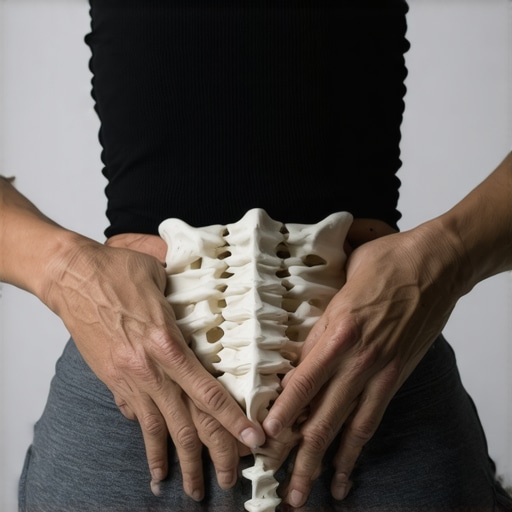
Why you should stop ‘sucking in’ your stomach
When you suck in your gut, you’re often just using your superficial ‘mirror muscles’ and actually increasing intra-abdominal pressure that pushes out against your pelvic floor. Real stability comes from the bottom up. I remember a time last summer when I was trying to move a heavy cast-iron fire pit in the backyard. In the past, I would have just ‘powered through’ with my arms and legs, likely resulting in a week on the heating pad. This time, I set my feet, engaged that ‘internal thread,’ and felt my pelvis lock into a solid unit. I moved the weight without a single twinge. This is why I tell people that your core strength won’t fix your back if your hips are locked—you need the deep activation to happen first.
The secret to moving without that scary clicking sound
Once you can find that deep tension while standing still, the real work is maintaining it during transitions. This is where most of us fail. We ‘let go’ of our core the second we reach for a coffee cup or turn to look at someone. To practice this, try the ‘Finger Check’ during your day-to-day life. Keep your fingers on those lower abdominal points while you sit down into a chair. If you feel the muscle go soft halfway down, your spine is suddenly vulnerable. This bracing technique is especially vital if you’ve ever wondered why you feel a sharp pinch in your back when you sneeze; that pinch is the sound of an unsupported joint being jerked. To build on this foundation, you can integrate the heel-to-toe walk drill for better balance and stability, ensuring that your pelvis stays level with every step.
The proper way to breathe through a back spasm
One of the biggest mistakes I made early on was holding my breath while trying to ‘brace.’ When you hold your breath, you create a rigid, brittle trunk. Instead, try ‘360-degree breathing.’ As you inhale, feel your lower ribs expand out to the sides and into your back, rather than just your chest rising. This maintains the pressure needed for stability without the tension that triggers a spasm. This simple shift can boost your back mobility significantly because it relaxes the overactive muscles in your lower back that are trying to do the core’s job. When you combine this breath with the ‘thread’ activation, you’ve mastered the correct way to use your core when lifting heavy groceries or even just picking up a toddler.We’ve spent a lot of time focusing on activation, but here is the contrarian truth that most ‘posture experts’ won’t tell you: trying to sit perfectly straight is often a recipe for disaster. I used to think that ‘military posture’ was the gold standard. I’d pull my shoulders back and arch my spine, thinking I was doing myself a favor. In reality, why your perfect sitting posture is making you stiffer is because you’re creating constant, low-level muscle fatigue. Your spine is designed to move, not to be a frozen statue. According to research published in the Journal of Orthopaedic & Sports Physical Therapy, there is no single ‘ideal’ posture that prevents pain. Instead, the best posture is your next posture. The ‘Oops’ factor here is staying in any one position for too long. If you’re forcing yourself into a rigid shape, you’re actually starving your discs of the nutrient-rich fluid they get through movement. This is a common hurdle I see with people who wonder is your back pain a sign of something more serious, when often it is simply a case of postural ‘suffocation.’
Why does my back still ache even though I’m flexible?
This is the advanced question I hear all the time. People who can palm the floor often have the worst back pain because they rely on their ligaments instead of their muscles for stability. If you have ‘loose’ joints, your muscles have to work ten times harder to keep things from shifting. If you find yourself constantly tugging at your legs, consider the hidden reason your hamstrings always feel tight: it might be your nervous system locking them down to protect a vulnerable spine. 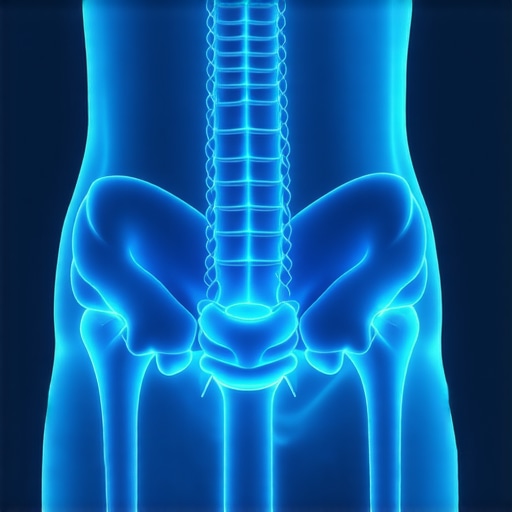 In these cases, why stretching your hamstrings often makes your sciatica worse is that you’re literally pulling on an already sensitized nerve. One of the biggest mistakes you can make is chasing the sensation of a ‘stretch’ to fix a structural stability issue. It’s why why your therapeutic sacramento massage only provides temporary relief for back pain—the massage addresses the symptom, like a tight muscle, but not the underlying instability. We also often overlook how the rest of the body participates in this cycle. For example, did you know the connection between your jaw tension and your constant headaches can actually travel down the fascial chain and affect your neck and upper back alignment? It’s all connected. Have you ever fallen into this trap? Let me know in the comments.
Maintenance isn’t about being perfect or never slouching again; it’s about having a toolkit ready for when life gets busy and your body starts to protest. I used to think I needed a thousand-dollar office chair to save my spine, but I eventually learned how to pick a chair that actually supports your lumbar curve without overcomplicating things. The real secret weapon in my daily life is actually a simple foam cylinder. Using it consistently is how I finally achieved mobility mastery without the constant fear of a relapse.
Stop the slouch before it starts with simple lumbar support
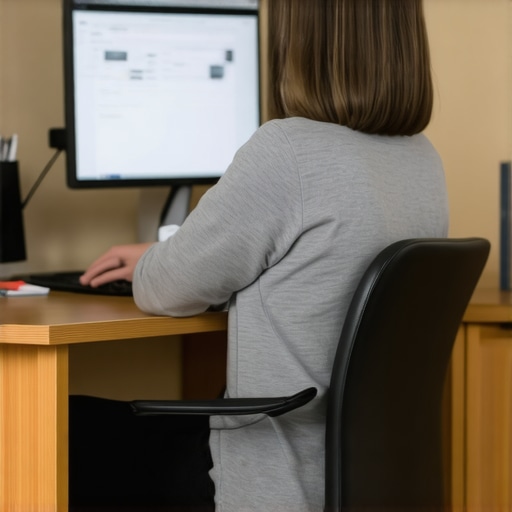
I don’t wait for a flare-up to reach for my support gear. If you’ve been sitting for more than twenty minutes, your spinal discs are already starting to compress under the weight of your torso. I’ve found that knowing how to use a lumbar roll to prevent mid-day back fatigue is more valuable than any expensive massage. It keeps that natural ‘S’ curve in your spine so your deep stabilizers don’t have to fight a losing battle against gravity. Even Dr. Stuart McGill, a leading expert in spine biomechanics, emphasizes that ‘spine hygiene’—the accumulation of how we move and sit throughout the day—is the most critical factor in long-term recovery. This proactive approach is what keeps the ‘gears’ from slipping out of place when you least expect it.
How do I maintain my mobility without spending hours at the gym?
Consistency is often the hardest part, so I use ‘environmental triggers’ to stay on track. For instance, every time I walk through a doorway, I do a quick chest release to revitalize my neck and reset my rounded shoulders. If I’m standing in a long line at the grocery store, I perform that 3-second pelvic reset to keep my joints happy. It’s about building back pain breakthroughs into the small gaps of your day. For those of us who have dealt with the fire of nerve pain, I highly recommend learning the nerve glide exercise that calms burning leg pain. I do three repetitions of these every time I boil the kettle for tea; it ensures the sciatic nerve stays mobile rather than getting snagged on tight surrounding tissues.
Looking ahead to a world of smart spinal sensors
Looking toward the future, I believe we are moving away from ‘crisis care’ and toward real-time biofeedback. I predict that within the next few years, we’ll see common wearables that use skin-based sensors to vibrate the moment our core stabilizers go ‘offline.’ This will be a game-changer for those who struggle to maintain focus on their posture during long work sessions. Until then, you have to be your own sensor. Start noticing if you have 4 signs your dizziness is coming from your neck alignment or if your gait starts to feel heavy. Staying ahead of the discomfort is exactly why maintenance care is better than waiting for a spinal crisis that puts you out of commission for a week. Advanced Tip: The next time you sit down, don’t just collapse into the chair. Use your ‘internal thread’ activation to slowly control your descent. This turns a mundane movement into a strength-building exercise for your pelvic stabilizers.
What I finally understood after years of fighting my own pelvis
After years of trial and error, I realized that my SI joint wasn’t “out of place” like a brick; it was just lacking the active support it needed to stay centered. First, stop chasing the stretch. If you feel like your hamstrings are always tight, it’s often a signal that your brain is locking them down to stabilize your spine. Second, learn the difference between muscle burn and joint irritation. If a move makes your joint feel “pinched,” stop immediately. Third, watch for the warning signs your sciatica needs professional help, especially if the pain travels below the knee. Finally, figuring out how to tell if your sciatica is a disc or muscle issue can save you months of the wrong rehabilitation approach. Real progress happened for me when I stopped trying to beat my core into submission and started treating it like a precision instrument.
#IMAGE_PLACEHOLDER_E#
Tools that keep my spine quiet every single day
I don’t believe in expensive gadgets, but I do believe in mechanics. I never leave the house without a plan for my spine. My “survival kit” includes a firm lumbar support; knowing how to use a lumbar roll to prevent mid-day back fatigue has been the single best investment for my desk life. I also keep a tennis ball in my gym bag because how a simple tennis ball can fix deep glute tension is like having a therapist on call 24/7 for those localized knots. When it comes to furniture, stop looking for “soft” and look for “structure.” I’ve spent a lot of time researching how to pick a chair that actually supports your lumbar curve because your home office shouldn’t be the reason your back feels brittle by 5 PM.
Reclaiming your freedom from the fear of the clunk
Your body is not a machine that has “broken down”; it is a living system that has simply forgotten how to brace itself properly. Every time you use your “internal thread” or reset your pelvis, you are teaching your nervous system that you are safe to move through a full range of motion. These back pain breakthroughs don’t happen overnight, but they do happen through small, consistent wins. You deserve to live a life where you aren’t constantly scanning for the nearest chair or fearing a simple sneeze. Your back pain doesn’t define your future mobility—your habits and your commitment to stability do. Which daily movement usually triggers your back pain? Let’s talk about how to brace through it in the comments below.