
Why you should avoid soft couches if you have sciatica
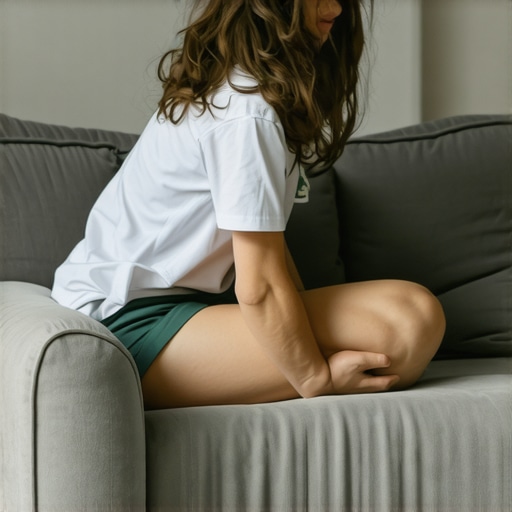
I sank into the cushions of my favorite velvet sofa, expecting a moment of bliss, but instead, I got a lightning bolt. My left leg went navy and numb almost instantly. It was that familiar, terrifying buzz that tells you your sciatic nerve is under attack. I spent years thinking that because my back hurt, I needed the softest, most pillowy surfaces I could find. I was dead wrong. In fact, that comfortable couch was the primary reason I couldn’t walk the next morning. Today, I’m going to show you exactly why that plush upholstery is a secret enemy to your recovery and how a few simple swaps can save your spine.
That Deep Sofa Is Actually Eating Your Spine
I made a huge mistake early in my journey: I prioritized feel-good comfort over structural support. When you sit in a soft chair, your pelvis tilts backward, forcing your lower spine into a C shape. This position puts immense pressure on your lumbar discs. According to clinical data cited by the Harvard Health Publishing, sitting actually puts more pressure on your spinal discs than standing or walking, and a slumping posture multiplies that load significantly. When you sink into a cushion, you lose the natural curve of your back, and that’s exactly why your soft couch is the worst place to sit during a flare. I used to think I was resting, but I was actually suffocating my sciatic nerve. Without firm support, your muscles stop engaging, leaving your vulnerable nerves to bear the entire weight of your torso. It is a recipe for disaster.
Is a Firmer Seat Really Better Than My Favorite Recliner?
You might be skeptical. I certainly was. The idea of sitting on a firm, supportive chair when your glutes feel like they are on fire sounds like a nightmare. But here is the truth: stability is what stops the pinching. When you learn expert strategies for lasting comfort, you realize that your nerves need space to breathe. A soft couch compresses the soft tissues around the nerve, while a firm surface allows your sit-bones to take the weight. Even if you love your lounge time, you need to know how to sit in a recliner without crushing your sciatic nerve so you don’t undo all your progress. Have you ever felt that stuck feeling after sitting for just twenty minutes? Tell me in the comments, because once I realized I wasn’t alone, I finally started making changes that stuck. We aren’t just talking about ergonomics; we’re talking about proven approaches to end discomfort for good. Let’s look at what your spine actually needs from your furniture.
Turn Your Living Room Into a Recovery Zone
The moment you realize your furniture is working against you, everything changes. You don’t need to throw out your sofa, but you do need to stop letting it dictate your spinal shape. Start by choosing the right foundation. When you learn how to pick a chair that actually supports your lumbar curve, you’re looking for a seat height that allows your feet to rest flat and a depth that doesn’t force you to slouch just to reach the backrest. Think of your spine like a suspension bridge; if the anchors are soft sand, the whole structure collapses. It is not just about the seat itself, but how your body interacts with it to maintain a neutral alignment that prevents nerve compression.
The Towel Trick That Saved My Sister’s Dinner Party
I’ll never forget a holiday dinner where the only seating was a set of deep, velvet armchairs that felt like quicksand. Ten minutes in, my leg was already starting to buzz with that familiar sciatic fire. I grabbed a firm decorative towel from the guest bathroom, rolled it into a tight cylinder—about the thickness of my forearm—and wedged it into the space between the chair and my lower back. That DIY support kept my pelvis from tilting backward, effectively preventing the nerve pinch. You can do the exact same thing right now. Learning how to use a lumbar roll to prevent mid-day back fatigue is the cheapest and most effective way to modify any bad chair into a healing one. #IMAGE_PLACE_HOLDER_B#
Why Your Feet Need a Step Up
Gravity is a constant weight on your sciatic nerve. If your legs are dangling or even just resting flat on the floor while you’re in a deep seat, it can pull on your lower back and strain the hamstrings. I started keeping a small footrest under my desk and even used a heavy book while watching TV. It sounds minor, but knowing how to use a step stool to save your lower back in the kitchen or the living room shifts the angle of your hips, taking the tension off the L5-S1 discs. It’s like loosening a tightened guitar string just enough so it doesn’t snap under the pressure of daily movement.
Move Even When You Are Stuck in a Chair
Static positions are the enemy of recovery. Even with perfect support, your nerves need blood flow and space to move. This is where mobility mastery daily tips to keep your spine and joints healthy come into play. You should never sit for more than 20 minutes without a ‘micro-break.’ I’m not talking about a full gym session; I’m talking about a 3-second pelvic reset where you simply tilt your pelvis forward and back to lubricate the joints. If you feel that sharp, burning sensation starting to creep down your thigh, stop what you are doing and perform the nerve glide exercise that calms burning leg pain. It gently slides the nerve through the surrounding tissue, preventing it from getting ‘stuck’ in a state of inflammation. Once you bridge the gap between poor posture and chronic back pain with these active movements, you stop being a victim of your furniture and start being the architect of your own relief.I’ve seen it a thousand times: someone feels a pull in their leg and immediately thinks they need to stretch their hamstrings. It’s the single most common mistake in sciatica recovery. If your sciatic nerve is inflamed, it doesn’t want to be yanked on like a rubber band; it wants space. When you pull your toes to your nose, you’re often just irritating the nerve further, making the inflammatory fire burn brighter. This is exactly why stretching your hamstrings often makes your sciatica worse. You think you’re being proactive, but you’re actually causing micro-trauma to a nerve that is already gasping for air. We need to stop thinking about our bodies as a collection of tight ropes and start thinking about the plumbing. If a pipe is clogged, pulling on it won’t clear the blockage. Similarly, why you should stop stretching your back into a C-shape becomes clear when you realize that flexion often pushes disc material further into the nerve.
Stop Obsessing Over Your Core Strength
Another common trap is the obsession with a rock-hard core. I used to spend hours on planks, thinking my weak abs were the culprit. But why your core strength won’t fix your back if your hips are locked is a fundamental law of bio-mechanics. If your hip joints are glued shut, your lower back has to move twice as much to compensate. All the core strength in the world won’t save a spine that is being forced to do the job of a hip. This leads to the ‘oops’ factor I see most often: people doing ‘core’ work that actually increases their pelvic tilt, further crushing their L5-S1 discs. It’s a dangerous cycle where the cure becomes the cause. #IMAGE_PLACE_HOLDER_C#
Is Your ‘Perfect’ Sitting Posture Actually Creating More Stiffness?
You might think sitting bolt upright with your shoulders pinned back is the gold standard, but why your perfect sitting posture is making you stiffer is something the ergonomic industry rarely discusses. True spinal health isn’t about finding one ‘perfect’ position and freezing there; it is about movement and variability. According to a study in the Journal of Manual & Manipulative Therapy, neural mobilization techniques are far superior to static positions because they reduce ‘mechanosensitivity’—the clinical term for how easily your nerves get grumpy. If you are struggling to tell the difference between a simple muscle pull and a genuine nerve issue, you need to learn how to tell if your sciatica is a disc or muscle issue before you try another ‘viral’ stretch you saw online. Have you ever fallen into the trap of stretching through the pain, only to feel twice as bad the next day? Let me know in the comments, because that ‘no pain, no gain’ mentality is the fastest way to a chronic flare-up. If you notice a sudden, sharp change in your sensation, always check if your back pain is a sign of something more serious. True relief comes from nuance, not force.Once I stopped making those common stretching mistakes, I had to face the reality of daily maintenance. You can’t just fix a disc bulge once and assume you’re invincible; you need a toolkit that keeps your hardware running smoothly. I’ve tried every gadget on the market, from vibrating foam rollers to thousand-dollar inversion tables, but the most effective tools in my arsenal cost less than a cup of coffee. I personally swear by a standard, high-rebound tennis ball. Why? Because it has the perfect amount of ‘give.’ While a lacrosse ball is great for dense muscle, it can be too aggressive near an inflamed nerve. I use the tennis ball to target the piriformis and the glute medius, and I’ve found that how a simple tennis ball can fix deep glute tension is the foundation of my daily relief routine. It’s not about smashing the muscle; it’s about sustained, gentle pressure that tells the nervous system to let go.
How do I maintain my spinal mobility for the next decade?
Consistency is the only way forward. I don’t wait for a twinge to start my exercises; I treat my spine like I treat my teeth. I follow mobility mastery daily tips to keep your spine and joints healthy because I’ve learned that why maintenance care is better than waiting for a spinal crisis is a lesson you only want to learn the hard way once. I also shifted my digital habits. I used to crane my neck over my phone for hours, but now I use a haptic feedback app that vibrates my Apple Watch whenever I slouch past a certain degree. This kind of ‘biofeedback’ is where I see the industry heading. According to a study published in the Journal of Electromyography and Kinesiology, real-time postural feedback can significantly reduce muscle fatigue in the upper trapezius and lumbar extensors. In the next few years, I predict we will see smart clothing with embedded sensors that gently guide our alignment as we move through the day. #IMAGE_PLACE_HOLDER_D#
The Standing Desk Trap and How to Avoid It
If you think switching to a standing desk is the ultimate cure-all, be careful. I made the jump too fast and ended up with throbbing hip flexors. You have to know how to transition to a standing desk without leg pain, or you’re just trading one set of problems for another. I recommend an anti-fatigue mat with a built-in massage ball so your feet are always making micro-adjustments. This keeps the blood flowing and prevents that ‘locked’ feeling in the lower back. If you’re serious about unlocking mobility expert tips on managing back pain in 2025, you need to look at your entire environment. For me, that meant even looking at my kitchen; I learned how to use a step stool to save your lower back in the kitchen while prepping dinner. It’s these tiny, specific adjustments that compound into a pain-free life. **My advanced tip for you today:** Try a ‘dynamic sitting’ session. Instead of a traditional chair, use a firm medicine ball for just 15 minutes a day to force those stabilizer muscles to wake up. It’s a game-changer for SI joint stability.
The Hidden Truth About Why Most Sciatica Plans Fail
For a long time, I thought I could out-stretch my pain. I was looking for a “magic move” that would fix me instantly. But the biggest lesson I’ve learned is that nerves don’t respond to force; they respond to environment. If you spend eight hours a day in a chair that collapses your spine, no amount of yoga will save you. Another lightbulb moment was realizing that sciatica relief secrets often have more to do with what you stop doing than what you start. I had to stop the “no pain, no gain” mentality and start listening to the subtle buzz in my leg as a boundary, not a challenge to overcome. Finally, remember that your body is a system; tension in your neck or feet often travels down to your lumbar spine, reinforcing the pinch.
#IMAGE_PLACE_HOLDER_E#
My Personal Survival Kit for a Happy Spine
When clients ask me what they actually need to buy, I keep it simple. First, get a high-quality tennis ball. Learning how to use a tennis ball to relieve glute tension is the most cost-effective therapy I’ve ever found for releasing those deep, angry muscles. Second, I recommend looking into mobility mastery daily tips to keep your spine and joints healthy to build a sustainable routine that prevents the “stuck” feeling. Third, keep a firm lumbar roll or even a rolled-up towel in your car and your office chair. These tools aren’t just gadgets; they are reminders for your nervous system to stay in a neutral, safe zone. If you feel lost, always check the warning signs your sciatica needs professional help to ensure you aren’t ignoring a deeper issue that requires clinical attention.
Start Claiming Your Mobility Back Today
Recovery is rarely a straight line, but it is always possible when you stop fighting your anatomy and start supporting it. You now have the blueprint to turn your home from a danger zone into a recovery suite. By making small, intentional changes to how you sit, move, and rest, you can finally put an end to the cycle of flares. You deserve to sit through a movie or a dinner party without planning your escape route due to creeping numbness. Take that first step today—whether it’s the towel trick or a pelvic reset—and watch how your body rewards you. We are entering a new era of unlocking mobility expert tips on managing back pain in 2025, and you are now ahead of the curve. Have you tried the “towel roll” trick in your favorite chair yet, and did it change how long you could sit comfortably? Let me know in the comments below!