
The simple ankle drill that improves your walking balance
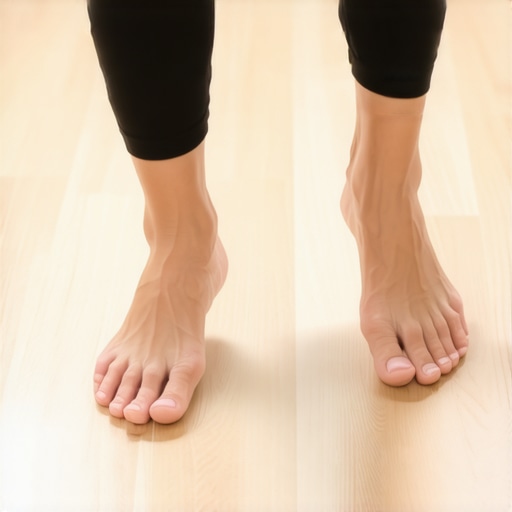
I will never forget the day I nearly took a header into my neighbor’s prize-winning hydrangeas. It wasn’t a patch of ice or a stray garden hose that did it. I simply stepped off the curb, and my ankle decided to take a sudden, unannounced vacation. It’s a visceral, heart-thumping moment when you realize your body isn’t quite as reliable as it used to be. For a long time, I blamed my poor posture or perhaps just getting a little older. I assumed that if I just did more squats, my stability would return. But I made a classic rookie mistake: I ignored the foundation. I was focusing on my core while my ankles were essentially frozen blocks of wood.
Why You Keep Tripping Over Absolutely Nothing
Most of us treat our feet like they’re just meat-anchors at the end of our legs. We shove them into stiff shoes and wonder why we feel heavy when we walk. When I first started looking into mobility mastery, I realized that my ankles had lost their ability to talk to my brain. This disconnect is more than just annoying; it’s a setup for disaster. According to the Centers for Disease Control and Prevention, one out of four older adults falls each year, but the silent decline in proprioception—your body’s ability to sense its position—actually starts much earlier than you would think. I spent months trying to stretch my way out of it, but stretching often isn’t the answer if the joint itself isn’t moving correctly. Have you ever felt that sudden jolt of instability while walking on a perfectly flat sidewalk? It is a wake-up call that your ankles need more than just rest.
Is a 30-second drill actually better than expensive orthotics?
You might be skeptical. I certainly was. I thought I needed those $400 custom inserts or perhaps a new pair of stability sneakers to fix my clunky gait. I even wondered if the connection between my flat feet and back pain meant I was just doomed to be a wobbler forever. But the truth is, most orthotics just mask the problem by acting as a crutch. What I needed wasn’t more padding; I needed better communication between my nervous system and my joints. Once I started this simple ankle drill, my walk felt lighter, and that nagging fear of tripping vanished. It turns out that professional adjustments improve your balance by clearing those neural pathways, but you need a daily habit to keep them open. Let’s get into the why behind this specific movement before I show you how to do it in your kitchen.
Think of your ankle not as a simple hinge that only moves up and down, but as a high-performance joystick. When it works well, it should glide smoothly in every direction. When it’s stuck, it’s like trying to play a video game with a broken controller; you try to move left, but the signal never quite makes it to the screen. If you’ve felt your foot slap the ground or your gait feels heavy, your joystick is likely seized with rust. This lack of feedback travels up the chain, which is why your core strength won’t fix your back if your hips are locked or your ankles are stiff. Your brain simply stops trusting your feet, and it compensates by tightening your lower back and neck to keep you from falling over.
Turn Your Ankles From Bricks Into Joysticks
To fix this, we need to perform what I call the Kitchen Counter Reset. This isn’t a passive stretch where you lean against a wall and check your phone. This is active neural training. Stand facing your counter and place both hands on the edge for balance. Shift your weight to your right leg and lift your left foot slightly off the floor. Now, I want you to imagine there is a pencil attached to your big toe. Your goal is to draw the largest, slowest, and smoothest circle possible in the air. Most people find that their ‘circle’ looks more like a jagged hexagon. That’s the disconnect. Each jagged edge is a blind spot where your brain has lost control of the joint.
The Kitchen Counter Secret for Instant Stability
When you perform these circles, you must keep the rest of your leg perfectly still. Don’t let your knee wobble or your hip hike up. The movement must come strictly from the ankle. I remember one Tuesday morning I was trying to rush through these while my coffee was brewing. I was so focused on my laptop on the counter that I didn’t realize I was ‘cheating’ by swinging my whole leg. I hit a jagged spot in my rotation, lost my center of gravity, and nearly took out the entire coffee carafe. My kitchen was a mess of lukewarm brew and broken glass, but it was a harsh reminder: if you don’t own the movement at the ankle, your body will steal it from somewhere else. Focusing on this precision is one of the boost your back mobility simple exercises that make a difference because it stops the ‘upward leak’ of instability.
Why Rotating Beats Stretching Every Single Time
People love to stretch their calves, but if the ankle joint itself is restricted, you’re just pulling on a rope that’s tied to a concrete block. This restricted joint creates a cascade of issues, including the hidden link between tight calves and neck stiffness. When your ankle can’t dorsiflex—that is, pull toward your shin—you can’t even perform a proper squat to protect your knees and back. Instead, your heels lift, your knees cave, and your spine takes the hit. By doing these slow, controlled rotations for 30 seconds per foot, you are essentially ‘re-mapping’ the joint in your brain. You are telling your nervous system that it is safe to move through that full range. Once your brain feels safe, it releases the tension it was holding in your hips and lower back, and you might finally fix your gait to reduce chronic hip clicking that has bothered you for years.
Let’s dig deeper into why your recovery might be stalled. Most people assume that if something feels tight, they need to yank on it until it yields. However, when you are dealing with radiating leg pain, your nerves are already under significant tension. Stretching an irritated nerve is like pulling on a live wire; it doesn’t make the wire longer, it just makes the fire spread. This is why I tell people why stretching your hamstrings often makes your sciatica worse. It’s a crucial nuance that separates those who actually heal from those who stay stuck in a cycle of temporary relief followed by a devastating flare-up. Have you ever fallen into this trap of stretching harder when the pain won’t budge? Let me know in the comments.
Stop trying to pull your spine apart
The biggest ‘oops’ I see in clinics and gyms is the classic knee-to-chest stretch. It feels good for about five seconds because it triggers a brief stretch reflex, but if your pain is coming from a disc, you’re actually pushing that disc material further toward the nerve. You must stop pulling your knees to your chest for back relief if you want to protect your spinal integrity. Instead of aggressive, blunt-force stretching, your nervous system requires precision. Using the nerve glide exercise that calms burning leg pain allows the nerve to slide through its surrounding tissues without being over-tensioned.
Why does your leg feel tight even when you’re naturally flexible?
This is the question that trips up even seasoned athletes. Dr. Stuart McGill, a world-renowned expert in spine biomechanics, explains that the sensation of ‘tightness’ is often a protective mechanism from your brain—a state known as neural tension—rather than a physically short muscle. If you keep pulling, you’re essentially fighting your own brain’s defense system. You need to determine how to tell if your sciatica is a disc or muscle issue before you decide on a daily routine. In the world of conquering sciatica proven approaches to end discomfort now, we have to stop the constant ‘picking of the scab.’ This means you should stop stretching your back into a C-shape, as this rounded position is the exact mechanism that often causes the injury in the first place. High-level recovery is about stability and glide, not just how far you can reach past your toes.
Once you’ve stopped the cycle of aggressive stretching and ‘picking the scab’ of your irritated nerves, you enter the most critical phase: the long game. Most people fail here because they treat recovery like a finished task rather than a lifestyle shift. I realized early on that my flare-ups always happened during the weeks I felt ‘fine’ and stopped my routine. This is exactly why maintenance care is better than waiting for a spinal crisis to force your hand. When you are pain-free, that is actually the best time to build the structural resilience your body needs for the future.
Stop Waiting for the Crisis to Hit Your Spine
Maintenance doesn’t require two hours in the gym. It requires smart, tactical tools that you actually use. For me, the game-changer was a simple lumbar roll. I spent years slumping in my office chair, wondering why my sciatica would return every Friday afternoon. By learning how to use a lumbar roll to prevent mid-day back fatigue, I maintained the natural curve of my spine without having to constantly ‘think’ about my posture. It’s about setting up your environment so you can’t fail. I also live by the the 20-20-20 rule for neck and eye strain relief because my neck pain was frequently a downstream effect of staring at a screen for four hours straight without a break.
The $2 Solution for Deep Glute Pain
If you aren’t using a tennis ball yet, you are missing out on the cheapest physical therapist in the world. When I feel that familiar tightness creeping into my glutes—that pre-sciatica warning shot—I don’t reach for ibuprofen. I grab a tennis ball. Knowing how a tennis ball can relieve deep glute and sciatic pain allows you to target those specific trigger points that a foam roller is just too bulky to reach. This concept of self-myofascial release is what Dr. Kelly Starrett, author of Becoming a Supple Leopard, refers to as ‘smashing’ the tissues to restore sliding surfaces. He emphasizes that if your tissues are glued together, no amount of ‘good posture’ will save you because you’re fighting internal friction.
Will AI Finally Fix Your Forward Head Poke?
Looking ahead, I predict we are moving toward a world where biometric wearables won’t just count your steps, but will map your spinal alignment in real-time. We are already seeing the emergence of haptic feedback sensors that vibrate when your shoulders slump. While these tools are exciting, they won’t replace the need to how to adjust your monitor to stop that burning neck pain right now. The future of mobility is a blend of high-tech monitoring and the low-tech consistency of back pain breakthroughs found in simple daily movements. Technology can give us the data, but we still have to do the work.
How do I keep my mobility gains long-term?
The secret is ‘greasing the groove.’ Instead of one big workout, sprinkle your corrective drills throughout the day. I keep my tennis ball under my desk and my lumbar roll in my car. This ensures I’m getting mobility mastery daily tips to keep your spine and joints healthy without needing a dedicated ‘rehab’ hour. My challenge to you is this: for the next 48 hours, every time you sit down to eat, check your hip position. If you’re slumping, fix it. That three-second adjustment is worth more than any fancy gadget you can buy.
Lessons I Learned the Hard Way While Trying to Stand Straight
The biggest epiphany I had during my own recovery was that pain is often a lagging indicator. By the time my back actually hurt, the dysfunction in my ankles and hips had been festering for months. I used to think every twinge meant I was broken, but now I know that checking if is your back pain a sign of something more serious is just a signal from my body to adjust my daily habits. Another hard lesson? Consistency beats intensity every single time. I spent years trying to ‘fix’ myself with one-hour brutal gym sessions once a week, but the real magic happened in the 30-second kitchen counter drills. I also learned that I had to stop guessing and actually find out how to tell if your sciatica is a disc or muscle issue before I could apply the right fix. Once I stopped attacking the symptoms and started respecting the mechanics, everything changed.
What’s Inside My Daily Spinal Protection Kit
You don’t need a home gym to maintain your results, but you do need a few non-negotiables. First, the tennis ball—it is my frontline defense against stiffness. Knowing how a simple tennis ball can fix deep glute tension is like having a therapist in your pocket. Second, I highly recommend Dr. Stuart McGill’s book, Back Mechanic; it provides the biomechanical foundation that most generic fitness programs miss. Third, I never travel or work without a lumbar roll to support my spine’s natural curve. Setting up these small wins is a core part of back pain breakthroughs that actually last.
#IMAGE_PLACEHOLDER_E#
Your Body Still Has a Lot of Miles Left
It is easy to feel discouraged when a flare-up happens, but remember that your body is remarkably resilient when you give it the right inputs. Recovery isn’t a straight line—it’s a series of small, intentional adjustments that add up over time. Don’t ignore the warning signs your sciatica needs professional help, but also don’t underestimate the power of your daily choices. You have the tools now to take control of your mobility mastery and move through the world with confidence again. Have you ever noticed your ankles feel stiff after a long day of sitting? Let me know in the comments below.