
How to sit on a plane without your legs going numb
The air was dry, the cabin was dim, and the person in front of me had their seat reclined so far back that the headrest was practically touching my nose. I was somewhere over the Atlantic, mid-flight to London, when I realized my right leg had simply… vanished. Not literally, of course, but it was so numb I couldn’t even tell if my shoe was still on. I tried to stand up to use the restroom, and my knee nearly buckled under me like a wet noodle. It was embarrassing, painful, and honestly, a little bit scary. I spent the first two days of my hard-earned vacation hobbling through the British Museum with a dull ache in my hip that felt like a localized storm. If you’ve ever felt like your lower body was being squeezed by a giant vice, you know exactly what I’m talking about. We spend thousands on flights only to arrive feeling like we’ve been folded into a suitcase. Today, I’m going to show you exactly how I fixed my seating posture to keep the blood flowing and the nerves happy, even in economy. [image1]
Why Your Legs Go Dead Before the First Movie Ends
It’s not just you, and it’s not just the cramped legroom. The real culprit is the way airplane seats are sculpted—they almost force your spine into a “C” shape, which puts massive pressure on your sciatic nerve. I used to make the classic mistake of tucking my feet back under my seat, thinking I was being polite by staying out of the aisle. In reality, I was just cutting off the circulation at the back of my thighs. This is remarkably similar to how to sit in a car for hours without triggering sciatica; the plane is just a more confined version of that same physiological battle. According to the CDC, sitting still for long periods on flights can lead to deep vein thrombosis, and for many of us, it starts with that terrifying numbness. You need a strategy that keeps your pelvis neutral, otherwise, you’re just waiting for the tingles to start.
Is This Really Avoidable Without a First Class Ticket?
I used to be a total skeptic. I thought unless I had a lie-flat bed, my legs were destined to fall asleep. My biggest blunder? I would lean my head against the window and let my hips slide forward, creating a huge gap between my lower back and the seat. This “slump” is a one-way ticket to a numb foot. If you aren’t sure if your discomfort is just tired muscles or something more serious, you might want to check the simple test to see if your leg pain is actually sciatica. Trust me, once you stop fighting the seat and start supporting your own anatomy, the difference is night and day. Have you ever had to do that awkward “zombie walk” down the aisle because your leg wouldn’t wake up?
The Biomechanics of the “Economy Squeeze”
The problem starts at the hips. When your knees are higher than your hip joints for hours on end, your psoas muscles shorten and your glutes basically turn off. It’s a recipe for disaster. I’ve found that even small shifts in how you position your feet can change everything. If you find your back is already stiff before you even board, you might want to look into back pain breakthroughs that help prep your body for the journey. Later, we will talk about the one stretch you should do after every flight to reset your system, but first, we have to address the “why” behind the numbness.
Stop the Slump with a Makeshift Lumbar Roll
The gap between your lower back and the airplane seat is a vacuum for your spine’s health. When you sink into that void, your lumbar curve flattens, and the pressure on your discs skyrockets. I learned this the hard way on a 10-hour haul to Tokyo. By hour three, my lower back felt like it was made of dry wood ready to snap. I finally took my thickest travel hoodie, rolled it into a firm cylinder, and shoved it right into the small of my back. The relief was almost instant. This is essentially how to use a lumbar roll to prevent mid-day back fatigue, but applied in a metal tube at 30,000 feet. By filling that space, you force your pelvis to stay upright, preventing the “C-shape” collapse that pinches your nerves. 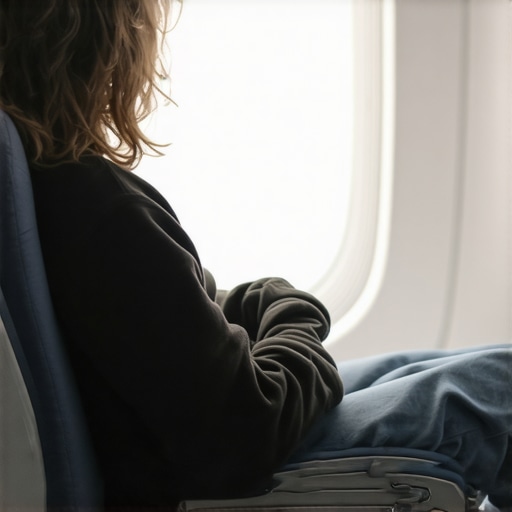
Why High Knees are Killing Your Circulation
Most people think more legroom is the only solution, but the angle of your hips matters more than the distance to the seat in front of you. In economy, the seat pan often tilts backward while the floor remains flat, forcing your knees higher than your hips. This “closed” hip angle pinches the femoral artery and compresses the sciatic nerve like a kinked garden hose. If you’ve ever wondered why your desk chair height is wrecking your hips, the mechanics here are identical. To fix this, use your personal item—your backpack or a laptop bag—as a footrest. Raising your feet just three or four inches can actually help if you lean the seat back slightly, but the goal is to keep the weight on your “sit bones” rather than the back of your thighs. When I fly, I always use my camera bag as a pedestal; it keeps my hamstrings from being crushed against the seat edge, allowing blood to reach my feet.
The Hidden Danger of Tucking Your Feet
We’ve all done it: tucking our feet under our own seat to make room for others. This pulls your hamstrings tight and tilts your pelvis backward, which is the fast track to a painful flare-up. If the tingling starts in your toes and moves up your calf, you need to know how to tell if your sciatica is a disc or muscle issue before you start any aggressive stretching. On that flight to London, I realized I was keeping my ankles crossed for hours. This uneven pressure rotates the pelvis and puts a shearing force on the SI joint. Keep your feet flat and hip-width apart. It feels formal at first, but your nerves will thank you when you land.
Reset Your Pelvis Without Getting Up
You don’t need to pace the aisle every fifteen minutes to keep things moving. I use a technique I call “the seat-wiggle.” Every time the pilot makes an announcement, I perform a few pelvic tilts—arching my back away from the seat and then flattening it back against my DIY lumbar roll. This creates a pumping action for the spinal discs, bringing in fresh nutrients and flushing out inflammatory waste. It’s a modified version of the 10-second hip reset for relief after sitting. You can also do simple glute squeezes to wake up the muscles that have gone dormant from constant pressure. Understanding the link between poor posture and chronic back pain is about realizing that even small, micro-movements can prevent the total system shutdown that leads to that “dead leg” feeling. Implementing these enhance your back mobility ergonomic tips for everyday comfort turns your cramped seat into a manageable space rather than a torture device.Most travelers make one fatal mistake when their leg starts to tingle mid-flight: they try to stretch it out. It seems logical. Your leg feels tight, so you pull your knee to your chest in the aisle or reach for your toes while waiting for the lavatory. But here is the advanced nuance that most ‘wellness’ blogs miss: you aren’t always stretching a muscle; often, you’re yanking on a sensitized nerve. In my experience, why stretching your hamstrings often makes your sciatica worse is the number one reason people land in more pain than when they took off. When the sciatic nerve is inflamed or compressed, it doesn’t want to be lengthened—it wants to be ‘slacked.’ This is the hidden reason your hamstrings always feel tight; it’s a protective brain response, not a physical length issue. According to research published in the Journal of Orthopaedic & Sports Physical Therapy (JOSPT), neural mobilization—or ‘nerve gliding’—is far more effective than static stretching for reducing the mechanosensitivity of the nervous system. Have you ever tried to ‘stretch through the pain’ only to have it roar back ten times worse? Let me know in the comments if you’ve fallen into this trap. 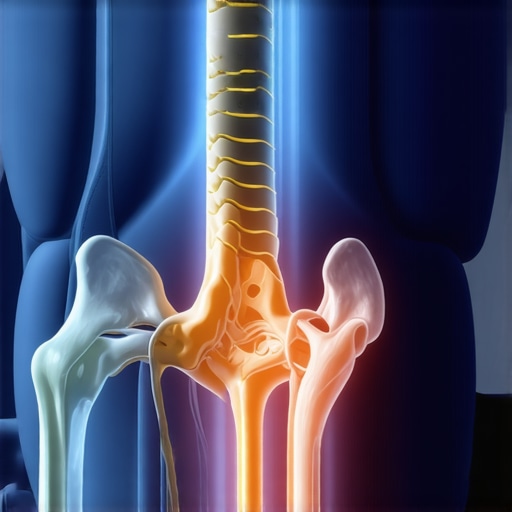
The ‘Perfect Posture’ Trap and Why It Fails You
We have been conditioned to believe that sitting like a statue with a perfectly straight spine is the gold standard. This is the ‘Oops’ factor of modern ergonomics. If you try to maintain a rigid, military-style posture for six hours, you are actually fatiguing the very stabilizer muscles meant to protect you. Why your perfect sitting posture is making you stiffer comes down to the lack of ‘micro-movements.’ Your spine is a series of joints, and joints require movement to stay lubricated. When you sit perfectly still, you create static loading on your intervertebral discs. I always tell my fellow travelers: ‘The best posture is your next posture.’ Switch it up. Slump for five minutes, then sit tall for ten. Use that DIY lumbar roll I mentioned earlier, then move it higher or lower every hour. Static is the enemy; variability is the cure.
Can a Lack of Hip Mobility Actually Mimic a Herniated Disc?
This is a question I get from frequent flyers who are convinced they have a major spinal injury because of their leg pain. Often, the issue isn’t a disc at all, but ‘locked’ hips that are forcing the lower back to overwork. You might spend hours doing planks in the hotel gym, but why your core strength won’t fix your back if your hips are locked is simple: if the ball-and-socket joint of the hip won’t rotate, that movement has to come from somewhere else—usually the lumbar spine. If you’re unsure if your pain is coming from your back or your hips, look for is your back pain a sign of something more serious key symptoms to watch, such as progressive weakness or loss of bladder control. For most of us, it’s about unlocking sciatica relief expert strategies for lasting comfort by focusing on hip internal rotation rather than just ‘back exercises.’ When your hips move freely, your sciatic nerve has the space it needs to breathe, even in a middle seat.I have survived enough red-eyes and cramped middle seats to know that hope is not a strategy for your spine. If you want to land feeling like a human being instead of a question mark, you need a proactive toolkit. I never board a plane without a standard lacrosse ball stashed in my personal item. It is small, incredibly dense, and perfectly suited for targeted release. Once I arrive at my destination, the first thing I do after checking in isn’t looking for the nearest cafe—it’s using that ball to hunt down trigger points in my glutes and hips. You see, how a simple tennis ball can fix deep glute tension is a fundamental skill for anyone with a history of sciatica, but the lacrosse ball’s extra hardness reaches the deeper piriformis layers that a soft tennis ball might miss. By applying direct pressure to these areas, you are essentially ‘restarting’ the muscle after hours of static compression. This is the cornerstone of my philosophy on mobility mastery daily tips to keep your spine and joints healthy. It is about moving from a state of emergency care to one of sustainable maintenance.
How do I maintain these mobility gains over the long haul?
Consistency always trumps intensity when it comes to the nervous system. I follow the core principles established by Robin McKenzie, the founder of the McKenzie Method. In his landmark book, Treat Your Own Back, McKenzie argues that the patient’s ability to perform their own mechanical therapy is the most effective way to eliminate recurring pain. This is exactly why maintenance care is better than waiting for a spinal crisis. Every time I deplane, I immediately perform the one stretch you should do after every flight to counteract the flexion-heavy posture of the cabin. 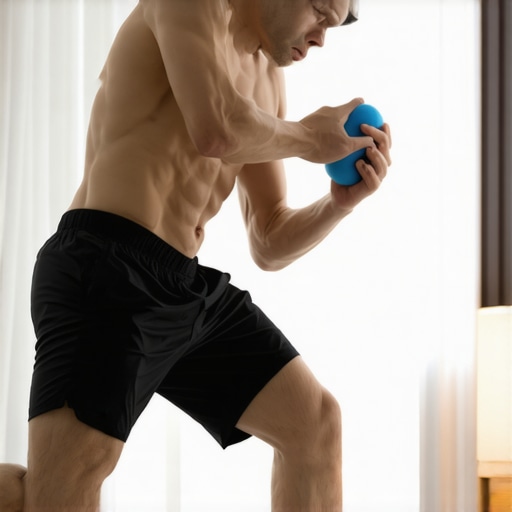
Pack This One Secret Weapon for Every Trip
To truly scale your results for a lifetime of adventure, you have to integrate small wins into your daily routine. I have started layering boost your back mobility simple exercises that make a difference into my mornings, regardless of whether I am at home or in a hotel in Singapore. Looking ahead, I predict that the next decade of travel will see a shift toward ‘smart seating’ technology, where biometric sensors in airplane seats will trigger micro-oscillations in the lumbar support to prevent blood pooling. Until that technology is standard, however, you must be your own ergonomic engineer. We are seeing a trend where unlocking mobility expert tips on managing back pain in 2025 will focus heavily on wearable tech and biofeedback. My challenge for you is simple: the next time you feel that deep, radiating ache starting in your hip mid-flight, do not just reach for the pain relievers. Find a wall, grab a dense ball, and lean into that tension for sixty seconds. Your sciatic nerve will thank you long before you ever reach the baggage claim.
The Biggest Myths About Flight Comfort That Kept Me Hurting
I spent years thinking that being a ‘quiet’ passenger meant keeping my feet tucked tight under my seat to avoid bothering others, but that was my biggest mistake. I finally realized that movement—even tiny, almost invisible pulses—is the only way to keep the nerves from screaming in a cramped cabin. Another hard-earned lesson: if you wait until the tingling starts to adjust your seat, you’ve already lost the battle. Proactive positioning before the ache sets in is everything. Finally, I discovered that hydration isn’t just about avoiding a mid-air headache; it’s a mechanical necessity for keeping your spinal discs plump and resilient enough to handle the atmospheric pressure changes during the flight.
The Minimalist Kit That Saves My Spine Every Trip
For any traveler who wants to protect their back, I highly recommend Robin McKenzie’s book, Treat Your Own Back. It completely changed how I view self-correction and spinal health. I also suggest looking into overcoming sciatica top lifestyle changes for better quality of life to ensure your body is resilient before you even head to the airport. My personal toolkit always includes a dense lacrosse ball for trigger point release and these sciatica relief secrets how to banish pain quickly today for managing flare-ups in a hotel room after a long-haul journey.
#IMAGE_PLACEHOLDER_E#
You Deserve to Land Feeling Great
Don’t let the fear of a physical flare-up keep you from seeing the world. By implementing these ergonomic shifts and staying mobile, you can manage your sciatica and arrive at your destination ready to explore rather than ready to collapse. However, if you find that your symptoms aren’t improving with these micro-movements or if the numbness persists long after landing, it’s vital to check the warning signs your sciatica needs professional help. Travel is meant to be an adventure, not an endurance test for your nervous system.
Which part of your body usually ‘quits’ first on a long flight—is it your lower back, your neck, or those dreaded numb legs? Let me know in the comments below!