
Why your workout might be feeding your chronic inflammation
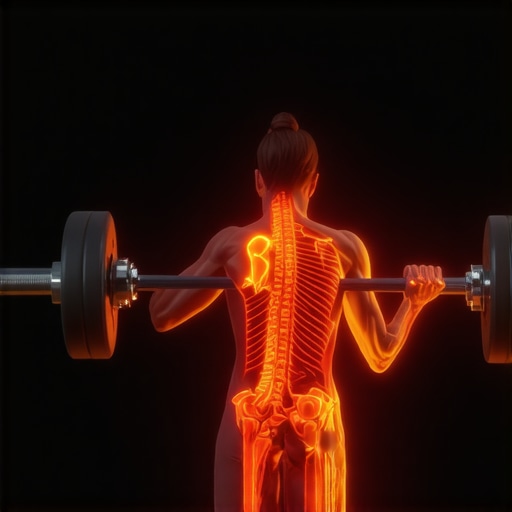
I remember waking up three years ago feeling like my spine had been fused together with rusty rebar. I’d just finished a high-intensity bootcamp week, convinced that if I wasn’t gasping for air and hobbling the next day, I wasn’t working hard enough. I ignored that sharp pull in my lower back and that hot, throbbing sensation in my neck because I thought I was ‘doing the right thing.’ But I wasn’t getting fit—I was effectively marinating my joints in a soup of systemic inflammation. If you’ve ever felt like your body is permanently ‘on fire’ or that your morning stretch is just a temporary fix for a body that feels fragile, I’ve been exactly where you are. Today, I’m going to show you why pushing through the pain is a lie and how to find back pain breakthroughs that actually calm your nervous system instead of lighting it up. [image placeholder]
Stop paying the hidden price of the no pain no gain mindset
For the longest time, I made the classic neighborly mistake of thinking more sweat equaled more healing. I’d head to the gym to ‘work out’ my stiffness, only to end up needing an ice pack and a handful of ibuprofen by noon. It was a vicious cycle. When we overtax our bodies, especially when we are already managing neck pain and stress, we trigger a massive spike in cortisol and pro-inflammatory cytokines. Instead of building muscle, we end up in a state of constant biological high alert. A study by Harvard Health Publishing confirms that while moderate activity is a powerful anti-inflammatory, excessive or improper exercise without real recovery can lead to chronic inflammatory states. I learned the hard way that the reason for your pelvic tilt or that nagging ache often isn’t a lack of strength; it’s a system that is simply overwhelmed. Have you ever felt like the more you train, the more your body seems to rebel against you?
Will I lose my hard-earned muscle if I slow down?
This is the fear that kept me stuck in the pain cycle for years. We think if we aren’t red-faced and exhausted, we are losing our edge. But here is the reality: your muscles grow and your inflammation levels drop during the quiet moments, not the loud ones. When I finally stopped treating every gym session like a battlefield, my recurrent lower back pain actually started to clear up. We aren’t going to stop moving altogether. Instead, we are going to shift toward movements that respect your biology. I’m going to share the specific adjustments that saved my joints and helped me regain my range of motion without the post-workout crash that used to ruin my entire weekend.
Get your spine to move like a precision hinge instead of a noodle
To fix the ‘on fire’ feeling, you have to stop aggravating the nerves that are already screaming for help. Most people, when they feel stiff, immediately try to touch their toes. I did this for months, thinking I was helping, but I was actually just straining my discs further. You need to realize why you should stop stretching your back into a c-shape. Think of your spine like a series of well-oiled hinges; if you try to bend the metal itself rather than letting the hinge do the work, something is going to snap. Focus on keeping a neutral spine and moving from your hips. This transition alone dropped my daily pain levels by half because I stopped picking at the ‘scab’ of my injury.
The 10-second hip reset that saved my morning routine
I remember a specific Tuesday when I tried to do a simple bodyweight squat and my lower back seized so hard I had to crawl to the phone. The culprit? My hips were as locked as a bank vault. I had been sitting at a desk for six hours straight and then expected my spine to take all the load. Before you even think about heavy lifting or long walks, you need to learn how to check your own hip mobility in under a minute. Once you identify the restriction, perform the 10-second hip reset for relief after sitting. It feels like hitting a ‘refresh’ button on your pelvis, allowing your lower back to finally breathe. 
Stop pulling on your hamstrings if you have sciatica
If you feel a lightning bolt shooting down your leg, your hamstrings aren’t tight—your nerves are irritated. I used to yank on my leg with a towel every morning, only to find the pain intensified by noon. Research and clinical experience show why stretching your hamstrings can actually flare up sciatica. Nerves don’t like to be stretched; they like to be ‘slid’ or ‘glided.’ Instead of a static hold, try gentle nerve flossing or look into conquering sciatica proven approaches to end discomfort now. It’s about being a mechanic for your nervous system, not a construction worker.
Fix the ‘heavy head’ feeling at your desk
That burning between your shoulder blades usually starts at the base of your skull. I used to lean in toward my monitor like I was trying to climb inside the screen. This puts about 40 pounds of extra pressure on your neck. To break this, implement the 30-second neck tuck to stop tension headaches at your desk. It’s a subtle move that realigns your cervical spine and shuts off those overactive trapezius muscles that feel like rocks. When you pair this with neck pain solutions proven techniques to regain your range of motion, you stop the inflammatory cycle before it reaches your lower back.
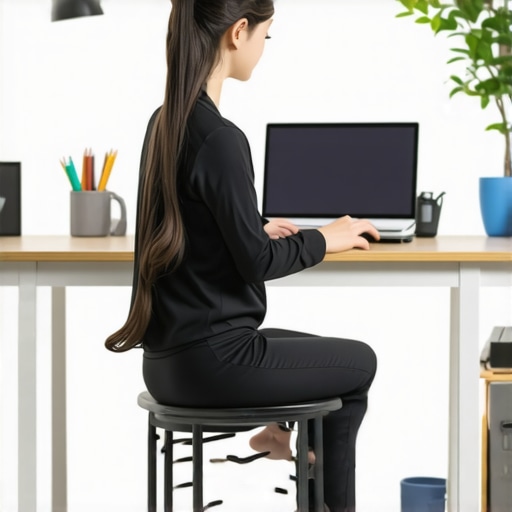
I used to sit with a book on my head, thinking that a rigid, upright spine was the gold standard for health. But here’s the contrarian truth: there is no such thing as perfect posture. In fact, why your perfect sitting posture is making you stiffer is because your muscles are essentially performing an isometric hold for eight hours straight. It’s not about being straight; it’s about being fluid. I’ve seen clients spend thousands on ergonomic chairs only to find that their back pain breakthroughs came when they finally started fidgeting more. Your best posture is your next posture. When you try to force a ‘military’ stance, you create a state of perpetual muscular guarding that actually limits your blood flow. This is a classic trap where we trade mobility for a visual ideal that doesn’t exist in nature.
Why does my MRI show a bulge if I feel fine today?
This is the question that keeps most of my advanced students up at night. We’ve been conditioned to think that an MRI is a crystal ball for our future pain levels. However, we need to look at the ‘oops’ factor of over-medicalizing normal aging. A landmark study published in the British Journal of Sports Medicine found that a massive percentage of people with absolutely no pain have disc bulges, protrusions, and ‘wear and tear’ on their scans. If you treat the image instead of the person, you might end up in a spiral of fear that prevents you from doing mobility mastery daily tips to keep your spine and joints healthy. It’s vital to know is your back pain a sign of something more serious, but for most of us, that scan is just a snapshot of a living, breathing, and highly adaptable system. Don’t let a picture of your spine dictate your potential for movement.
The core strength trap that keeps you in a pain loop
Everyone tells you to ‘strengthen your core’ the moment your back twinges. I fell for this, too, cranking out planks until my face turned purple. But here is the nuance: why your core strength won’t fix your back if your hips are locked. If your pelvis is stuck in a bowl-like tilt because of your hip flexors, all the abdominal bracing in the world is just adding pressure to a compressed spine. You’re essentially pulling the ropes tighter on a knot that needs to be untied. Instead of more crunches, try the 5-minute hip flexor release for desk workers to give your lower back some actual room to move. We often confuse ‘stiffness’ with ‘strength.’ True stability comes from the ability of your nervous system to coordinate movement, not just having ‘abs of steel’ that act like a corset. This is why maintenance care is better than waiting for a spinal crisis—it’s about fine-tuning the mechanics before the engine seizes. Have you ever fallen into the ‘strong core, sore back’ trap? Let me know in the comments.
I used to think that once I solved that core-strength puzzle, the work was done. But that’s the fastest way to end up back on the floor, unable to tie your shoes. Maintenance isn’t about doing more; it’s about doing the right things consistently. This is where most people fail because they stop their mobility mastery daily tips to keep your spine and joints healthy the second they feel 80% better. You have to treat your spine like a high-performance engine that needs regular oil changes, not a spare tire you only think about when it’s flat. This shift in mindset is why maintenance care is better than waiting for a spinal crisis. It turns you from a victim of your biology into the captain of your own recovery.
The $5 tool that beats a $3000 massage chair
If you look at my travel bag, you won’t find expensive gadgets. You’ll find a standard yellow tennis ball. It sounds primitive, but how a simple tennis ball can fix deep glute tension is a game-changer for anyone who spends hours in a car or on a plane. I place it right against the wall and lean into my piriformis or those knots along my shoulder blades. It allows for a level of precision that a foam roller just can’t match. As Dr. Stuart McGill, a world-renowned expert in spine biomechanics and author of The Back Mechanic, frequently points out, the goal of these interventions is to create ‘pockets of relief’ so the nervous system can desensitize. You aren’t just smashing tissue; you are telling your brain it’s safe to let go of the muscular guarding. 
How do I maintain my spinal health over time?
Consistency over intensity is the golden rule. I tell my clients to stop looking for the one ‘magic’ hour at the gym and start looking for the 30-second windows throughout the day. This might mean integrating boost your back mobility simple exercises that make a difference while your coffee brews or during a commercial break. The real secret is using ‘movement snacks.’ By never letting your tissues settle into a stagnant state for more than 30 minutes, you prevent the ‘creep’—a biological phenomenon where ligaments actually stretch and lose their supportive tension under sustained loads. This is the cornerstone of unlocking mobility expert tips on managing back pain in 2025.
Sensors and AI will soon be your new physical therapist
Looking ahead, I predict we are going to see a massive shift toward wearable biofeedback. We are already seeing smart shirts that vibrate when your shoulders round too much and apps that use your phone’s camera to analyze your gait in real-time. By the end of this decade, managing back health won’t be about guessing; it will be about data-driven adjustments. But until the robots take over, you need to be your own first responder. My challenge to you today: grab a tennis ball or a lacrosse ball and spend exactly two minutes on that one spot in your glute that always feels ‘tight.’ Don’t rush it; just breathe and let the tissue melt. You’ll be surprised how much that one tiny habit can change your entire week.
The subtle shifts that finally silenced my chronic aches
When I was deep in the cycle of inflammation, I thought progress meant working harder. I was wrong. The first big lesson was realizing that my back pain breakthroughs didn’t come from a heavy gym session, but from learning to listen to the whisper of a ‘twinge’ before it became a roar. Another revelation was the ‘MRI trap’—learning that a picture of my spine isn’t my destiny was incredibly liberating. I also realized that my ‘tight’ hamstrings were often just my nerves being protective, which is why I focused on unlocking sciatica relief through mobility rather than force. Finally, I learned that sitting ‘perfectly’ was actually making me stiffer than moving imperfectly; constant micromovement is the real secret to joint health.
My go-to kit for keeping the doctor away
You don’t need a home gym to maintain a healthy spine; you just need a few reliable strategies. I swear by my yellow tennis ball for targeted release, specifically because of how a tennis ball can relieve deep glute and sciatic pain. For anyone stuck at a screen, I highly recommend adopting the 20-20-20 rule for neck and eye strain relief—it’s a non-negotiable for my workday. Lastly, I keep a simple doorframe clear to perform daily posture resets, which I consider part of my mobility mastery daily tips. These tools aren’t fancy, but they are effective because they are accessible during a busy day.
Your path to a body that moves with ease
Recovery isn’t a straight line, and there will be days when you feel a bit of that old fire return. The difference now is that you have the tools to handle it. You aren’t fragile, and your body is remarkably capable of healing if you stop fighting it and start working with its natural mechanics. By committing to these small, daily adjustments, you are ensuring that your back pain breakthroughs become your new normal. Don’t wait for a crisis to start caring for your spine—begin today with just one minute of intentional movement. What is the one daily habit that has made the biggest difference in how your back feels? Let me know in the comments below!