
Why stretching your hamstrings can actually flare up sciatica
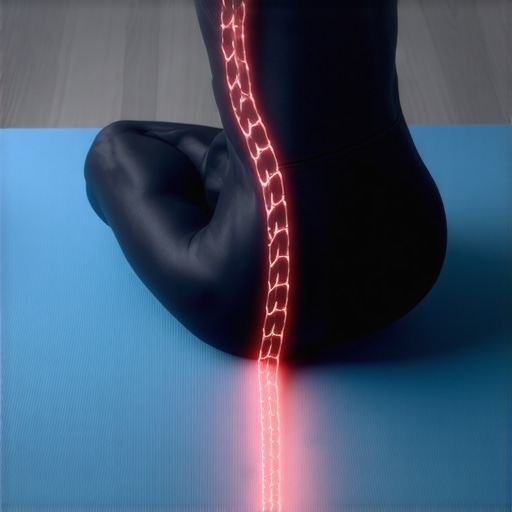
The beige carpet was inches from my face, and my left leg felt like it had been plugged into a high-voltage industrial socket. I had been trying to do what every gym teacher and ‘wellness guru’ ever told me to do: touch my toes to fix my tight legs. I pulled, I breathed through the tension, and then—*zap*. A lightning bolt of white-hot pain shot from my glute all the way to my pinky toe. I didn’t just fail to get flexible; I ended up horizontal for three days. It was a brutal realization that my ‘stiff’ hamstrings weren’t actually the problem, but a symptom of a nerve that was screaming for mercy. If you have been religiously stretching your legs only to find that your leg pain is getting angrier, you are likely stuck in the same cycle of accidental self-sabotage that I was. Today, we are going to break that cycle and finally look at why your body is fighting back.
Stop Yanking on Your Burning Leg
I spent years assuming that if a muscle felt tight, the only logical solution was to yank on it until it surrendered. It feels intuitive, right? If a rubber band is short, you pull it. But your sciatic nerve isn’t a rubber band. It is a highly sensitive communication cable that doesn’t take kindly to being stretched. When you have sciatica, the hidden reason your hamstrings always feel tight often has nothing to do with the muscle fibers themselves and everything to do with ‘protective tension.’ Your brain is literally tightening those muscles to stop you from over-stretching a nerve that is already irritated at the source. When you force a deep hamstring stretch, you are essentially putting a high-tension cable under even more strain. It is no wonder that why stretching your hamstrings often makes your sciatica worse is one of the most common complaints I hear from people who are trying their best to heal at home. Have you ever felt that sharp, electric ‘zing’ while trying to reach for your shoes? That isn’t a ‘good’ stretch; it is your nervous system sounding the alarm. According to research published in the Journal of Physical Therapy Science, nerves do not actually have the elastic properties of muscles; they require ‘gliding’ or ‘sliding’ within their sheaths rather than forceful elongation. When we ignore this, we aren’t building flexibility—we are increasing neural inflammation.
Is stretching actually making my pain worse?
It is a scary thought, isn’t it? The very thing you’re doing to get better might be the culprit. I remember the skepticism I felt when a specialist told me to stop stretching. I thought, ‘But if I stop, won’t I just get stiffer?’ The reality is that once you calm the nerve down using the nerve glide exercise that calms burning leg pain, that ‘tight’ feeling often evaporates without you ever having to touch your toes. You have to differentiate between a muscular pull and a neural tug. If you aren’t sure which one you’re dealing with, it’s worth learning how to tell if your sciatica is a disc or muscle issue before you keep pulling on that leg. My biggest mistake was thinking more intensity equaled faster healing. It doesn’t. In the world of sciatica, less is almost always more. We need to stop treating our bodies like a piece of stubborn leather and start treating our nerves like a sensitive instrument. Next, we are going to look at the specific movements that actually create space for the nerve to breathe, like the 30-second stretch that relieves pressure on your sciatic nerve without the flare-up.
Floss Your Nerves Instead of Pulling Them
Think of your sciatic nerve like a piece of dental floss running through a narrow, gummed-up channel. When the channel is inflamed, the floss gets stuck. If you pull hard on both ends of that stuck floss, it doesn’t move more freely; it just frays and snaps. This is exactly what happens when you perform a traditional hamstring stretch while your nerve is irritated. Instead of pulling, we need to ‘glide’ it. I remember the first time I tried this after my carpet-face-plant incident. I sat on the edge of a firm chair, slumped my shoulders forward, and slowly straightened my knee while looking up at the ceiling. Then, as I bent my knee back, I tucked my chin to my chest. It felt weird—almost like I wasn’t doing ‘enough’ work—but for the first time in weeks, that white-hot ‘zing’ didn’t show up. By using the nerve glide exercise that calms burning leg pain, you are moving the nerve back and forth through its pathway without putting it under high-tension. This helps to pump out inflammatory fluid and ‘grease’ the track. If you feel a stretch, you are pulling too hard. The goal is movement, not intensity.
Ditch the Soft Couch to Save Your Spine
Your living room is likely a minefield of sciatica triggers. I used to love my overstuffed, ‘cloud-like’ recliner until I realized it was essentially a torture device for my L5-S1 disc. When you sink into a soft cushion, your pelvis tucks under, flattening your natural lumbar curve and pushing your discs toward your already angry nerves. This is exactly why you should avoid soft couches if you have sciatica. If you can’t get rid of the couch, at least sit on a firm cushion or a folded yoga mat to keep your hips higher than your knees. I noticed that when I switched to a firm chair, that morning ‘stiffness’ started to fade. It’s also worth noting why your favorite recliner might be the cause of your sciatica flares; the angle often creates a perfect storm of compression in the lower back.
Use a Tennis Ball to Target the Gatekeeper
Sometimes the nerve isn’t just irritated at the spine; it’s being strangled by the piriformis muscle in your glute. I call this the ‘gatekeeper’ because if it stays tight, nothing else you do will matter. I used to try and dig my thumb in there, but I’d just tire out my hand. That’s when I learned how a tennis ball can relieve deep glute and sciatic pain. You don’t just roll around aimlessly. You find that one specific, ‘hurt-so-good’ spot, let the weight of your leg sink into the ball, and breathe for 30 seconds. This is significantly more effective than traditional stretching because it addresses the local trigger point without tugging on the nerve. Just be careful: if you start feeling numbness or an increase in the ‘electric’ sensation, move the ball immediately. You want to melt the muscle, not crush the nerve. When you combine this with the 30-second stretch that relieves pressure on your sciatic nerve, you create a window of relief that actually lasts.Let’s dig deeper into why we often fail even when we think we’re doing everything right. For years, the fitness industry has shouted from the rooftops that ‘core strength’ is the magic bullet for back pain. But here is the contrarian truth: a rock-solid core is practically useless if your hips are locked tight. In fact, if your hips can’t move, your back has to pick up the slack, and no amount of planks will save you from that mechanical overload. This is precisely why your core strength won’t fix your back if your hips are locked. Your spine is designed to be a stable anchor, not a primary mover. When your hip joints lose their range of motion, your lower back—specifically the L4-L5 and L5-S1 segments—starts trying to act like a hip. It twists and bends in ways it wasn’t built for, leading to the very disc issues we’re trying to avoid.
Core Strength is a Lie Without Mobile Hips
We often obsess over the ‘strength’ of the muscle, but we ignore the ‘timing’ of the movement. This is a common trap. You might be doing your bird-dogs and dead-bugs, but if you haven’t addressed the understanding the link between poor posture and chronic back pain, you are just building strength on top of a dysfunctional foundation. A study published in the Journal of Orthopaedic & Sports Physical Therapy (JOSPT) highlights that limited hip internal rotation is a significant predictor of lower back pain. If the ‘ball and socket’ can’t turn, the ‘hinge’ above it—your spine—will eventually fray.
Why does my back still hurt even though I have a strong core?
It’s a frustrating plateau to hit. You’ve put in the work, you’ve got the muscle, yet the dull ache persists. The nuance lies in ‘stiffness’ versus ‘stability.’ Many people mistake being stiff and rigid for being stable. If you are constantly bracing your midsection, you might actually be increasing the intra-abdominal pressure that irritates your discs. You need to learn unlocking mobility: expert tips on managing back pain in 2025 to find that balance between tension and flow.
Stop Rounding Your Spine into a C
Here is the ‘oops’ factor I see every single day: people trying to stretch their lower back by pulling their knees to their chest or touching their toes while standing. You are literally pulling your vertebrae apart at the back and squishing the discs at the front. This is why you should stop stretching your back into a C-shape immediately. This posture increases ‘shear’ force on the spine. Instead, focus on maintaining a neutral curve and moving from the hips. If you keep pulling on a sore back, you’re just picking at a scab. If you’ve been stuck in this cycle, it might be time to check is your back pain a sign of something more serious. Have you ever fallen into this trap of over-stretching or over-bracing? Let me know in the comments.I used to think that once the pain stopped, the work was over. That’s the most dangerous lie in the recovery world. If you treat your spine like a one-off project, you’re just waiting for the next flare-up. For me, the real breakthrough happened when I stopped looking for ‘cures’ and started looking for ‘environment modifiers.’ One of the most effective tools in my arsenal is a simple lumbar roll. It sounds too basic to be true, but learning how to use a lumbar roll to prevent mid-day back fatigue changed the way I work. I don’t use it because it feels like a massage; I use it because it mechanically prevents my L5-S1 disc from being ‘wedged’ open while I type. If you’re stuck in a cheap office chair, why your desk chair height is wrecking your hips is likely the reason your progress stalls every Tuesday afternoon.
How do I keep my spine from relapsing into pain?
The secret isn’t more intensity; it’s frequency. Dr. Stuart McGill, a world-renowned expert in spine biomechanics and author of Back Mechanic, often emphasizes that the ‘Big 3’ exercises—the bird-dog, side plank, and modified curl-up—are about building endurance, not power. I do a 5-minute version of this every single morning. It’s my daily insurance policy. I’ve also had to rethink my downtime. I stopped being a victim of my furniture by learning the specific way to sit on a couch to avoid lower back spasms. It’s not about being perfect; it’s about reducing the ‘cumulative load’ on your tissues.
Smart Tech and the Future of Your Back
We are moving toward an era where ‘listening to your body’ won’t be a guessing game. I predict that within the next five years, wearable biofeedback—sensors embedded in our shirts that vibrate when our pelvic tilt is off—will become standard for desk workers. This isn’t science fiction; it’s the logical next step in mobility mastery: daily tips to keep your spine and joints healthy. Until then, you have to be your own sensor. If you spend hours on your feet, pay attention to the connection between flat feet and recurrent lower back pain. Your feet are the foundation for everything above them. I challenge you to try one advanced move this week: find a flat wall and try the wall-supported move that fixes slumping posture fast. Do it for just 60 seconds every time you finish a Zoom call. It resets the neurological ‘map’ of your posture before the stiffness sets in. If you find that these small adjustments aren’t enough, don’t wait for a crisis; why maintenance care is better than waiting for a spinal crisis is a lesson you don’t want to learn the hard way.
Myths That Sabotaged My Own Recovery
Looking back at my years of struggling with nerve pain, I realized I was fighting against my body rather than working with it. First, I had to accept that where I felt the pain—that burning in my calf—was rarely where the injury actually lived. Chasing the symptom is like trying to put out a fire by spraying the smoke. Second, I learned that complete rest is a trap. While you shouldn’t be powerlifting during a flare-up, gentle movement like the ‘gliding’ we discussed is what keeps the tissue from becoming a scarred, stuck mess. Finally, I discovered that how to tell if your hip tightness is actually a back issue is the most important skill you can develop. If you treat a disc bulge like a tight muscle, you will lose every single time.
The Personal Toolkit That Saved My Sanity
I don’t believe in magic pills, but I do believe in the right tools. My ‘back-saving’ bag always includes a firm tennis ball for those deep glute releases and a dedicated lumbar support for every chair I sit in. I’ve found that how to pick a chair that actually supports your lumbar curve is often more effective than any massage I’ve ever had. I also suggest looking into the work of Dr. Stuart McGill; his ‘Big 3’ routine is the gold standard for anyone serious about sciatica relief secrets: how to banish pain quickly today. And while I love the community aspect of fitness, I had to learn the truth about yoga for sciatica sufferers—not every ‘zen’ pose is safe for an angry nerve. #IMAGE_PLACE_HOLDER_E#
Give Yourself Permission to Move Again
The most paralyzing part of chronic pain isn’t the physical sensation; it’s the fear of the next ‘zap.’ But your body is incredibly resilient when you stop picking at the metaphorical scab of your nerves. You don’t need to be a professional athlete to regain your life; you just need to be consistent with the small, smart adjustments we’ve covered today. Whether it’s fixing your desk height or swapping a deep stretch for a gentle glide, these wins add up. Your journey toward lasting sciatica relief starts with the very next time you sit down or reach for your shoes. You have the tools; now it’s time to use them. Have you ever felt like your ‘stretching’ was actually making your leg pain worse? Drop a comment below and let’s talk about what finally worked for you.