
The seated shoulder blade squeeze to kill midday tension headaches

It was 2:14 PM last Tuesday when the familiar tightening started behind my eyes. I felt like a vice was slowly closing on my skull, and my first instinct—as it has been for years—was to reach for the extra-strength ibuprofen in my desk drawer. I’d spent the last four hours hunched over a spreadsheet, my chin drifting closer to the screen like a moth to a flame. My neck felt like concrete. I used to think this was just the “cost of doing business” in a modern office, but I was wrong. I was making a classic mistake: I kept trying to stretch my neck out by pulling my head to the side, which I eventually learned was just irritating the nerves further. The real culprit wasn’t my neck; it was my collapsing mid-back.
That Heavy Head Feeling is Actually a Warning Sign
If you feel like your head weighs a hundred pounds by the time lunch is over, you aren’t alone. When we slouch, our shoulder blades slide forward and up toward our ears, putting an incredible amount of strain on the tiny muscles at the base of the skull. This creates a nasty feedback loop where neck pain and stress feed into each other until you’re left with a pounding tension headache. According to the Cleveland Clinic, tension-type headaches are the most common form of headache, and many are triggered by physical stress or poor posture. I finally realized that how my monitor was set up was forcing me into a “C” shape that my spine hated. Today, I’m going to show you exactly how the seated shoulder blade squeeze can reset that tension in seconds, without you even having to leave your chair. Have you ever felt that “tight band” around your forehead halfway through the workday?
Does Squeezing Your Shoulders Really Fix a Throbbing Head?
I was the ultimate skeptic. I figured if a massage or a handful of pills didn’t work, a simple movement definitely wouldn’t. But the science of the link between poor posture and chronic pain is hard to argue with. When you engage the rhomboids and lower trapezius muscles by squeezing your blades together, you inhibit the overactive muscles in the front of your chest and the top of your neck. It’s like a “reset” button for your nervous system. I’ve found that combining this with a 30-second neck tuck creates a double-whammy of relief that keeps the afternoon fog at bay. It took me a long time to realize that my “bad neck” was actually just a cry for help from my upper back.
Squeeze Your Shoulder Blades Without Shrugging Your Ears
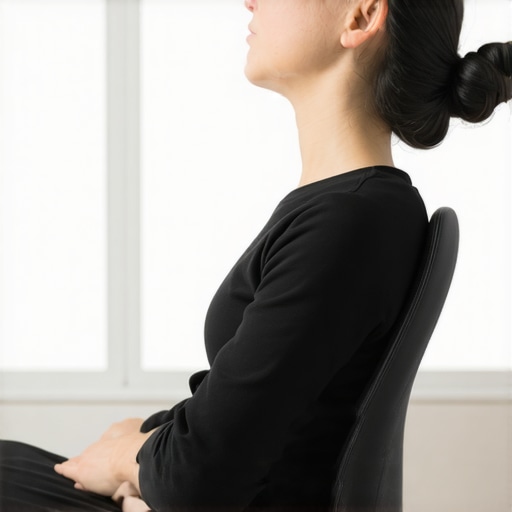
Imagine your shoulder blades are two sliding glass doors. Most of us have these doors stuck halfway open, tilted at an angle that pulls on the wires of our neck. To fix this, you don’t just pull them back; you have to pull them down and in. Sit tall in your chair, let your arms hang, and imagine you’re trying to tuck the bottom corners of your shoulder blades into your opposite back pockets. If you feel your chest opening up and your collarbones widening, you’re doing it right. If your shoulders are touching your earlobes, you’ve missed the mark. I remember the first time I tried this during a high-stakes Zoom call. I was so determined to fix my posture that I squeezed my back like I was trying to crush a walnut between my spine. About thirty seconds in, my mid-back went into a full-blown spasm because I was forcing a range of motion my body wasn’t ready for. I looked like a stiff wooden soldier, and my coworkers definitely noticed the grimace. The lesson? It’s a gentle engagement, not a powerlift.
Slide the Drawer Shut with a Chin Tuck
Once your shoulders are set, it’s time to address the forward head lean. This is where the 30-second neck tuck to stop tension headaches at your desk comes into play. Think of your head like a bowling ball sitting on a broomstick. For every inch that ball tilts forward, it feels ten pounds heavier to the muscles holding it up. To do this correctly, keep your eyes on the horizon and pull your chin straight back, as if you’re making a double chin. Don’t look down; just slide the drawer shut. You should feel a gentle stretch at the base of your skull. This tiny shift takes the shearing force off your cervical discs and puts the weight back onto your spine where it belongs.
Stop Fighting Your Workspace
No amount of stretching can out-muscle a bad desk setup. I used to work off a laptop on my kitchen table, which is essentially a recipe for chronic inflammation. You have to learn how to set up your laptop for better spine protection if you want these resets to actually stick. If your screen is too low, your eyes will naturally drag your head into a slouch. I eventually bought a cheap riser and a separate keyboard so I could implement how to adjust your monitor to stop that burning neck pain by keeping the top third of the screen at eye level. This prevents that C shape from forming in the first place. If you find your mid-back still feels like a solid block of wood, adding the thoracic bridge move that fixes slouching to your morning routine can help open up that ribcage mobility you’ve lost from years of desk work. It’s all about understanding the link between poor posture and chronic back pain and realizing that your environment is often the silent architect of your physical discomfort.
I spent years thinking that if I just sat up straight enough, my pain would vanish. I’d pull my shoulders back so hard I looked like I was awaiting a royal inspection. But here is the nuance that most ‘posture experts’ miss: sitting perfectly upright is often just as exhausting for your nervous system as slouching. In my experience, why your perfect upright posture is actually tensing your spine comes down to muscle fatigue. You aren’t designed to be a statue. When you force that rigid, military-style alignment, you’re creating ‘co-contraction’—where your front and back muscles fight each other for dominance. This leads to a different kind of burning sensation that people often mistake for ‘weakness’ when it’s actually just pure exhaustion.
Stop Trying to Sit Like a Statue
The biggest trap I see people fall into is the ‘lumbar support’ obsession. We’ve been told that a massive cushion in the small of our back is the cure-all, but why your lumbar support might be making your back stiffer is because it often pushes the pelvis into a fixed position that doesn’t allow for natural micro-movements. If your spine can’t shift, the pressure builds up in your discs like a shaken soda bottle. I eventually learned that the best posture is your next posture. Movement is the only real lubricant for your joints.
Can Too Much Core Stability Actually Cause More Pain?
It sounds like heresy in the fitness world, but yes. Advanced practitioners often over-brace their midsection, thinking they are protecting their spine. However, a study published in the Journal of Biomechanics suggests that excessive trunk stiffness can actually increase the load on your spinal discs during simple tasks. If you are constantly ‘sucking it in’ or clenching your abs while typing, you are effectively locking your ribcage. This prevents your lungs from expanding fully and forces your neck muscles to take over the job of breathing. This is why why your core strength won’t fix your back if your hips are locked—your body is one continuous chain, and tension in the basement will always show up as a crack in the attic.
Why Your Hips Hold the Remote Control for Your Neck
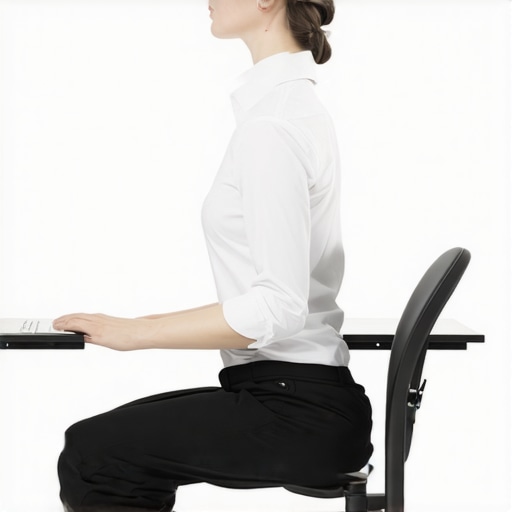
If you’ve been stretching your neck for months with no relief, the problem likely isn’t your neck. I was shocked to find that my recurring headaches were actually a result of my stiff ankles and tight hip flexors. When your hips are glued shut from sitting, your pelvis tilts forward, which forces your upper back to round and your head to jut out just so you can keep your eyes on the horizon. I’ve seen people find more relief from the 5-minute hip flexor release for desk workers than from any neck massage. We also have to talk about the ‘self-adjustment’ trap. I used to be a chronic neck-cracker, thinking I was ‘releasing’ the tension. The truth is that why cracking your own back is making your joints more unstable is because you’re usually just moving the segments that are already too loose, while the stuck ones stay stuck. Have you ever fallen into the trap of thinking ‘tighter is better’ when it comes to your posture? Let me know in the comments if you’ve been over-correcting your alignment.
For the longest time, I thought I could out-exercise a bad environment. I’d do my stretches in the morning and then spend ten hours essentially undoing all that progress in a cheap plastic chair. It wasn’t until I started viewing my workspace as a piece of medical equipment that things finally shifted for good. You don’t need a thousand-dollar ergonomic throne, but you do need to stop treating your laptop like a permanent workstation. I finally invested in a simple aluminum laptop riser that brings my screen up to eye level, which is the cornerstone of how to set up your laptop for better spine protection. When your eyes are level with the top third of your screen, your neck muscles finally get the memo that they can stop pulling overtime.
The Simple Gadgets That Actually Earned a Spot on My Desk
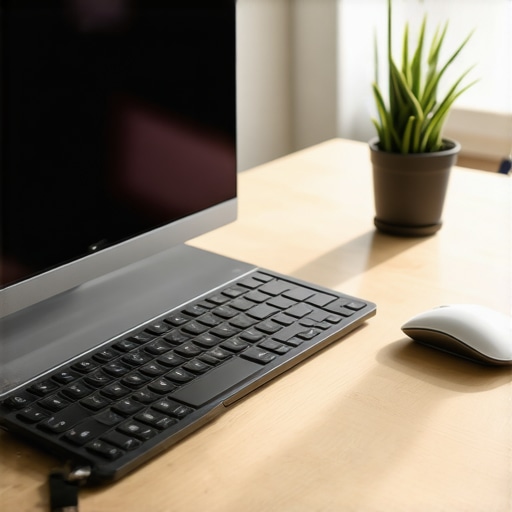
I’ve wasted plenty of money on gimmicks, but two things changed my life: a separate mechanical keyboard and a high-quality vertical mouse. By moving the keyboard closer to my body, I can keep my elbows tucked at my sides, preventing that rounded-shoulder look that leads to those nasty tension headaches. If you’re still reaching forward to type on your laptop’s keys while it’s on a stand, you’re just swapping one problem for another. I also started using a small foam roll behind my lower back during long Zoom calls. Learning how to use a lumbar roll to prevent mid-day back fatigue was a game-changer for my sciatica. It’s not about being ‘pushed’ forward; it’s about providing a gentle reminder to your pelvis not to tuck under while you’re focused on a spreadsheet.
As Dr. Stuart McGill, Professor Emeritus at the University of Waterloo and author of Back Mechanic, points out, ‘spinal hygiene’ is the real secret to longevity. It’s the cumulative effect of how you brush your teeth, how you sit, and how you pick up a pen. If you keep picking the ‘scab’ of your injury through poor daily movement patterns, no amount of therapy will fix it. This is why I also had to re-evaluate my downtime. I realized that why your favorite armchair is secretly causing your lower back stiffness was because it was basically a soft bucket that forced my spine into the very ‘C’ shape I was trying to avoid at work.
Can I really keep my spine healthy without spending a fortune?
Absolutely. Maintenance is more about awareness than expensive gear. I’ve integrated the 20-20-20 rule for neck and eye strain relief into my phone’s alarm system. Every 20 minutes, I look at something 20 feet away and take 20 seconds to do a quick shoulder blade squeeze. These micro-breaks prevent the ‘creep’—a technical term for when your ligaments slowly stretch out from being held in a bad position for too long. For long-term results, I follow a checklist of mobility mastery daily tips to keep your spine and joints healthy, which focuses on small, consistent wins rather than hour-long gym sessions.
The Future of Sitting is Dynamic
I predict that in the next five years, we’re going to see a massive shift away from ‘static’ ergonomics. We are already seeing the rise of AI-integrated monitors that track your head position and gently dim the screen if you start to slouch, forcing you to reset your posture to see clearly. The ‘perfect’ chair won’t be one that supports you perfectly in one spot, but one that encourages you to move while you work. We are moving toward a world where your furniture will basically be a personal trainer for your posture. If you want to start prepping your body for that kind of mobility today, I highly recommend you try the 5-minute hip flexor release for desk workers right now. It’s the single most effective way to ‘unlock’ your pelvis after a long day of meetings and will make every other tip in this article twice as effective.
The Hardest Lessons I Learned About Reclaiming My Mobility
After years of chasing symptoms, these were the lightbulb moments that actually moved the needle for my recovery. I finally stopped looking for a ‘quick fix’ and started looking at the mechanics of my body as a whole. Here is the wisdom I gained through trial and error:
- Chasing the pain is a losing game. I used to spend hours rubbing my neck when the real culprit was my locked-down ribcage. Once I realized why deep tissue massage isn’t fixing your recurring back pain, I shifted my focus to opening up the areas that were actually stuck, rather than just soothing the ones that were screaming.
- Your jaw and your neck are best friends. I never connected my afternoon headaches to my habit of grinding my teeth during deadlines. Understanding the connection between jaw clenching and chronic neck pain helped me realize that tension starts from the top down and requires a full-body awareness.
- Small wins beat big workouts. You don’t need a 60-minute yoga session to find relief. Five seconds of a glute squeeze or a 30-second wall stretch is often enough to break the cycle of inflammation before it takes hold and ruins your afternoon.
The Resources That Finally Rescued My Spine
If you’re tired of guessing which stretch will work or which gadget to buy, these are the tools and guides I personally swear by for consistent, daily results:
- The Humble Tennis Ball: You don’t need fancy equipment to release deep muscle knots. I learned how a tennis ball can relieve deep glute and sciatic pain and it’s been the most cost-effective ‘therapist’ I’ve ever had in my desk drawer.
- A Daily Roadmap: I stopped trying to remember a dozen different exercises and stuck to a simple, repeatable routine. Following mobility mastery daily tips to keep your spine and joints healthy keeps me on track even when I’m traveling or buried in work.
- Precision Support: Instead of buying an expensive new chair, I learned how to use a lumbar roll to prevent mid-day back fatigue. It’s a simple fix that provides better feedback for my spine than most high-end ergonomic chairs.
Take Back Control of Your Daily Comfort
Finding a back pain breakthrough isn’t about finding one magic stretch; it’s about a series of small, intentional shifts in how you live, sit, and move. Your body is incredibly resilient, but it needs you to listen when it whispers before it has to scream. By integrating these micro-resets into your workday, you aren’t just managing symptoms—you’re retraining your nervous system to feel safe and stable in your own skin again. You deserve to finish your workday without feeling like your head is a lead weight or your back is made of concrete. Don’t be afraid to experiment, move often, and trust that your mobility can be restored with a bit of patience and the right strategy. Have you found that a specific part of your workspace—like your mouse or your monitor—is the biggest trigger for your neck pain? Let me know in the comments below!