
Why a ‘tight’ psoas is often actually a weak psoas
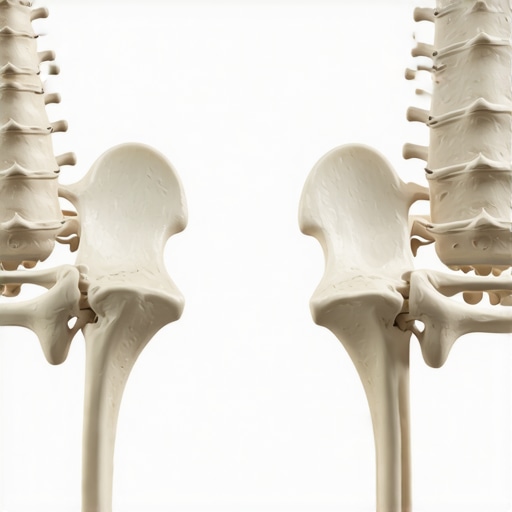
I used to live on my yoga mat, desperately trying to lunge my way out of hip pain every single morning. I would sink into a deep stretch, feeling that familiar, sharp pull in the front of my thigh, convinced I was doing myself a favor. But by noon, that gnawing, ‘stuck’ sensation would return, often accompanied by a dull ache in my lower back that made me want to curl into a ball. I made the classic mistake of assuming that ‘feeling tight’ always meant I needed to pull the muscle longer. In reality, my psoas wasn’t short; it was exhausted and underpowered. Today, I am going to show you why your persistent stiffness is actually a cry for help from a muscle that can’t hold its own weight and how we can finally fix it.
Stop Stretching a Muscle That’s Just Tired
For the longest time, I thought I was a mobility master because I could touch my toes, but I was actually ignoring the real reason my legs felt heavy. My psoas was constantly ‘on’ because it was trying to stabilize my spine without any actual strength to back it up. When a muscle is weak, the nervous system keeps it in a state of protective tension—that is the ‘tightness’ you feel. It is a physiological safety brake, not a lack of length. According to research published in the Journal of Orthopaedic & Sports Physical Therapy, the psoas major is a primary stabilizer of the lumbar spine; if it cannot perform its job, the surrounding tissues will seize up to prevent injury. I spent years irritating my joints because I didn’t realize that why your hip feels stuck is often a strength deficit rather than a flexibility one.
Is it possible that stretching is the very thing making you stiffer?
I know it sounds counterintuitive. We have been told to stretch since grade school gym class. But if you have been lunging for six months and you still feel like you need a quick hip mobility check every hour, you are likely just irritating the nerves and further weakening the muscle. I remember thinking that if I just pushed deeper into the stretch, I would finally ‘release’ the tension. I was wrong. By constantly pulling on a weak, over-sensitized psoas, I was making it even more unstable. Have you ever felt like you are doing all the ‘right’ things for your mobility but still feel like a rusty tin man by lunch? It is time to stop attacking the symptom and start supporting the system so you can move without that constant, nagging restriction.
Stop Pulling and Start Pressing
To fix a ‘tight’ psoas, we have to stop treatng it like a short rubber band and start treating it like a weak battery that needs a jump-start. Think of your psoas as a dimmer switch that has been stuck on low for years. Stretching is like trying to force that switch higher by shaking the wall; all you do is damage the hardware. Instead, we need to rewire the connection between your brain and the muscle through isometric loading. I remember sitting in my kitchen chair, trying to lift my right knee just two inches off the seat. My hip didn’t just feel tight; it felt paralyzed. It was a wake-up call that my brain had literally lost the ‘phone number’ to my hip flexors. To fix this, sit tall and place your hand on your mid-thigh. Try to lift your knee into your palm while resisting with your hand. Hold this for ten seconds at about 30% effort. This isn’t a workout; it’s a conversation. You are telling your nervous system that it is safe to let that muscle produce force again. If you feel a pinch, back off the intensity. Often, how a simple reach and breathe move can decompress your back is by teaching the psoas to stabilize while the diaphragm moves, rather than seizing up in fear.
Wake Up Your Sleeping Glutes
The psoas doesn’t live in a vacuum. It works in a delicate dance with your glutes. When one side of the joint is weak, the other side overworks to compensate. This is why your glutes turn off when you sit for over an hour, leaving your psoas to act as the sole stabilizer for your entire lower spine. It’s like asking a toddler to hold up a collapsing tent—eventually, that toddler is going to get exhausted and cranky. To restore balance, we need to engage the back of the hip while the front is working. Try a bridge exercise, but instead of just lifting your hips, imagine you are dragging your heels toward your butt without actually moving them. This ‘hamstring and glute’ activation tells the brain that the psoas can finally relax because the ‘big brothers’ of the hip are back on the job. Without this, you might find that why stretching your hamstrings can actually flare up sciatica is because you’re tugging on nerves that are already being pinched by a misaligned, weak hip complex.
Fix Your Foundation From the Ground Up
Believe it or not, your hip tension might actually start at your big toe. If your feet and ankles are stiff, your psoas has to work double-time to pull your leg forward every time you take a step. I spent months obsessing over my hips until I realized my left ankle was as stiff as a board from an old soccer injury. Once I implemented a 30-second ankle drill that reduces your risk of back injury, my hip ‘tightness’ vanished almost overnight. The body is a kinetic chain; if the bottom link is frozen, the middle link—the psoas—has to absorb the shock. Focus on moving your ankle through its full range of motion every morning before you even put your shoes on. By clearing the path for your foot to move, you remove the mechanical ‘braking’ system that is forcing your hip flexors into a state of permanent, painful contraction.For years, I was obsessed with sitting up ‘perfectly’ straight. I thought that if my spine wasn’t a rigid, vertical line, I was failing at health. But here is the truth: that military-grade stiffness is a performance, not a functional position. In my experience, most people trying to fix their alignment are actually over-correcting to the point of exhaustion. When you force yourself into a ‘soldier’ stance, you are likely discovering why your perfect upright posture is actually tensing your spine rather than helping it. Your muscles are meant to be dynamic, not frozen in a struggle against gravity. This is also why your straight posture is actually straining your muscles; you are essentially holding a low-grade contraction all day long, which leads to that deep, localized fatigue by 3:00 PM. 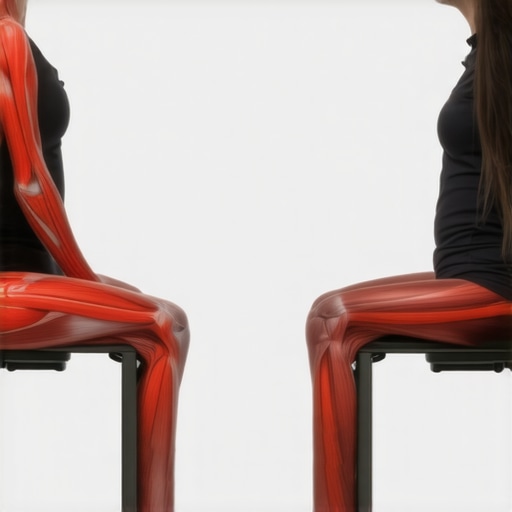
The Couch is Not Your Friend During a Flare-up
Another trap I see people fall into is the ‘rest-until-it-stops’ mentality. When your back is screaming, it feels logical to melt into the cushions and stay there. However, this is usually why your back hurts more after a day of resting on the couch. Soft furniture provides zero feedback to your nervous system, allowing your spine to slump into a ‘C-shape’ that puts massive pressure on your discs. If you are struggling with a flare, the key isn’t total stillness; it’s gentle, frequent movement. You might even find that why your lumbar support might be making your back stiffer is because it’s pushing into a sensitive area without allowing your own stabilizers to engage.
Can an MRI actually lie to you about the source of your pain?
This is a sophisticated question that many of my clients ask after seeing their scan results. The answer is a resounding ‘yes.’ A landmark study by Brinjikji et al., published in the American Journal of Neuroradiology, revealed that 37% of twenty-year-olds with no pain had disc degeneration, and that number climbed to 80% for those aged fifty. This highlights the ‘Oops’ factor of modern medicine: treating a picture instead of a person. If you obsess over a ‘bulge’ on a scan, you might miss the fact that your pain is actually coming from the functional weaknesses we discussed—like a sleepy psoas or stiff ankles. It is vital to determine is your back pain a sign of something more serious through a physical assessment, rather than just relying on an image that might just be showing ‘grey hair on the inside.’ Have you ever fallen into the trap of let-ting a scan result scare you out of moving? Let me know in the comments.
The $2 Mobility Tool You’re Probably Ignoring
I used to think I needed a thousand-dollar massage chair to fix my back, but it turns out a simple tennis ball was the missing link. When my psoas or glutes start to feel like they are tightening up again—usually after a long drive—I don’t reach for a massive foam roller. I use the ball to pinpoint specific trigger points that are otherwise unreachable. If you’ve never tried it, you’ll be shocked at how a simple tennis ball can release your deep glute tension without needing a professional therapist on speed dial. This is about precision, not power. By applying steady pressure to those knots against a wall or the floor, you are essentially telling the nervous system to ‘let go’ of the protective bracing. It’s one of the best simple exercises that make a difference because it fits in your laptop bag and works in under two minutes.
How I Tricked My Brain into Better Alignment
One of the hardest parts of staying pain-free is remembering to move when life gets busy. I used to catch myself slouching over my steering wheel every single afternoon until I learned the ‘mirror hack.’ It is remarkably simple: sit up tall, set your rearview mirror to that perfect height while your spine is elongated, and then don’t touch it again. If you find yourself unable to see out of the back window clearly ten minutes later, it’s a physical signal that your posture has collapsed. Learning how to adjust your rearview mirror to force better posture turns your car into a biofeedback machine. This isn’t just about ‘looking’ better; it’s about reducing the shear force on your lumbar discs. I’ve found that these little ‘behavioral nudges’ are far more effective than trying to use pure willpower to stay upright all day.
How do I maintain these mobility results over time?
The secret isn’t more intensity; it’s consistency and what experts call ‘spinal hygiene.’ This term was championed by Dr. Stuart McGill, a world-renowned expert in spine biomechanics and author of Back Mechanic. In his research, he emphasizes that the way you perform mundane tasks—like brushing your teeth or picking up a pen—matters just as much as your time in the gym. If you want to scale your progress, you need to integrate daily tips to keep your spine and joints healthy into your existing routines. For example, I now use the ‘golfer’s lift’ every time I reach into the dishwasher to avoid a flare-up. These back pain breakthroughs come from changing your movement vocabulary, not just doing a isolated 10-minute stretch. I predict that in the next few years, we will see AI-powered wearable tech that actually vibrates when our psoas enters that ‘protective tension’ state, but until then, we have to rely on these manual checks. My challenge to you: Try the rearview mirror trick on your drive tomorrow and see how many times you have to ‘re-grow’ your spine just to see the road behind you!
The Hardest Truths I Discovered About My Own Hip Pain
One major lightbulb moment in my journey was realizing that “tightness” is often the brain’s way of guarding a weak joint. I spent years attacking my body with deep lunges when I should have been inviting it to feel safe through stability. I learned that pain isn’t a design flaw; it’s a communication system. Another realization? You can’t out-stretch a lifestyle of sitting; you have to out-move it with mobility mastery daily tips to keep your spine and joints healthy. When I stopped viewing my psoas as an enemy and started viewing it as a protector, my recovery finally began.
Gear and Wisdom That Actually Moved the Needle
If you’re looking for a roadmap beyond this article, I cannot recommend Dr. Stuart McGill’s work enough—it fundamentally changed how I view ‘core’ strength and spinal mechanics. My personal toolkit is actually quite humble: a firm tennis ball for releasing deep glute tension and a commitment to back pain breakthroughs that prioritize function over mere flexibility. These tools work because they address the root cause of the bracing response rather than just masking the symptoms. #IMAGE_PLACEHOLDER_E#
The First Step Toward a Pain-Free Future
You do not have to live in a perpetual cycle of constant stretching followed by temporary relief. By shifting your focus from ‘lengthening’ to ‘strengthening’ and paying attention to your kinetic chain—from your big toe to your rib cage—you can find lasting comfort. Whether it’s learning how to adjust your rearview mirror to improve your driving posture or simply changing how you breathe, every small win counts. If you’re feeling overwhelmed or stuck, don’t hesitate to reach out for guidance through our contact us page. Your body is remarkably capable of healing when given the right signals. Have you ever found that the more you stretched a ‘tight’ muscle, the more it seemed to seize up? Share your experience in the comments below!