
Why your ‘straight’ posture is actually straining your muscles

I remember sitting at my kitchen table, back as straight as a ruler, feeling like my spine was a ticking time bomb. I was doing everything the experts told me to do. Shoulders pinned back? Check. Chin tucked? Check. Chest puffed out like I was about to give a military address? Absolutely. But within thirty minutes, a searing ache would start between my shoulder blades, and by the end of the day, my neck felt like it was made of rusted iron. I was working so hard to have good posture that I was actually strangling my own muscles. It was a miserable cycle of trying harder and hurting more. We’ve been fed a lie that a straight spine is a healthy spine, but for many of us, that rigidity is the very thing keeping us in pain. today, I want to show you how to find relief by finally letting go of that stiff, artificial stance.
Stop trying to look like a soldier at your desk
The biggest mistake I made—and maybe you’re making it right now—is thinking that posture is a static position you have to hold with an iron grip. I used to think if I just forced my body into a vertical line, the pain would vanish. Instead, I found that why your perfect upright posture is actually tensing your spine became my painful reality. When you lock your joints and engage your muscles to hold a perfect pose, you’re essentially doing a low-grade isometric workout for eight hours a day. No wonder you’re exhausted. In this post, we are going to debunk the stand up straight myth and look at how actual movement is the secret to a happy back. We’ll dive into how understanding the link between poor posture and chronic back pain isn’t about being perfectly straight, but about being perfectly mobile. Have you ever felt like your muscles were fighting you the harder you tried to sit up? I’d love to hear if you have faced this specific problem.
Is sitting like a statue actually better for you?
There’s a common fear that if we don’t hold ourselves rigid, we’ll eventually turn into a human question mark. But the body isn’t meant to be a statue. According to research from the Mayo Clinic, the best posture is actually your next posture—meaning movement is more important than any specific alignment. Staying in any single position for too long, even a perfect one, restricts blood flow and leads to muscle fatigue. I learned this the hard way when I realized why your shoulder hurts more when you try to stand up straight was because I was over-recruiting my trapezius muscles. When you force that military-style stance, you often end up with the real reason your head feels heavy at the end of the day: total muscle burnout. We need to stop focusing on a look and start focusing on how we feel. Let’s look at why your body is screaming for a bit of a slouch every now and then.
Shake off the rigid soldier stance
Instead of forcing a vertical line, start by letting your breath dictate your alignment. When we brace our bodies to look ‘perfect,’ we stop breathing into our lower abdomen, which causes the tiny stabilizers around the spine to lock down in a panic. I recommend trying a movement-based approach where you shift your weight every fifteen minutes. If you’ve been feeling stuck, mobility mastery daily tips to keep your spine and joints healthy suggest that the most effective posture is one that is constantly changing. I used to set a timer for 20 minutes; when it went off, I wouldn’t just stand up—I’d do a gentle twist or reach toward the ceiling to reset my neurological baseline.
Breathe into your ribs to drop the tension
The ribs are the cage that protects your lungs, but they also act as an anchor for your mid-back. When you sit up too straight, you flare your ribs out, which shears the transition point between your upper and lower back. To fix this, sit back in your chair and exhale fully until you feel your ribs drop down toward your pelvis. From this position, take a slow breath into your back rather than your chest. You can learn more about how a simple reach and breathe move can decompress your back to master this specific rib-dropping technique. It feels less ‘noble’ than standing like a soldier, but your discs will thank you for the lack of constant compression.

Stop ignoring the signals from your jaw
There is a direct neurological link between your jaw and the base of your skull. If you are trying too hard to maintain good posture, you are likely clenching your teeth. This creates a chain reaction of tension that travels down your neck and into your shoulders. I’ve found that the 10 second jaw release that softens your neck muscles is often more effective for posture than any high-end ergonomic chair. I remember a specific Tuesday afternoon when I was struggling with a deadline; my neck felt like it was in a vice. I realized I was biting down like I was trying to chew through a steak. I let my jaw hang open, took a breath, and felt my shoulders drop two inches instantly. The ‘correct’ position was found in the relaxation, not the effort.
Reset your spine when the spasms start
If you feel that sharp, electric pinch, don’t try to stretch it out by reaching for your toes—that usually makes it worse by over-stretching already irritated nerves. Instead, find a way to decompress the area. You need to signal to your nervous system that the perceived danger is over. Understanding how a simple breath reset can calm a back spasm is vital here. I’ve had moments where a spasm caught me in the middle of a grocery store aisle. Instead of panicking and standing stiffer, I leaned on the cart, rounded my back slightly, and focused on expanding my lower ribs with my breath. It feels counter-intuitive to ‘slump’ during a spasm, but it creates the space your nerves are screaming for. This is especially true if you are trying to navigate the real reason your head feels heavy at the end of the day, which is often just sheer muscular fatigue from over-correcting your natural curves.
Your core might be the culprit rather than the cure
For years, the fitness world has echoed the same mantra: if your back hurts, you just need a stronger core. I spent countless hours doing planks and deadlifts, thinking I was building a bulletproof spine. But here is the contrarian truth I had to learn the hard way: a ‘strong’ core that is constantly braced is often just a stiff core that’s crushing your discs. Understanding why your core strength won’t fix your back if your hips are locked is the first step toward actual recovery. As Dr. Stuart McGill, a world-renowned expert in spine mechanics, has noted, the goal isn’t just strength; it’s the ability to transition from tension to relaxation. If you are ‘on’ all the time, you are never allowing your tissues to recover. Have you ever fallen into this trap of over-strengthening while ignoring mobility? Let me know in the comments.
Is your chronic stiffness actually a protective mechanism?
When we feel tight, our first instinct is to stretch. We reach for our toes or pull our knees to our chest, hoping for that sweet release. However, this is the biggest ‘oops’ factor in spinal health. Often, that tightness isn’t a short muscle; it’s your nervous system ‘locking the brakes’ to protect an unstable joint. This is especially true with the legs. You might be stuck in a cycle of why stretching your hamstrings can actually flare up sciatica. When the sciatic nerve is irritated, it feels exactly like a tight muscle, but stretching it only adds more friction to an already inflamed nerve. Instead of pulling, we need to look at the hidden reason your hamstrings always feel tight, which is often an anterior pelvic tilt caused by—you guessed it—stiff hips and a locked-down back.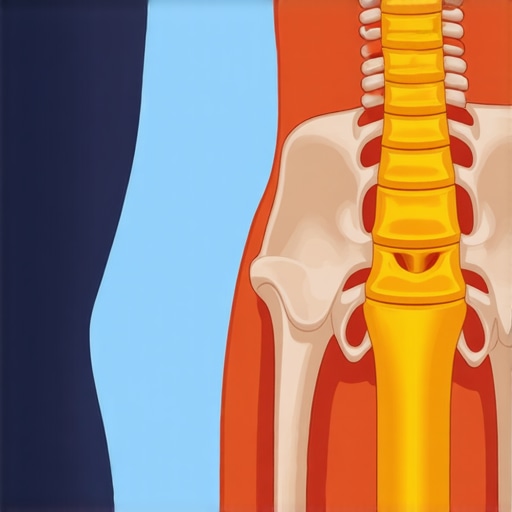
Stop stretching your back into a C-shape
If you’re currently experiencing a flare-up, the worst thing you can do is round your spine to ‘open it up.’ I used to think I was decompressing my vertebrae, but I was actually pushing the disc material further against the nerve. Modern back pain breakthroughs navigating your path to restored mobility suggest that we need to find ‘neutral’ before we find ‘movement.’ If your spine is in a state of high-alert, more stretching is like yelling at someone who is already panicked. You need to calm the system down first. I’ve found that using the 2 minute hip reset for better sleep tonight provides more relief than an hour of aggressive yoga because it tells the nervous system that the hips are safe to move again. By addressing the hinges of the body—the hips and the mid-back—we stop the lower back from having to act as a primary mover. It’s a nuance that takes you from managing pain to actually eliminating the source of the mechanical friction.I’ve spent a fortune on ‘ergonomic’ gear that just gathered dust. Honestly, the most effective tool in my kit costs about two dollars. I’m talking about using a simple tennis ball. I use it to hunt for ‘hot spots’ in my glutes. If you’ve ever dealt with that deep, gnawing hip ache, learning how a tennis ball can relieve deep glute and sciatic pain is a game-changer. I place it right against the wall and lean into the muscle until I find a spot that feels like a bruised grape. I breathe into it for 30 seconds, and the relief is more profound than any expensive massage. Dr. Kelly Starrett, author of ‘Becoming a Supple Leopard,’ emphasizes that ‘all human beings should be able to perform basic maintenance on themselves.’ This DIY approach is what keeps me out of the doctor’s office.
Stop the laptop hunch before it starts
It’s not just about the soft tissue; it’s about the environment we spend ninety percent of our time in. I’m a big believer in low-cost hacks. For instance, I tell everyone to learn how to set up your laptop for better spine protection. If your eyes aren’t level with the top third of your screen, your neck is doing extra work. I use a stack of old books as a riser and an external keyboard. It sounds simple, but it stops that forward-head drift that ruins your day.
How do I keep my spine feeling young for the long haul?
The secret isn’t a sixty-minute workout; it’s the ‘greasing the groove’ method. I integrate tiny resets into my existing routine. When I’m driving, I use a specific trick: I sit up straight, adjust my mirror, and then relax. If I can no longer see clearly through the mirror, I know I’ve started to slump. Learning how to adjust your rearview mirror to improve your driving posture is a passive way to maintain awareness. Consistency over intensity is the gold standard for mobility mastery daily tips to keep your spine and joints healthy. 
Wearables are about to change everything
Looking forward, I predict we are moving toward a world of ‘haptic biofeedback.’ We’ll likely see smart fabrics that gently vibrate when your shoulders reach a threshold of tension, teaching your brain to relax before the pain even starts. But until then, we have to be our own sensors. If you want to revitalize your neck with effective techniques for lasting pain relief, start today by adjusting one thing in your environment—your screen height or your car mirror. Pick one hack and stick with it for a week. You’ll be surprised how fast your body responds when you stop fighting it.
Lessons learned from a decade of fighting my own spine
I spent years trapped in a cycle of over-correction, and if I could go back, there are a few hard-won truths I’d tell my younger, stiffer self. First, your brain treats constant tension as a threat; if you never relax, your nervous system stays on high alert, which actually lowers your pain threshold. It is also vital to know when the ache is just fatigue and when is your back pain a sign of something more serious because ignoring red flags in favor of ‘powering through’ leads to long-term damage. I also had to learn that why cracking your own back is making your joints more unstable was the reason my relief only lasted five minutes. Real progress came when I stopped trying to ‘fix’ my alignment and started focusing on how well I could move in every direction.
The specific tools that finally gave me my life back
You don’t need a thousand-dollar ergonomic setup to find relief, but you do need a few high-value items that encourage movement. My daily toolkit includes a simple tennis ball because how a tennis ball can relieve deep glute and sciatic pain is the most efficient way to release the tissues that pull on your lower back. I also swear by a basic laptop riser; learning how to set up your laptop for better spine protection changed my daily headache frequency almost overnight. Finally, I highly recommend reading Dr. Stuart McGill’s work on spinal mechanics; his research completely reshaped how I approach mobility mastery daily tips to keep your spine and joints healthy by emphasizing stability over mindless stretching.
#IMAGE_PLACEHOLDER_E#
Stop surviving your workday and start moving through it
The journey to a pain-free life isn’t about achieving a perfect look in the mirror; it’s about regaining the freedom to live without calculating every movement’s cost. When you stop treating your body like a rigid machine and start treating it like a fluid, adaptable system, the ‘problem’ of posture starts to solve itself. By applying unlocking mobility expert tips on managing back pain in 2025, you aren’t just fixing a slump—you are investing in a future where you can play with your kids, enjoy your hobbies, and simply exist without a nagging ache in the background. Your spine was built for movement, so let it move. Have you ever felt more pain after trying to ‘fix’ your posture? Let me know in the comments below.