
The 30-second ankle drill that reduces your risk of back injury
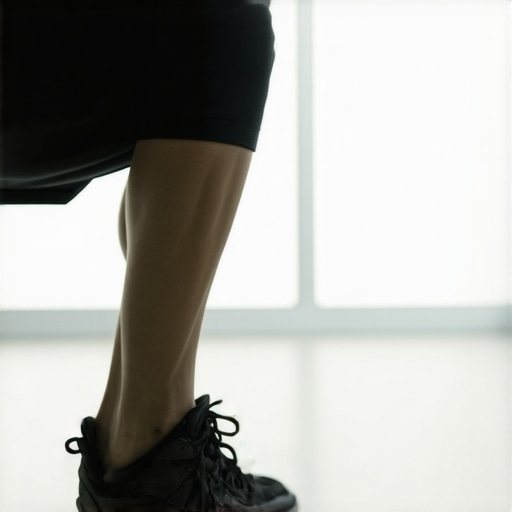
I remember the day I realized I was broken. Not ‘needs a nap’ broken, but ‘stuck on the floor for three hours’ broken. I was reaching into the back seat of my car to grab a grocery bag—something I’d done a thousand times—and *snap*. My lower back didn’t just hurt; it quit on me. I spent the next forty-eight hours crawling to the bathroom, wondering how my body had betrayed me so easily. I was doing the yoga, I was using the standing desk, and yet, I was a total mess. It wasn’t until I met a physical therapist who looked at my rigid, immobile ankles and laughed that I finally understood. My back wasn’t the weak link; it was the victim of my ankles. I used to think my ‘bad back’ was just an inevitable part of getting older, like gray hairs or a sudden interest in lawn care. I’d wake up stiff, spend my day careful not to move too fast, and avoid any activity that involved bending over. It’s a miserable way to live, always waiting for the next spasm to strike. But here’s the kicker: once I started addressing the mobility of my lower limbs, that ‘random’ back pain practically vanished. It turns out, my spine was just tired of doing everyone else’s job. [image]
Your Ankles Are Quietly Sabotaging Your Lower Spine
Every time you walk, sit, or move, your body expects a certain amount of give from your joints. When your ankles are locked up like rusted hinges, that mechanical energy doesn’t just disappear. It travels straight up the kinetic chain. I spent years focusing on lumbar supports and core strength, but I was ignoring the foundation. I even found that why your standing desk is giving you lower back pain is often tied to how your feet interact with the floor. If you’ve been struggling with constant flare-ups, you might realize how a stiff ankle is actually causing your recurrent lower back aches. I made the early mistake of hammering my core with planks and crunches while my feet were essentially blocks of wood, which only led to more tension and frustration. Have you ever felt a sharp pinch in your spine just from standing up after a long drive? I’d love to hear if you’ve faced that same frustration in the comments below.
Is it really possible to fix my back by moving my feet?
It sounds like one of those ‘too good to be true’ internet gimmicks, doesn’t it? I was the biggest skeptic in the room until I saw the biomechanics for myself. A study published in the Journal of Athletic Training found that restricted ankle dorsiflexion—the ability to flex your foot toward your shin—significantly increases the compensatory load on the lumbar spine during functional movements. When I first tried the toe touch test that reveals your actual back injury risk, I was shocked at how little my ankles actually moved. This 30-second drill I’m about to show you isn’t just about flexibility for the sake of it; it’s about creating a mechanical buffer for your spine. By the time you finish reading this, you’ll have a tool that takes less time than brushing your teeth but offers way more protection for your long-term health. We’re going to walk through exactly how to do it so you can stop living in fear of the next ‘tweak’.To stop the cycle of pain, we have to address the ‘stiffness tax’ your ankles are charging your spine. Think of your body as a high-performance suspension system. If the bottom shocks—your ankles—are seized up, every bump in the road is absorbed by the chassis, which in this case is your lower back. This is precisely how a stiff ankle is actually causing your recurrent lower back aches. I didn’t believe it until I failed the most basic mobility check in my therapist’s office.
Test your range before you start
Before you jump into fixes, you need to know where you stand. Stand facing a wall with your big toe about four inches away. Keep your heel glued to the floor and try to touch your knee to the wall. If your heel lifts or your knee can’t reach, you’ve found the mechanical bottleneck. I remember trying this for the first time on a long road trip across Nebraska. I pulled over at a rest stop because I was feeling that familiar why you feel a sharp pinch when standing up from a chair or car seat. I used the side of my SUV as the ‘wall’ for the test. My left ankle was fine, but my right one—the one I used for the gas pedal—was as stiff as a board. That subtle imbalance was twisting my pelvis every time I drove. 
The kneeling mobilization that unlocks the chain
To fix this, we use a simple ‘Knee-to-Wall’ drill. Get into a half-kneeling position with your front foot a few inches from a wall. Slowly drive your knee forward over your middle toe until you feel a stretch in the back of your calf or a bit of pressure in the front of the ankle. The key is the ‘Three-Second Pause.’ Hold the end range, then back off. Repeat this 10 times per side. This isn’t just a stretch; it’s a recalibration of the joint. By doing this, you’re helping boost your back mobility with simple exercises that make a difference. When I started doing this three times a day, the morning ‘log-roll’ out of bed became a smooth pivot.
Stop fighting your own footwear
You can do all the drills in the world, but if you spend eight hours in shoes that lock your feet in a tilted position, you’re swimming upstream. I realized why your thin shoes are impacting your lower back shock absorption the hard way. I was wearing flat, unsupportive sneakers that forced my ankles to collapse inward. This collapse pulls the knees inward and yanks on the psoas muscle, which is anchored to your spine. If you’ve been doing 500 crunches because someone told you ‘core is king,’ you might want to see why you should stop doing planks if your back already hurts when your foundation is crumbling.
Make the ground work for you
Another trick I use is a ‘breath reset’ while working on ankle range. While your knee is at that end-range near the wall, take a deep belly breath. This relaxes the nervous system, allowing the muscles to stop guarding the joint. It’s similar to how a simple reach and breathe move can decompress your back. I used to be the guy who tried to ‘muscle’ through a stretch, but your body is smarter than that. If it feels threatened, it tightens up. When you breathe into the movement, you’re telling your brain that it’s safe to let the ankle move. If you find that your back pain often radiates down your leg, you should also check out the simple test to see if your leg pain is actually sciatica, as ankle stiffness can exacerbate these symptoms by forcing an awkward gait.
Small daily adjustments for lasting relief
Think about the way you sit at your desk. If your feet are tucked under your chair, you’re keeping those ankles in a shortened, stressed position for hours. Use the simple chair height trick to stop your legs from falling asleep and to keep your ankles at a neutral 90-degree angle. By just moving your feet forward, you’re preventing the ‘rusted hinge’ effect from setting in while you work, protecting your spine from the ground up.Most people hear ‘back pain’ and immediately think ‘weak core.’ I used to be that person doing a hundred planks a day, convinced I was building an internal corset. But here is the contrarian truth: a rock-solid core without mobile hips is just a recipe for a fused, unhappy spine. This is exactly why your core strength won’t fix your back if your hips are locked. If your hips can’t rotate or hinge properly, your lower back—which is biologically designed for stability rather than massive rotation—is forced to pick up the slack. You aren’t necessarily weak; you’re just geometrically compromised.
The hamstring stretching trap you need to avoid
Another massive ‘oops’ factor I see daily is the obsession with stretching the hamstrings to solve lower back tightness. When you feel that pulling sensation behind your leg, your instinct is to reach for your toes. But if that ‘tightness’ is actually neural tension from a pinched nerve, you are essentially playing tug-of-war with your own spinal cord. This is why stretching your hamstrings can actually flare up sciatica rather than fixing it. Dr. Stuart McGill, a world-renowned expert in spine biomechanics, emphasizes that aggressive stretching of an already sensitized nerve can lead to protective muscle spasms, making the pain cycle even worse. You aren’t lengthening a muscle; you’re irritating a live wire. 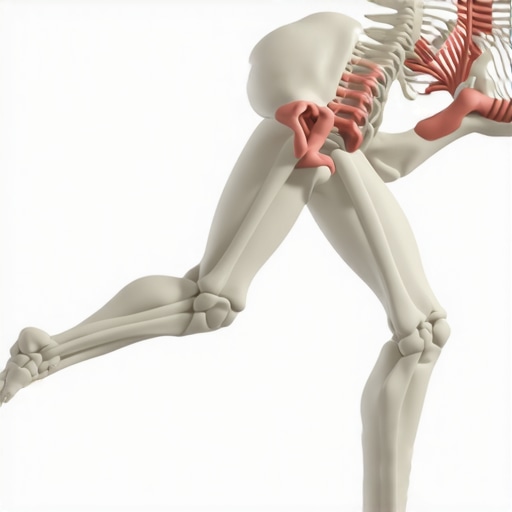
What happens when your upper back stops moving?
While we often obsess over the lumbar spine, we frequently ignore the ‘stiff neighbor’ upstairs. When your thoracic spine—the part attached to your rib cage—becomes as rigid as a block of ice from hours at a desk, your neck and lower back are forced to move twice as much to compensate. This is how a stiff upper back is forcing your neck to move too much, leading to those recurring knots between your shoulder blades. I spent months treating my neck for ‘stress’ before I realized my mid-back was the true mechanical culprit. Furthermore, understanding the link between poor posture and chronic back pain isn’t just about ‘standing up straight’; it’s about restoring the specific mobility of the rib cage to allow for deep, functional breathing.
The danger of the self-adjustment habit
Please, for the sake of your long-term joint health, stop the self-cracking. I know that sudden ‘pop’ feels like a temporary release, but why cracking your own back is making your joints more unstable is a critical concept to grasp. You are almost always popping the joints that are already moving too much (hypermobile), while the truly ‘stuck’ segments remain frozen. This creates a cycle where you need to crack your back every thirty minutes just to feel normal. If you’re constantly hunting for that release, you should investigate is your back pain a sign of something more serious. Have you ever fallen into this trap of ‘stretching the pain away’ only to have it come back worse an hour later? Let me know in the comments.
The cycle usually stops when you trade the ‘quick stretch’ for a systematic toolkit. I’ve wasted hundreds of dollars on vibrating foam rollers and gravity boots, but the reality of long-term relief is much simpler. I’ve narrowed it down to three specific tools that never leave my side, and they cost less than a single chiropractic co-pay.
The three tools that actually live in my gym bag
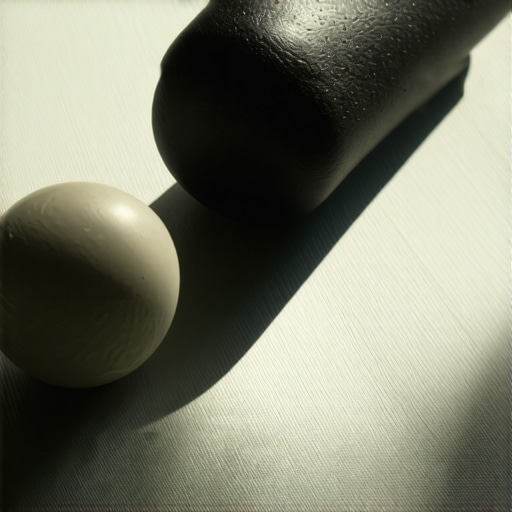
First, a simple lacrosse ball. I use it for targeted trigger point therapy on the piriformis and the suboccipital muscles at the base of the skull. You’ll find that how a simple tennis ball can fix deep glute tension is the blueprint for this. I place the ball against a wall and lean into those ‘hot spots’ for 90 seconds. Second, I rely on a standard 36-inch firm foam roller—not for my IT band, which is a waste of time, but for thoracic extension. By arching my mid-back over the roller, I’m counteracting the ‘C-shape’ my spine takes at the computer. Finally, I use a resistance band for ‘monster walks’ to wake up my glute medius. If those muscles aren’t firing, your lower back is essentially flying without a pilot.
How do I keep these results for the next decade?
Maintenance isn’t about doing an hour of yoga every morning. It’s about micro-dosing movement throughout your day. Dr. Kelly Starrett, author of Becoming a Supple Leopard and founder of The Ready State, advocates for a ’10-minute daily maintenance’ rule. The idea is to spend at least ten minutes every single day working on your soft tissue or joint mechanics. Whether it’s during a Netflix show or while your coffee is brewing, consistency beats intensity. By following mobility mastery daily tips to keep your spine and joints healthy, you turn injury prevention into an automated habit. I’ve found that the 10-second breathing trick for instant lower back relief is the easiest way to reset the nervous system when I feel a flare-up starting. It’s about staying proactive rather than waiting for the next ‘snap’.
Your phone will soon be your physical therapist
Looking ahead, I predict that unlocking mobility expert tips on managing back pain in 2025 will revolve heavily around wearable biofeedback. We are moving toward a world where your smartwatch doesn’t just track steps; it monitors the ‘shear force’ on your lumbar spine or the ‘forward head lean’ while you’re texting. This real-time data will allow us to catch poor movement patterns before they become structural injuries. Until that tech is perfected, you need to be your own biofeedback loop. Use revitalize your neck effective techniques for lasting pain relief to keep your upper chain mobile, and remember that your body is a dynamic system, not a static machine. My challenge to you: spend just two minutes tonight using a tennis or lacrosse ball on your glutes. It’s the highest ROI move you can make for your spine before the day ends.
The shift from ‘managing pain’ to ‘mastering movement’ is a mental game as much as a physical one. After years of trial and error, I’ve realized that the most important progress happens when no one is watching—during those small moments of daily maintenance.
Lessons from the Floor: What My Back Spasms Taught Me
I learned the hard way that more effort doesn’t mean more relief. When I was at my worst, I tried to ‘out-stretch’ the pain, only to realize I was irritating my nerves. One of the biggest lightbulb moments was discovering is your back pain a sign of something more serious or just a mechanical bottleneck. I also had to accept that why your core strength won’t fix your back if your hips are locked; the body is a chain, and a strong link is useless if the neighbors are frozen. Lastly, I realized that pain is often a messenger, not an enemy. It’s your body’s way of saying, ‘Hey, something down the line isn’t doing its job.’
The Gear That Actually Saved My Spine
You don’t need an expensive home gym to fix your mobility. My essential toolkit is surprisingly low-tech. I never travel without a simple lacrosse ball because I’ve seen how a simple tennis ball can fix deep glute tension in minutes. I also keep a firm foam roller for my mid-back and a set of mini-bands to keep my hips active. For those looking for deeper knowledge, I always recommend Becoming a Supple Leopard by Dr. Kelly Starrett. It’s the ultimate manual for human maintenance. These aren’t just gadgets; they are the tools I use to follow mobility mastery daily tips to keep your spine and joints healthy regardless of how busy my schedule gets.
Reclaiming the Movement You Were Born With
I want you to know that you aren’t ‘broken’—you’re just stuck in a pattern that isn’t serving you. Whether you’re dealing with sciatica, neck pain, or that nagging back pain, the path forward starts with one intentional move. By addressing the root causes and embracing long-term relief, you can stop being a passenger in your own body. Check out these back pain breakthroughs navigating your path to restored mobility and take your first step toward a more active, fear-free life. I’ve been exactly where you are, and I promise the view is better when you’re standing tall and pain-free. Looking toward the future, unlocking mobility expert tips on managing back pain in 2025 will be all about these small, consistent wins.
Have you ever tried stretching your hamstrings for relief only to find it made your back feel tighter? I’d love to hear about your experience in the comments below.