
The Impact of Stomach Sleeping on Your Spinal Disc Health
I remember waking up on a Tuesday morning in 2022, ready to step out of bed, only to feel a lightning bolt of pain shoot straight down my left leg. I collapsed back onto the mattress, sweating and thoroughly confused. I was relatively active, ate well, and exercised. What on earth did I do to deserve this sudden, agonizing spasm? It took months of frustrating research, several doctor visits, and a deep dive into my own habits to realize my favorite, comforting nighttime habit—face-down, stomach sleeping—was actually slow-cooking my spinal discs into a state of absolute ruin. If you are struggling with daily aches, understanding if your back pain is a sign of something more serious is the first step toward getting your active life back.
The Nighttime Habit That Flattens Your Spine
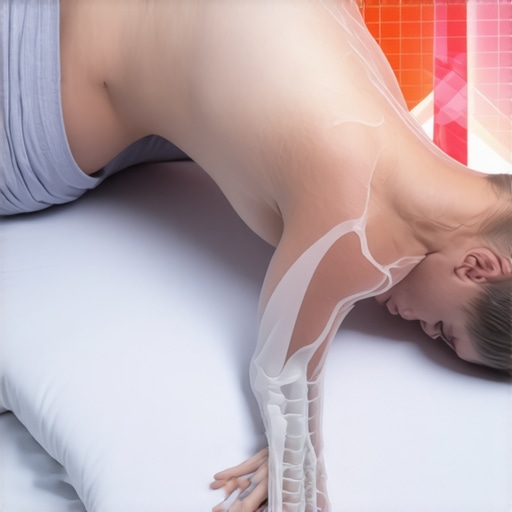
When you sleep on your stomach, you force your neck to twist completely to one side for hours at a time just to breathe. Simultaneously, gravity pulls your belly down, hyperextending your lower back into an unnatural arch. This posture squashes the delicate cushions between your vertebrae. I made the massive mistake of ignoring the warning signs early on, thinking my morning stiffness was just a sign of getting older. Instead, I was actively dehydrating my discs. According to the Mayo Clinic, prolonged spinal misalignment during sleep prevents the natural rehydration process that your spinal discs desperately need during rest. By keeping my spine locked in a hyper-arched twist, I was starving my body of its natural recovery time. Learn how proper hydration keeps your spinal discs plump and healthy, because your sleeping posture might be fighting against all the water you drink during the day. Today, we are going to break down exactly why this sleep posture ruins your spine and how you can transition to a healthier habit without losing a good night’s sleep.
Can a simple sleeping position really cause this much damage?
It sounds absurd that sleeping—something meant to heal you—can actually be the primary driver of your chronic back pain. But think about the sheer volume of time. You spend roughly a third of your life in bed. If you spend seven to eight hours every single night grinding your spinal joints together under the weight of your own torso, your muscles eventually give up, and your discs pay the price. Have you ever woken up feeling like your lower back is made of solid concrete? Tell me in the comments below if you have faced this frustrating morning stiffness! For those struggling to break the habit, implementing the morning routine that prevents lower back stiffness can help mitigate the damage while you train your body to stay off its stomach.
How to Reprogram Your Sleep Muscle Memory
To stop punishing your spine every night, you have to approach sleep posture like a physical therapist. Think of your spine as a delicate suspension bridge. When you lie on your stomach, you collapse the main cables, placing immense stress on the supporting towers—your neck and lower lumbar region. When I first attempted to abandon stomach sleeping, I woke up every single hour feeling completely disoriented. My body kept trying to roll back into its favorite destructive twist. I only succeeded when I stopped relying on willpower and started using strategic external barriers to block my movements. This systematic approach is what finally kept me aligned and pain-free.
Rebuild Your Sleep Environment with Pillow Placement
The most effective way to force your body into a safer alignment is by using physical roadblocks. If you transition to side sleeping, your top leg will naturally want to slide forward and touch the mattress. This subtle slide rotates your pelvis and wrenches your lower back. By learning how to use a pillow between your knees to stop morning back stiffness, you keep your hips perfectly stacked. I used a thick, firm memory foam pillow that physically blocked my top knee from dropping. The very first night I got this right, I woke up without that deep, dull ache in my sacrum for the first time in three years. If you absolutely must sleep on your back, place that same pillow directly under your knees to take the tension off your hip flexors and flatten your lumbar spine against the mattress.
Protect Your Neck from Constant Rotation
Your neck is highly vulnerable to awkward angles that pinch sensitive nerves. When I was sleeping face down, I was keeping my cervical spine rotated at a sharp ninety-degree angle for eight hours. It is no wonder I felt a constant, hot pull near my shoulder blade. To combat this, you need to transition to a side position that supports your head without elevating it too high. Understanding the truth about using two pillows for side sleeping is critical here; overloading your head with fluffy pillows actually creates a severe lateral bend in your neck. Instead, use one supportive pillow that fills the exact gap between your shoulder tip and your ear.
Keep Your Lower Back Neutral to Relieve Nerve Pressure
If your sleep posture has already sensitized your nerves, you might feel a sharp, shooting pain traveling down your leg. This structural irritation requires immediate relief strategies. When my sciatic nerve was inflamed from years of stomach sleeping, I found that integrating a nerve tension test you can do in your living room helped me track which sleeping adjustments were actually relieving the pressure. To keep your lower back neutral throughout the night, you can also roll up a small bath towel and wrap it around your waist, securing it with a safety pin. This DIY lumbar roll fills the gap between your waist and the mattress when you turn, preventing your spine from sagging sideways and pinching those delicate nerve roots.
Why Rest and Stretching Might Be Quietly Sabotaging Your Recovery
When we struggle with agonizing back or neck tension, our natural instinct is to lie down or perform intense, deep stretches. For years, I believed that if my back felt tight, I simply needed to stretch it more. However, this is one of the most common and damaging traps in spinal health. In my experience, aggressively stretching a highly sensitized lower back actually destabilizes the joints and prolongs your agony. Why your hamstrings are not the real reason your back is tight is a perfect example of this misconception; we pull and yank on muscles that are actually locking up to protect an unstable pelvis. Resting completely on a soft surface is just as bad. When you spend days immobile, you starve your spinal discs of the nutrient-rich fluid exchange they get from gentle walking. This lack of movement leads to severe stiffness and structural weakness. Understanding why your back hurts more after a day of resting on the couch will help you realize that passive resting is often just a recipe for prolonged inflammation.
Why does your favorite sciatica stretch make the burning worse?
If you have ever tried to bend forward to stretch out a shooting pain in your leg, only to have the pain flare up ten times worse, you have experienced nerve sensitivity firsthand. Many popular routine stretches put intense tension on an already irritated sciatic nerve pathway. According to a study published in the Journal of Orthopaedic & Sports Physical Therapy, aggressive mechanical stretching of an inflamed nerve root can exacerbate micro-vascular damage and increase localized swelling. This is exactly why some sciatica stretches actually pinch the nerve further rather than releasing it. Instead of forcing your body into extreme positions, you need to use gentle nerve mobilization or ‘flossing’ to help the nerve glide smoothly through its surrounding tissues without tension.
The Core Strength Trap That Compresses Your Discs
Another major myth is that building a rock-solid core requires endless sit-ups, planks, and abdominal crunches. I fell hard into this trap, thinking that if I just did enough abdominal work, my spine would miraculously align itself. In reality, traditional spinal flexion exercises place a massive compressive load on your lumbar discs. If you are already struggling with bulging or degenerating discs from poor sleep posture, high-repetition crunches can actually squeeze the jelly-like center of your disc right out against your nerve roots. This is why you should stop doing sit-ups for core strength and focus on static, spine-neutral stabilization exercises instead. To build true, functional core strength that protects your lower back during daily movements, you must learn to brace your abdomen while keeping your spine perfectly neutral. Have you ever fallen into this trap of over-stretching or over-exercising a sore back only to make it worse? Let me know in the comments below! If you want to safely build back your strength, try incorporating the dead bug exercise variation that actually protects your spine into your daily routine. This simple shift ensures you build deep structural support without throwing your lower back into a state of absolute ruin.
My Personal Toolkit for Unbreakable Spine Health
To keep my discs hydrated and my nerves completely free of that terrifying shooting pain, I had to move beyond temporary fixes and build a daily, automated defense system. Over the years, I have tested dozens of gadgets, but only a select few actually made a measurable difference in my recovery. First, I replaced my soft, saggy mattress with a medium-firm latex mattress to prevent my hips from sinking. If you are struggling with spinal alignment issues, knowing why firm mattresses are not always better for scoliosis can help you choose the right surface for your specific structural needs. I also carry a small, dense foam half-roll everywhere. When I travel, I implement the specific way to use a lumbar roll for maximum relief on plane seats and office chairs alike. Finally, I swear by a simple, hard lacrosse ball. Sitting on it for two minutes to release the piriformis muscle does more for my mobility than any hour-long massage session ever did.
How do I maintain my spinal mobility over time?
Consistency beats intensity every single time. You cannot fix years of poor sleeping habits with a single stretching session. True joint maintenance requires integrating tiny, non-negotiable physical habits into your everyday routine. For instance, whenever I find myself sitting for more than forty-five minutes, I perform a quick posture reset. Practicing mobility mastery daily tips to keep your spine and joints healthy is how you build a body that resists wear and tear. I also suggest tracking your active ranges of motion. If you notice your neck feels stiff when turning your head to check your blind spot, do not ignore it. This is your cue to implement neck pain solutions proven techniques to regain your range of motion before the restriction locks up your mid-back.
Where the Future of Spine Care and Mobility Is Heading
We are moving away from passive treatments like cracking and ice packs, and shifting toward active, bio-mechanical reorganization. Niche experts, including Dr. Stuart McGill of the University of Waterloo, have demonstrated that building true spinal stiffness through targeted muscular bracing is far superior to pulling on joints. I predict that over the next decade, we will see personalized wearable sensors that vibrate when your lumbar spine exceeds a safe flexion angle during daily tasks. Until that technology is mainstream, we must rely on self-education and proactive movement. If you want to dive deeper into this shift, explore back pain breakthroughs navigating your path to restored mobility to see how modern science is changing the recovery landscape. My challenge for you today is simple: take action. Tonight, place a firm pillow between your knees when you sleep, or commit to a single spinal-neutral movement tomorrow morning. Your back will thank you.
I used to think that recovering from spinal issues meant a lifetime of medical appointments and rigid restrictions. But real, lasting freedom only comes when you take daily ownership of your movement patterns. Transitioning away from destructive nighttime habits is the catalyst that allows your muscles and joints to heal naturally.
The Hardest Lessons I Learned on My Journey to Spinal Relief
Through years of trial, error, and painful setbacks, I discovered critical truths about my body that shifted how I approach physical recovery:
- Stiffness is often a cry for stability, not length: I spent years aggressively stretching my lower back, thinking tightness meant my muscles were short. In reality, my nervous system was locking those muscles down because my spine lacked structural support.
- Passive therapy only buys you a window of time: While a manual adjustment or massage can provide immense immediate relief, the benefits will fade by Monday morning if you return to the exact same sitting, standing, and sleeping habits that caused the stress in the first place.
- Small, cumulative habits trump heroic efforts: Doing a grueling one-hour physical therapy session once a week will not save your spine if you spend seventy hours slumped over a desk or twisted like a pretzel in bed. Consistent, micro-adjustments throughout the day create permanent change.
My Essential Toolkit for Restoring Daily Mobility
I rely on a highly curated set of tools and simple strategies to protect my alignment, no matter where my day takes me:
- A Dedicated Support Setup: I never sit for long periods without structural help. Learning the specific way to use a lumbar roll for maximum relief keeps my lower back properly supported while driving or working.
- Active Mid-Back Mobilizers: Instead of cracking my own spine, I utilize targeted upper-body movements. Practicing the 30-second wall slide for better shoulder alignment helps neutralize the forward-slump posture before it turns into chronic neck stiffness.
- Joint-Saving Movement Rules: In my daily life, I avoid heavy lifting with rounded posture. I always apply how to lift heavy boxes using your hips instead of your spine to shield my discs from sudden compressive forces.
Take the First Step Toward Your Active Life Today
It is incredibly easy to feel overwhelmed by the sheer volume of health advice out there, but your path to a pain-free life does not require a lifestyle overhaul. You do not need to spend hours exercising or buy expensive medical equipment. Start by making a single, conscious choice tonight to support your body while you rest, and implement gentle exercises that make a difference. By gradually addressing your body’s structural alignment, you can finally reclaim the active, unrestricted life you deserve.
Have you ever tried to change your sleep posture, only to wake up right back in your favorite comfortable position? Let me know your experience in the comments below!