
How to lift heavy boxes using your hips instead of your spine
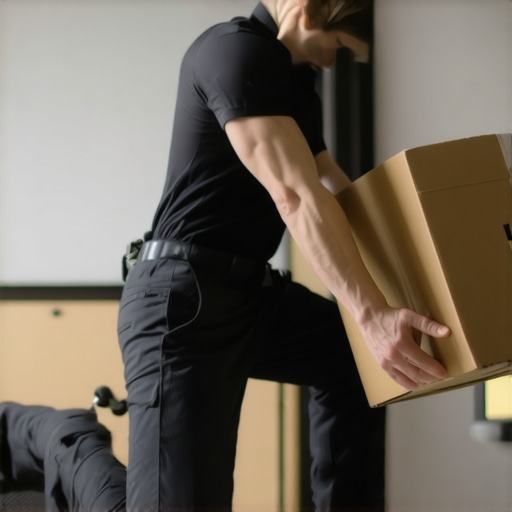
I remember the exact sound it made. It wasn’t a loud crack, but more like a wet thud deep in my lower back as I reached for a box of old college textbooks. I was bending over at the waist—the classic crane position—thinking I was being efficient. Instead, I spent the next three days staring at the ceiling, wondering if I’d ever walk straight again. We’ve all been there, haven’t we? That moment you realize your spine isn’t a forklift. I was making a rookie mistake that cost me a week of work and a lot of sleep, all because I thought my back was stronger than physics.
Your Back Is a Terrible Crane
For years, I made the same mistake everyone makes. I assumed that if I just muscled it up, my spinal column would hold. It didn’t. I eventually learned that the specific way to lift a grocery bag matters just as much as lifting a heavy sofa. My biggest error early on was treating my spine like a hinge instead of a stabilizer. Your spine is designed to protect your nervous system and provide a rigid upright structure, not to act as the primary motor for moving 40-pound boxes. When you bend at the waist, you’re putting an astronomical amount of leverage against your own discs. According to researchers at Harvard Health, leaning forward just 20 degrees can effectively double the pressure on your lumbar discs. Today, I’m going to show you how to shift that load to your hips—the strongest joint in your body—so you can stop living in fear of the next tweak.
[image_placeholder_1]
Is This Method Actually Worth the Effort?
You might be thinking that proper form takes too long or looks a bit silly in the middle of a hardware store aisle. I used to think the same thing until I realized that back pain can be a sign of something much more serious than just a tired muscle. The truth is, once you master the hip hinge, it’s actually faster and uses far less energy. You’re not just avoiding injury; you’re unlocking power you didn’t know you had. I even had to relearn how to pick up a toddler without a lower back tweak because, let’s face it, kids don’t wait for you to find your perfect gym form. I’m curious—have you ever felt that sharp, hot lightning bolt in your lower back while doing something as simple as picking up a laundry basket? It’s a wake-up call, isn’t it? The real secret isn’t just about bending your knees; it’s about where the movement originates. Most people think they have tight hamstrings, but your hamstrings might not be the real reason your back is tight. It’s often a lack of hip mobility that forces your spine to compensate. Let’s get into the mechanics of how to fix this for good.
Stop Bending and Start Hinging
Think of your hips like the heavy-duty hinges on a bank vault door. They are designed to carry massive weight while moving through a wide range of motion. Your spine, on the other hand, is more like a stack of delicate china plates held together by rubber bands. When you bend at the waist, you’re basically trying to use the china plates as a lever. The secret to safety is keeping that “china stack” vertical and making the vault hinges do the work. I first learned this after realizing why your glutes turn off when you sit for over an hour. When those muscles go dormant, your lower back is forced to take over the heavy lifting, leading to that dreaded “pop.”
The Wall Drill That Saved My Spine
To teach your brain this new movement pattern, stand about six inches away from a wall, facing away from it. Soften your knees—don’t lock them—and try to touch your butt to the wall without falling over. You aren’t squatting down; you’re pushing your hips back. If you do it right, you’ll feel a slight stretch in your hamstrings, but zero pressure in your lower back. This is the simple morning move to prime your spine for the day. I used to practice this every morning before coffee until it became second nature. Now, when I reach for a heavy bag of dog food, my hips automatically slide back, creating a stable platform for the load.
Why Your Ankles Are Ruining Your Lift
Sometimes you try to hinge, but your body fights back. You might find yourself tipping forward or your heels lifting off the floor. Often, the culprit isn’t even in your back; it’s your feet. I spent months stretching my lower back only to find out that why your calves are tight and how it pulls on your lower back was the real issue. If your ankles can’t flex, your hips can’t sit back, and your spine has no choice but to round. To stabilize the core while you work on that mobility, I highly recommend the dead bug exercise variation that actually protects your spine. It builds the “inner corset” necessary to hold everything together while your hips do the heavy lifting.
Real-World Physics at the Grocery Store
I remember being at the store, trying to grab a 24-pack of water from the bottom shelf. In the past, I would have just leaned over and yanked it. This time, I stepped close—so close my shins almost touched the rack—set my feet wide, and performed that wall-drill hinge. The weight felt half as heavy. By staying close to the object, I reduced the “moment arm,” which is just a fancy way of saying I didn’t let the weight use my back as a crowbar. This is the specific way to lift a grocery bag to avoid a spasm, and it applies to everything from laundry baskets to toddlers. If you can keep the weight between your feet and hinge your hips, you’ve already won 90% of the battle against chronic pain.
Most people think they just need to ‘stand up straight’ to fix their back. In reality, why standing up straight is actually making your back pain worse is a common discovery for my patients. Forcing a rigid, military-style posture creates excessive tension in the spinal extensors. You aren’t a statue; you’re a dynamic organism. If you’re constantly bracing, you’re essentially red-lining your muscles 24/7. I used to believe that more stretching was always the answer. If the back felt tight, I’d reach for my toes. But here’s the contrarian truth: many ‘tight’ backs are actually weak or unstable, not short. This is why why some sciatica stretches actually pinch the nerve further. If you have a disc issue, that classic ‘knees-to-chest’ stretch can actually increase the outward pressure on the disc. A study published in the Journal of Biomechanics highlights that excessive spinal flexion under load—or even repeated end-range stretching—can compromise the integrity of the annulus fibrosus. You’re essentially picking a scab.
Can Your Breathing Pattern Actually Destabilize Your Spine?
This is where even the gym pros get it wrong. They hold their breath or breathe shallowly into their chest. I found that learning how your breathing pattern affects your core stability was the missing link. You need to breathe into your pelvis. Think of your torso like a soda can; if the can is full and pressurized, it’s incredibly hard to crush. If you’re ‘hollowing’ your stomach or breathing only with your shoulders, that ‘can’ is empty, and your spine takes the hit. This pressure management is why I often suggest how to breathe into your lower back to release deep muscle tension as a foundational skill before you ever pick up a heavy box again.
The Trap of the Post-Injury Couch Potato
One of the biggest traps—the ‘Oops’ factor that keeps people in the clinic longer than necessary—is the post-tweak rest. We think we’re helping by laying on a plush sofa for twelve hours. However, why your back hurts more after a day of resting on the couch is a lesson in blood flow. Your discs don’t have a direct blood supply; they rely on movement to ‘pump’ nutrients in and waste out. Total immobilization is often the fastest way to turn a minor tweak into a chronic flare-up. Have you ever fallen into this trap of resting until you’re too stiff to move? Let me know in the comments. Instead of total rest, subtle mobility is key. This is the logic behind the nerve flossing routine for stubborn leg numbness and tingling—moving the nerves through their tracks without aggravating the source.
The Subtle Danger of Your Sitting Style
Finally, let’s talk about the chair. Even if you lift like a pro, how you sit for the other eight hours matters. I see so many people struggle with sciatica relief secrets only to go back to a desk that kills their progress. Small nuances, like why crossing your legs is the fastest way to tilt your pelvis, can undo a month of rehab. It isn’t just about ‘sitting up straight’—it’s about variety and maintaining the natural curves of your spine without forcing them. When you understand that understanding the link between poor posture and chronic back pain is about repetitive stress rather than a single ‘bad’ position, you can finally start to heal.
After years of trial and error, I’ve realized that the best form in the world can’t save you if your environment is working against you. I used to think ergonomic chairs were a marketing scam until I understood why your desk chair depth is cutting off circulation to your legs. Now, I’m obsessed with specific tools that act as a safety net for my daily movement. My favorite is a simple, high-density lumbar roll. It’s not just a pillow; it’s a physical reminder for your spine to maintain its natural lordotic curve. I’ve found through personal experience that the specific way to use a lumbar roll for maximum relief is much lower on the spine than most people think—right at the belt line. If you’re currently working from a kitchen table or a makeshift desk, don’t panic. I actually wrote a guide on how to set up your home office for less than fifty dollars because you don’t need a thousand-dollar chair to save your neck. A simple stack of books under your monitor can prevent ‘tech neck’ just as effectively as an expensive monitor arm.
How do I keep my spine healthy for the long haul?
Maintenance isn’t a one-time fix; it’s a biological tax you pay every day to stay functional. According to a study published in the Journal of Physical Therapy Science, even short periods of micro-breaking—standing up for just 60 to 120 seconds every half hour—significantly reduce the risk of chronic musculoskeletal disorders compared to doing one long gym session at the end of a sedentary day. This is why I focus on mobility mastery daily tips to keep your spine and joints healthy. I personally use a timer on my laptop that dims the screen every hour. It’s the only way I remember to check how proper hydration keeps your spinal discs plump and healthy. Remember, dehydrated discs are brittle discs, and brittle discs are far more prone to those ‘wet thud’ injuries I mentioned earlier.
Your Spine in 2030 and Beyond
I predict we’re moving toward a world of ‘active furniture’—desks and chairs that use subtle haptic feedback to nudge you when your posture begins to collapse. Until those tools are mainstream, you have to be your own bio-sensor. Staying ahead of the curve means unlocking mobility expert tips on managing back pain in 2025. We’re seeing a massive shift away from the idea of ‘static’ perfect posture toward ‘dynamic’ sitting. The goal isn’t to be perfectly still like a statue; it’s to never stay in one position for more than 20 minutes at a time. If you’re ready to take this seriously, try this right now: stand up and perform the 30-second doorway stretch for people who work at a laptop. It’s the single most effective way to reverse the ‘c-shape’ we all fall into while typing. Treat your mobility like a bank account and make a small deposit every single hour.
Lessons My Spine Taught Me the Hard Way
Reflecting on my journey from that ‘wet thud’ on the floor to moving with confidence, I’ve realized that back health is less about brute strength and more about body awareness. One of the biggest shifts was stopping the ‘I’m fine’ lie. I used to ignore the small twinges during my morning routine, not realizing that back pain can be a sign of something much more serious when left unaddressed. I also learned that complexity doesn’t equal quality. You don’t need a 20-step gym routine; you need to master the basics, like the hip hinge, until they become as natural as breathing. Finally, I discovered that recovery is rarely a straight line. Some days you will feel like a world-class athlete, and others you might feel a bit stiff—the key is to stay consistent with simple exercises that make a difference rather than giving up during a minor flare-up.
My Personal Toolkit for a Bulletproof Back
I don’t believe in cluttering your home with expensive gadgets, but there are a few specific tools and resources that I swear by for maintaining a healthy spine. First is the high-density lumbar roll. It’s a literal lifesaver for long car rides or late nights at the desk, provided you know the specific way to use a lumbar roll for maximum relief. Second, I always keep a simple tennis ball in my gym bag. It’s the most cost-effective way I’ve found to perform self-myofascial release, specifically for releasing deep glute tension that often contributes to lower back tightness. Lastly, I recommend focusing on core stability over ‘six-pack’ abs. Using the dead bug exercise variation that actually protects your spine has done more for my daily comfort than a thousand crunches ever could.
[image_placeholder_E]
You Aren’t Brittle and You Can Heal
It’s easy to feel like your body is broken after a major back tweak, but I want you to remember that you are a dynamic, adaptable organism. Your spine is incredibly resilient when you give it the right environment and movement patterns. By shifting the load to your hips and paying attention to the link between poor posture and chronic back pain, you are actively participating in your own recovery. We are seeing incredible back pain breakthroughs every day in the world of physical therapy and chiropractic care, proving that chronic discomfort doesn’t have to be your forever reality. Start small, be patient with your progress, and trust that your body wants to return to a state of balance. Have you ever had a ‘lightbulb moment’ where a tiny change in how you moved—like the wall hinge or a sitting adjustment—completely stopped a flare-up in its tracks? Let me know in the comments below.