
How proper hydration keeps your spinal discs plump and healthy
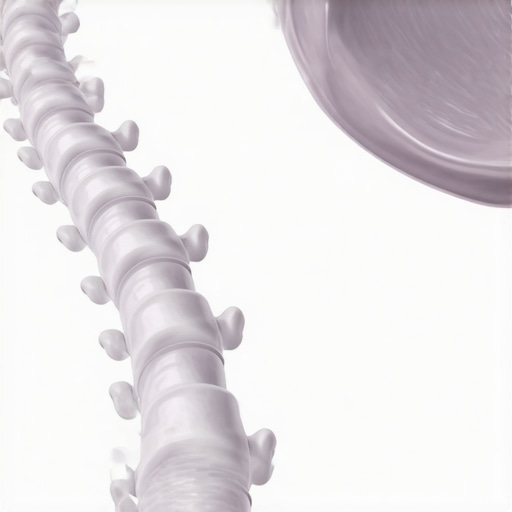
I will never forget the Tuesday morning I dropped a piece of sourdough toast and realized I couldn’t bend down to pick it up. My lower back didn’t just ache; it felt brittle, like a piece of dry kindling that would snap if I moved an inch too fast. I had spent a fortune on fancy mattresses and ‘ergonomic’ chairs, but the real culprit was sitting in my kitchen tap the whole time. If you ever wake up feeling like your spine is a dry, creaky floorboard, you aren’t just ‘getting older’—you might actually be drying out from the inside. Today, I want to show you how proper hydration is the single most underrated tool for keeping your discs plump and your nerves happy. Have you ever noticed that your back feels ten times tighter on the days you’ve been running on nothing but espresso and stress?
Give Your Spine the Fluid it Needs to Bounce Back
Think of your spinal discs like a stack of jelly donuts. When they are full of fluid, they provide a thick, resilient cushion that prevents your vertebrae from grinding together. But when you are dehydrated, those donuts start to flatten and lose their bounce. This is exactly why this specific morning habit is so vital for keeping your spine mobile. I made a huge mistake early in my journey by thinking my gallon of iced tea counted as hydration. It didn’t. In fact, I was barely providing my body the raw materials it needed to repair itself, leading to serious symptoms you shouldn’t ignore. According to the Journal of Neurosurgery, the inner core of your spinal discs is roughly 80% water. When that level drops, the disc loses height, and you suddenly find yourself at risk for the kind of nerve compression that makes every step a chore.
Is drinking water actually worth the hype for back pain?
I know what you are thinking because I thought it too: ‘My back is a mess, and you want me to just drink more water?’ It sounds almost too simple to be true. But once I started prioritizing fluid intake alongside tracking signs that your nerves are finally healing, my daily stiffness practically vanished. If you feel that resting on the couch makes it worse, it is often because your discs aren’t getting the movement-based ‘pumping’ action they need to absorb water from the surrounding tissues. We are about to look at how we can fix that circulation problem and get those cushions back to their full height.
The first thing you have to realize is that your spinal discs are the only parts of your body that don’t have a direct blood supply. They are like sponges sitting between your vertebrae. To get fresh fluid in and waste out, they rely on a process called ‘imbibition’—basically, a pumping action created by movement. If you aren’t moving and you aren’t hydrated, those sponges stay dry, thin, and brittle. I remember a cross-country flight where I drank three liters of water but sat perfectly still for six hours. By the time I landed, I could barely stand up straight; my back felt like a block of concrete. That was the moment I realized that water without movement is just a trip to the bathroom, not a cure for a stiff spine.
Give Your Discs a Reason to Soak Up Fluid
To actually rehydrate your spine, you need to combine specific fluid intake with strategic movement. Think of it like watering a potted plant where the soil has become a hard crust. If you just dump a bucket on it, the water runs off the sides. You have to poke holes in the soil first. Your ‘holes’ are the micro-movements you do throughout the day. This is why the morning routine that prevents lower back stiffness is so effective; it primes those discs to actually absorb the water you drink with breakfast.
The Salt Secret for Better Water Absorption
If you are drinking gallon after gallon but still feel ‘dry,’ you might be missing electrolytes. Your cells need minerals like sodium and magnesium to actually pull water into the tissue. Every morning, I started adding a tiny pinch of high-quality sea salt to my first glass of water. It sounds counterintuitive, but it helped my body retain the moisture needed for my joints. When I skipped this, I noticed my stubborn leg numbness and tingling would flare up much faster during my afternoon walks because my discs were flattening out and pinching the nerves again.
Move Your Spine to Pump the Sponges
Since your discs need pressure changes to ‘breathe,’ you can’t just stand at a desk all day and expect results. I started implementing a ‘pumping’ move every 30 minutes. It’s a gentle cat-cow stretch or a standing pelvic tilt. By doing these simple exercises that make a difference, you are literally squeezing the old fluid out and allowing fresh, nutrient-rich fluid to be sucked back in. When I first tried this during a busy week at the office, the usual 3 PM ‘heavy head’ feeling vanished. I wasn’t just more hydrated; my spine was actually supporting my weight again instead of letting my muscles do all the heavy lifting.
Stop Squashing Your Discs While You Work
You can drink all the water in the world, but if you are sitting in a way that constantly compresses one side of your disc, it will never rehydrate. I discovered that how a slight change in your sitting angle stops leg numbness is the missing link for most office workers. By opening up your hip angle, you reduce the ‘wedging’ effect on your lower lumbar discs. I used to think icing your lower back might be slowing down your recovery because I was focusing on the inflammation, but the real issue was the physical compression preventing fluid flow. Once I shifted my pelvis forward and kept my water bottle full, the daily ‘snap, crackle, and pop’ of my spine finally quieted down.
We have all been there: your lower back feels tight, so you immediately reach for your toes. It feels like the right thing to do, doesn’t it? But here is the contrarian truth that took me years to learn: most of the time, that ‘tight’ feeling isn’t a muscle that needs to be longer; it is a nervous system that is trying to protect you. When I was deep in the trenches of my own recovery, I spent months aggressively stretching my legs, only to find that why stretching your hamstrings won’t fix your tight legs was the hardest lesson I had to learn. If your hamstrings feel like steel cables, they might be acting as a secondary stabilizer because your core is failing to hold your pelvis in place. By stretching them out, you are literally pulling the emergency brake off a car that’s parked on a hill.
How can you tell if your tightness is a muscle issue or a nerve response?
This is the million-dollar question for anyone dealing with chronic discomfort. If you can touch your toes one minute and then feel ‘tight’ again five minutes later, you aren’t dealing with short muscles—you are dealing with neural tension. This is the ultimate ‘oops’ factor for most people. They treat their sciatic nerve like a piece of elastic, but nerves don’t like to be stretched; they like to be ‘flossed’ or slid. According to spine expert Dr. Stuart McGill, a renowned biomechanics researcher, static stretching of an irritated nerve can actually increase neural sensitivity and worsen symptoms. If you keep pulling on a nerve that is already being pinched at the spine, you are just making it angrier. I used to fall into this trap daily until I learned how to tell if your leg pain is a muscle pull or a nerve root, which changed my entire approach to mobility.
The nuance most people miss is that your brain uses ‘protective tension’ to prevent you from moving into positions it deems dangerous. If your spine is unstable, your brain will lock up your hips and hamstrings to keep everything still. This is why understanding the link between poor posture and chronic back pain is about more than just standing up straight; it is about teaching your brain that it is safe to move again. Instead of forcing a stretch, I started using the nerve tension test you can do in your living room to see what was actually going on. This simple assessment helps you stop the cycle of self-inflicted flare-ups. Have you ever spent weeks stretching only to find your back pain getting worse? Have you ever fallen into this trap? Let me know in the comments.
Stop Treating Your Nerves Like Elastic Bands
When you have sciatica, the urge to stretch is almost primal. But why some sciatica stretches actually pinch the nerve further is a concept most beginner programs ignore. If you have a disc issue, certain forward-bending stretches actually push the disc material further into the nerve. You might feel a brief ‘release’ because of the Golgi Tendon Organ response—a temporary neurological trick that relaxes the muscle—but twenty minutes later, your back feels twice as stiff. This is why sciatica relief secrets often involve less stretching and more stabilization. Once I traded my aggressive yoga routine for daily tips to keep your spine and joints healthy focused on core bracing, the ‘tightness’ in my legs finally started to let go on its own. Your body doesn’t want to be tight; it wants to be safe. Give it stability, and it will give you mobility.
Once I stopped stretching and started stabilizing, the game changed. But you can’t just fix the problem and expect it to stay fixed without the right maintenance gear. I’ve wasted hundreds on vibrating foam rollers and ‘posture shirts’ that didn’t do much. Now, I keep it simple. My daily toolkit consists of a standard lacrosse ball for trigger points and a firm lumbar roll. If you find your hips locking up, learning how a simple tennis ball can release your deep glute tension is a game-changer because it allows for precision that a foam roller just can’t hit. I personally use it while sitting on a hard chair for two minutes every morning to ‘wake up’ my posterior chain.
The Tools That Actually Earned a Spot in My Bag
Beyond the physical tools, your environment is the silent killer or the secret healer. I realized my neck pain wasn’t coming from my workout; it was coming from my 9-to-5. If you are working from a laptop, why your laptop screen height is the primary cause of your headaches becomes painfully obvious after an hour of hunching. According to the Cornell University Ergonomics Research Laboratory, a monitor placed too low forces the neck into a persistent curve that increases the effective weight of your head from 12 pounds to nearly 60 pounds at extreme angles. This is why I religiously follow the 15-degree rule for your computer monitor to save your neck. It’s a tiny adjustment that keeps the cervical spine in a neutral ‘power’ position rather than a vulnerable ‘slump’ position.
How do I keep my spine healthy for the next twenty years?
Maintenance isn’t a one-time event; it’s a series of small, sustainable choices. For me, overcoming sciatica involves top lifestyle changes that prioritize movement variety over static standing or sitting. I predict that in the next five years, we will see a massive shift toward wearable bio-feedback devices that vibrate the moment your core goes slack or your pelvis tilts. But you don’t have to wait for tech to catch up. You can start by implementing daily tips to keep your spine and joints healthy right now. The secret is to stop looking for a ‘cure’ and start looking for a ‘system.’ My system is simple: hydrate, move every thirty minutes, and never sit on a soft sofa for more than twenty minutes without a lumbar support.
If you really want to scale your results and move from ‘pain-free’ to ‘invincible,’ you have to look at the foundations. Often, we focus on the back, but the issue starts at the floor. I’ve found that how a stiff big toe forces your lower back to overwork is one of those deep-dive secrets that experts rarely talk about. When your feet can’t move, your back has to pick up the slack during every step. I challenge you to try one thing today: raise your monitor or laptop to eye level and see if that afternoon ‘heavy head’ feeling disappears. If you’re ready to take the next step toward a pain-free life, check out our full range of neck pain solutions or reach out to us directly to build a custom plan that actually sticks.
The Hardest Truth I Had to Accept About My Spine
Looking back at my recovery, the biggest hurdle wasn’t the physical damage; it was my own ego. I spent years trying to ‘beat’ the pain with aggressive stretches and expensive gadgets, only to realize that the body prefers a whisper over a shout. Here are the three shifts that changed everything for me: First, pain is a protective signal, not a broken part. When my hamstrings felt like steel cables, it wasn’t because they were short—it was my brain’s way of guarding my spine because I was dehydrated and unstable. Second, consistency trumps intensity. Doing a two-minute ‘pumping’ move every hour is infinitely more effective than a grueling two-hour gym session once a week. Finally, your environment dictates your health. You cannot heal in the same environment that made you sick. If you spend eight hours a day in a slumped position, no amount of water will fully save your discs.
Everything I Keep in My Daily Recovery Kit
I’ve trimmed my routine down to a few non-negotiables that offer the highest return on investment. If you are struggling with lasting neck pain relief, start with these simple tools. I always keep a standard lacrosse ball nearby because a simple tennis ball can release your deep glute tension and take the pressure off your sciatic nerve. I also never sit without my lumbar roll; however, you have to learn the specific way to use a lumbar roll for maximum relief or you might actually increase your lumbar pressure. Lastly, a cheap monitor riser is the best investment I ever made to stop the constant ‘text neck’ strain from my laptop.
#IMAGE_PLACEHOLDER_E#
Stop Waiting for the Perfect Moment to Heal
It’s easy to feel like you’re stuck in a cycle of ‘good days’ and ‘bad days,’ but you have more control than you think. By prioritizing hydration, mastering your movement patterns, and using sciatica relief secrets to stabilize your core, you are building a resilient foundation for the future. Don’t wait until you can’t pick up a piece of toast to take action. Use these expert tips on managing back pain in 2025 to start your journey toward a pain-free life today. You deserve to move without fear. Which of these shifts surprised you the most—was it the hydration-disc connection or the truth about stretching? Let me know in the comments below!