
How to hold a book without straining your cervical discs
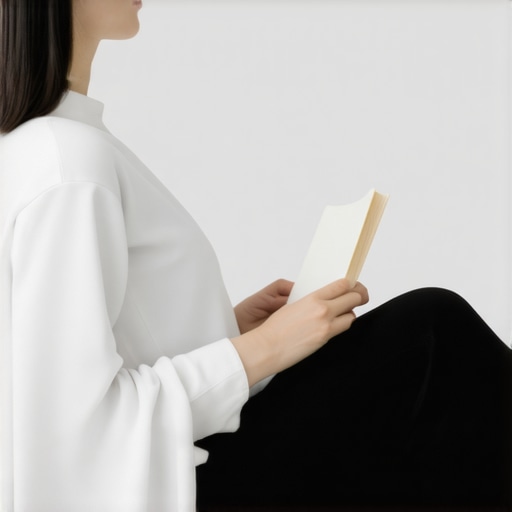
I remember the exact moment I realized my love for thick, hardcover fantasies was literally breaking my neck. It was a Tuesday night, I was deep into a chapter about dragons, and when I finally tried to look up, a white-hot flash of pain shot from the base of my skull all the way down to my shoulder blades. I couldn’t even turn my head to look at my husband. It wasn’t just a fluke; it was the result of years of thinking that ‘getting cozy’ meant curling into a human pretzel. For a long time, I made the classic mistake of thinking I just needed a better chair, but the truth is, how you hold that book matters far more than where you sit. I spent months struggling with stiffness before I figured out that my reading habit was causing that hump in my neck and putting unnecessary stress on my cervical discs. Today, I’m going to show you exactly how to rearrange your reading life so you can finish that 800-page novel without feeling like you need a neck brace the next morning.
Gravity is a Thief of Your Neck Comfort
The human head is heavy—about the size and weight of a bowling ball. When you tilt that ‘bowling ball’ forward to peer at small print, you are essentially asking your neck muscles to hold up a massive weight at a terrible angle. In fact, research published in Surgical Technology International by Dr. Kenneth Hansraj found that tilting your head forward at a 60-degree angle—the typical reading or texting pose—increases the weight on your spine to a staggering 60 pounds. That is like carrying an average eight-year-old child on your neck for every hour you’re reading! This constant strain is why so many of us feel that burning sensation between the shoulder blades. I’ve found that using specific techniques to regain your range of motion starts with simply bringing the world up to your eyes, rather than dropping your eyes to the world. Have you ever felt that sharp pinch after a long reading session and wondered if you were doing permanent damage?
Does This Actually Require Expensive Gear?
I’ll be the first to admit that I was a skeptic. I used to think book stands and specialized pillows were just gimmicks for people with too much money. But after trying to ‘muscle through’ the pain and failing, I realized that my DIY methods (like stacking old shoeboxes) weren’t cutting it. While you don’t need a high-tech laboratory, understanding the best pillow height and support angles is a game changer. I wasted way too much time early on trying to support my head with soft, mushy cushions that offered zero structural integrity. You need firm support that keeps your ears aligned over your shoulders, not something that lets your chin sink into your chest. We’re going to dive into the exact physical adjustments you can make right now, using items you likely already have around the house, to keep your spine neutral and your mind focused on the plot, not the pain.
How to Stop Your Book from Ruining Your Spine
The first rule of pain-free reading is simple: if your chin is touching your chest, you are losing the battle against gravity. I learned this the hard way during a rainy weekend marathon with a massive hardcover that weighed nearly five pounds. By Sunday, my neck was locked, and I realized my lap was the worst possible place for a book. To fix this, you must bring the reading material up to your eye level. This prevents the ‘forward head carriage’ that stretches your spinal ligaments to their breaking point. If you aren’t at a desk, use a wedge pillow or even a firm laundry basket on your lap to create a shelf. Often, understanding why your reading glasses are forcing your neck into a painful crane is the key, because you might be subconsciously tilting your head to find the sweet spot in your lenses, so pay close attention to where your focus actually lands.
Prop Your Arms to Protect Your Traps
Your neck muscles aren’t just holding up your head; they are also working to stabilize your shoulders while your arms hold the book. After about twenty minutes, those muscles fatigue, and you start to slouch. I found that tucking a small, firm cushion under each elbow immediately takes the ‘tug’ off the upper trapezius muscles. This creates a structural tripod that supports the weight of your book and your limbs. If you find yourself tightening up anyway, you can perform the 30-second neck tuck to stop tension headaches before they start. This reset pulls your cervical spine back into a neutral alignment, undoing the damage of that forward lean. 
Give Your Eyes and Discs a Break
Even with perfect posture, static loading is the enemy of joint health. Your spinal discs need movement to stay hydrated and flexible. I use a simple timer to follow the 20-20-20 rule for neck and eye strain relief, which involves looking at something 20 feet away for 20 seconds every 20 minutes. During this break, I gently roll my shoulders and reset my spine. If you’re reading in bed or on a sofa, knowing how to use a towel roll to support your neck can provide that necessary cervical curve support that soft, mushy cushions lack. I remember the first time I used a rolled-up hand towel behind my neck while finishing a thriller; I woke up the next morning without that familiar ‘rusty hinge’ feeling in my neck for the first time in years.
Check Your Environment for Hidden Stressors
Sometimes the pain isn’t just about the book. If your lighting is dim, you will naturally lean closer to the page, straining the small muscles at the base of your skull. If your seat is too soft, your pelvis tilts back, forcing your neck to compensate to keep your eyes level. You might need to implement ergonomic tips for everyday comfort to realize that your favorite reading chair might actually be your spine’s biggest enemy. I had to swap my plush recliner for a firm armchair with a lumbar roll, and the difference in my mid-back tension was almost immediate. It’s these small, cumulative adjustments that stop a favorite hobby from becoming a long-term health liability.
I used to be a ‘stretch it out’ person. Every time my lower back felt tight or a twinge of sciatica flared up, I’d immediately drop into a deep forward fold or pull my knees to my chest. It felt good for about thirty seconds, but the pain always came back—usually worse than before. This is where most people, even seasoned athletes, get it wrong: they mistake ‘tension’ for ‘tightness.’ Sometimes your muscles are tight because they are short, but often they are ‘tight’ because they are acting as a protective emergency brake for an unstable joint. If you keep stretching that brake, the body only tightens more to protect itself. Let’s dig deeper into the nuances that most generic advice columns completely miss.
Stop Stretching Your Hamstrings If Your Leg Is Burning
One of the most dangerous myths is that you should stretch your hamstrings to fix sciatica. If your leg pain is caused by a disc issue, your nerve is already under tension—it’s like a frayed rope being pulled tight. When you do a traditional hamstring stretch, you aren’t just stretching muscle; you are physically yanking on an irritated sciatic nerve. This is why many find that stretching your hamstrings often makes your sciatica worse. Instead of aggressive pulling, the modern approach to managing back pain in 2025 focuses on ‘nerve flossing,’ which slides the nerve through its pathway without putting it under tension. I’ve seen readers spend years in a cycle of stretching and re-injury because they didn’t realize their ‘tightness’ was actually neural tension.
Is Your Core Strength Actually Hiding a Hip Problem?
We’ve all heard that a ‘weak core’ is the root of all evil. But here is the contrarian truth: you can have a core like a professional gymnast, but if your hips are immobile, your lower back will still pay the price. Dr. Stuart McGill, a world-renowned expert in spine biomechanics, emphasizes that spinal stability is often sacrificed when the hips can’t move independently. If your hip sockets are ‘locked,’ every time you walk or bend, that motion has to come from somewhere—and that ‘somewhere’ is usually your lower lumbar discs. This is exactly why your core strength won’t fix your back if your hips are locked. Focusing on hip mobility rather than just ‘crunching’ your way to health is the advanced shift that finally stops the chronic flare-ups.
Another common ‘trap’ is the habit of self-adjusting. We all know that person (or maybe you are that person) who twists their torso until they hear a loud pop for instant relief. While it feels satisfying, you are likely ‘cracking’ the joints that are already too loose (hypermobile) while the stuck, painful joints remain jammed. This is why cracking your back at home is a temporary fix that eventually leads to more instability. You’re essentially loosening the bolts on a machine that’s already vibrating too much. If you find yourself needing to ‘pop’ your back every hour, it’s a major red flag that you need professional stabilization, not more clicking.
The Warning Signs You Shouldn’t Ignore
When does a simple ache become a crisis? Most people wait until they can’t walk to seek help, but there are subtler ‘oops’ factors to watch for. If you start noticing weakness in your big toe, or if you can’t stand on your heels, those are neurological signs that go beyond simple muscle fatigue. Knowing if your back pain is a sign of something more serious is crucial for preventing long-term nerve damage. I once ignored a slight numbness in my outer calf, thinking it was just a tight sock, only to realize later it was the first sign of a significant disc protrusion. If you’ve been doing the same stretches for months with no progress, it’s time to stop and reassess the mechanics of your movement. Have you ever fallen into the trap of ‘over-stretching’ only to feel stiffer the next day? Let me know in the comments—I’d love to hear what finally worked for you.
Once you’ve identified the culprits—the bad chairs and the ‘death-grip’ on your book—it’s time to talk about the long game. I’ve spent way too much money on gadgets that promised the world and delivered nothing, but a few specific tools have earned a permanent spot in my living room. The first is a pair of prism glasses, often called ‘lazy glasses.’ They use mirrors to bend light at a 90-degree angle, allowing you to lie completely flat on your back while reading a book resting on your stomach. It sounds ridiculous, but it completely eliminates the need to crane your neck. I also swear by a simple, high-density tennis ball. Learning how a simple tennis ball can fix deep glute tension was a revelation; it’s my go-to for breaking up the ‘sitting-induced’ knots that eventually pull on my lower back. If you’re struggling with the upper back, knowing the fix for that constant burning sensation between your shoulder blades usually involves a combination of a firm foam roller and targeted mobility drills.
My Secret Tools for a Supple Spine
Beyond the prism glasses, I’ve found that a dedicated floor-standing book holder is the best investment for any serious reader. It keeps the weight of the book off your lap and puts the text exactly where your eyes need it to be. This is crucial because your thoracic spine (your mid-back) is the anchor for your neck. A 2017 study published in the Journal of Manipulative and Physiological Therapeutics demonstrated that targeted thoracic mobilization significantly reduces neck pain by improving ‘regional interdependence.’ This essentially means that if your mid-back is stiff, your neck has to work twice as hard. I use a daily mobility routine to keep that area moving, which acts as a shield against the strain of modern life. 
How do I maintain my spinal health over time?
Consistency is the only thing that beats gravity. You can’t out-stretch a lifestyle of 10-hour desk sessions in one weekend. I shifted my mindset from ‘fixing a problem’ to ‘maintaining a machine.’ This means performing small, daily resets rather than waiting for a flare-up. This is exactly why maintenance care is better than waiting for a spinal crisis. Every morning, I spend five minutes on mobility mastery: daily tips to keep your spine and joints healthy, focusing on my mid-back and hip internal rotation. If you can keep these key areas mobile, the risk of a debilitating flare-up drops significantly.
The Future of Posture is High-Tech
The next decade of spine health isn’t just about better chairs; it’s about biofeedback. We are already seeing the rise of wearable sensors that vibrate when your shoulders slump, but soon, AI-driven apps will analyze your gait through your phone’s camera to predict injury before it happens. Until then, you have to be your own biofeedback loop. I highly recommend learning how to use a lumbar roll to prevent mid-day back fatigue because it provides the physical ‘cue’ your brain needs to stay upright. If you take one thing away from my journey, let it be this: don’t wait for the pain to return to start moving again. Try the 5-minute hip flexor release for desk workers tonight before you sit down with your book. It’s the single most effective way I’ve found to ‘unlock’ my pelvis and protect my lower discs from the pressure of sitting. Your future self—the one who can still move freely at seventy—will thank you for the five minutes you invested today.
I remember the exact moment I realized my love for thick, hardcover fantasies was literally breaking my neck. It was a Tuesday night, I was deep into a chapter about dragons, and when I finally tried to look up, a white-hot flash of pain shot from the base of my skull all the way down to my shoulder blades. I couldn’t even turn my head to look at my husband. It wasn’t just a fluke; it was the result of years of thinking that ‘getting cozy’ meant curling into a human pretzel. For a long time, I made the classic mistake of thinking I just needed a better chair, but the truth is, how you hold that book matters far more than where you sit. I spent months struggling with stiffness before I figured out that my reading habit was causing that hump in my neck and putting unnecessary stress on my cervical discs. Today, I’m going to show you exactly how to rearrange your reading life so you can finish that 800-page novel without feeling like you need a neck brace the next morning.
Gravity is a Thief of Your Neck Comfort
The human head is heavy—about the size and weight of a bowling ball. When you tilt that ‘bowling ball’ forward to peer at small print, you are essentially asking your neck muscles to hold up a massive weight at a terrible angle. In fact, research published in Surgical Technology International by Dr. Kenneth Hansraj found that tilting your head forward at a 60-degree angle—the typical reading or texting pose—increases the weight on your spine to a staggering 60 pounds. That is like carrying an average eight-year-old child on your neck for every hour you’re reading! This constant strain is why so many of us feel that burning sensation between the shoulder blades. I’ve found that using specific techniques to regain your range of motion starts with simply bringing the world up to your eyes, rather than dropping your eyes to the world. Have you ever felt that sharp pinch after a long reading session and wondered if you were doing permanent damage?
Does This Actually Require Expensive Gear?
I’ll be the first to admit that I was a skeptic. I used to think book stands and specialized pillows were just gimmicks for people with too much money. But after trying to ‘muscle through’ the pain and failing, I realized that my DIY methods (like stacking old shoeboxes) weren’t cutting it. While you don’t need a high-tech laboratory, understanding the best pillow height and support angles is a game changer. I wasted way too much time early on trying to support my head with soft, mushy cushions that offered zero structural integrity. You need firm support that keeps your ears aligned over your shoulders, not something that lets your chin sink into your chest. We’re going to dive into the exact physical adjustments you can make right now, using items you likely already have around the house, to keep your spine neutral and your mind focused on the plot, not the pain.
How to Stop Your Book from Ruining Your Spine
The first rule of pain-free reading is simple: if your chin is touching your chest, you are losing the battle against gravity. I learned this the hard way during a rainy weekend marathon with a massive hardcover that weighed nearly five pounds. By Sunday, my neck was locked, and I realized my lap was the worst possible place for a book. To fix this, you must bring the reading material up to your eye level. This prevents the ‘forward head carriage’ that stretches your spinal ligaments to their breaking point. If you aren’t at a desk, use a wedge pillow or even a firm laundry basket on your lap to create a shelf. Often, understanding why your reading glasses are forcing your neck into a painful crane is the key, because you might be subconsciously tilting your head to find the sweet spot in your lenses, so pay close attention to where your focus actually lands.
Prop Your Arms to Protect Your Traps
Your neck muscles aren’t just holding up your head; they are also working to stabilize your shoulders while your arms hold the book. After about twenty minutes, those muscles fatigue, and you start to slouch. I found that tucking a small, firm cushion under each elbow immediately takes the ‘tug’ off the upper trapezius muscles. This creates a structural tripod that supports the weight of your book and your limbs. If you find yourself tightening up anyway, you can perform the 30-second neck tuck to stop tension headaches before they start. This reset pulls your cervical spine back into a neutral alignment, undoing the damage of that forward lean.
Give Your Eyes and Discs a Break
Even with perfect posture, static loading is the enemy of joint health. Your spinal discs need movement to stay hydrated and flexible. I use a simple timer to follow the 20-20-20 rule for neck and eye strain relief, which involves looking at something 20 feet away for 20 seconds every 20 minutes. During this break, I gently roll my shoulders and reset my spine. If you’re reading in bed or on a sofa, knowing how to use a towel roll to support your neck can provide that necessary cervical curve support that soft, mushy cushions lack. I remember the first time I used a rolled-up hand towel behind my neck while finishing a thriller; I woke up the next morning without that familiar ‘rusty hinge’ feeling in my neck for the first time in years.
Check Your Environment for Hidden Stressors
Sometimes the pain isn’t just about the book. If your lighting is dim, you will naturally lean closer to the page, straining the small muscles at the base of your skull. If your seat is too soft, your pelvis tilts back, forcing your neck to compensate to keep your eyes level. You might need to implement ergonomic tips for everyday comfort to realize that your favorite reading chair might actually be your spine’s biggest enemy. I had to swap my plush recliner for a firm armchair with a lumbar roll, and the difference in my mid-back tension was almost immediate. It’s these small, cumulative adjustments that stop a favorite hobby from becoming a long-term health liability.
I used to be a ‘stretch it out’ person. Every time my lower back felt tight or a twinge of sciatica flared up, I’d immediately drop into a deep forward fold or pull my knees to my chest. It felt good for about thirty seconds, but the pain always came back—usually worse than before. This is where most people, even seasoned athletes, get it wrong: they mistake ‘tension’ for ‘tightness.’ Sometimes your muscles are tight because they are short, but often they are ‘tight’ because they are acting as a protective emergency brake for an unstable joint. If you keep stretching that brake, the body only tightens more to protect itself. Let’s dig deeper into the nuances that most generic advice columns completely miss.
Stop Stretching Your Hamstrings If Your Leg Is Burning
One of the most dangerous myths is that you should stretch your hamstrings to fix sciatica. If your leg pain is caused by a disc issue, your nerve is already under tension—it’s like a frayed rope being pulled tight. When you do a traditional hamstring stretch, you aren’t just stretching muscle; you are physically yanking on an irritated sciatic nerve. This is why many find that stretching your hamstrings often makes your sciatica worse. Instead of aggressive pulling, the modern approach to managing back pain in 2025 focuses on ‘nerve flossing,’ which slides the nerve through its pathway without putting it under tension. I’ve seen readers spend years in a cycle of stretching and re-injury because they didn’t realize their ‘tightness’ was actually neural tension.
Is Your Core Strength Actually Hiding a Hip Problem?
We’ve all heard that a ‘weak core’ is the root of all evil. But here is the contrarian truth: you can have a core like a professional gymnast, but if your hips are immobile, your lower back will still pay the price. Dr. Stuart McGill, a world-renowned expert in spine biomechanics, emphasizes that spinal stability is often sacrificed when the hips can’t move independently. If your hip sockets are ‘locked,’ every time you walk or bend, that motion has to come from somewhere—and that ‘somewhere’ is usually your lower lumbar discs. This is exactly why your core strength won’t fix your back if your hips are locked. Focusing on hip mobility rather than just ‘crunching’ your way to health is the advanced shift that finally stops the chronic flare-ups.
Another common ‘trap’ is the habit of self-adjusting. We all know that person (or maybe you are that person) who twists their torso until they hear a loud pop for instant relief. While it feels satisfying, you are likely ‘cracking’ the joints that are already too loose (hypermobile) while the stuck, painful joints remain jammed. This is why cracking your back at home is a temporary fix that eventually leads to more instability. You’re essentially loosening the bolts on a machine that’s already vibrating too much. If you find yourself needing to ‘pop’ your back every hour, it’s a major red flag that you need professional stabilization, not more clicking.
The Warning Signs You Shouldn’t Ignore
When does a simple ache become a crisis? Most people wait until they can’t walk to seek help, but there are subtler ‘oops’ factors to watch for. If you start noticing weakness in your big toe, or if you can’t stand on your heels, those are neurological signs that go beyond simple muscle fatigue. Knowing if your back pain is a sign of something more serious is crucial for preventing long-term nerve damage. I once ignored a slight numbness in my outer calf, thinking it was just a tight sock, only to realize later it was the first sign of a significant disc protrusion. If you’ve been doing the same stretches for months with no progress, it’s time to stop and reassess the mechanics of your movement. Have you ever fallen into the trap of ‘over-stretching’ only to feel stiffer the next day? Let me know in the comments—I’d love to hear what finally worked for you.
Once you’ve identified the culprits—the bad chairs and the ‘death-grip’ on your book—it’s time to talk about the long game. I’ve spent way too much money on gadgets that promised the world and delivered nothing, but a few specific tools have earned a permanent spot in my living room. The first is a pair of prism glasses, often called ‘lazy glasses.’ They use mirrors to bend light at a 90-degree angle, allowing you to lie completely flat on your back while reading a book resting on your stomach. It sounds ridiculous, but it completely eliminates the need to crane your neck. I also swear by a simple, high-density tennis ball. Learning how a simple tennis ball can fix deep glute tension was a revelation; it’s my go-to for breaking up the ‘sitting-induced’ knots that eventually pull on my lower back. If you’re struggling with the upper back, knowing the fix for that constant burning sensation between your shoulder blades usually involves a combination of a firm foam roller and targeted mobility drills.
My Secret Tools for a Supple Spine
Beyond the prism glasses, I’ve found that a dedicated floor-standing book holder is the best investment for any serious reader. It keeps the weight of the book off your lap and puts the text exactly where your eyes need it to be. This is crucial because your thoracic spine (your mid-back) is the anchor for your neck. A 2017 study published in the Journal of Manipulative and Physiological Therapeutics demonstrated that targeted thoracic mobilization significantly reduces neck pain by improving ‘regional interdependence.’ This essentially means that if your mid-back is stiff, your neck has to work twice as hard. I use a daily mobility routine to keep that area moving, which acts as a shield against the strain of modern life.
How do I maintain my spinal health over time?
Consistency is the only thing that beats gravity. You can’t out-stretch a lifestyle of 10-hour desk sessions in one weekend. I shifted my mindset from ‘fixing a problem’ to ‘maintaining a machine.’ This means performing small, daily resets rather than waiting for a flare-up. This is exactly why maintenance care is better than waiting for a spinal crisis. Every morning, I spend five minutes on mobility mastery: daily tips to keep your spine and joints healthy, focusing on my mid-back and hip internal rotation. If you can keep these key areas mobile, the risk of a debilitating flare-up drops significantly.
The Future of Posture is High-Tech
The next decade of spine health isn’t just about better chairs; it’s about biofeedback. We are already seeing the rise of wearable sensors that vibrate when your shoulders slump, but soon, AI-driven apps will analyze your gait through your phone’s camera to predict injury before it happens. Until then, you have to be your own biofeedback loop. I highly recommend learning how to use a lumbar roll to prevent mid-day back fatigue because it provides the physical ‘cue’ your brain needs to stay upright. If you take one thing away from my journey, let it be this: don’t wait for the pain to return to start moving again. Try the 5-minute hip flexor release for desk workers tonight before you sit down with your book. It’s the single most effective way I’ve found to ‘unlock’ my pelvis and protect my lower discs from the pressure of sitting. Your future self—the one who can still move freely at seventy—will thank you for the five minutes you invested today.
Chasing Symptoms Never Solved My Chronic Stiffness
The biggest lightbulb moment in my journey was realizing that the spot where it hurts is rarely the spot where the problem actually lives. For years, I massaged my neck when the real culprit was understanding the link between poor posture and chronic back pain in my lower lumbar region. Here are the three ‘insider’ truths I had to learn the hard way:
- Tension is often protection: Your body isn’t ‘tight’ because it hates you; it’s tight because it’s trying to brace a joint it thinks is unstable. Stretching that brace only makes the body fight back harder.
- Movement is the only WD-40: No amount of expensive supplements can replace the hydration your discs get from simple, varied movement. If you’re looking for back pain breakthroughs, start by moving every 30 minutes, no exceptions.
- The ‘pop’ is a lie: That satisfying click you get when you twist your back is just gas releasing from joints that are likely already moving too much. It doesn’t fix the ‘stuck’ ones.
A Reader’s Survival Kit for Long Marathons
If you are serious about your 1,000-page epics, you need a setup that treats reading like the athletic event for the eyes and spine that it truly is. I don’t go anywhere without these three essentials:
- The Prism Glasses: These allow you to lie perfectly flat on your back while the book sits on your stomach. It is the ultimate hack to revitalize your neck by removing gravity from the equation entirely.
- A Firm Lumbar Roll: Never trust a soft couch. A simple roll tucked into the small of your back keeps your pelvis from tilting, which is the first step in conquering sciatica before it even starts.
- The Tennis Ball: I keep one in my reading nook to use against a wall for a quick 2-minute release of the muscles between my shoulder blades.
Reclaim the Joy of Getting Lost in a Story
Reading should be an escape, not a source of physical dread. It took me a long time to realize that I didn’t have to choose between my books and my health. By integrating these small shifts, you can break the cycle where neck pain and stress feed into each other. Don’t wait until you’re already stiff to start these habits; your spine is the literal foundation of your quality of life. Start tonight by simply propping your book up higher and see how much further you can read when you aren’t fighting your own body. Have you ever found a specific pillow or book stand that finally ended your neck pain? Let me know in the comments below! #IMAGE_PLACEHOLDER_E#”,”image”:{“imagePrompt”:”A person lying flat on a yoga mat or bed wearing prism glasses while reading a book held comfortably on their chest, demonstrating a zero-strain neck position.”,”imageTitle”:”Prism Glasses for Pain-Free Reading”,”imageAlt”:”A person using prism glasses to read while lying flat to prevent neck pain.”},”categoryId”:1,”postTime”:”2025-05-15 10:00:00″}