
How to pick up your dog or child without a back injury

I remember the day my forty-pound Golden Retriever decided he was absolutely finished with his walk right in the middle of a busy intersection. I panicked, reached down, and twisted my torso to scoop him up. In that split second, I felt a sharp, electric jolt that traveled from my tailbone to my shoulder blades. I didn’t just hurt my back; I effectively sidelined myself for three weeks of agonizing stiffness. It was a classic rookie mistake that I see neighbors and friends making every single day. Whether it is a wiggly toddler or a stubborn bulldog, we often prioritize speed over our own spinal integrity. Today, I am going to show you how to break that cycle of pain so you can restore your mobility and stay active for the ones who depend on you.
Why Your Current Lifting Style is a Disaster Waiting to Happen
For years, I thought I was ‘strong enough’ to just muscle through any lift. I ignored the basic mechanics of my body because I was in a hurry. The truth is, your spine is remarkably resilient until you add a heavy, shifting load like a child or a pet into the mix. When you bend at the waist with straight legs, you are putting hundreds of pounds of pressure on your lumbar discs. I learned the hard way that poor posture during daily tasks is the fastest route to a long-term injury. Many people struggle with this because they don’t realize that locked hips actually force your lower back to do work it wasn’t designed for. According to the Mayo Clinic, improper lifting is one of the most common causes of back strain, yet most of us never take the time to learn the ‘hinge.’ Have you ever felt that sudden, terrifying ‘twinge’ while reaching into a car seat or picking up a dog bowl?
Is it even possible to lift a squirming toddler safely?
I get it. You are skeptical because a toddler isn’t a barbell; they move, they kick, and they throw off your balance. However, the secret isn’t in controlling the child, but in how you properly squat to create a stable base. Early on, I made the mistake of reaching far away from my body, which exponentially increases the weight’s impact on your spine. You have to bring the load close to your center of gravity. Whether you are trying to prevent neck strain or protect your lower back, the mechanics remain the same: keep your chest up and let your legs take the brunt of the work. If you have been struggling with a nagging ache, it might be time to look at how to pick up a toddler without the constant fear of a flare-up. Let’s dive into the specific moves that will save your spine starting today.
The Hinge is Your New Best Friend
Most of us treat our backs like a construction crane—we lean forward and expect a single cable of muscle to pull everything back up. Instead, you need to think of your body as a hydraulic lift. The most critical move you can learn is the hip hinge. Instead of rounding your spine like a C-shape, you push your butt back as if you are trying to close a car door with your glutes while keeping your chest proud. I remember trying this for the first time after my back flared up. I stood in my kitchen and practiced just the movement of bowing without my spine changing shape. It felt awkward, almost like I was overacting a polite greeting, but the relief in my lower back was immediate. If you feel like your movement is restricted, it is often because locked hips are forcing your lumbar spine to compensate. Working on this hinge is the foundation of how to enhance your back mobility through every day tasks.
Stop Reaching and Start Hugging
The physics of back pain is simple: the further an object is from your body, the heavier it becomes for your spine. When I pick up my Golden Retriever now, I don’t reach over him. I get so close that our fur and clothes are touching before I even think about bending my knees. I call it the ‘close-quarters lift.’ By keeping the center of gravity of the toddler or pet tight against your own torso, you reduce the shearing force on your discs by over 50%. This is the gold standard for how to hold your baby without that familiar, nagging ache creeping into your shoulder blades. I used to think I could just ‘snatch’ my niece up from the floor while standing two feet away. One afternoon, I felt that familiar warning zing in my glute and realized I was being lazy with my positioning. Now, I always take the extra two steps to get right on top of the weight.
Why Your Breath is Secretly a Back Support
Before you even make contact with the ‘load,’ you need to create internal pressure. Think of your torso like a soda can; if it’s empty and open, it crushes easily. If it’s pressurized and sealed, you can stand on it. Use the 10-second breathing trick to brace your core before you lift. Inhale into your belly, hold it slightly to create that internal ‘airbag,’ and then perform the lift. This simple act stabilizes your vertebrae from the inside out. If you have ever wondered why you fail the toe-touch test, it often isn’t tight hamstrings, but a nervous system that is too afraid to let go because it doesn’t feel stable.
Tantrum-Proof Your Spine
When a toddler is kicking or a dog is squirming, your base of support has to be wider. Don’t stand with your feet together like a soldier; take a wide, staggered stance. This allows you to shift your weight from front to back rather than relying on your spine to twist. When my niece had a meltdown in the grocery store last month, I dropped into a wide proper squat, waited for her to catch her breath, and scooped her up into my center of gravity using my legs as the primary engine. It wasn’t the most graceful thing to witness, but I walked out of that store without needing a heating pad that night. Knowing how to pick up a toddler during a move means accepting that you might look a little silly to stay pain-free.
The Core Strength Myth That’s Keeping You Sore
For years, the fitness world has preached that ‘strong abs’ are the ultimate shield for a bad back. I used to spend hours on planks and crunches, convinced I was bulletproofing my spine, yet my back still felt like glass every time I picked up my dog. Here is the nuance that most people miss: why your core strength won’t fix your back if your hips are locked. If your hip joints aren’t mobile enough to handle the ‘hinge’ we discussed earlier, your lower back is forced to compensate by bending, regardless of how many situps you have done. A landmark study published in the Journal of Biomechanics highlighted that excessive spinal flexion under load—even when supported by ‘strong’ muscles—significantly increases intradiscal pressure compared to a neutral spine approach. We need to stop focusing on ‘sucking in’ our stomachs and start focusing on ‘bracing’ our entire trunk. Bracing involves creating 360-degree pressure around your spine, like a built-in weightlifting belt, rather than just pulling your belly button toward your spine. If you are currently struggling with nerve pain, you might need sciatica relief secrets that prioritize this internal stability over simple abdominal tension.
Don’t Fall for the Back-Seat Reach Trap
The most dangerous ‘oops’ I see doesn’t happen at the gym or while cleaning the house; it happens in the driveway. Understanding why you should never reach into the backseat from the drivers seat is a lesson usually bought with a sudden, searing pop. This ‘twist and reach’ maneuver combines spinal rotation with extension and a long lever arm, which is the exact mechanical recipe for a disc disaster. I once tried to grab a fallen diaper bag from the floor of the passenger side while sitting in the driver’s seat and felt my world turn gray for a second. It was a classic trap of prioritizing a three-second convenience over my long-term spinal health. When you reach behind you, you are putting your vertebrae in their most vulnerable, ‘open’ position while asking them to bear a load. If you must grab something from the back, take the ten seconds to get out of the car and walk around. Your discs will thank you. 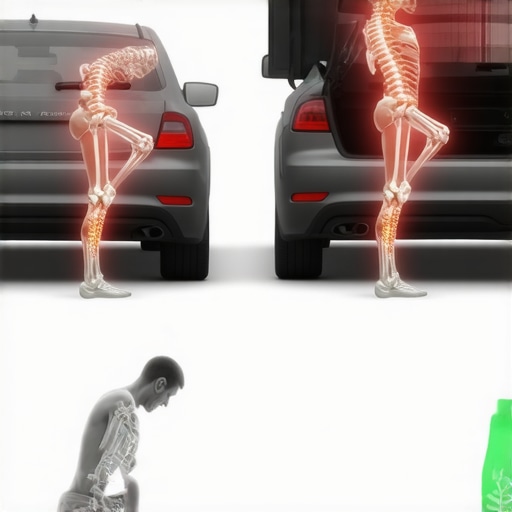
Can you still lift heavy loads with a diagnosed herniated disc?
This is the question I hear most often from people who feel like their active life is over after an MRI. The short answer is yes, but your margin for error is now much thinner. You have to be hyper-vigilant about unlocking sciatica relief through movement patterns that avoid ‘end-range’ flexion—meaning you never let your back round under weight. It is not just about the lift itself; it is about how you recover. For instance, finding the best sleeping position for a herniated disc ensures your spine is not under tension overnight, giving you the physical ‘budget’ to move and lift the next day. If you are unsure whether your current ache is a simple strain or something more permanent, you should check for key symptoms to watch to ensure you aren’t ignoring a serious neurological issue. Have you ever fallen into the ‘strong core’ trap only to find your back still hurts? Let me know in the comments.I used to think that as long as I didn’t lift anything heavy, I was safe. I was wrong. Maintenance is where the real battle is won, and I have found that the most expensive gadgets rarely outperform the simplest tools. I personally swear by a tennis ball. It sounds low-tech, but knowing how a simple tennis ball can fix deep glute tension saved me hundreds in massage therapy bills. I use it against a wall to pin down those trigger points that develop after a long day of sitting. It is about precision, not pressure. When you find that spot that makes your breath catch, stay there and breathe. This is part of my mobility mastery daily tips that keep me from regressing into that old, stiff version of myself. 
Why a Lumbar Roll is My Non-Negotiable Tool
If you spend any amount of time at a desk or in a car, your lumbar curve is under siege. I started using a small, firm cushion tucked into the small of my back because I realized my office chair was essentially a spine-crusher. Learning how to use a lumbar roll to prevent mid-day back fatigue changed my energy levels completely. It is not just about comfort; it is about keeping the discs in their natural alignment so they do not start to bulge under the weight of your own torso. I have even taken this a step further by figuring out how to sit in a car for hours without triggering sciatica, which involves a combination of the roll and frequent ‘glute squeezes’ to keep blood flowing. Dr. Stuart McGill, a world-renowned expert on spine biomechanics and author of ‘Back Mechanic,’ emphasizes that ‘spine hygiene’—the way we move throughout the entire day—is more important than any thirty-minute gym session. If you are constantly picking at the scab by sitting poorly, no amount of stretching will heal you.
How do I keep my back from locking up again?
Maintenance is not a destination; it is a rhythm. I suggest a 5-minute ‘check-in’ every morning. I use the toe-touch test not to see if I can reach the floor, but to feel where the tension is hiding that day. If my hamstrings feel like steel cables, I know my pelvis is tilted and I need to prioritize hip mobility. I also make sure to use a foam roller for sciatica relief by focusing on the lateral quads rather than the nerve itself. Looking ahead, I predict we will see a massive shift toward wearable biofeedback sensors that alert you when your spine is out of neutral for more than ten minutes. Until then, we have to be our own sensors. I want you to try this right now: set a timer for 30 minutes, and when it goes off, do a 10-second hip reset. It is the single most effective way to scale your progress and ensure you are not just managing pain, but managing back pain in 2025 and beyond with confidence.
Lessons Bought with a Searing Pop
After years of treating my body like an unthinking forklift, I realized that back health isn’t about being ‘tough.’ My biggest lightbulb moment was discovering that leverage always beats muscle. When I stopped trying to snatch my dog from a distance and started moving my feet to get closer, the constant inflammation finally vanished. Another hard truth? Your body gives you dozens of whispers—like a stiff hamstring or a dull ache—long before it screams with a full-blown spasm. Ignoring those small whispers is a recipe for a three-week recovery. Finally, I learned that healing isn’t passive; it is an active commitment to mobility mastery daily tips that prevent the damage from accumulating in the first place.
#IMAGE_PLACEHOLDER_E#
My Daily Arsenal for a Pain-Free Life
I don’t believe in expensive fads, but a few specific tools have become my non-negotiables for spinal integrity. First, I highly recommend Dr. Stuart McGill’s work for anyone wanting to understand true spinal stability. For physical tools, I always keep a simple tennis ball in my bag; it is the most effective way to access sciatica relief secrets that actually work while you are on the go. For my desk and car, a firm lumbar roll is essential to keep my spine in neutral when I am tired. I trust these tools because they put the power of recovery back in my hands. If you aren’t sure where your specific ache is coming from, you should check these key symptoms to watch to ensure you are using the right approach for your body.
Start Rebuilding Your Resilience Today
You do not have to live in fear of the next ‘twinge’ every time you reach for your child or your pet. By fundamentally changing how you approach every lift, you are investing in a future where you can stay active and present. It takes practice to make the hip hinge feel natural, but the payoff is a life lived without the constant shadow of injury. Reclaiming your strength is about small, consistent wins in your daily movement patterns. Check out these back pain breakthroughs and take the first step toward a more mobile, confident version of yourself. You’ve got this, and your spine will thank you for years to come. Managing back pain in 2025 is entirely possible when you have the right mechanics on your side.
Have you ever felt that sharp, warning ‘zing’ in your glute while picking up a pet or a child? Let me know your experience in the comments below!