
The 10-second breathing trick for instant lower back relief

I was standing in my kitchen, frozen. I had just leaned over to pick up a single, solitary sock, and my lower back locked up like a rusty gate. It is embarrassing, isn’t it? One minute you are a functioning adult, and the next you are defeated by laundry. I spent years trying every ‘hack’ in the book, yet I remained stuck in a cycle of stiffness. I even bought a fancy ergonomic chair, only to realize later why your perfect sitting posture is making you stiffer instead of helping. I was missing the most basic tool I owned: my breath. We are going to fix that today. I want to show you how a specific, ten-second reset can do more for a sudden twinge than twenty minutes of aggressive stretching ever could. have you ever felt that sudden, sharp ‘catch’ in your back that makes you afraid to even move?
The Moment I Realized Stretching Was Making It Worse
For a long time, I made the classic mistake of trying to ‘force’ my way out of a back spasm. I would drop to the floor and stop pulling your knees to your chest for back relief because that is what everyone told me to do. It felt okay for a second, but then the pain would snap back even harder. My mistake was simple: I was treating my muscles like they were just tight, when they were actually terrified. Your brain locks your back down to protect you. If you just yank on those muscles, your nervous system panics more. It wasn’t until I learned how a simple breath reset can calm a back spasm that I finally felt in control again. According to a study in the Journal of Physical Therapy Science, diaphragmatic breathing is a primary driver of intra-abdominal pressure, which literally stabilizes the spine from the inside out, acting like a built-in lumbar support.
Is a Short Breathing Trick Actually Worth the Hype?
I get the skepticism. When you are in real, thumping pain, ‘just breathe’ sounds like a platitude you would hear in a yoga class you didn’t want to attend. But this isn’t about relaxation; it is about mechanics. Think of your torso like a pressurized canister. When your breathing is shallow—which happens automatically when we are stressed or hurt—that canister loses its structural integrity. By spending just ten seconds focusing on a specific expansion of the ribs, you are effectively re-inflating your own internal support system. It is the difference between a flat tire and one that is properly pressurized for the road. If you have been struggling with the link between poor posture and chronic back pain, this breath is your first line of defense. We aren’t just trying to ‘feel better’; we are trying to signal to your brain that the danger has passed so it can let go of those guarded muscles.To start, you need to abandon the idea of ‘sucking it in.’ We have been conditioned to keep a flat stomach for aesthetics, but for spinal health, that is a disaster. When you pull your belly button toward your spine, you are actually hollowing out your support system. Instead, I want you to think about creating a 360-degree ring of pressure around your waist. This is the specific core move that stabilizes the si joint and provides a base for your entire upper body. It is not about being ‘strong’ in the traditional sense; it is about being pressurized.
How to Build Your Internal Bracing System
The goal is to move your breath low. If your shoulders are moving up toward your ears when you inhale, you are failing the test. You are essentially using your neck muscles to breathe, which often leads to the fix for that constant burning sensation between your shoulder blades. To do this right, sit or stand tall and place your hands on the very bottom of your ribcage, just above your waist. Your thumbs should be pointing toward your spine and your fingers toward the front. This physical feedback is crucial because your brain needs to ‘see’ where the air is supposed to go.
Breathe Into Your Thumbs Not Your Chest
When you inhale, try to push your thumbs away with your back muscles. It sounds impossible at first. For years, I could only move my chest. But once you unlock this, you are accessing mobility mastery daily tips to keep your spine and joints healthy without even trying. You aren’t just filling your lungs; you are using the pressure of the air to push against your spine from the inside. Imagine a balloon inflating inside a cardboard box. As the balloon expands, it makes the box much harder to crush. That is your spine when you breathe correctly.
The Grocery Store Incident: Why Messy Execution Beats Perfection
I remember standing in the checkout line last November, feeling my lower back start to seize after carrying a heavy basket. I didn’t have a floor to lie on or a foam roller, so I just stood there, hands on my ribs, trying to breathe ‘wide.’ I looked like I was doing a very slow, very weird dance. A guy behind me actually moved his cart back a few inches, probably thinking I was hyperventilating. It wasn’t graceful, and I definitely felt self-conscious, but that concentrated expansion stopped the spasm in its tracks. It taught me that enhance your back mobility ergonomic tips for everyday comfort aren’t just for the gym; they are for the messy moments when life actually happens.
The Five-Second Hold Strategy
Once you have mastered the expansion, add a small pause. Inhale for four seconds, feeling that 360-degree stretch in your midsection, and then hold that pressure for two seconds before a slow, controlled exhale through pursed lips. This ‘pause’ is where the nervous system recalibrates. It forces your brain to realize that you are stable and safe. If you find yourself struggling with movement later in the day, combine this with the 10-second hip reset for relief after sitting to keep the momentum going. You are essentially training your body to stop over-reacting to every minor movement or twinge.
The Big Lie About Feeling Tight
We have been conditioned to believe that ‘tightness’ is a physical problem that requires a physical solution—usually stretching. But here is the nuance that most people miss: tightness is often a neurological signal, not a muscular length issue. When I first started diving into the mechanics of the spine, I realized that my hamstrings weren’t actually short. They were just ‘clutched’ by my brain to protect my unstable lower back. In fact, why stretching your hamstrings can actually flare up sciatica is one of the most common reasons people stay in chronic pain cycles. If you pull on a nerve that is already irritated, you are just pouring gasoline on the fire.
Why Does My Back Still Hurt Even Though I Have a Strong Core?
This is the question that haunts every gym-goer with a herniated disc. We are told to build a ‘strong core,’ but we often focus on the wrong kind of strength. Six-pack abs (the rectus abdominis) are great for looking good at the beach, but they are actually quite poor at stabilizing the spine. Dr. Stuart McGill, a leading expert in spine biomechanics, emphasizes that the spine needs ‘stiffness’—a co-contraction of all the layers of the abdominal wall—rather than just strength in one direction. This is exactly why your core strength wont fix your back if your hips are locked. If your hips cannot move, your lower back is forced to do the job of a joint it wasn’t designed for, leading to inevitable wear and tear. 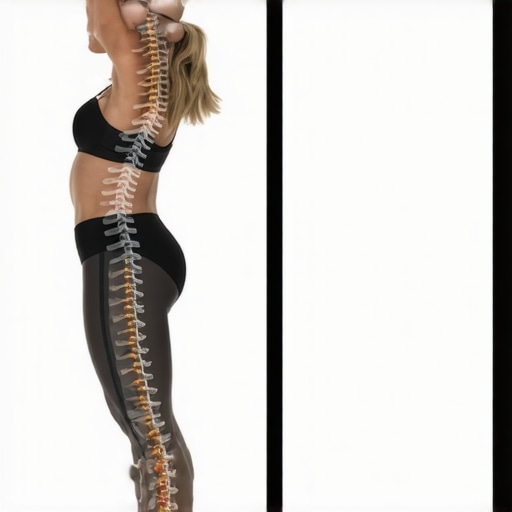
Stop Chasing Symptoms and Start Bracing the Spine
The biggest ‘oops’ factor I see is the tendency to stretch the back into a C-shape for relief. I used to do this every morning, thinking I was ‘opening up’ my vertebrae. In reality, why you should stop stretching your back into a c-shape comes down to disc pressure. Rounding your spine under tension can actually push the disc material further toward the nerves. If you are dealing with shooting pain, you need to understand the nerve glide exercise that calms burning leg pain instead of aggressive static holds. This is a sophisticated way to ‘floss’ the nerve through the surrounding tissue without over-stretching it.
The Trap of the ‘Good’ Sensation
Another common mistake is confusing ‘relief’ with ‘recovery.’ Many people love the feeling of the truth about yoga for sciatica sufferers—they feel a deep, satisfying stretch in the moment, but the pain returns an hour later. This is because the stretch triggers a temporary ‘stretch reflex’ that dulls the pain, but doesn’t fix the underlying instability. You need to be able to distinguish between a healthy muscular release and a dangerous neural pull. If you are unsure, it is vital to know is your back pain a sign of something more serious before you continue any DIY routine. Have you ever fallen into the trap of stretching your hamstrings to fix your back, only to have it blow up the next day? Let me know in the comments.
Why I Stopped Waiting for the Next Big Crash
I used to be a ‘reactive’ patient. I would only pay attention to my spine when it screamed at me. But after years of setbacks, I realized that why maintenance care is better than waiting for a spinal crisis is the only way to stay out of the emergency room. If you only brush your teeth when you have a cavity, you have already lost the game. Your back is no different. We need to shift the focus from ‘putting out fires’ to building a fireproof house. This means looking at the tools we use every single day—from the shoes on our feet to the way we sit during our morning commute.
How do I keep my spine happy for the long haul?
The secret to long-term results isn’t about doing a two-hour workout once a week; it is about the micro-adjustments you make throughout the day. For example, I changed how to pick a chair that actually supports your lumbar curve because most office furniture is designed for aesthetics, not anatomy. I also started being hyper-aware of my environment. Even simple tasks can be dangerous if your mechanics are off, which is why I mastered how to load the dishwasher without hurting your lower back. It sounds mundane, but it is these repetitive, low-level movements that slowly erode our spinal health over time. A 2020 meta-analysis in the British Journal of Sports Medicine found that ‘graded activity’—the intentional, gradual increase in movement complexity—is significantly more effective at preventing recurrence than passive treatments alone.
The Tools That Actually Earned a Spot in My Gym Bag
I have a closet full of gadgets that promised to fix me, but most of them are collecting dust. There are only a few things I swear by now. First is a simple, high-bounce tennis ball. Learning how a simple tennis ball can fix deep glute tension saved me more money on physical therapy than I care to admit. It allows for pinpoint pressure on the piriformis that a broad foam roller just can’t reach. Speaking of rollers, you have to be careful; I had to relearn how to use a foam roller for sciatica without making it worse because rolling directly over an inflamed nerve is a recipe for disaster.  Looking ahead, I predict that unlocking mobility expert tips on managing back pain in 2025 will lean heavily into personalized biomechanical sensors. We are moving toward an era where your phone will alert you if your posture is shifting into a ‘high-risk’ zone before the pain even starts. Until then, we have to rely on our internal sensors. This is why mobility mastery daily tips to keep your spine and joints healthy are so vital. If you want to scale your progress, stop looking for a magic pill and start looking at your daily habits. Try this tonight: instead of collapsing onto your soft couch after work—which we know is a reason to avoid soft couches if you have sciatica—spend five minutes on the floor with your legs at a ninety-degree angle on a chair. This ‘psoas release’ position uses gravity to reset your pelvis without you having to lift a finger. Give it a shot and see how much lighter your legs feel when you stand back up.I was standing in my kitchen, frozen. I had just leaned over to pick up a single, solitary sock, and my lower back locked up like a rusty gate. It is embarrassing, isn’t it? One minute you are a functioning adult, and the next you are defeated by laundry. I spent years trying every ‘hack’ in the book, yet I remained stuck in a cycle of stiffness. I even bought a fancy ergonomic chair, only to realize later why your perfect sitting posture is making you stiffer instead of helping. I was missing the most basic tool I owned: my breath. We are going to fix that today. I want to show you how a specific, ten-second reset can do more for a sudden twinge than twenty minutes of aggressive stretching ever could. have you ever felt that sudden, sharp ‘catch’ in your back that makes you afraid to even move?
The Moment I Realized Stretching Was Making It Worse
For a long time, I made the classic mistake of trying to ‘force’ my way out of a back spasm. I would drop to the floor and stop pulling your knees to your chest for back relief because that is what everyone told me to do. It felt okay for a second, but then the pain would snap back even harder. My mistake was simple: I was treating my muscles like they were just tight, when they were actually terrified. Your brain locks your back down to protect you. If you just yank on those muscles, your nervous system panics more. It wasn’t until I learned how a simple breath reset can calm a back spasm that I finally felt in control again. According to a study in the Journal of Physical Therapy Science, diaphragmatic breathing is a primary driver of intra-abdominal pressure, which literally stabilizes the spine from the inside out, acting like a built-in lumbar support.
Is a Short Breathing Trick Actually Worth the Hype?
I get the skepticism. When you are in real, thumping pain, ‘just breathe’ sounds like a platitude you would hear in a yoga class you didn’t want to attend. But this isn’t about relaxation; it is about mechanics. Think of your torso like a pressurized canister. When your breathing is shallow—which happens automatically when we are stressed or hurt—that canister loses its structural integrity. By spending just ten seconds focusing on a specific expansion of the ribs, you are effectively re-inflating your own internal support system. It is the difference between a flat tire and one that is properly pressurized for the road. If you have been struggling with the link between poor posture and chronic back pain, this breath is your first line of defense. We aren’t just trying to ‘feel better’; we are trying to signal to your brain that the danger has passed so it can let go of those guarded muscles.To start, you need to abandon the idea of ‘sucking it in.’ We have been conditioned to keep a flat stomach for aesthetics, but for spinal health, that is a disaster. When you pull your belly button toward your spine, you are actually hollowing out your support system. Instead, I want you to think about creating a 360-degree ring of pressure around your waist. This is the specific core move that stabilizes the si joint and provides a base for your entire upper body. It is not about being ‘strong’ in the traditional sense; it is about being pressurized.
How to Build Your Internal Bracing System
The goal is to move your breath low. If your shoulders are moving up toward your ears when you inhale, you are failing the test. You are essentially using your neck muscles to breathe, which often leads to the fix for that constant burning sensation between your shoulder blades. To do this right, sit or stand tall and place your hands on the very bottom of your ribcage, just above your waist. Your thumbs should be pointing toward your spine and your fingers toward the front. This physical feedback is crucial because your brain needs to ‘see’ where the air is supposed to go.
Breathe Into Your Thumbs Not Your Chest
When you inhale, try to push your thumbs away with your back muscles. It sounds impossible at first. For years, I could only move my chest. But once you unlock this, you are accessing mobility mastery daily tips to keep your spine and joints healthy without even trying. You aren’t just filling your lungs; you are using the pressure of the air to push against your spine from the inside. Imagine a balloon inflating inside a cardboard box. As the balloon expands, it makes the box much harder to crush. That is your spine when you breathe correctly.
The Grocery Store Incident: Why Messy Execution Beats Perfection
I remember standing in the checkout line last November, feeling my lower back start to seize after carrying a heavy basket. I didn’t have a floor to lie on or a foam roller, so I just stood there, hands on my ribs, trying to breathe ‘wide.’ I looked like I was doing a very slow, very weird dance. A guy behind me actually moved his cart back a few inches, probably thinking I was hyperventilating. It wasn’t graceful, and I definitely felt self-conscious, but that concentrated expansion stopped the spasm in its tracks. It taught me that enhance your back mobility ergonomic tips for everyday comfort aren’t just for the gym; they are for the messy moments when life actually happens.
The Five-Second Hold Strategy
Once you have mastered the expansion, add a small pause. Inhale for four seconds, feeling that 360-degree stretch in your midsection, and then hold that pressure for two seconds before a slow, controlled exhale through pursed lips. This ‘pause’ is where the nervous system recalibrates. It forces your brain to realize that you are stable and safe. If you find yourself struggling with movement later in the day, combine this with the 10-second hip reset for relief after sitting to keep the momentum going. You are essentially training your body to stop over-reacting to every minor movement or twinge.
The Big Lie About Feeling Tight
We have been conditioned to believe that ‘tightness’ is a physical problem that requires a physical solution—usually stretching. But here is the nuance that most people miss: tightness is often a neurological signal, not a muscular length issue. When I first started diving into the mechanics of the spine, I realized that my hamstrings weren’t actually short. They were just ‘clutched’ by my brain to protect my unstable lower back. In fact, why stretching your hamstrings can actually flare up sciatica is one of the most common reasons people stay in chronic pain cycles. If you pull on a nerve that is already irritated, you are just pouring gasoline on the fire.
Why Does My Back Still Hurt Even Though I Have a Strong Core?
This is the question that haunts every gym-goer with a herniated disc. We are told to build a ‘strong core,’ but we often focus on the wrong kind of strength. Six-pack abs (the rectus abdominis) are great for looking good at the beach, but they are actually quite poor at stabilizing the spine. Dr. Stuart McGill, a leading expert in spine biomechanics, emphasizes that the spine needs ‘stiffness’—a co-contraction of all the layers of the abdominal wall—rather than just strength in one direction. This is exactly why your core strength wont fix your back if your hips are locked. If your hips cannot move, your lower back is forced to do the job of a joint it wasn’t designed for, leading to inevitable wear and tear.
Stop Chasing Symptoms and Start Bracing the Spine
The biggest ‘oops’ factor I see is the tendency to stretch the back into a C-shape for relief. I used to do this every morning, thinking I was ‘opening up’ my vertebrae. In reality, why you should stop stretching your back into a c-shape comes down to disc pressure. Rounding your spine under tension can actually push the disc material further toward the nerves. If you are dealing with shooting pain, you need to understand the nerve glide exercise that calms burning leg pain instead of aggressive static holds. This is a sophisticated way to ‘floss’ the nerve through the surrounding tissue without over-stretched it.
The Trap of the ‘Good’ Sensation
Another common mistake is confusing ‘relief’ with ‘recovery.’ Many people love the feeling of the truth about yoga for sciatica sufferers—they feel a deep, satisfying stretch in the moment, but the pain returns an hour later. This is because the stretch triggers a temporary ‘stretch reflex’ that dulls the pain, but doesn’t fix the underlying instability. You need to be able to distinguish between a healthy muscular release and a dangerous neural pull. If you are unsure, it is vital to know is your back pain a sign of something more serious before you continue any DIY routine. Have you ever fallen into the trap of stretching your hamstrings to fix your back, only to have it blow up the next day? Let me know in the comments.
Why I Stopped Waiting for the Next Big Crash
I used to be a ‘reactive’ patient. I would only pay attention to my spine when it screamed at me. But after years of setbacks, I realized that why maintenance care is better than waiting for a spinal crisis is the only way to stay out of the emergency room. If you only brush your teeth when you have a cavity, you have already lost the game. Your back is no different. We need to shift the focus from ‘putting out fires’ to building a fireproof house. This means looking at the tools we use every single day—from the shoes on our feet to the way we sit during our morning commute.
How do I keep my spine happy for the long haul?
The secret to long-term results isn’t about doing a two-hour workout once a week; it is about the micro-adjustments you make throughout the day. For example, I changed how to pick a chair that actually supports your lumbar curve because most office furniture is designed for aesthetics, not anatomy. I also started being hyper-aware of my environment. Even simple tasks can be dangerous if your mechanics are off, which is why I mastered how to load the dishwasher without hurting your lower back. It sounds mundane, but it is these repetitive, low-level movements that slowly erode our spinal health over time. A 2020 meta-analysis in the British Journal of Sports Medicine found that ‘graded activity’—the intentional, gradual increase in movement complexity—is significantly more effective at preventing recurrence than passive treatments alone.
The Tools That Actually Earned a Spot in My Gym Bag
I have a closet full of gadgets that promised to fix me, but most of them are collecting dust. There are only a few things I swear by now. First is a simple, high-bounce tennis ball. Learning how a simple tennis ball can fix deep glute tension saved me more money on physical therapy than I care to admit. It allows for pinpoint pressure on the piriformis that a broad foam roller just can’t reach. Speaking of rollers, you have to be careful; I had to relearn how to use a foam roller for sciatica without making it worse because rolling directly over an inflamed nerve is a recipe for disaster. Looking ahead, I predict that unlocking mobility expert tips on managing back pain in 2025 will lean heavily into personalized biomechanical sensors. We are moving toward an era where your phone will alert you if your posture is shifting into a ‘high-risk’ zone before the pain even starts. Until then, we have to rely on our internal sensors. This is why mobility mastery daily tips to keep your spine and joints healthy are so vital. If you want to scale your progress, stop looking for a magic pill and start looking at your daily habits. Try this tonight: instead of collapsing onto your soft couch after work—which we know is a reason to avoid soft couches if you have sciatica—spend five minutes on the floor with your legs at a ninety-degree angle on a chair. This ‘psoas release’ position uses gravity to reset your pelvis without you having to lift a finger. Give it a shot and see how much lighter your legs feel when you stand back up.
The Three Truths That Finally Changed My Spine Health
Looking back, the biggest shifts in my recovery didn’t come from a gym. They came from understanding that pain is a signal, not a permanent sentence. First, I realized that high-intensity training can’t fix a low-intensity lifestyle; I had to master the proper way to brush your teeth without straining your back before I could worry about my personal bests in the weight room. Second, I learned to stop viewing my body as separate, disconnected pieces. Understanding the hidden link between tight calves and neck stiffness made me realize that a back issue is often a whole-body coordination problem. Finally, I accepted that my brain acts as an overprotective bodyguard. When it senses instability, it creates stiffness to shield me. My job is to prove I am safe through consistent, pressurized breathing and intentional movement.
What I Keep in My Daily Mobility Kit
I have traded the expensive vibration plates and complicated braces for a few key resources that actually move the needle. A standard tennis ball remains my top recommendation for targeted release; it is the most effective tool I have found for melting deep tension. I also rely heavily on gait mechanics, as learning how to fix your gait to reduce chronic hip clicking has preserved my joints during long walks. Most importantly, I keep a curated list of back pain breakthroughs navigating your path to restored mobility at my disposal to remind myself that the science of recovery is always evolving. These aren’t just gadgets; they are the foundation of a life where I am no longer afraid to move.
Believe in Your Capacity to Recover
If you are currently in the middle of a flare-up, please know that your body hasn’t failed you—it is simply communicating a need for stability. By using the breath and bracing techniques we have explored, you are giving your nervous system the green light to let go of its defensive guard. You have the inherent power to change how you move and, eventually, how you feel. Navigating back pain is a marathon, but every deep, 360-degree breath is a meaningful step toward the finish line. Don’t be afraid to take that first small step today. Which of these breathing tips are you going to try first during your next busy day? Let me know in the comments below!