
Why heat is often better than ice for chronic neck stiffness

I woke up last Tuesday feeling like my head was bolted to my shoulders with rusty hardware. My first instinct, honed by years of bad advice, was to grab the frozen peas. I sat there for twenty minutes, shivering and numbing the area, only to find that when I took the pack off, I could move even less than before. It was a classic aha moment—or rather, an ouch moment. For years, I treated my chronic stiffness like a fresh sports injury, but your neck isn’t a twisted ankle. Today, I am going to show you why flipping the switch to heat will finally give you the range of motion you have been chasing. We are moving past the numb it and hope phase and into actual recovery.
The Frozen Pea Fiasco that Taught Me Everything
I used to be an ice addict. I thought that if my neck felt tight and angry, it must be inflamed. But here is the mistake I made: I was confusing chronic tension with acute trauma. When you have chronic neck pain, your muscles are often in a state of semi-permanent contraction. They are hungry for oxygen and blood. Ice, while great for a literal punch to the face, actually constricts blood flow. It tells those already-tight muscles to clench even harder to stay warm. [image] According to the Mayo Clinic, heat is far more effective for relaxing tissues and stimulating blood flow in chronic conditions. Have you ever felt stiffer after icing your neck for twenty minutes? You aren’t crazy; you are just cold.
Does heat make the inflammation even worse?
This is the biggest fear I hear from my neighbors and friends. We have been conditioned to fear heat because we think it will boil the inflammation. But unless you have just been in a car accident or fell down the stairs, that stiffness is likely a lack of mobility and blood flow, not a massive internal fire. Heat acts like a key for a locked door. It softens the glue, or fascia, between your muscles. If you are also struggling with finding the right pillow height, you know that nighttime stiffness is a different beast entirely. We need to melt the tension, not freeze it in place. Tell me, have you been icing your neck for weeks without seeing any real improvement?
Why Moist Heat Beats Your Dry Heating Pad Every Time
Think of your neck muscles like a sponge that has been sitting in the sun for three days. It is brittle, stiff, and if you try to bend it quickly, it snaps. Adding dry heat is like putting that sponge in a toaster; it gets warm, but it doesn’t get flexible. To get that sponge moving again, you need moisture. This is why a damp towel wrapped around a hot water bottle is infinitely more effective than a standard electric heating pad. The moisture helps the heat penetrate deeper into the tissue, bypassing the skin barrier and reaching the stubborn fibers of the levator scapulae and trapezius. I remember one Sunday afternoon where I was so desperate, I microwaved a dry rice bag until it smelled like burnt toast. It was hot, sure, but it felt like it was just scorching my skin while the muscles underneath remained as hard as granite. It wasn’t until I layered a damp washcloth between my skin and that heat source that I felt the melting sensation. Within ten minutes, I could actually turn my head to check the door. It was a messy, drippy lesson, but it worked. This deep penetration is essential if you want to revitalize your neck and get back to a normal life. 
The Fifteen Minute Window for Maximum Mobility
Heat alone is only half the battle. If you just sit there with a warm wrap and then go right back to looking down at your phone, you are effectively creating a permanent neck hump. The goal of the heat is to create a window of opportunity. When those muscles are warm and the blood is flowing, they are finally compliant enough to be stretched without triggering a protective spasm. I call this the Heat-Move-Reset cycle. You apply moist heat for 15 minutes, then immediately perform gentle range-of-motion exercises. If you are stuck at a desk, you should also follow the 20-20-20 rule to ensure you aren’t undoing all your progress the moment you log back in.
The Specific Stretch That Unlocks Your Shoulder Blades
Once the area is warm, you need to target the knots that usually hide right between your shoulder blades. These knots act as anchors, pulling on your neck every time you move your arms. Instead of a random pull, try the 30-second wall stretch that focuses on opening the chest and dropping the scapula. When I first started doing this, I realized I had been holding my shoulders near my ears for nearly a decade. By combining the heat to soften the tissue and the wall stretch to reset the alignment, the relief wasn’t just temporary; it actually lasted through my afternoon meetings.
Stop the Burning Sensation Before it Starts
If you feel that familiar fire starting at the base of your skull, it is often a sign that your ergonomics are failing you. You can heat and stretch all day, but if you don’t adjust your monitor properly, you are fighting a losing war. The heat buys you the comfort to make these changes, but the changes are what keep the pain from returning. Think of heat as the mechanic that fixes the engine, and ergonomics as the oil that keeps it from seizing up again. If you combine these steps, you stop managing symptoms and start changing the environment of your body. These daily tips to keep your spine healthy are the foundation of a life without chronic stiffness.
We have all heard the advice: sit up straight, shoulders back, chin tucked. I spent years trying to maintain that ‘perfect’ military-style posture, convinced that if I could just stay in that one position, my neck pain would vanish. But here is the nuance most people miss: your body was never meant to be a statue. In fact, research published in the British Journal of Sports Medicine suggests that postural variability—the ability to change positions frequently—is far more important for spinal health than maintaining a single ‘correct’ alignment. When you force yourself into a rigid position, you are essentially creating a new kind of tension. Why your perfect sitting posture is making you stiffer is actually quite simple: you are overworking ‘postural’ muscles that need a break, leading to that deep, gnawing fatigue at the end of the day. This is the biggest trap for the advanced recovery seeker: the belief that stability means stillness.
Can you actually be too stable for your own good?
In the world of mobility, there is a concept called ‘over-bracing.’ I see it all the time with people who have read every blog on core strength. They walk around with their abs perpetually tensed, thinking they are protecting their spine. But if you are constantly bracing, you are effectively locking your joints in place. I used to be the person who squeezed my glutes and engaged my core while just standing in line for coffee. All I got for my effort was a fresh bout of sciatica because my hips couldn’t move naturally. The truth is, why your core strength won’t fix your back if your hips are locked comes down to how force is distributed; if the hips can’t rotate, that pressure has nowhere to go but your lumbar discs. Have you ever fallen into this trap of ‘over-correcting’ your body into a state of permanent tension? Let me know in the comments if you’ve been trying to hold a perfect pose all day.
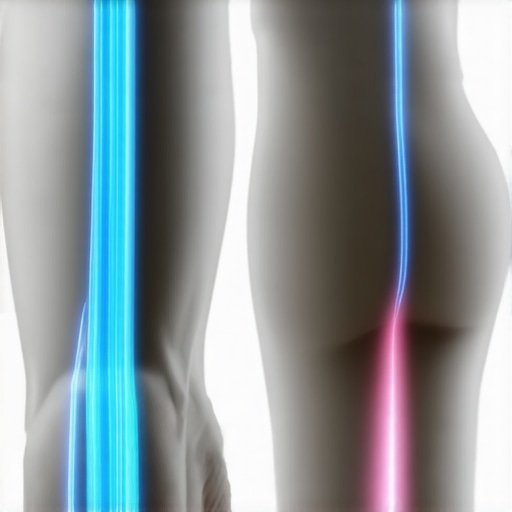
Another nuance that most beginners overlook is the ‘Hamstring Trap.’ Everyone with lower back pain starts frantically stretching their hamstrings, but for many, those hamstrings aren’t actually short—they are just ‘long and tight’ because the pelvis is tilted. If you keep pulling on a nerve that is already under tension, you are going to make things worse. This is why why stretching your hamstrings often makes your sciatica worse is such a common complaint in my Drowsy Morning emails. We need to stop looking at the body as a collection of separate parts and start seeing it as a connected chain. If your neck is stiff, don’t just heat your neck; look at your mid-back and even your jaw. The hidden link between tight calves and neck stiffness is a real thing, caused by the superficial back line of fascia that runs from your toes to your forehead. When you understand these advanced connections, you stop chasing symptoms and start unlocking mobility with actual intent. For those looking for expert tips on managing back pain in 2025, the focus has shifted from ‘fixing’ a position to ‘inviting’ movement back into every layer of your tissue. If you aren’t sure if your pain is just a simple muscle knot or something that requires a professional eye, keep a close watch on the warning signs your sciatica needs professional help before you try to ‘stretch’ your way out of a herniated disc.
I’ve spent thousands of dollars on gadgets that promised to “align” my spine while I slept, only to find most of them gathering dust in my closet. What actually works for me isn’t the flashy $500 vibrating chair; it’s the $3 tennis ball I keep in my desk drawer. When I feel that deep, familiar throb in my hip, I don’t wait for it to bloom into full-blown nerve pain. I use that ball to hunt down the trigger points in my glutes. This is a crucial part of why maintenance care is better than waiting for a spinal crisis. If you can catch a “hot spot” on a Tuesday afternoon, you won’t be crawling into a clinic on Friday morning. I personally use the tennis ball technique because it allows me to apply pinpoint pressure to the piriformis muscle, which is often the silent culprit behind my leg pain. You can see exactly how a simple tennis ball can fix deep glute tension and keep you from losing a weekend to the couch.
How do I maintain these mobility gains without making it a full-time job?
The secret is integrating “micro-adjustments” into your existing routine. You don’t need a two-hour gym session; you need to change how you interact with your environment. For example, I’ve learned that how to adjust your monitor to stop that burning neck pain is more about the height of my eyes than the comfort of my chair. I also swear by a lumbar roll during my commute. Learning how to use a lumbar roll to prevent mid-day back fatigue was a game-changer for my 40-minute drive. According to Dr. Stuart McGill, a leading expert in spine biomechanics and author of Back Mechanic, the goal should be “spinal hygiene”—the idea that we must treat our backs with the same daily consistency we treat our teeth. If you wouldn’t skip brushing, don’t skip your 10-second hip reset.

The tools I actually carry in my laptop bag
Looking ahead to 2025 and beyond, I predict we are going to see a massive shift toward wearable biofeedback. We won’t just guess if our posture is failing; our shirts or necklaces will gently vibrate to remind us to vary our position. Until then, we have to be our own sensors. I want you to try one thing today: take a tennis ball and spend two minutes leaning against a wall, rolling out the space between your shoulder blades. It’s the fastest way to experience the relief I’m talking about. Keeping your body fluid is about mobility mastery and daily tips to keep your spine and joints healthy. If you are consistent, the results aren’t just temporary—they become your new baseline.
The Brutal Truth About Why My Neck Wouldn’t Stay Relaxed
For years, I thought if I just found the “right” exercise, my pain would vanish instantly. The hardest lesson I learned was that consistency beats intensity every single time. You can’t undo a decade of slouching with one twenty-minute stretch. Another eye-opener was realizing how much jaw clenching and chronic neck pain are intertwined; I was literally biting my way into a stiff neck every night. I also had to accept that my quest for a military-style posture was actually backfiring, leading to a state of permanent tension that my body couldn’t sustain.
My Personal Recovery Kit for Staying Fluid
I don’t believe in expensive gadgets, but I do swear by a few basics. First, the book Back Mechanic by Dr. Stuart McGill completely changed how I view spinal hygiene. Second, I never travel without a simple tennis ball to help with relieving deep glute and sciatic pain when my hips tighten up. #IMAGE_PLACE_FINAL# Finally, a high-quality moist heating pad is the only thing I use for my neck. These aren’t just “nice-to-haves”; they are the pillars of managing back pain in 2025 and beyond. They work because they address the root cause of the stiffness rather than just masking the symptoms.
Take the First Step Toward a More Flexible You
Your journey out of chronic stiffness won’t happen overnight, but it starts with one small change. Whether you swap your ice pack for heat or finally adjust your monitor to save your neck, you are making a choice to stop living in pain. You aren’t broken; you are just out of alignment, and your body is incredibly resilient when given the right signals. Start today by testing that heat-move-reset cycle and see how much easier that first turn of the head feels. Have you noticed that your neck feels tighter on days when you’re particularly stressed or busy? Let me know your experience in the comments below.