
The 30-second wall stretch that releases shoulder blade knots
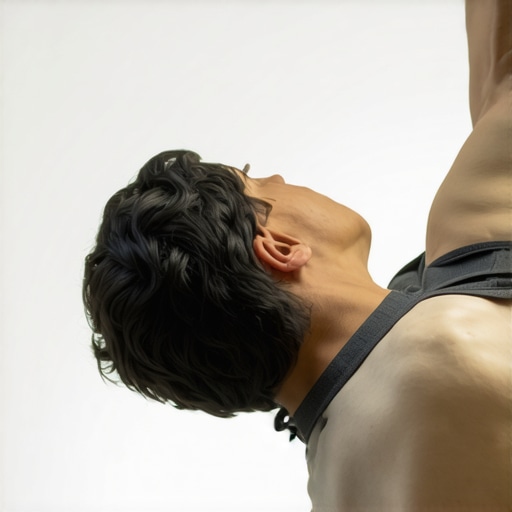
I remember sitting at my desk, squinting at a spreadsheet, when that familiar, searing “hot spot” flared up right under my left shoulder blade. It felt like a thumb-sized knot of iron was trying to fuse my ribcage together. For years, my go-to move was to reach across my body and yank on my arm, hoping to pull the muscle back into place. But here’s the truth: I was making it worse. By constantly stretching the already over-lengthened muscles of my upper back, I was just making them weaker and angrier. I eventually realized that the burning sensation between your shoulder blades isn’t a signal to pull harder; it’s a plea for stability and a reset. Today, I’m going to show you the 30-second wall stretch that finally turned the lights off on that pain and gave me my range of motion back without a single expensive gadget.
Stop Attacking Your Back and Start Using the Wall
Most of us treat our knots like enemies that need to be crushed. We use lacrosse balls, foam rollers, or even the corner of a wall to grind away at the tissue like a bear on a tree. While that might feel “good-hurt” for a minute, the relief rarely lasts because the underlying tension remains. According to clinical observations on myofascial trigger points, these knots are often protective contractions caused by postural stress rather than true muscle damage. If your chest is tight, your back has to work overtime just to hold you upright. That’s why using a doorway to release chest tension is actually more effective than digging into your back. This wall stretch works because it addresses the relationship between your ribs, your scapula, and your spine without over-stretching the sensitive tissues. Have you ever felt like your shoulder knot was actually a permanent part of your anatomy? You aren’t alone, and it’s usually just a sign your nervous system is on high alert.
Can a 30-second move really outperform a deep tissue massage?
I was the biggest skeptic in the world. I used to spend hundreds on professional massages, only to have the knot return by the time I walked to the parking lot. The mistake I made early on was thinking the “knot” was the root cause. In reality, the knot was a symptom of my shoulder blade losing its ability to glide smoothly over my ribs. Sometimes, your shoulder blade pain might be a rib out of place or a simple lack of thoracic mobility. By using the wall as a fixed point, we create the kind of specific leverage that you simply can’t get by just swinging your arms around in the air. It provides the physical feedback your brain needs to finally let the muscle relax. If you’ve been struggling with lasting neck and shoulder pain, this simple pivot might be the lightbulb moment that changes your entire daily routine.
I’ll never forget trying this for the first time in a tiny, dimly lit hotel room. I was there for a conference, and my back felt like a coiled spring ready to snap. I tried to do the move, but I kept arching my lower back like a bridge to compensate for my stiff shoulders. It was messy, frustrating, and I almost gave up. It took me several attempts to realize that if my tailbone wasn’t tucked, I was just cheating the movement and missing the relief entirely. To do this right, stand with your heels about four inches away from the wall and lean your back against it. Your sacrum, your upper back, and the back of your head should all make contact. If you find your head can’t touch the wall without you looking at the ceiling, you’re likely fighting a forward-tilted posture, which is why learning how to adjust your monitor to stop that burning neck pain is a vital long-term fix.
Get Your Back Flat Against the Drywall
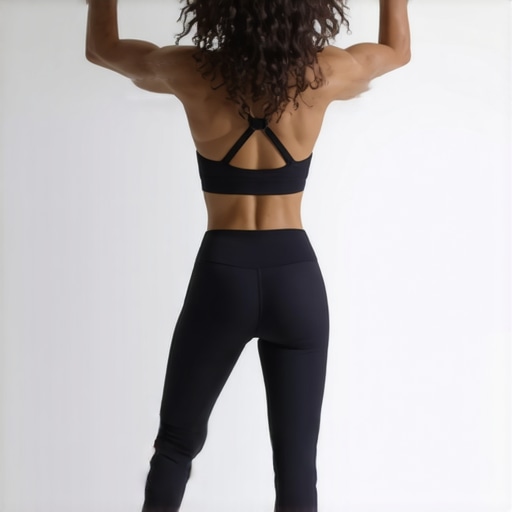
Once you are in position, raise your arms into a “W” shape, pressing your elbows and the backs of your hands firmly against the wall. This is where the work begins. Slowly slide your hands upward, aiming to straighten your arms without letting your elbows or wrists lose contact with the surface. If your ribs start to flare out like a pufferfish, you’ve gone too far. You want to keep your core engaged so that your entire spine stays glued to the wall. This specific leverage forces your shoulder blades to rotate and glide over your ribs rather than just tipping forward. It’s a game of millimeters, not miles. If you find your arms popping off the wall immediately, it’s a clear signal that you need to boost your back mobility through more targeted chest opening first.
The Secret is in the Scapular Glide
As you reach the top of your range—wherever that is for you today—hold it for a second. You might feel a deep stretching sensation across your chest or a slight quivering in the muscles between your shoulder blades. This isn’t the “bad” pain; it’s the feeling of muscles that have been dormant finally waking up. Most people fail because they rush the movement, but the magic happens in the slow, controlled return to the starting “W” position. This eccentric control is what builds lasting stability. If you’re struggling with general stiffness throughout the day, incorporating mobility mastery daily tips to keep your spine and joints healthy can help bridge the gap between these focused sessions.
Breathe Through the Resistance
While you are sliding those arms up, you must breathe. I used to hold my breath until my face turned red, which actually tells the nervous system to tighten up even more to “protect” the spine. Instead, think about breathing into the sides of your ribs. This internal pressure helps nudge the ribs into a better position from the inside out, creating space for the shoulder blade to move. It’s a similar physiological trick to how a simple breath reset can calm a back spasm by lowering your overall tension. If you feel a sharp pinch, stop and reset. That pinch is often a sign that your mid-back is too locked up to allow the movement. Sometimes, the thoracic bridge move that fixes slouching is a better starting point to clear out that congestion before you tackle the wall again. My messy hotel room session taught me that consistency beats perfection every time; by the third set, that “hot spot” under my blade had cooled from a bonfire to a dull ember.
It’s a common scene in every gym: someone with a nagging lower back ache bent over their legs, trying to touch their toes. They think they’re helping, but in my experience, they’re often feeding the beast. We’ve been conditioned to believe that “tight” equals “needs stretching.” But if a muscle is tight because it’s trying to stabilize a weak joint, stretching it is like loosening the lug nuts on a shaky wheel. This is especially true with the sciatic nerve. I’ve seen so many people try to “stretch out” leg pain, not realizing that why stretching your hamstrings often makes your sciatica worse is usually due to mechanical tension on the nerve itself, not the muscle. If you have sciatica, you aren’t stretching a rubber band; you’re pulling on a sensitive electrical cord.
Is your nervous system stuck in a “protective” loop?
The nuance most people miss is “protective tension.” Your brain is smarter than you think. If it senses that your spine or hips are unstable, it will command the surrounding muscles to lock down like a parking brake. A study published in the Journal of Strength and Conditioning Research found that eccentric strengthening—loading the muscle while it lengthens—can improve range of motion more effectively than static stretching. Why? Because it proves to the nervous system that the muscle is strong enough to control that new range. Without that strength, your brain will just reset the tension the moment you stand up. This is exactly why cracking your back at home is a temporary fix; you get a quick neuro-chemical hit, but the underlying instability remains untouched.
Stop Stretching Your Back into a C-Shape
Here is the “oops” factor that catches even experienced athletes: the seated forward fold. I always warn people why you should stop stretching your back into a C-shape. When you round your spine aggressively to reach for your feet, you’re often just gapping the posterior discs and over-stretching the ligaments that provide passive stability. Over time, this makes you more prone to throwing your back out because you’ve traded structural integrity for a superficial feeling of flexibility. Instead, focus on hinging at the hips while keeping a flat back. It’s a subtle shift, but it’s the difference between long-term health and a recurring injury cycle.
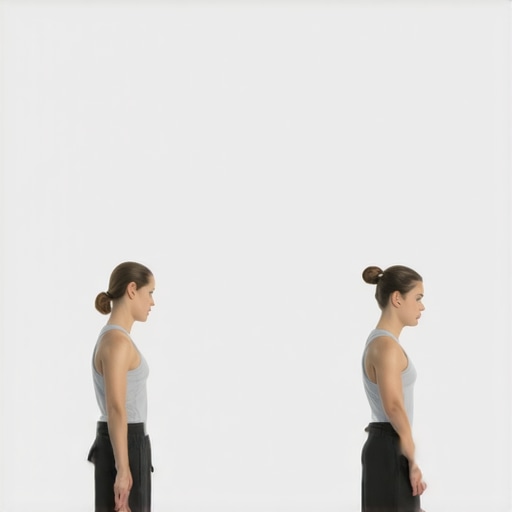
True progress happens when you stop attacking the symptoms and start addressing the structural cause. For many, understanding the link between poor posture and chronic back pain isn’t about sitting up straight; it’s about realizing that your body is a system of compensations. If your hips are jammed, your lower back has to move more to make up for it. But here’s the kicker: why your core strength won’t fix your back if your hips are locked is because a “strong core” can’t overcome a joint that literally cannot move. You need both. Have you ever spent weeks stretching a “knot” only for it to come back stronger the next day? I’ve certainly been there. Have you ever fallen into this trap? Let me know in the comments.
I eventually learned that the hardest part of healing isn’t the breakthrough; it’s the Tuesday morning three weeks later when you feel great and start slacking on your habits. We have a tendency to treat physical therapy like a course of antibiotics—once the pain stops, we stop the treatment. But your spine doesn’t work that way. It’s more like a garden that needs constant weeding. If you don’t maintain the space you’ve created, the weeds of stiffness and compression will grow right back. I realized that why maintenance care is better than waiting for a spinal crisis boils down to the simple physics of repetitive stress. We spend hours in fixed positions, so we need a daily counter-strategy to stay fluid.
Why a $20 Lumbar Roll Beats a $1,000 Chair
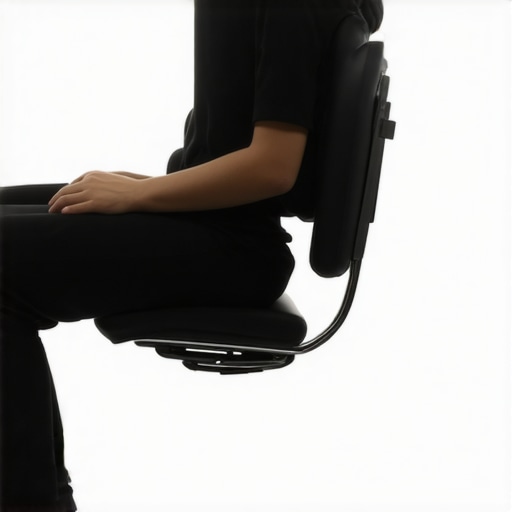
I used to think I needed the most expensive ergonomic chair on the market to save my back. I spent a small fortune on a mesh-backed throne, only to find my lower back still throbbed by 3 PM. The problem? No chair fits everyone perfectly. I finally discovered that a simple, firm foam cylinder—a lumbar roll—was the missing link. By placing it exactly at the level of my belt line, it forced my pelvis into a slight forward tilt, preserving the natural curve of my lower spine. Learning how to use a lumbar roll to prevent mid-day back fatigue was a game-changer for my productivity. It’s not about the chair; it’s about the support. I keep one in my car and one in my office now. It’s a low-tech solution that provides high-level results by preventing that ‘slump’ that eventually leads to sciatica or neck strain.
How do I maintain these mobility gains for the long haul?
Maintenance isn’t about doing an hour of yoga every morning. It’s about building ‘mobility snacks’ into your existing routine. For me, that means a quick hip reset after every long meeting or utilizing enhance your back mobility ergonomic tips for everyday comfort throughout the house. I also swear by a very specific habit: the daily foot massage habit that relaxes your entire back. By rolling my feet on a firm ball for two minutes while I brush my teeth, I’m loosening the bottom of the posterior chain, which has a ripple effect all the way up to my neck. Consistency is the only way to avoid the ‘one step forward, two steps back’ trap of chronic pain. To truly lock in these results, you need a balance of mobility and stability. Dr. Stuart McGill, a world-renowned spine biomechanics expert and author of Back Mechanic, advocates for the ‘Big Three’ exercises—the bird-dog, the side plank, and the modified curl-up. These moves don’t stretch the spine; they stiffen the core to protect it, which is the ultimate goal of any maintenance program.
Looking ahead, I think the world of spinal health is moving toward biofeedback. We are already seeing wearable sensors that vibrate when your head tilts too far forward or when your lower back begins to round. In the next few years, these tools will likely become as common as heart rate monitors, helping us catch postural shifts before they turn into inflammatory events. But until then, we have to be our own sensors. If you’re ready to take this seriously, I challenge you to try the foot rolling habit tonight. Just two minutes on each foot before bed can drastically change how your back feels when you step out of bed tomorrow morning. For more structured help, following mobility mastery daily tips to keep your spine and joints healthy will ensure you aren’t just guessing. Remember, your body is always listening to how you move; make sure you’re telling it that you value your freedom of motion.
Why My Back Finally Stopped Fighting Me
I spent years fighting my own anatomy because I thought pain was a muscle that just needed to be beaten into submission. My biggest “lightbulb moment” was realizing that less is often more when it comes to the spine. If you are constantly searching for neck pain solutions, stop looking for the hardest stretch and start looking for the most stable one. I also learned that if I didn’t address my breathing, no amount of wall sliding would keep my ribs from flaring. Most importantly, I had to accept that my back pain wasn’t a life sentence, but a feedback loop I was finally learning to decode. Sometimes you have to wonder, is your back pain a sign of something more serious, or just a sign you need to change your daily movement habits? For me, it was the latter.
The Gear That Actually Lives in My Gym Bag
You don’t need a thousand-dollar setup to fix your posture, but a few specific tools make the journey significantly easier. I never travel without a lumbar roll; it is the only thing that keeps my spine from collapsing into a C-shape during long flights or office days. I also keep a lacrosse ball handy for that foot-rolling habit we discussed; it’s the ultimate low-cost way to relax the entire posterior chain. For anyone serious about the “why” behind the pain, I always recommend Back Mechanic by Dr. Stuart McGill. It’s the “bible” of spine health that taught me why traditional sit-ups were actually wrecking my progress. Finally, finding back pain breakthroughs often comes down to having these simple, reliable tools within arm’s reach.
#IMAGE_PLACEHOLDER_E#
Take Back Your Range of Motion
The path to a pain-free life isn’t found in a single “magic” move, but in the small, consistent victories you claim every day. Whether it’s the 30-second wall stretch or a simple breath reset, these habits add up to a nervous system that feels safe enough to let go of tension. You have the tools, the knowledge, and the strategy to stop being a passenger to your own discomfort. Don’t wait for another flare-up to remind you to take care of your body. Start tonight, move with intention, and rediscover what it feels like to move without that constant, nagging pull. Which part of your back feels the tightest right now, and are you going to try the wall stretch or the foot massage first? Let me know in the comments below!