
Why cracking your back at home is a temporary fix

I spent years as a serial back-cracker. Every hour, I would grab the arms of my office chair, twist until I heard that familiar staccato rhythm of pops, and sigh with a brief sense of relief. But here is the catch: five minutes later, that nagging, heavy tightness would be right back where it started. I was chasing a ghost. I honestly thought I was fixing my own alignment, but I was really just putting a tiny, fleeting Band-Aid on a much bigger issue. I even made the massive mistake of trying to force a pop in my neck while sitting in traffic, which triggered a muscle spasm so intense I could not turn my head to the left for three days. If you find yourself constantly hunting for that next crack just to feel normal, you are not alone, but you are likely spinning your wheels. Today, I want to show you why that temporary fix fails and how you can move toward managing back pain in 2025 without the constant need to self-adjust. Have you ever felt like you are stuck in a cycle of needing to crack your back just to get through a morning meeting?
That satisfying pop is mostly a mental game
It feels great for a second. Then it is gone. Back to the same old ache. The reason this happens is that when you crack your own back, you are usually just hitting the joints that are already moving too much—the hypermobile ones. The real culprits, the joints that are actually stuck and causing your poor posture, remain locked up tight. According to a study often discussed in the Journal of Manipulative and Physiological Therapeutics, the sound you hear is simply gas bubbles shifting in the joint fluid, a process called cavitation. While this release triggers a tiny hit of endorphins that makes your brain feel happy, it does absolutely nothing to address the underlying structural tension.
Is this habit actually making my joints weaker?
It is a valid fear. When you force a pop over and over, you can actually stretch out the ligaments that are supposed to keep your spine stable. This creates a cycle where you feel more unstable, which makes you want to crack more, leading to a long-term decline in spinal health. Instead of waiting for a spinal crisis to force you into a doctor’s office, we need to focus on why those joints feel the need to pop in the first place. Usually, it is a signal that your muscles are working overtime to compensate for a lack of genuine mobility elsewhere.To break the cycle, you need to shift your focus from the loud joints to the quiet, stubborn ones. Think of your spine like a rusty bicycle chain; if one link is frozen solid, the links next to it have to bend twice as far to compensate. That extra bending is what creates the urge to crack.
Wake Up Your Mid-Back Instead of Forcing a Pop
Most people who habitually crack their lower back or neck are actually dealing with a frozen middle back, also known as the thoracic spine. When this area gets stiff from slouching over a laptop, your lower back tries to do all the moving, leading to that heavy, pressurized feeling. Instead of twisting your torso like a wet rag, try the simple reach and rotate move for mid-back stiffness. This specifically targets the segments that are actually stuck. I remember one Tuesday afternoon when my neck felt like it was in a vice. My instinct was to grab my chin and jerk my head to the side for that quick release. Instead, I lay on my side and performed ten slow, controlled thoracic rotations. By the eighth rep, the need to crack my neck simply evaporated because I had finally addressed the source of the tension rather than just the symptom. 
Stop Blaming Your Spine and Look at Your Hips
Your spine is essentially the middleman between your shoulders and your hips. If your hips are locked forward from hours of sitting, they pull on the fascia of your lower back, creating a constant, exhausting tug-of-war. You can crack your back all day, but if those hip flexors are tight, the relief will never last more than a few minutes. You should prioritize the 5-minute hip flexor release for desk workers to take the mechanical load off your lumbar vertebrae. It is about changing the geometry of your body rather than just chasing a sound. When your pelvis is neutral, the pressure on your discs drops significantly, which naturally quiets the urge to self-adjust.
The Tennis Ball Trick That Changed My Desk Routine
Sometimes the urge to crack is actually a scream for help from a muscle knot, not a joint issue. I used to think my upper back needed adjusting, but I was really just irritating my nerves by over-stretching them. I started keeping a tennis ball in my desk drawer. When that familiar ache starts, I lean against a wall and place the ball right between my shoulder blade and my spine. This type of self-myofascial release is far more effective for lasting pain relief than any self-adjustment. Learning how a simple tennis ball can fix deep glute tension can also be a game-changer, as tight glutes often masquerade as lower back stiffness. By melting the muscle tension, you remove the phantom pressure on the joint. If you are struggling with a sharper, radiating sensation, it is vital to know how to tell if your leg pain is sciatica or a deep muscle knot before you try any aggressive movements. This tactical approach ensures you are fixing the problem, not just making noise.Establishing expertise in spinal health means looking past the immediate relief and understanding the mechanical domino effect. For years, the gold standard advice for back pain was simply to ‘build a stronger core.’ But here is the contrarian truth: a rock-solid core can actually make your back pain worse if your hips remain immobile. If you have ever wondered
Why Your Core Strength Won’t Fix Your Back If Your Hips Are Locked
, the answer lies in leverage. When your hips are glued shut from sitting, your lower back is forced to become a primary mover during basic tasks like walking or picking up a laundry basket. Adding more ‘core strength’ to a rigid system often just increases the compressive force on your discs. You are essentially tightening the straps on a broken machine. Instead of more planks, you might find more success by focusing on mobility mastery to ensure your joints are actually doing the jobs they were designed for.
Is your ‘perfect’ sitting posture actually making you stiffer?
Most office workers strive for a rigid, 90-degree angle, thinking they are doing their spine a favor. However, staying in any ‘perfect’ position for hours is a recipe for disaster. This static load creates what clinicians call ‘creep’—a slow deformation of the spinal tissues. This is exactly why your perfect sitting posture is making you stiffer over time. The body craves movement, not a specific geometric alignment. 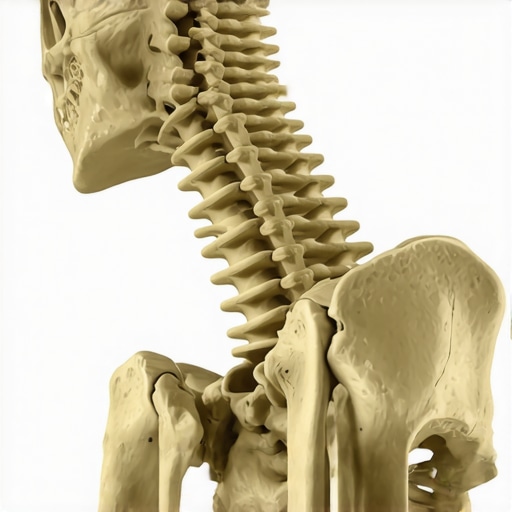 Another massive ‘oops’ factor I see with advanced clients is the urge to stretch through sciatica. When you feel that burning zip down the back of your leg, your instinct is to reach for your toes. But if that pain is coming from a disc, you are likely just yanking on an already irritated nerve. According to research published in the British Journal of Sports Medicine, aggressive stretching in the presence of neural tension can increase the mechanosensitivity of the nerve, effectively making it more ‘angry.’ This is why stretching your hamstrings often makes your sciatica worse. You should instead be looking at the nerve glide exercise that calms burning leg pain, which creates space for the nerve to move without putting it under a dangerous tensile load. Before you dive into any aggressive routine, it is essential to learn how to tell if your sciatica is a disc or muscle issue. Mistaking one for the other is the fastest way to turn a two-week recovery into a six-month ordeal. Even popular wellness habits can be traps; for instance, many people find the truth about yoga for sciatica sufferers is that certain forward-folding poses are the primary reason their symptoms never fully resolve. Have you ever fallen into this trap of trying to stretch away a nerve pinch? Let me know in the comments. Recognizing these nuances is what separates those who manage pain from those who actually resolve it. If you are unsure whether your discomfort is a simple strain or something requiring a professional eye, check for key symptoms to watch to ensure you are not ignoring a hidden crisis.I have come to realize that the difference between people who find lasting relief and those who stay stuck in a cycle of pain is the equipment they keep in their back health toolkit. I am not talking about a thousand-dollar inversion table; I am talking about the simple, specific tools that keep your spine in check while you are actually living your life. For instance, I swear by a high-density foam lumbar roll. Most people just grab a couch pillow when their back hurts, but pillows are far too soft; they compress under your weight and offer zero structural support. By learning how to use a lumbar roll to prevent mid-day back fatigue, you create a physical barrier against the slouch that inevitably happens when you get deep into a project. I keep one strapped to my office chair and another in my car for long drives.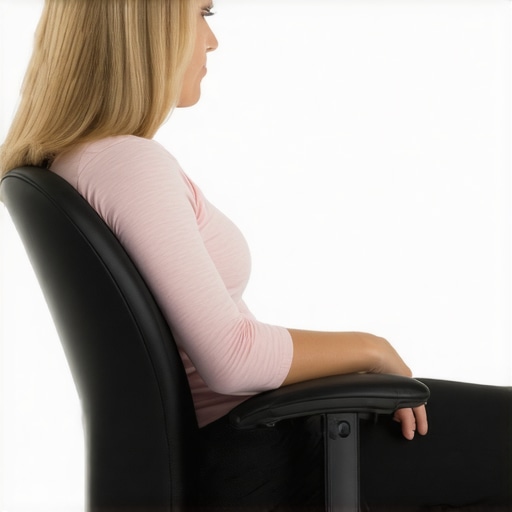
How do I maintain my spinal mobility over the next decade?
Long-term success is rarely about one massive, grueling workout; it is about what I call spinal hygiene. Think of it like brushing your teeth—you do it daily to prevent a crisis later. I have integrated mobility mastery into my morning coffee routine, spending five minutes moving my joints through their full range before I ever sit down at a desk. I also pay close attention to the mechanical traps in my own home, such as how to use a step stool to save your lower back in the kitchen. It might sound trivial, but leaning over a counter for thirty minutes during meal prep is a significant mechanical load. Dr. Stuart McGill, a world-renowned expert in spine biomechanics and author of Back Mechanic, notes that the most effective way to resolve back pain is often to identify and remove the ‘pain triggers’ found in your daily movement patterns. He argues that even the best exercises cannot overcome poor movement habits performed hundreds of times a day. I predict that in the next few years, we will see a massive shift toward wearable smart fabrics that provide haptic feedback, giving us a gentle buzz whenever our posture deviates from a neutral spine. Until that technology is mainstream, we have to be our own bio-sensors. I also keep a firm foam roller by my sofa, but I do not use it on my spine directly. Instead, I focus on the muscles that pull the spine out of alignment. Learning how to use a foam roller on quads to relieve back pressure was a massive turning point for me. When your quads are chronically tight from sitting, they act like a tension cable, pulling your pelvis forward. This is exactly why your workout might be causing your pelvic tilt, making every squat or run a potential source of back strain. To keep my neck in check, I have committed to the 30-second neck tuck to stop tension headaches at your desk, which resets my cervical alignment before the pressure builds into a migraine. If you want to see a change today, I challenge you to try the ‘step stool’ trick tonight while you are doing dishes or cooking dinner. It is a tiny adjustment that yields an immediate drop in lumbar pressure.
What My Spine Taught Me After a Decade of Self-Cracking
One of the biggest ‘lightbulb moments’ I had during my recovery was realizing that if I felt the need to crack my back five times a day, I wasn’t actually fixing anything; I was just chasing a temporary endorphin rush. I learned that the joints making the most noise are usually the ones doing all the work, while the silent, stiff ones are the real cause of the ache. Another hard lesson was that ‘holding’ a perfect posture is exhausting and counterproductive. Instead, I began focusing on mobility mastery through micro-breaks and movement variety. Finally, I stopped treating my body like a collection of isolated parts and started seeing how my stiff ankles or tight chest were the silent puppeteers behind my recurring back spasms. By addressing the ‘quiet’ areas, the urge to pop my spine eventually just faded away.
Tools That Actually Earned a Spot on My Desk
If you want to move beyond the temporary fix of a self-adjustment, you need a reliable toolkit that supports long-term function. I highly recommend picking up a copy of Back Mechanic by Dr. Stuart McGill; it completely shifted how I view spinal stability and movement patterns. For daily maintenance, a firm lacrosse ball or a simple tennis ball is essential for hitting those deep muscle knots that a quick crack will never reach. I also suggest exploring back pain breakthroughs that prioritize functional movement over static stretching. These resources provide the ‘why’ behind the ‘how,’ which is the only way to make lasting changes to your spinal health. I also swear by a firm lumbar roll, as it provides the structural feedback my body needs to stay neutral during long deep-work sessions.
Building a Body That Doesn’t Need Fixing Every Hour
You don’t have to be a slave to that nagging, heavy urge to twist and pop your spine just to get through the day. By shifting your focus toward genuine movement and functional stability, you can regain control of your physical comfort. Whether you are dealing with a stiff neck or searching for expert strategies for sciatica relief, remember that consistency in small, daily habits beats a once-a-week intensity every time. Your spine is incredibly resilient, and with the right movement patterns, you can break the cycle of constant self-adjustments and regain your range of motion with confidence. It is about working with your body’s mechanics instead of forcing them. Have you found yourself cracking your back more often lately, or have you tried a specific movement that finally made that ‘heavy’ feeling go away? Let me know in the comments below!