
The best sleeping position for a herniated disc in your neck

I remember the exact moment I realized my bed had become a torture chamber. It was 3:14 AM on a Tuesday. I was staring at the ceiling, my right arm feeling like it was being plugged into a high-voltage socket. Every time I tried to shift, a sharp, white-hot needle pricked the base of my skull. A herniated disc in the neck—or cervical radiculopathy, if we’re being fancy—is not just soreness. It is an exhausting, relentless physical burden that makes you dread the sunset. I spent months trying to outsmart my own spine, buying every orthopedic gadget on the market, only to wake up stiffer than a board. Today, I am going to cut through the noise and show you exactly how to set up your sleep environment so you can actually close your eyes without fear. We are going to fix your alignment and give those nerves the breathing room they are begging for.
Stop Fighting Your Pillow Every Single Night
For a long time, I made the classic rookie mistake: I thought more pillows equaled more comfort. I would stack two or three plush ones, thinking the extra cushion would protect my neck. In reality, I was just wrecking my neck alignment even further. By propping my head up too high, I was forcing my cervical spine into a constant forward bend, which is basically like poking an angry bear—the bear being my herniated disc. It was not until I started looking into effective techniques for lasting pain relief that I realized the why behind my agony. Your disc needs neutral alignment to heal, not a pillow-fort. That constant battle to find the cold spot or fluff the foam is usually a sign that your foundation is fundamentally broken. I spent way too much money on memory foam that was too soft and down pillows that offered zero structural integrity.
Is Finding the Perfect Position Even Possible?
You are probably skeptical. I get it. When you are in the thick of it, the idea of a pain-free night feels like a fairy tale. You have likely tried different positions for a pinched nerve and still woke up with that heavy, burning sensation. But here is the thing: according to Harvard Health Publishing, the goal is not just comfort, it is maintaining the natural curve of your spine. Whether you are on your back or your side, if that curve is compromised, you are going to suffer. I had to learn the hard way that even my daytime habits, like how I held a book or looked at my phone, were setting me up for failure before I even hit the sheets. Have you ever felt like no matter how you lay down, your arm just will not stop tingling? If so, you are exactly who I wrote this for. Let us get into the mechanics of how to actually support that neck of yours without turning your bed into a construction zone. We will dive into the specific angles that keep your vertebrae from pinching those sensitive nerve roots.
Ditch the Fancy Pillows and Build a Custom Support System
Think of your cervical spine like a garden hose. If you put a kink in that hose by bending your neck too far forward or too far to the side, the ‘water’—those vital nerve signals—gets blocked. When you have a herniated disc, that kink isn’t just a metaphor; it is a physical compression that leads to constant nerve irritation. I remember spending $150 on a ‘space-age’ memory foam pillow that promised to fix everything. I woke up on day three feeling like someone had driven a railroad spike into my trap muscle. The problem was not the material; it was the loft. It was too high for my frame, forcing my chin toward my chest all night and keeping the disc under constant pressure.
Measure the Gap Between Your Ear and Your Shoulder
If you are a side sleeper, your goal is a straight line from the center of your forehead to the middle of your chest. Most people use pillows that are way too soft, which causes the head to dip toward the mattress, pinching the disc on the ‘down’ side. Or, they use a pillow that is too firm and thick, shoving the head upward. I found my ‘sweet spot’ by taking a standard, relatively flat pillow and stuffing a small, rolled-up hand towel into the bottom edge of the pillowcase. This created a firm ‘cervical roll’ that filled the hollow of my neck while letting my head rest at a natural level. This simple tweak is one of those innovative strategies for fast recovery that does not cost a dime.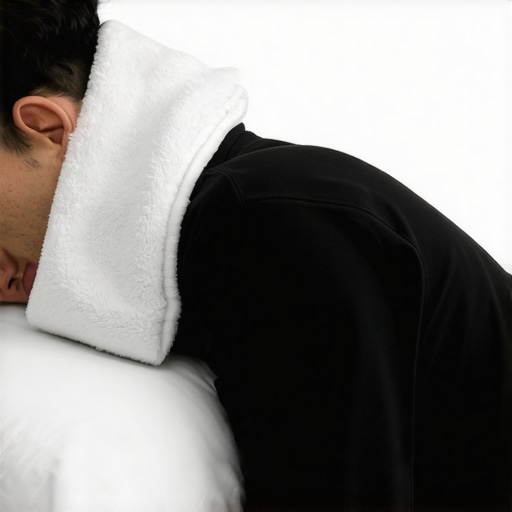
Stop Your Head from Tilting Backwards
For the back sleepers out there, the danger is ‘extension.’ If your pillow is too thin, your chin tilts toward the ceiling, narrowing the space where the nerves exit your spine. You need to ensure the specific pillow height for back sleepers supports the curve without pushing the head forward into a ‘tech neck’ position. I used to think I could just ‘tough it out,’ but morning neck stiffness is your body’s way of saying you failed the alignment test. When your head tilts back, you are essentially grinding those facet joints together, which is why you wake up feeling like your neck is full of gravel.
Keep Your Lower Half in Check
It sounds weird, but your hips affect your neck. If your lower back is twisted, it creates a chain reaction of tension that travels all the way up to your cervical spine. When I was at my worst, I started learning how to sleep with a pillow between your knees. By stabilizing my pelvis, I stopped tossing and turning, which meant my neck stayed in that ‘safe zone’ I worked so hard to create with my towel roll. You are not just trying to be comfortable; you are trying to create a physical ‘cast’ out of bedding that prevents you from moving into a pain-triggering position while you are unconscious. If you feel that familiar burn before bed, you might also benefit from the 30-second neck tuck to reset the muscles before you hit the lights.
Stop Stretching the Pain Away
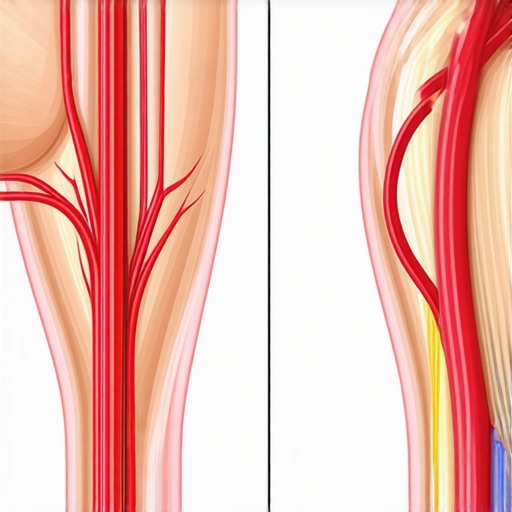
If you are like I was, your first instinct when your neck or back flares up is to reach for your toes or yank your head to the side. It feels productive, right? Wrong. In the world of spinal rehab, this is what I call the ‘Stretch Trap.’ We assume that because a muscle feels tight, it needs to be elongated. However, when a disc is herniated, your muscles often lock up as a protective mechanism to keep the spine from moving into a dangerous position. When you force a stretch, you are fighting your own body’s defense system. Specifically, why stretching your hamstrings can actually flare up sciatica is a concept many people miss—you aren’t stretching a muscle; you’re tensioning a nerve that is already red-hot and angry.
Expert biomechanist Dr. Stuart McGill, author of ‘Back Mechanic,’ argues that repetitive spinal flexion—like those traditional toe-touches—can actually increase the hydraulic pressure within the disc, potentially pushing the nucleus pulposus further into the nerve root. This is why you need to stop stretching your back into a c-shape if you want the disc to actually recede. Instead of mindless pulling, focus on stability and what we call ‘nerve glides’—gentle movements that let the nerve slide through its pathway without being tugged like a rubber band.
Can You Distinguish Between Muscle Tension and Neural Irritation?
This is the million-dollar question for anyone serious about recovery. If you feel a ‘pulling’ sensation that is dull and stays in the muscle belly, it might be a standard knot. But if that ‘stretch’ creates a zing, a tingle, or a numb feeling that travels down your arm or leg, you are aggravating the nerve. You have to learn to distinguish the two. I spent months ignoring this distinction, and all I did was prolong my misery. It’s also vital to realize that is your back pain a sign of something more serious? If you find that the pain persists regardless of your alignment or simple fixes, you need to look at more than just your pillow height.
Another common mistake is the ‘Core Myth.’ People tell you to ‘strengthen your core’ to fix back pain, so you start doing sit-ups or crunches. But if you have a disc issue, traditional crunches are often the worst thing you can do. You are literally crushing the front of your vertebrae together. You need to learn the correct way to use your core, which involves bracing rather than bending. Have you ever noticed your pain spikes after a ‘core’ workout? It’s a sign your mechanics are working against your anatomy.
Finally, consider the hidden link between tight calves and neck stiffness. It sounds like a reach, but your body is one big kinetic chain. If your ankles are locked up, your gait changes, your pelvis tilts, and your neck eventually has to compensate for the shifting center of gravity. This is why localized treatment often fails; you are treating the symptom while the cause is lurking two feet below. Have you ever fallen into this trap of stretching the very thing that hurts? Let me know in the comments.
Once you stop the cycle of ‘stretching the pain,’ you have to transition into what I call the Shielding Phase. This isn’t about doing a thousand reps of an exercise; it’s about environmental design. I realized that why maintenance care is better than waiting for a spinal crisis became my new mantra. It’s much easier to keep a disc happy than it is to calm it down once it’s flared. This is where your environment becomes your best friend or your worst enemy.
Forget the Crisis Mindset and Start Building Resilience
Recovery isn’t a straight line, but you can flatten the curves by being proactive. I started using mobility mastery daily tips to keep your spine and joints healthy, which shifted my focus from ‘fixing a problem’ to ‘maintaining a system.’ I think we’re heading toward a future where our workspaces are semi-autonomous; imagine a desk that subtly shifts its height by a few millimeters every twenty minutes to prevent static loading. Until that tech becomes mainstream, we have to be our own advocates.
The Three Cheap Tools That Saved My Spine
My ‘rehab kit’ isn’t expensive. First, I never sit without a McKenzie-style roll; learning how to use a lumbar roll to prevent mid-day back fatigue was a game-changer because it forced my spine into a neutral position even when my brain wanted to slouch. Second, I keep a lacrosse ball (or a tennis ball) in my desk drawer. I found that how a simple tennis ball can fix deep glute tension is the fastest way to shut down a brewing sciatica flare before it travels down my leg. Third, I invested in a chair that actually works; I stopped looking for ‘cushion’ and started looking for ‘support’ by figuring out how to pick a chair that actually supports your lumbar curve. 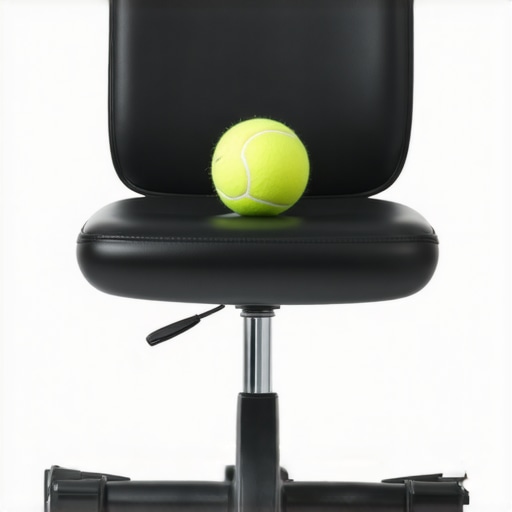 Dr. Kelly Starrett, the founder of The Ready State and author of ‘Becoming a Supple Leopard,’ often talks about ‘upstream and downstream’ mobilizations—meaning if your neck hurts, you better be looking at your shoulders and your upper back. This holistic view is exactly what helped me stop the recurring cycles of pain.
How do I maintain my mobility without spending hours at the gym?
You don’t need a 60-minute routine. You need 60 seconds, ten times a day. According to unlocking mobility expert tips on managing back pain in 2025, the key is frequent, low-intensity movement. I want you to try one thing today: set a timer on your phone for every 50 minutes. When it goes off, do a single 10-second ‘bracing’ move where you stiffen your core as if someone is about to poke you in the stomach. This resets your neural tone and tells your brain that your spine is protected. It’s a simple ‘advanced’ tip that separates those who stay healed from those who relaspe.
The path from a 3:00 AM flare-up to a full night of rest is rarely a straight line, but it is entirely possible if you stop treating your body like a collection of broken parts and start treating it like a system. I had to stop looking for a ‘miracle cure’ and start looking for small, sustainable wins in my environment and my habits.
The Hard Lessons That Finally Made Sense
Looking back at my recovery from a herniated disc, there were three ‘lightbulb moments’ that changed everything for me. First, I realized that my neck pain wasn’t just about my neck. I spent so much time obsessing over pillows while ignoring the connection between my poor posture and my chronic back pain. My rounded shoulders were pulling on my cervical spine all day, making it impossible for my disc to heal at night. Second, I learned that breaking the cycle of neck pain and stress was half the battle. When you’re stressed, your upper traps and scalenes tighten like guitar strings, compressing the very nerves you’re trying to decompress. Finally, I accepted that rest is not passive; it is an active choice to maintain alignment even when it feels inconvenient to set up your support system.
My Must-Have Resources for Long-Term Healing
If you are tired of guessing which gadget will work, I recommend sticking to the fundamentals. My recovery was built on the work of Dr. Stuart McGill, whose book ‘Back Mechanic’ taught me how to move without ‘kinking the hose.’ I also frequently revisited navigating your path to restored mobility to keep my expectations realistic. For daily environmental tweaks, I relied on ergonomic tips for everyday comfort to ensure my desk and car seat weren’t undoing the progress I made while sleeping. These resources gave me a framework to judge whether a new ‘hack’ was actually helpful or just marketing noise.
Believe That Better Sleep Is Coming
It is easy to feel defeated when your body feels like an enemy, but remember that your spine is incredibly resilient. Every night you spend in neutral alignment and every minute you spend bracing your core or using a lumbar roll is a deposit into your long-term health. Dealing with a herniated disc in the neck is a marathon, not a sprint, but by designing your environment to shield your nerves, you are giving your body the space it needs to heal itself. You don’t need to be perfect; you just need to be consistent. Which part of your sleep setup is the hardest to get right—finding the right pillow height or staying off your stomach? Let me know below.