
The simple chair height trick to stop your legs from falling asleep
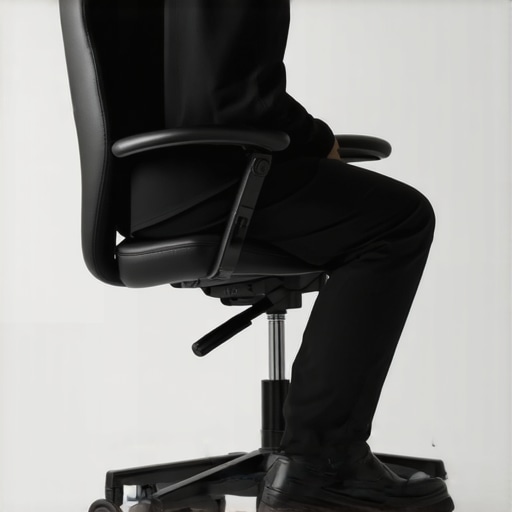
I remember the exact moment I realized my office chair was treating my legs like a pair of forgotten leftovers in the back of the fridge. I was mid-call, feeling productive, when I tried to shift my weight. Nothing. My left leg was a heavy, tingling pillar of static. When I finally stood up, I nearly tumbled into my bookshelf because my foot didn’t exist anymore. It wasn’t just “falling asleep”; it was a recurring nightmare that left me limping for ten minutes every hour.
Stop Settling for Pins and Needles Every Time You Work
I used to think this was just the price of being a “productive adult.” I spent hundreds on a fancy chair with more levers than a fighter jet, but the numbness wouldn’t go away. I made the classic mistake of following that old advice to keep my feet perfectly flat on the floor at a 90-degree angle, thinking I was a model of posture. In reality, my lumbar support was actually making things worse because my hips were pinned in a way that choked off circulation.
Does a simple height change really fix nerve compression?
You might be skeptical. After all, how can two inches of height solve a problem that feels like a medical emergency? But the physics of your femoral nerve and the blood vessels behind your knees don’t care about your skepticism. According to research cited by the Mayo Clinic, prolonged pressure on the peroneal nerve (often caused by poor sitting angles) is a leading cause of that “dead leg” sensation. We aren’t just talking about comfort; we’re talking about preventing long-term nerve irritation.
Why Your Hips Need to Be Higher Than You Think
The secret isn’t just “sitting up straight.” It’s about the “slope.” When your knees are higher than your hips, you’re essentially creating a kink in the garden hose of your lower body. I found that by raising my chair just slightly above the standard recommendation, I could keep my legs from going numb even during long sessions. It sounds counterintuitive, but that extra height takes the pressure off the sit-bones and lets the blood actually reach your toes. Have you ever had to do that awkward “one-legged dance” in your office because your foot was still waking up?
Tell the Difference Between a Numb Foot and Real Nerve Pain
Before we dive into the specific measurements, we have to be honest: sometimes a tingle is just a tingle, but other times it’s a flare-up. If you find the numbness is traveling down a very specific path or accompanied by sharp back pain, you might want to look into the warning signs your sciatica needs professional help. I ignored the signs for months, thinking I just needed a better cushion, but my chair height was only half the battle.
Fix Your Seat Height Without a Tape Measure
To stop the static in your legs, you need to adjust your chair using your own body as the yardstick. Most people lower their chair when their legs hurt, but that actually increases the compression. Instead, stand in front of your chair and adjust the seat pan until the highest point is just below your kneecap. When you sit down, your feet should be flat, but your hips should be noticeably higher than your knees. This simple shift is one of the most effective ergonomic tips for everyday comfort because it opens the angle of your pelvis. I remember trying to fix my posture by using a stack of old textbooks as a makeshift footrest. It was a disaster; the books kept sliding away, my ankles were locked at a weird angle, and I ended up with a sharp ache in my calf. It taught me that height alone isn’t the fix—it is the relationship between your joints. 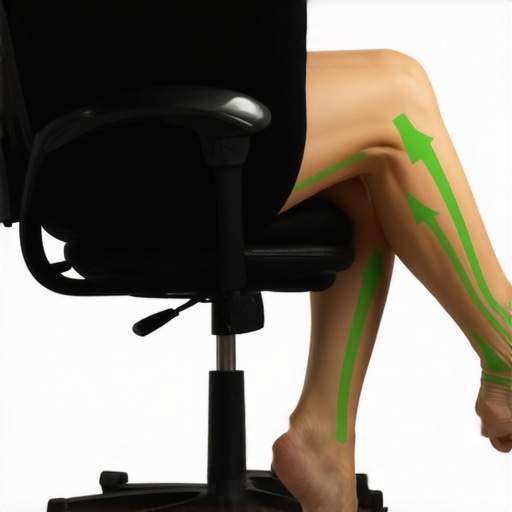
Give Your Femoral Nerve Some Breathing Room
Think of your femoral nerve like a garden hose. When you sit at a strict 90-degree angle, you are effectively putting a heavy boot right on top of that hose. By raising your seat and allowing your thighs to slope slightly downward, you remove that ‘kink.’ If you feel like your ankles are getting stiff from this new height, you might be surprised to learn how a stiff ankle is actually causing your recurrent lower back aches. A flexible ankle allows your foot to sit naturally even when the chair is high, maintaining that vital blood flow.
Forget the 90-Degree Rule for Your Hips
The old-school advice of sitting like a LEGO person—perfect right angles everywhere—is outdated and dangerous for your nerves. Aim for a hip angle of about 100 to 110 degrees. This ‘open’ posture reduces the pressure on your psoas and prevents your pelvis from tucking under, which is a primary cause of disc compression. Many people find that your perfect sitting posture is making you stiffer because you are using muscle tension to hold yourself upright. Instead, let the chair height do the work for you. When the seat is high enough, gravity helps maintain your lumbar curve naturally without you having to ‘try’ to sit up straight.
Why Your Feet Need More Than Just a Flat Floor
If your chair is at the right height but your feet don’t feel solid, you will subconsciously tense your thighs to stay balanced. This tension is a silent killer for circulation. If you are on the shorter side, a dedicated footrest with a slight tilt is mandatory. This keeps your lower body engaged without restricting the back of your thighs. If you feel a flare-up starting despite these changes, try the 5-second glute squeeze that prevents sciatica flares to reset your pelvic floor and wake up the muscles that support your spine.
Quick Resets for When the Tingling Starts
Even with a perfect setup, your body isn’t meant to be a statue. Every thirty minutes, you need a ‘nerve flush.’ This isn’t a full workout; it’s a simple movement to keep the neural pathways clear. If you’ve been sitting too long and feel that familiar prickle, look into swift relief for sciatica quick home remedies like seated nerve glides. These movements gently pull the nerve through the surrounding tissue, preventing it from getting ‘glued’ down by inflammation and poor blood flow. It’s the difference between a productive afternoon and a week spent hobbling around the living room.If you’re anything like I was, your first instinct when your legs feel tight is to reach for your toes. It feels like the logical solution to that ‘stuck’ sensation in your hips and calves. But here is the contrarian truth that most general fitness influencers won’t tell you: if your leg numbness is coming from your spine, stretching your hamstrings is likely making the problem worse. When the sciatic nerve is already irritated, a deep stretch acts like a cheese wire being pulled tight across a sensitive surface. Instead of relief, you’re just creating more inflammation. I spent weeks religiously touching my toes every morning, wondering why my ‘tightness’ was actually turning into a sharper, more electric pain.
Stop Stretching and Start Gliding
Most people fall into the trap of thinking all tension is muscular. In reality, the hidden reason your hamstrings always feel tight is often your nervous system protecting itself. If you force a stretch on a nerve that is already compressed by your chair or a disc, you are essentially ‘tugging’ on a raw wire. This is why stretching your hamstrings can actually flare up sciatica rather than fixing it. I had to learn the hard way that ‘no pain, no gain’ is a dangerous motto when it comes to neural health. Have you ever fallen into this trap of stretching harder when the pain gets worse? Let me know in the comments.
Is it actually a muscle knot or just neural tension?
This is the question that separates basic ergonomics from real recovery. A study published in the Journal of Manual & Manipulative Therapy highlights that for many patients with sciatic-like symptoms, neural ‘gliding’—which gently oscillates the nerve without stretching it—provides significantly better outcomes than static muscle stretching. If you find that stretching gives you a few minutes of relief followed by a massive spike in pain an hour later, you are dealing with neural tension. You might want to try the toe touch test that reveals your actual back injury risk before you attempt another deep hamstring pull. 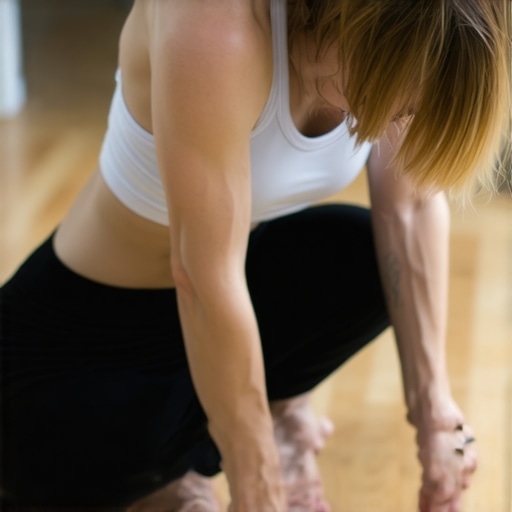
Why Your Ankles Are Quietly Sabotaging Your Lower Back
We often look at the site of the pain—the back or the thigh—and ignore the rest of the chain. This is the ‘Oops’ factor of home recovery. I realized that my recurring numbness wasn’t just about my chair height; it was about how my stiff ankles were forcing my pelvis to tilt every time I stood up or sat down. If you don’t have enough range of motion in your feet, your lower back has to pick up the slack. You’d be surprised how a stiff ankle is actually causing your recurrent lower back aches by throwing off your entire sitting mechanics.
Your Core Might Be Strong Enough, But Is It Stable?
Another common myth is that you just need ‘more crunches’ to fix your back. But if you’re holding your breath or bracing too hard, you’re increasing intra-abdominal pressure that can actually push on your discs. It’s a nuance that many people miss: why your core strength won’t fix your back if your hips are locked. True stability comes from the relationship between your breath and your pelvic floor, not just having ‘six-pack’ muscles. When you sit at your desk, focus on a ‘soft’ core that supports you without rigid tension. I found that your perfect sitting posture is making you stiffer because you’re essentially holding your breath all day to stay upright. Transitioning to a more dynamic, ‘open’ posture was the only thing that finally kept the static out of my legs for good.I’ve learned that owning the right chair is only twenty percent of the battle. The rest is about the small, intentional tools you keep within arm’s reach. For me, the game-changer wasn’t a thousand-dollar seat, but a simple, firm lumbar roll. I tried the soft, memory foam ones, but they just collapsed under my weight and offered zero support. I needed something that felt like a gentle, firm pressure pushing back against my spine to maintain my natural curve. Learning how to use a lumbar roll to prevent mid-day back fatigue changed my endurance levels entirely. It’s about creating a physical boundary that stops your pelvis from slumping into that dangerous ‘C’ shape we all default to when we get tired after lunch.
How do I maintain these mobility gains over time?
Consistency beats intensity every single time. You don’t need a ninety-minute yoga session to save your back; you need sixty seconds of movement every hour. This is where mobility mastery daily tips to keep your spine and joints healthy come into play. I personally set a silent vibration on my watch every forty-five minutes. When it buzzes, I do one quick seated nerve glide or a standing stretch. That’s it. It keeps the neural tissues sliding smoothly through their tunnels. If I skip this ritual, the ‘dead leg’ feeling starts to creep back within forty-eight hours, proving that your body has a very short memory for good posture. Research in the Journal of Orthopaedic & Sports Physical Therapy confirms that high-frequency, low-load movement is the gold standard for preventing disc-related stiffness and keeping the spinal environment healthy. 
Why Your Smart Watch Might Be Your Best Physical Therapist
Most of us use technology to distract us from our bodies, but you can flip the script. I use my wearable tech to track my ‘stand hours,’ not for the fitness calories, but to ensure my nerves never sit in a compressed state for more than an hour. If you’ve already hit a point where movement feels like a chore, you might need swift relief for sciatica quick home remedies to lower the baseline inflammation before you can commit to a long-term maintenance plan. I found that using a simple tennis ball against a wall to hit my glutes while I was on a conference call helped break up the tension that the chair height couldn’t solve alone.
The Future of Sitting is Dynamic
Looking ahead, I suspect we are going to see a shift toward ‘active’ furniture. We are already seeing the rise of chairs with split-seat designs that subtly tilt or wobble to keep your core engaged without you having to think about it. The era of the static, heavy executive chair is ending. But until your office buys you a robotic, self-adjusting seat, you have to be the pilot of your own posture. If you’re struggling with the transition to this more ‘active’ way of sitting, reading about back pain breakthroughs navigating your path to restored mobility can help you see the bigger picture. It’s not just about surviving your current shift; it’s about ensuring you can still enjoy your weekends without a heating pad. Don’t wait for the tingling to return to take action. My biggest piece of advice is to start using the one-foot-up rule for pain-free dishwashing and chores tonight. It’s a tiny tweak that offloads your spine while you’re standing at the sink, and it’s the perfect way to test if your hip height and pelvic adjustments are actually sticking in your muscle memory.
The Hardest Lesson My Numb Foot Taught Me About Desk Jobs
When I first started tweaking my setup, I thought there was a perfect height that would solve everything forever. The biggest lightbulb moment for me was realizing that your body isn’t a static machine—it’s dynamic. Even the best ergonomic adjustment is only a temporary fix if you remain frozen in that position. I learned that my dead leg wasn’t just a sign to raise my chair; it was a loud, clear signal that my nervous system was feeling trapped. If you are constantly adjusting but still feeling a pinch, it’s worth checking if your back pain is a sign of something more serious that requires professional eyes. I also stopped treating my chair like a luxury throne and started treating it like a tool that needs frequent recalibration. #IMAGE_PLACEHOLDER_E#
My Personal Arsenal for Beating the Mid-Afternoon Slump
I don’t go anywhere without my specific toolkit now. First, a firm lumbar roll is non-negotiable; it creates that shelf for your lower back that prevents the circulation-killing slump. Second, I swear by a simple vibration alarm on my phone to remind me to stand up. If you’re looking for more ways to keep the momentum going, I highly recommend checking out these expert tips on managing back pain in 2025. Finally, keeping a tennis ball under the desk to roll out the arches of my feet keeps my lower chain active without me even noticing. These aren’t just accessories; they are barriers against the return of that electric tingling.
Take Back Your Energy from Chronic Sciatica
You don’t have to accept leg numbness as a standard part of your professional life. By making these small adjustments to your chair height and joint angles, you are giving your body the breathing room it deserves. It takes a little trial and error, but the reward of standing up at 5:00 PM without feeling like a statue is worth every second of effort. Don’t be afraid to keep digging into sciatica relief secrets to find the combination that works for your unique anatomy. If your posture issues have started to travel upward, you might also want to look into how to revitalize your neck to ensure your whole spine is in sync. Your body is capable of change; you just have to give it the right environment to thrive. Have you ever noticed that your legs feel worse at a specific time of day, like right after lunch or just before you clock out? Let me know in the comments below!