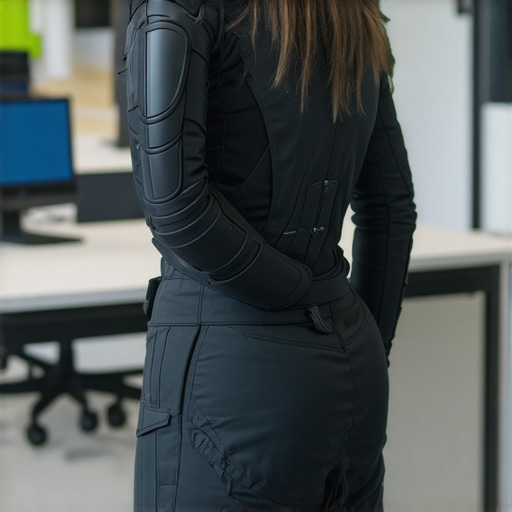
I remember the moment I realized my new haptic work-suit was more of a pain in my back than an innovation. I was sitting at my desk, feeling that familiar, dull ache spreading from my lower spine down to my hips. It was not just a typical adjustment needed—this was deep, persistent, and I felt it every day. The immediate thought was, “Is this normal? Or did I make a terrible mistake?”
The Hidden Cost of Cutting-Edge Tech
In the pursuit of the latest in wearable technology, I had jumped on the hype train. The promise of seamless integration, heightened responsiveness, and immersive experiences seemed worth it. But what no one warns you about—especially in early 2026—is how these sophisticated suits might be unintentionally disrupting our body’s natural alignment. Turns out, a poorly designed or improperly fitted haptic suit can cause serious lower back issues—something I didn’t consider until it hit me hard.
Could It Be Worse Than Just Back Discomfort?
At first, I thought my back pain was just a temporary inconvenience. But as weeks passed, it grew more persistent. I worried it might be something more serious, like a slipped disc or sciatic nerve irritation. According to recent studies, prolonged poor posture or awkward support from wearable tech can lead to long-term spinal problems. Having made this mistake early on—ignoring the importance of ergonomics—I learned the hard way that rushing into gadgets without considering their impact on our health is a mistake many of us make.
Now, I want to help you avoid the same pitfalls. Today, we’ll explore the reasons why your 2026 haptic suit might be contributing to your lower back pain and, more importantly, what actionable steps you can take to find relief and prevent future issues.
Assess Your Posture Rigorously
Start by evaluating how you sit and stand when wearing your tech gear. Imagine your spine as a tower of blocks; if one block is out of alignment, the entire structure becomes unstable. During my own use, I noticed that slouching or leaning forward increased my discomfort. To combat this, set up your workspace ergonomically, ensuring your monitor is at eye level and your hips are level when seated. Regularly check your posture, especially after long sessions.
Use a Mirror or Record Your Posture
Practically, I placed a mirror nearby and recorded myself sitting and standing. Seeing the real-time alignment highlighted specific habits—like tilting my head or jutting my pelvis—that I wasn’t aware of. This visual feedback is crucial; it’s like having a coach pointing out misalignments you can’t feel. For detailed guidance, review articles on proper ergonomic setup (here) for adjustments tailored to your needs.
Implement Targeted Mobility Exercises
Next, incorporate daily mobility routines to loosen stiff areas and strengthen supporting muscles. I started with simple moves like the pelvic tilts and cat-cow stretches, which resemble gentle waves and rockings—like soothing a sailboat in calm waters. These actions improve spinal flexibility and alleviate pressure. Consistency is key; dedicate 5-10 minutes each morning to these exercises (see recommended routines) for noticeable relief over time.
Focus on Hip and Core Strength
Weak hip stabilizers often cause compensatory stress on the lower back. To activate these muscles, I performed dead bugs and bridges—like reinforcing the foundation of a building. Strengthening the core is akin to tightening the ribs around a barrel—stabilizing the spine from within. These exercises prevent slouching and encourage proper load distribution. For a comprehensive plan, consult the core stabilization guides (here).
Practice Microbreaks and Movement Variations
During prolonged wear or work, avoid staying static for too long. Every 30 minutes, stand, stretch, or walk briefly—think of this as giving your spine a mini vacation. I set timers to remind myself, doing simple twists or shoulder rolls, which act like lubricants for stiff joints. This prevents stiffness and improves circulation, reducing pain spikes. Incorporate occasional movement sequences from mobility mastery (here) into your routine.
Address Underlying Conditions Promptly
If discomfort persists or worsens, it’s essential to evaluate whether your suit’s design or fit is contributing to the problem. A misfitting suit can act like an ill-fitting shoe—causing more harm than good. Don’t wait until it’s serious; consult professionals who can assess your specific situation. Try to identify signs like numbness or radiating pain, which may indicate nerve compression. For guidance on symptoms, check out this resource. If needed, reach out for expert advice (here) to tailor a solution suitable for your body and tech setup.Many believe that stretching always cures back issues, but in my experience, this is a misconception. Overemphasizing flexibility without strengthening your core can actually worsen your condition, leading to increased instability and discomfort. The myth that all pain can be relieved through stretching ignores the importance of muscular balance and alignment, which are critical for long-term relief. Advanced cases, such as persistent sciatica, often require targeted strength and posture correction rather than just more stretching. According to a study published in the Journal of Orthopaedic & Sports Physical Therapy, strengthening stabilizer muscles is more effective for long-term pain management than flexibility alone, highlighting the need for a nuanced approach. Never assume that pain is solely about tight muscles; sometimes, poor movement patterns and weak supporting muscles are the real culprits. Be cautious of exercises that push your limits without proper diagnosis, as they can reinforce bad habits or even cause further injury. Addressing the root cause with professional guidance ensures safer, sustainable improvement. For deeper insights into proper mobility strategies, check this
Maintaining your progress with mobility and pain relief requires the right tools and consistent strategies. Over the years, I’ve refined my toolkit to include specific equipment and software that truly make a difference in my daily routine. One game-changer has been a high-quality foam roller, particularly the Vulkska Deep Tissue Foam Roller. Unlike standard rollers, its dense construction allows me to target deep muscle knots, especially around the hips and lower back, which are critical areas for managing sciatic discomfort. I personally use it every evening after my mobility exercises, and I can confirm that it helps prevent stiffness from creeping in.
Another essential tool is PostureScreen Mobile, an app I rely on to analyse my posture via my smartphone’s camera. It provides instant feedback on misalignments, allowing me to adjust my sitting and standing habits in real-time. This app has been instrumental in catching subtle deviations I wouldn’t notice on my own, helping me correct habits before they become chronic issues. For ongoing tracking and motivation, I integrate this with my wearable device, such as a Garmin Vivosmart, which monitors my activity levels and encourages movement. Moving regularly is key—think of it as oiling the joints to keep them running smoothly.
Looking ahead, the trend seems to favor smarter, AI-integrated tools that can automatically detect posture issues and suggest personalized corrections. I believe in the near future, we’ll see even more seamless solutions that combine real-time feedback with adaptive exercises, making maintenance easier and more effective.
How do I keep my mobility routine effective over time?
Consistency is paramount. I schedule daily sessions using a combination of my foam roller and app-guided stretches, ensuring I hit all critical areas like the hips, lower back, and neck. Additionally, I set weekly goals using apps like Mobility Mastery, which breaks down simple drills that fit into a busy schedule. This layered approach—combining active tools, monitoring, and targeted exercises—helps me maintain results and adapt as my body changes. For persistent issues, I don’t hesitate to consult professionals—sometimes, a quick analysis or tailored program makes all the difference. If you’re serious about keeping your mobility in check, I recommend trying the simple exercises I use daily; they’re surprisingly effective at preventing setbacks and promoting long-term health. Remember, the goal isn’t just temporary relief but building resilient movement patterns that support your active life for years to come.
Unspoken Lessons That Changed My Approach
- One of the hardest lessons was realizing that technology designed without ergonomic insight can do more harm than good; custom-fitting and listening to my body’s signals proved essential.
- I learned that consistent movement and targeted exercises aren’t optional but vital; neglecting routine leads to setbacks, especially when integrating advanced gear into daily life.
- Simplistic solutions like stretching are only part of the puzzle—building strength in supporting muscles truly transformed my back health and prevented future pain.
Tools and Resources That Made the Difference
- Vulkska Deep Tissue Foam Roller: Its density lets me target deep knots around my hips and lower back, crucial for sciatic relief, and has become an evening staple for me.
- PostureScreen Mobile: The app I trust to analyze my posture through my smartphone camera, providing immediate feedback that helps me make real-time corrections so issues don’t become chronic.
- Mobility Mastery: This program breaks down daily drills that seamlessly fit into my schedule, fostering long-term resilience and flexibility in my spine and joints.
Embrace Your Journey Toward Better Movement
Your mobility and back health are ongoing pursuits—small, consistent actions lead to profound change. Whether you’re starting today or adjusting an existing routine, remember that your body responds best to mindful movement, proper ergonomics, and patience. By integrating tools like targeted exercises, ergonomic evaluations, and professional guidance, you create a sustainable path to relief and mobility. Don’t wait for pain to dictate your limits—take proactive steps now to ensure a healthier, more comfortable future. The journey to lasting back health is personal but entirely within your control. What’s one minor change you can make today that will support your mobility long-term? Share below—I’d love to hear your thoughts.
![Stop 2026 Back Pain From Micro-Current Body-Suits [3 Fixes]](https://bodyrenewtherapy.com/wp-content/uploads/2026/04/Stop-2026-Back-Pain-From-Micro-Current-Body-Suits-3-Fixes.jpeg)