
How a slight change in your sitting angle stops leg numbness
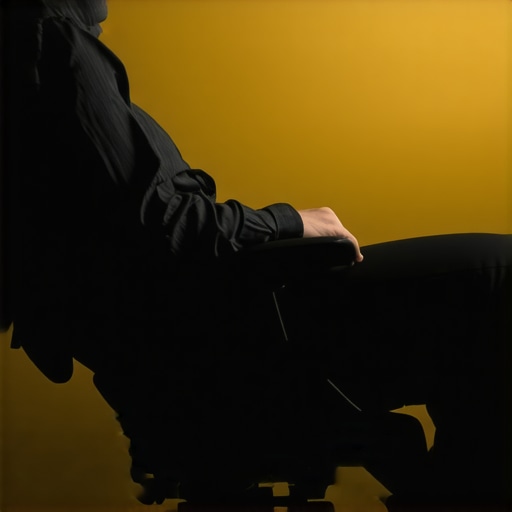
I remember sitting in my favorite armchair—the one I thought was the peak of comfort—and realizing I couldn’t feel my left big toe. It was a wake-up call. I’d spent years thinking my legs feeling heavy during an evening walk was just a sign of getting older. But there I was, 45 minutes into a movie, dragging a "dead leg" across the living room carpet. It’s embarrassing, it’s frustrating, and honestly, it’s a bit scary when your own body stops responding. We often assume it is the chair’s fault, or that we need a $1,000 ergonomic setup, but usually, the answer is far simpler and cheaper.
That Tingly Pins-and-Needles Feeling Isn’t Just a Quirk
We’ve all been told to "sit up straight," but for years I followed that advice and only ended up with more tension. I even bought those bulky cushions, but I eventually learned why your lumbar support might be making your back stiffer. The real culprit for that numbness isn’t necessarily the softness of the seat; it’s the compression happening at the hip crease. When your knees are higher than your hips, you’re basically kinking the garden hose of your nerve supply. Today, I want to show you how a tiny shift—literally just a few degrees—can keep the blood and "nerve juice" flowing freely. Whether you are at a desk or sitting on a plane for hours, the mechanics remain the same.
Is a tiny adjustment really enough to stop the pins and needles?
You might be skeptical. I was too. I thought I needed surgery or a complete lifestyle overhaul. But think about it: if you are stuck in a small space, you don’t have room for a fancy setup. You only have your body and the angle of your seat. A surprising fact from the Mayo Clinic notes that even minor, repetitive nerve compression can lead to long-term issues like paresthesia if left unaddressed. I made the mistake of ignoring it for months, assuming my glutes were just turning off from a lack of exercise. It turns out, I was just strangling my nerves at the source. Have you ever had to "wake up" your leg before you could walk across the room? It is a sign we need to talk about your pelvic tilt.
The Secret Geometry of Your Hips and Knees
The goal is to open up the angle between your torso and your thighs. When you sit in a bucket seat or a soft sofa, your hips sink, and your knees pop up. This creates a sharp "V" shape that pinches the femoral and sciatic nerves. By using a simple chair height trick, you can ensure your hips stay slightly higher than your knees. It sounds too simple to work, but this change in geometry reduces the mechanical pressure on the nerves. If you’re stuck in a chair that doesn’t adjust, even a simple footstool trick can change the pelvic tilt enough to make a difference. We aren’t just talking about comfort; we’re talking about preventing that sharp pinch when standing up that haunts so many of us who work desk jobs. It is time to stop the numbness before it starts.
Stop the V-Shape Pinch at Your Hips
The most important thing you can do right now is change the physics of your chair. Most chairs are designed to make you collapse into them, which creates a sharp 90-degree angle at the hip—or worse, a deep ‘V’ if the seat is soft. Think of your nerves like a garden hose. If you fold that hose sharply, the water stops. To get the flow back, you need to open the hip angle to at least 110 degrees. I found this out the hard way during a cross-country flight where I ended up using my rolled-up jacket as a makeshift wedge. By lifting my tailbone slightly higher than my knees using a simple chair height trick, I felt the warmth return to my feet within minutes. It wasn’t magic; it was just removing the mechanical kink in the hose.
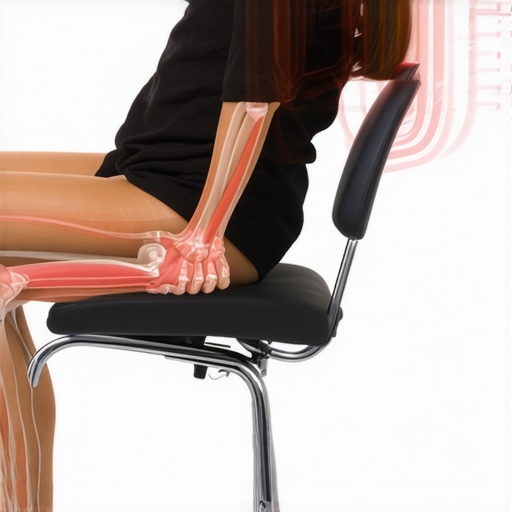
Turn Your Seat Into a Gentle Slope
If your chair doesn’t tilt, you can create a ‘wedge’ effect yourself. Take a firm pillow or a folded bath towel and place it on the back half of your seat. When you sit, your pelvis should tilt forward slightly, naturally arching your lower back and dropping your knees. This position prevents the glutes from turning off and reduces the compression on the sciatic nerve. If you are working at a desk, make sure your feet are flat on the floor or use a simple footstool trick to maintain that relaxed pelvic tilt without straining your hip flexors.
Give Your Nerves a Micro-Break Every Hour
You don’t need a full gym routine to keep your legs awake. Every 30 minutes, perform a ‘seated reset.’ I used to set a silent timer on my phone to remind me because I’d get so sucked into my work that I wouldn’t notice the numbness until it was too late. When the timer goes off, perform a 5-second glute squeeze. This contraction forces blood into the area and shifts the pressure points on your sit-bones. It’s like hitting the reset button on your circulation. If you’re already feeling a dull ache, try the reach and breathe move to create space in your lumbar spine, which is where those leg nerves actually originate.
Address the Source in Your Lower Back
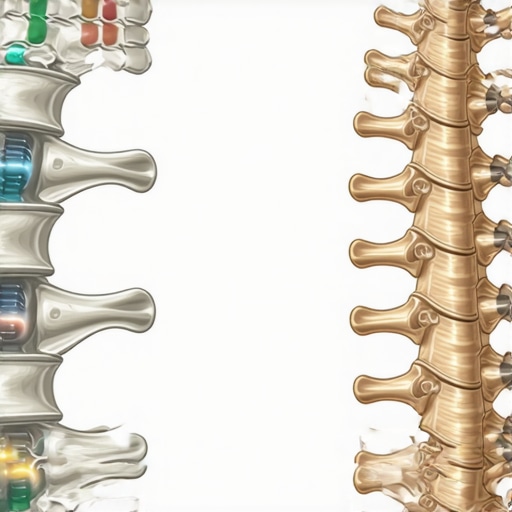
Sometimes the numbness in your legs isn’t actually happening in your legs; it’s a signal that your lower back is under siege. When we slouch, we overstretch the ligaments in the back, which can lead to poor posture and chronic back pain. If you find that the numbness persists even after shifting positions, it might be time to look at your environment. For example, your current sneakers or even your laptop height could be forcing your spine into a position that mimics sciatica. By applying expert strategies for sciatica relief, such as keeping your rib cage stacked over your pelvis, you stop the ‘nerve juice’ from being cut off at the power source. I once spent three weeks treating my calf pain with ice packs, only to realize the real issue was how I was setting up my laptop every morning.
I see it everywhere: people military-stiff at their desks, shoulders pinned back, trying to maintain what they think is "perfect" alignment. I used to be one of them. But here is the contrarian truth that most ergonomic experts won’t tell you: forced uprightness is often just as damaging as slouching. When you maintain a rigid, static pose, you are essentially holding your muscles in a state of constant isometric contraction. This leads to what I call "posture fatigue," where your perfect upright posture is actually tensing your spine and cutting off micro-circulation to the very nerves you’re trying to protect. According to a meta-analysis in the Journal of Orthopaedic & Sports Physical Therapy, movement variability—the ability to shift and change positions frequently—is far more critical for spinal health than maintaining a single "correct" angle. Static loading, even in a "good" position, leads to disc desiccation and muscle ischemia over time.
The Hamstring Stretch Myth That Is Making Your Sciatica Worse
If you have a tight sensation in the back of your legs, your first instinct is probably to reach for your toes. Stop right there. This is the biggest "oops" factor in the world of mobility. If that tightness is actually neural tension—meaning your sciatic nerve is being tugged like a guitar string—then stretching your hamstrings is the absolute worst thing you can do. You aren’t lengthening a muscle; you are irritating a sensitive nerve. I’ve seen countless people wonder why their pain won’t go away, not realizing that stretching your hamstrings can actually flare up sciatica by increasing the mechanical tension on the nerve root. Instead of chasing flexibility, we need to focus on nerve gliding and creating space in the lumbar spine through back pain breakthroughs that prioritize decompression over intensity.
Can your morning coffee ritual really trigger a sciatic flare-up?
It sounds like a stretch, but hear me out. If you are already dealing with a sensitized nerve, systemic inflammation plays a huge role in how much pain you actually feel. Dehydration and the inflammatory response to caffeine can sometimes be the "final straw" for a compressed nerve. I noticed that on mornings when I skipped my water and went straight for a double espresso, my leg felt twice as heavy by noon. It’s a subtle nuance, but why your morning coffee routine is secretly hurting your lower back often comes down to the chemical environment of your body. When your tissues are dehydrated, they lose their cushioning ability, making your discs less resilient to the pressure of sitting.
Stop Cracking Your Own Neck for Quick Relief
We’ve all done it—that quick twist to the side to hear a satisfying "pop." While it feels like a release of pressure, you are likely creating a dangerous cycle of hypermobility. When you self-adjust, you are usually cracking the joints that are already moving too much, while the stuck, painful segments stay locked. Over time, why cracking your own back is making your joints more unstable becomes clear as you find yourself needing to "pop" it more and more frequently just to feel normal. If you want lasting results, you need targeted neck pain solutions that stabilize the area rather than just seeking that temporary endorphin rush. Have you ever fallen into this trap of constant self-cracking or aggressive stretching? Let me know in the comments below, and let’s figure out how to stabilize your spine instead.
I’ve swapped the ‘crack and pray’ method for a more surgical approach to my environment. My number one tool isn’t a fancy chair; it’s a simple, high-density foam lumbar roll. Most chairs leave a gap at the L4-L5 junction, and that’s where the trouble starts. I also swear by a laptop stand that brings my screen to eye level. I realized that how to set up your laptop for better spine protection isn’t about the gadget itself, but the 15-degree rule—your gaze should hit the top third of the screen without you tilting your chin down. If you’re constantly looking down, you’re essentially hanging a 60-pound weight off your cervical spine. 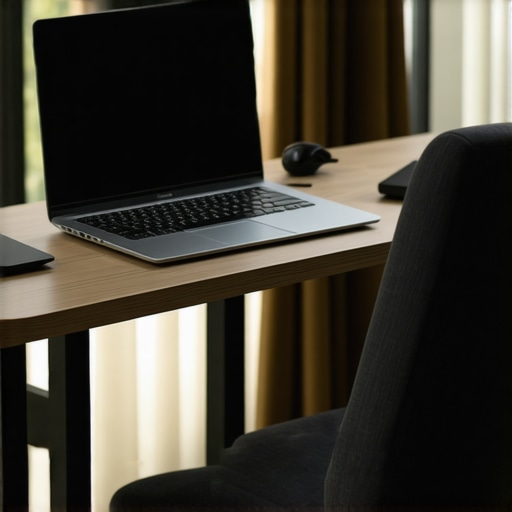
The Three Hardware Essentials I Use to Save My Spine
Beyond the riser, I use a separate wireless keyboard and mouse. This allows my shoulders to stay neutral while my hands work at desk height. If you are reaching forward to use a laptop trackpad while the screen is raised, you are actually creating a see-saw effect that pulls your mid-back into a slouch. By implementing these ergonomic tips for everyday comfort, you stop the mechanical fatigue before it requires a physical therapist. I also keep a simple tennis ball in my desk drawer. When I feel a knot, I lean against a wall and let the pressure do the work, rather than twisting my neck to find a release.
Biofeedback and the Future of Wearable Recovery
I am seeing a massive shift toward wearable biofeedback in the health industry. In the next few years, we won’t just guess if our posture is ‘off’; our shirts or smartwatches will give us a haptic nudge when our rib cage and pelvis aren’t stacked correctly. This is the logic behind unlocking mobility expert tips on managing back pain in 2025—moving away from reactive ‘fixing’ and toward real-time prevention. A study in the Journal of Bodywork and Movement Therapies highlights that chronic tightness is often a protective mechanism for underlying weakness. Specifically, the research notes that why a tight psoas is often actually a weak psoas is a nuance missed by most general practitioners. We are moving toward a ‘strengthen-to-lengthen’ model that uses tech to identify where we are bracing unnecessarily.
How do I maintain my spinal health without it becoming a second job?
It comes down to ‘greasing the groove.’ I don’t set aside an hour for stretching anymore because it’s hard to sustain. Instead, I integrate mobility mastery daily tips to keep your spine and joints healthy into my existing routine. While the coffee brews, I do a wall slide. While I’m on a Zoom call, I perform seated ankle circles. This frequent, low-intensity movement prevents the ‘setting’ of fascia that happens when we are sedentary for hours. By adopting a lifestyle of micro-movements, you’re building a resilient system that can handle the occasional long car ride or soft sofa without breaking down. My biggest piece of advice for you right now? Go check your monitor height and apply the 15-degree rule today—it’s the single most effective change you can make for immediate neck relief.
The One Habit That Finally Ended My Leg Numbness
After years of trial and error, I realized that my body wasn’t failing; it was simply communicating. Here are the core shifts that changed everything for my mobility:
- Static is the Enemy: I used to think a high-end ergonomic chair would save me. It didn’t. The real breakthrough came when I stopped trying to find the “perfect” pose and started focusing on movement variability throughout the day.
- The Back is the Source: I spent way too much time stretching my calves. Once I learned how to fix the head-forward posture and properly stacked my rib cage over my pelvis, the leg issues vanished.
- Listen to the Pins and Needles: Numbness is a request for space. When you feel it, don’t just shift—re-evaluate your pelvic tilt immediately.
- Signs of Success: Knowing the one sign that your sciatica is finally starting to heal, which involves the pain moving from the foot up toward the back, gave me the confidence to stay the course.
The Minimalist Kit for a Pain-Free Spine
I don’t believe in cluttering your home with gadgets, but these items are non-negotiable for my daily routine. A simple high-density foam roll for the lower back is often more effective than any “built-in” lumbar support. Also, many people overlook the truth about standing desks, which can increase lower back fatigue if you don’t use a footstool to shift your weight. Finally, I rely on a tennis ball for self-release; it is the most cost-effective way to target deep glute tension that often mimics nerve compression.
Take Back Control of Your Mobility
You don’t have to accept leg numbness as an inevitable side effect of your lifestyle or age. By making tiny, intentional changes to how you sit and move, you are actively preserving the health of your nervous system for decades to come. Whether you are dealing with a minor tingle or full-blown sciatica, the power to change your physical trajectory is in your hands. Start with one small adjustment today—perhaps just tilting your pelvis or adjusting your screen height—and watch how your body responds with newfound comfort. Have you noticed your legs falling asleep more often in a specific chair or during a certain time of day? Let me know in the comments below!