
Why your morning coffee routine is secretly hurting your lower back
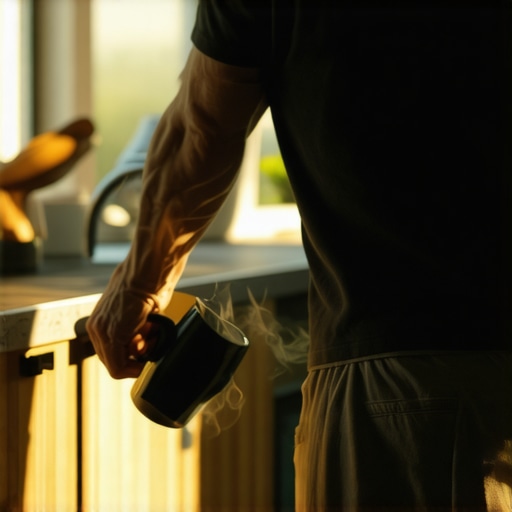
I was leaning over my kitchen island, that first-cup-of-the-day steam hitting my face, when it happened. A sharp, hot wire of pain snapped across my lower back. I hadn’t moved a piano or run a marathon; I had simply reached for a teaspoon. It was a wake-up call louder than any caffeine jolt. For years, I ignored the little twinges while I waited for my French press, not realizing that my body was screaming for a change in scenery—or at least a change in stance. We often blame the gym or our office chairs, but it’s the micro-habits, like how we stand at the counter, that set the stage for disaster. Today, I want to show you how to reclaim your morning ritual without the side of sciatica.
Stop Leaning Into Your Morning Back Spasms
The truth is, most of us treat our morning coffee ritual as a static, slumped event. We lean on one hip, hunch over the counter to watch the drip, or crane our necks to check the news on a phone while we wait. I made the classic mistake early on of thinking these five minutes didn’t count toward my daily strain. I was wrong. I spent months wondering is your back pain a sign of something more serious before I realized my kitchen habit was the primary spark. Your spine needs engagement, not just to be a coat rack for your upper body while you wait for caffeine to kick in. When you stand on a hard tile floor without moving, your muscles enter a state of tonic contraction that limits blood flow.
Is a simple cup of coffee really worth this much trouble?
It is a valid fear. You don’t want to have to overthink every single second of your day just to enjoy a latte. But your spine doesn’t differentiate between exercise and waiting for the kettle to whistle. According to a study published in the Journal of Physical Therapy Science, prolonged static standing can increase muscle fatigue in the lower back by up to 40 percent compared to dynamic movement. This fatigue is exactly what makes your discs vulnerable to a sudden snap when you finally move to grab a mug. I once spent a whole weekend on the floor because I refused to stop leaning on the sink while my beans ground. Have you ever felt that specific, dull ache start to creep in before you have even taken your first sip? If so, you are likely already dealing with the link between poor posture and chronic back pain. We need to integrate movement into the brew time. If you are struggling with that morning stuck feeling, it might be time to try the one foot up rule for pain-free chores to save your spine while the water boils.I decided to stop being a passive observer of my boiling water and started treating the kitchen like a subtle training ground. The first thing I changed was my ‘hinge.’ Instead of slumping forward like a wilting plant, I began to imagine my spine as a high-tension suspension bridge that required its primary anchors—the glutes—to be fully firing. When you stand completely still on a hard surface, your lower back takes the full, unmitigated brunt of your torso’s weight. By simply applying the 5-second glute squeeze that prevents sciatica flares while standing, you create a functional muscular corset. This engagement pulls the crushing pressure away from your L5-S1 discs and forces your hips to take over the heavy lifting of keeping you upright.
Prop a Foot Up to Kill the Compression
Most of us stand with locked knees while waiting for the drip, which sends every ounce of gravity straight into the lumbar spine. Last Tuesday, while waiting for my light roast to bloom, I felt that familiar, hot tightening in my sacrum. Instead of ignoring it, I reached for a small step stool I usually keep for reaching the top shelves. By placing one foot just six inches off the ground on that stool, you instantly flatten the excessive curve in your lower back. You can easily learn how to use a step stool to save your lower back in the kitchen to make this a mindless part of your morning. It is essentially shifting a heavy load from a single point of failure to a broader, more stable base. It felt like letting the air out of a pressurized tire—instant, audible relief. 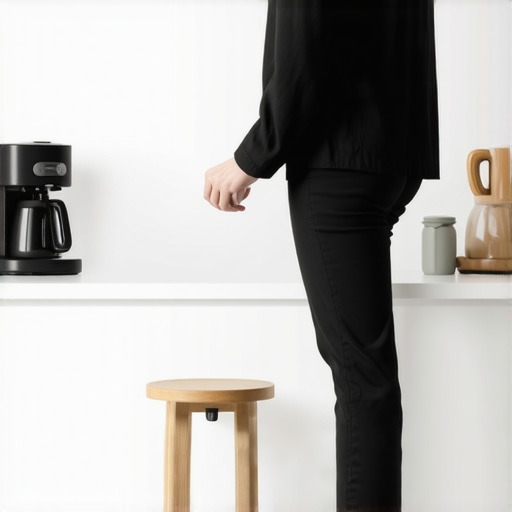
Move While the Coffee Grinds
The aggressive whir of the grinder used to be my cue to hunch over and check emails, but now it is my cue for micro-mobility. If you stand perfectly still, your joints begin to ‘dry out’ because synovial fluid—the natural WD-40 of your body—only circulates when you move. I started integrating gentle pelvic tilts and ‘star’ reaches while my beans were being pulverized. This isn’t about a full gym session; it is about mobility mastery and daily tips to keep your spine and joints healthy. I once tried a full ‘cobra stretch’ mid-brew and nearly knocked over the French press—a messy, caffeinated disaster that taught me that subtle, standing movements are far more effective in a cramped kitchen. Remember that why your perfect upright posture is actually tensing your spine if you hold it too rigidly. You want to be a swaying reed, not a brittle oak.
Keep Your Eyes Up to Save Your Neck
We often spend these five minutes looking down into the cup or at a phone on the counter, creating ‘text neck’ that radiates tension all the way to the tailbone. This forward head posture puts an extra 60 pounds of stress on your cervical spine. Instead of hovering over the brew, stand tall and bring your phone or your mug up to your face rather than dropping your chin to your chest. If you are already feeling a burning sensation that travels down your leg, it is time to look into conquering sciatica with proven approaches to end discomfort now. Your head dictates the tension of your entire posterior chain; keeping your gaze level with the horizon prevents the domino effect of misalignment that usually ends in a sharp pinch by the time you reach for the sugar.Most of us were taught that if something feels tight, we should pull on it until it lets go. I used to spend twenty minutes every morning aggressively reaching for my toes, convinced that my ‘short’ hamstrings were the reason my back felt like it was in a vice. But here is the nuance that usually gets missed: your brain creates tension as a protective ‘handbrake’ when it senses instability elsewhere. If you have a true disc issue, aggressively pulling your legs into a stretch is like yanking on a nerve that is already screaming for air. This is exactly why stretching your hamstrings can actually flare up sciatica. You aren’t lengthening a muscle; you are irritating a sensitive neural pathway. The biggest mistake I see—and one I am guilty of making for years—is the ‘C-shape’ stretch. We think rounding our backs into a ball will create space. In reality, why you should stop stretching your back into a C-shape is that this position often forces the jelly-like center of your spinal discs to migrate further back, potentially worsening a bulge. Before you dive into another yoga session, try the toe touch test that reveals your actual back injury risk to see if your ‘tightness’ is actually a structural warning sign.
Why does my back still ache even though I am flexible?
This is the ‘Yoga Trap.’ You might have a massive range of motion, but if you lack control at the end of that range, your spine is essentially a skyscraper built on Jell-O. A study in the Journal of Orthopaedic & Sports Physical Therapy (JOSPT) points out that limited hip mobility—not back flexibility—is a massive predictor of recurring lumbar stress. This concept of ‘Regional Interdependence’ suggests that your body is a chain where the weakest link dictates the load. If your hips are ‘locked’ into place, your lower back has to move twice as much to compensate. This is why your core strength won’t fix your back if your hips are locked; you are trying to stabilize a foundation that is being jerked around by the floor above it. Surprisingly, the culprit might be even further down. I found that how a stiff ankle is actually causing your recurrent lower back aches was the missing piece of my puzzle. When your ankles can’t flex properly as you walk, your body has to find that motion somewhere else—usually by over-arching the lower back. 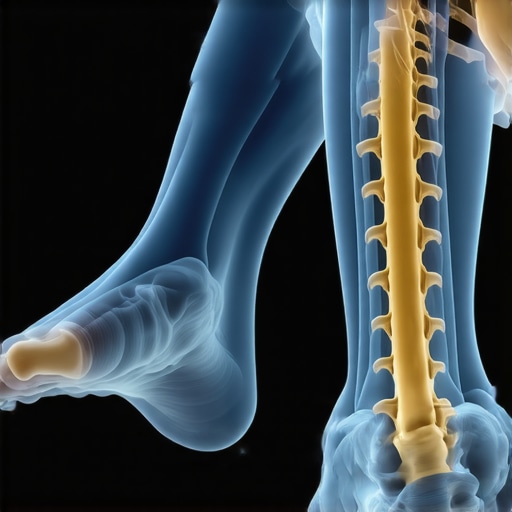 It is a domino effect that even connects to the hidden link between tight calves and neck stiffness. We need to look at back pain breakthroughs and navigating your path to restored mobility through the lens of the whole body, not just the spot that hurts. For more advanced guidance, check out unlocking mobility and expert tips on managing back pain in 2025. Have you ever fallen into this trap where stretching made things worse? Let me know in the comments.While moving away from those aggressive hamstring stretches was a turning point, the real long-term win came from refining the gear I use daily. Beyond the kitchen counter, my recovery took a sharp turn for the better when I stopped looking for high-tech cures and started focusing on low-cost, high-leverage tools. I eventually realized that the most expensive ergonomic chair on the market wouldn’t save me if I didn’t address the mechanical loading of my spine throughout the day. I swear by a basic McKenzie lumbar roll; it is the only thing that provides the specific curvature needed to stop my L4-L5 from compressing during long writing sessions. If you feel that midday slump, you should learn how to use a lumbar roll to prevent mid-day back fatigue. It is about environmental design, not just willpower. Similarly, I ditched my stylish but flat-soled sneakers for ones with actual shock absorption. It turns out why your thin shoes are impacting your lower back shock absorption is a major reason for those mystery aches after a simple walk around the block.
Why a Tennis Ball Is My Favorite Physical Therapist
If you want to get into the nitty-gritty of self-maintenance, you have to look at the ‘knot’ in the glute. Whenever my sciatica starts to whisper, I grab a standard tennis ball. By pinning it between my glute and a wall, I can pinpoint the piriformis muscle without the $150 price tag of a massage therapist. You can see the full breakdown on how a simple tennis ball can fix deep glute tension to try this at home tonight. 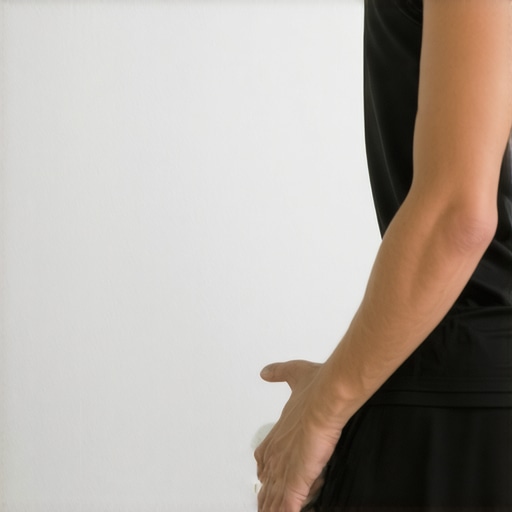 Dr. Stuart McGill, author of Back Mechanic and a leading expert in spine biomechanics, suggests that ‘spine hygiene’—the way you move during non-exercise hours—is more critical than any specific stretch. His research shows that managing the cumulative load on your discs is the secret to long-term resilience and preventing that sudden ‘snap’ during mundane activities.
How can I stay pain-free without a long daily routine?
The answer isn’t adding more to your plate; it is about refining what you already do. I call it the ‘micro-dose’ method. Instead of a 60-minute yoga class, I do three 2-minute sessions of boost your back mobility simple exercises that make a difference throughout the day. For the neck, I focus on revitalize your neck and effective techniques for lasting pain relief by simply adjusting my monitor height and performing chin tucks during commercials. I predict that in the next five years, we will see a massive shift toward bio-sensing wearables that vibrate the moment your spine enters a high-shear position, turning posture into a real-time game of biological feedback. Until then, you have to be your own sensor. Start today by trying the tennis ball glute release for two minutes; it is the most effective advanced tip for clearing out the neural tension that leads to a flare-up. If you are tired of the cycle of pain, you can explore back pain breakthroughs and navigating your path to restored mobility to get a head start on your recovery.
The Painful Lessons My Kitchen Counter Taught Me
I spent years thinking my back was just “old” or “bad.” It wasn’t; it was just unheard. My first big realization was that stability isn’t about being stiff; it’s about being supported. I learned that simple exercises that make a difference aren’t chores—they’re gifts to your future self. Second, I realized that my environment was working against me. If I didn’t change the counter height or my stance, the pain would always return. Finally, I stopped chasing the “pop” or the “crack” and started chasing function. You have to pass the toe touch test that reveals your actual back injury risk before you can decide if you need more stretching or more stability. #IMAGE_PLACEHOLDER_E#
The Survival Gear for Your Lumbar Spine
I highly recommend Back Mechanic by Dr. Stuart McGill. It shifted my perspective from aggressive stretching to smart stabilizing. For my daily routine, I never sit for long periods without a lumbar support; you can learn how to use a lumbar roll to prevent mid-day back fatigue to see why. Also, don’t underestimate the power of a cheap step stool; implementing the one foot up rule for pain-free chores is the easiest ergonomic win you’ll ever find. Finally, keeping up with expert tips on managing back pain in 2025 ensures you aren’t using outdated advice that could do more harm than good.
Your Morning Cup Should Be the Best Part of Your Day
You deserve to enjoy your coffee without checking your pain levels first. By integrating these small shifts, you are reclaiming your body. For more deep dives into long-term recovery, check out these back pain breakthroughs and navigating your path to restored mobility. Don’t be afraid to start small—even a five-second glute squeeze is a step toward a decade of freedom.
Have you ever noticed your back feels stiffer after standing at the kitchen counter for a long time? Let me know in the comments below!