
Why your current sneakers are causing your lower back to ache
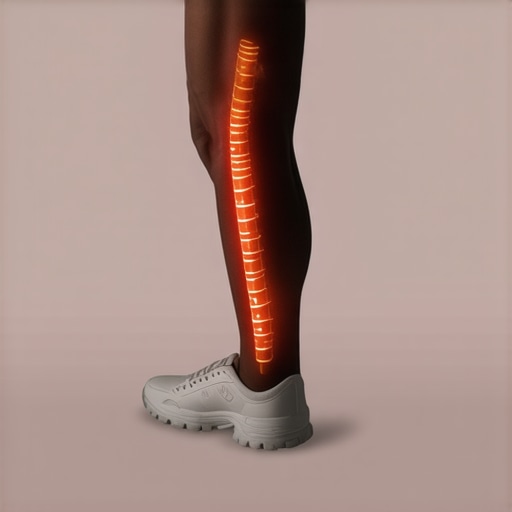
I remember it clearly. Last Tuesday, about three blocks into my usual evening loop, a sharp, familiar bite grabbed my lower back. I wasn’t lifting heavy boxes or twisting awkwardly—I was just walking. It felt ridiculous. [image_placeholder_1] I looked down at my feet, at those expensive, marshmallow-soft sneakers I’d bought thinking they’d be my forever pair. That’s when it hit me: my shoes weren’t helping me; they were essentially tilting my entire world out of alignment. Most of us assume that a high price tag or a soft sole equals back safety, but I learned the hard way that cushion without stability is a recipe for disaster. Today, we are going to dive into why your favorite footwear is actually your spine’s worst enemy and how to fix it before your next walk.
Your Feet Dictate How Your Spine Behaves
It’s easy to blame a heavy grocery bag or a bad night’s sleep, but often, the culprit is literally strapped to your feet. When we wear shoes that don’t match our body’s mechanics, we force our muscles to compensate in ways that aren’t natural. I used to make the classic mistake of thinking more cushion always meant more comfort. I bought the thickest soles I could find, only to realize I was basically walking on unstable sponges. This instability travels up the chain, often manifesting as that dull, nagging ache in the lumbar region. If you’ve been wondering if your back pain is a sign of something more serious, the answer might actually be found in your closet rather than a clinic.
Does that $160 price tag actually protect your spine?
Honestly? Most of the time, no. We get sucked into marketing about maximum energy return or proprietary foam technology, but our spines don’t care about branding. They care about stability and structural integrity. The American Podiatric Medical Association (APMA) notes that footwear lacking proper arch support or having an improper heel-to-toe drop can lead to excessive pronation, which rotates the hip and strains the lower back. You might find that why your high-arched shoes are causing your lower back to ache is simply because they are pushing your center of gravity too far forward. Tell me, have you ever finished a long walk only to feel like you need to lie on the floor immediately? If so, your shoes might be the primary suspect. It’s not just about the arch, either. Sometimes the issue is the lack of protection between you and the pavement. Understanding why your thin shoes are impacting your lower back shock absorption is just as crucial as finding the right support. When I finally swapped my marshmallow shoes for something with more structural integrity, the relief was almost instantaneous. We need to focus on how to enhance your back mobility through the choices you make every morning when you tie your laces. Let’s look at the specific mechanics that turn a good-looking shoe into a back-breaking nightmare.
Test your soles before you step out
Take your favorite pair of shoes right now and try to twist them like a wet towel. If they wring out effortlessly, they aren’t supporting your weight; they’re letting your foot collapse with every step. I learned this the hard way during a weekend camping trip in the Ozarks. I wore an old pair of ‘comfortable’ trail runners that had lost their structural integrity. By the second mile, my arches were flat, and by the campfire that night, my lower back felt like it was being squeezed in a vise. That instability forced my spine to work overtime just to keep me upright. When you realize how poor posture and chronic back pain are linked, you start to see your shoes as the foundation of a building. If the foundation is shaky, the roof—your neck and head—will eventually tilt.
Why your stiff ankles are stealing your back’s comfort
Think of your ankle like a shock absorber on a car. If that shock absorber is rusted shut, every bump in the road sends a jolt directly into the frame. Most people don’t realize that a stiff ankle is actually causing recurrent lower back aches. If your ankle can’t flex properly when you walk, your body looks for that missing movement somewhere else—usually your lower back. You can test this yourself by standing a few inches from a wall and trying to touch your knee to the drywall without lifting your heel. If you can’t, you’re likely overcompensating with every stride. Integrating this 30-second ankle drill can provide more relief than any expensive insert ever could. 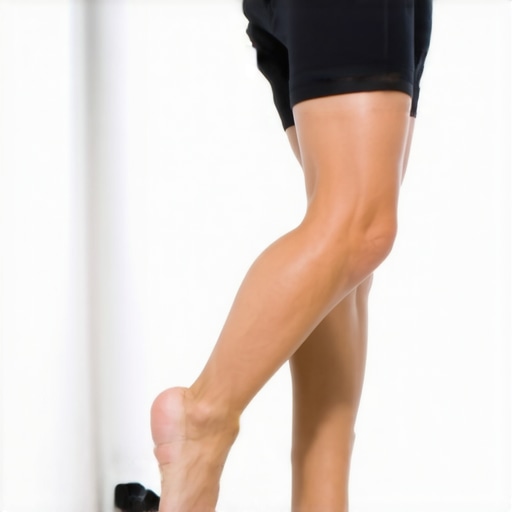
Tie your laces to protect your discs
It sounds minor, but how you secure your foot changes how your weight is distributed. If you have a history of nerve pain, there is a specific way to tie your shoes when you have a herniated disc that prevents the foot from sliding forward and jamming the toes, which shifts your pelvis into a safer alignment. I started using a ‘heel lock’ lacing pattern, and the difference in my stability was night and day. Instead of my foot swimming in the shoe, it stayed anchored, allowing my glutes to actually fire and support my spine. This is a core part of mobility mastery—making small, tactical shifts in your daily routine to protect your joints long-term. By improving your foundation through ankle drills that improve walking balance, you stop the ‘back-breaking’ cycle before it even starts.We often think that more effort equals faster results, but when it comes to the spine, the ‘no pain, no gain’ mantra is a fast track to a long-term injury. If you’ve spent weeks trying to pull your shoulders back into a military-straight line, you’ve likely noticed a new, burning ache in your mid-back. This is because your perfect upright posture is actually tensing your spine and forcing your stabilizer muscles into a state of constant, exhausting contraction. True mobility isn’t about being rigid; it’s about being adaptable.
The hamstrings myth that keeps you in pain
Most people assume that if their legs feel tight, they need to stretch them. I see patients every day who spend twenty minutes a morning reaching for their toes, only to find their back pain getting sharper. Here is the contrarian truth: that ‘tightness’ you feel is often not a short muscle, but a protective response from your nervous system. When you have a disc issue or nerve irritation, your brain tightens the hamstrings to prevent you from over-stretching the sensitive sciatic nerve. This is why stretching your hamstrings can actually flare up sciatica rather than fixing it. 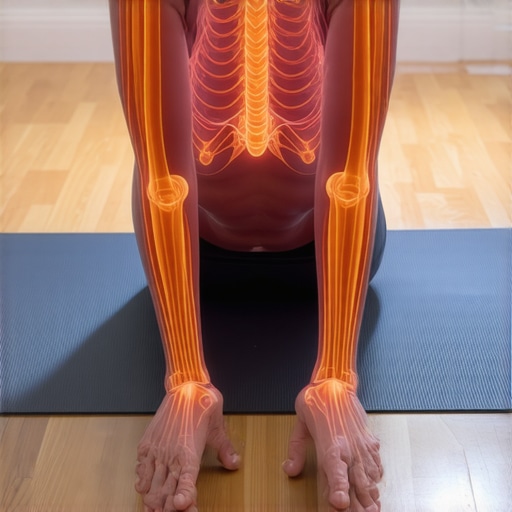 A 2022 study published in the Journal of Bodywork and Movement Therapies highlights that neural tension—the inability of the nerve to glide through its pathway—is frequently mistaken for muscular stiffness. If you keep pulling on a nerve that is already angry, you are essentially ‘sawing’ it against your vertebrae.
Is your morning routine secretly triggering a disc flare-up?
If your first move out of bed is a deep forward fold or a ‘cobra’ stretch, you might be walking into the ‘Oops’ factor. During a flare-up, these extreme ranges of motion can increase intradiscal pressure. I’ve seen countless people wonder why you should avoid the cobra stretch during a back spasm, and the reason is simple: you are jamming the facet joints together while the surrounding muscles are already in a state of high-guard. Instead of aggressive stretching, focus on gentle ‘nerve flossing’ to help the tissue slide without tension.
Stop the ‘heat vs ice’ guessing game
Another common mistake is the indiscriminate use of ice for chronic issues. While ice is great for a fresh ankle sprain, for chronic back stiffness, it often causes the muscles to guard even tighter. In my experience, heat is often better than ice for chronic neck stiffness and lower back aches because it promotes blood flow and signals the ‘fight or flight’ response in your muscles to stand down. You need to distinguish between an acute injury and a long-term mechanical imbalance. Understanding the difference between muscular sciatica and a slipped disc is the first step toward choosing the right recovery tool. Have you ever fallen into this trap of over-stretching or over-icing only to feel worse the next day? Let me know in the comments. We need to stop treating our bodies like machines to be fixed and start treating them like systems to be balanced. By focusing on mobility mastery through subtle, smart movements, you can finally break the cycle of recurring pain.If you’re looking for a magic bullet, you’re going to be disappointed. But if you’re looking for the tools that actually stay in my gym bag after years of trial and error, it starts with a humble $2 tennis ball. I’ve found that how a tennis ball can relieve deep glute and sciatic pain is often more effective than those $400 vibrating massage guns that just rattle your brain. The tennis ball allows for a level of targeted pressure that you simply can’t get with a bulky device. By placing it under your glute while sitting on the floor, you can release the piriformis muscle which is frequently the hidden culprit behind radiating leg pain. Just be cautious; you need to learn how to use a foam roller for sciatica without making it worse, because rolling directly over a hot nerve is like poking a hornet’s nest. 
Stop buying gadgets and grab a tennis ball
We spend forty hours a week at our desks, yet we treat our setup like an afterthought. I’ve had patients buy the most expensive ergonomic chairs only to find that why your standing desk is giving you lower back pain is because they are locking their knees and leaning on their heels for eight hours straight. It’s not just the chair; it’s the height of your tools. For instance, the 15-degree rule for your computer monitor to save your neck is a total game-changer. If your screen is too low, your head—which weighs about as much as a bowling ball—starts to drift forward, putting massive leverage on your cervical discs. Dr. Stuart McGill, a world-renowned spine biomechanics expert and author of Back Mechanic, emphasizes that it is the cumulative load of these small, daily postures that eventually leads to a herniation, not just one heavy lift.
How can I keep my spine healthy for the long haul?
Maintenance isn’t a one-time event; it’s a series of small, non-negotiable habits. I don’t believe in hour-long mobility sessions—nobody has time for that. Instead, I focus on ‘movement snacks.’ Every hour, I do a quick 10-second wall slide for instant shoulder tension relief to reset my posture. Consistency beats intensity every single time. If you want unlocking mobility expert tips on managing back pain in 2025, look at your environment first. Is your monitor at eye level? Is your keyboard at a height that prevents why your wrist position at your desk affects your neck health? If you manage these environmental stressors, your body doesn’t have to fight so hard just to exist. When we talk about scaling these results, it’s about moving from ‘fixing’ an injury to ‘optimizing’ a lifestyle. I’ve started integrating the one-foot up rule for pain-free dishwashing and chores, which sounds silly until you realize it shifts your pelvic tilt and saves your lumbar spine from that agonizing morning ache.
The next frontier of mobility tech
Looking ahead, the ‘one size fits all’ approach to back health is dying. I predict that within the next few years, we will see a surge in bio-individual wearable tech that doesn’t just track steps, but monitors spinal shear and pelvic tilt in real-time. We are moving toward a world where your phone might ping you the moment your posture starts to degrade into a high-risk zone. Until then, the best ‘tech’ you have is your own awareness. My challenge for you today is simple: stop trying to ‘fix’ your pain and start managing your mechanics. Try the 15-degree monitor rule tonight and see how your neck feels by morning. Remember, the goal of mobility mastery is to make your body’s natural state one of ease, not effort. If you’re constantly fighting your own muscles, you’re losing the battle. Start small, use the tools you already have, and listen to the signals your spine is sending you before they turn into screams.
The brutal truth about my decade-long fight with chronic stiffness
I spent years thinking I could simply stretch my way out of a problem. I found out the hard way that reaching for your toes is the worst way to stretch your back when your nerves are already on edge. Stability is actually the primary currency of a healthy spine, not flexibility. Another big realization? Don’t ignore the “small” stuff. Many people believe they need an MRI to understand their risk, but the truth is simpler. If you aren’t sure where you stand, this toe-touch test reveals your actual back injury risk and can guide your training without the need for expensive imaging. I also learned that “listening to your body” is useless if you don’t know what the signals mean; a dull ache is a whisper, but a sharp pinch is a scream that you’ve already gone too far.
The low-tech gear that saved my mobility
My “back kit” isn’t filled with expensive lasers or vibrating gadgets. It is anchored by a humble tennis ball and a monitor riser. I trust the tennis ball because a simple tennis ball can release your deep glute tension better than any bulky massage gun I’ve tested. For those looking for deeper reading, I highly recommend Back Mechanic by Dr. Stuart McGill. It is the gold standard for expert strategies for lasting comfort and focuses on long-term structural changes rather than temporary masks. These tools are my essentials because they empower you to be your own first responder when a flare-up starts to brew.
Your path to a pain-free 2025 starts with one small shift
Reclaiming your life from chronic aches doesn’t happen in a single afternoon or through one lucky adjustment. It is a slow, rewarding commitment to mobility mastery. You have the power to change how your body feels by simply adjusting your environment and respecting your nervous system’s limits. If you’re ever worried and wondering if your back pain is a sign of something more serious, always listen to that gut feeling and consult a professional. But for the daily grind, remember that small changes in your footwear and your desk height are the foundation of your success. Which one of these daily habits are you going to try first—the 15-degree monitor rule or the tennis ball release? Let me know in the comments below!