
How to reach for items in the bottom cupboard safely
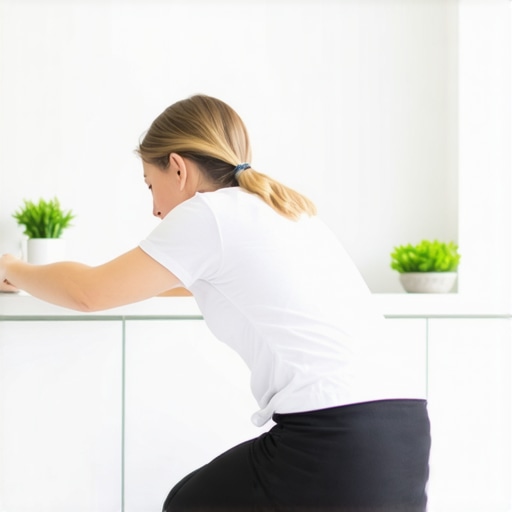
I remember the day the heavy Dutch oven finally won. It was a Tuesday evening, I was tired, and I just wanted to make a quick stew. I leaned over, twisted slightly to clear the spice rack, and—snap. Not a literal bone snap, but that sickening internal velcro tear that tells you your weekend plans just became a date with an ice pack and a bottle of ibuprofen. It was a classic case of thinking a light reach didn’t require any ‘form.’ I was wrong, and my spine paid the price for three weeks. If you have ever felt that sudden, sharp lightning bolt in your lower back just from grabbing a bag of potatoes, you know exactly what I am talking about. We spend so much time worrying about heavy gym weights, but we forget that our kitchens are high-risk zones for poor posture and chronic back pain.
Stop treating your spine like a folding lawn chair
Today, I am going to show you exactly how to navigate those low-level storage spots without triggering a massive flare-up. It is not just about ‘bending your knees’—that is the generic advice everyone gives. It is about spatial awareness and protecting your discs from the shearing forces that happen when we get lazy with our reaches. I used to make the mistake of ‘craning’ my neck down while reaching, which I later realized was part of why I felt so stiff. I should have been focused on enhancing my back mobility through proper daily habits instead of just powering through the pain. Have you ever reached for a lid and felt like your back was about to go on strike?
Is all this extra effort actually worth the payoff?
You might be thinking, ‘It is just a cupboard, do I really need a strategy for this?’ The answer is a resounding yes. According to researchers at the University of Waterloo, bending at the waist to reach for items can increase the compressive load on your spinal discs by over 300% compared to maintaining a neutral spine. That is a lot of pressure for a cast-iron skillet. When you don’t use the right mechanics, you are essentially gambling with your long-term health. If you are already dealing with tingles down your leg, you might need to check if your back pain is a sign of something more serious. Early on, I ignored these warnings and kept reaching with a rounded back, which only led to more frequent sciatica struggles. Let’s look at how to stop that cycle before your next meal prep session.
Turn your legs into a sturdy tripod
The first mistake most of us make is standing with our feet side-by-side, perfectly symmetrical, like we are waiting in a checkout line. When you reach down into a low cupboard from this position, you have zero leverage. Your center of gravity shifts forward, and your lower back muscles have to work overtime just to keep you from face-planting into the pots and pans. Instead, I want you to adopt the ‘kickstand’ stance. Step one foot slightly forward and the other slightly back. This wider base of support allows you to shift your weight between your legs rather than dumping all that force into your lumbar spine. I started doing this religiously after a messy incident involving a spilled gallon of olive oil; by staggering my feet, I could stay stable even when the floor became a skating rink. It is a simple adjustment that mirrors how to do a proper squat to protect your knees and back in a more confined, domestic setting.
Hinge at the hips like a heavy-duty drawbridge
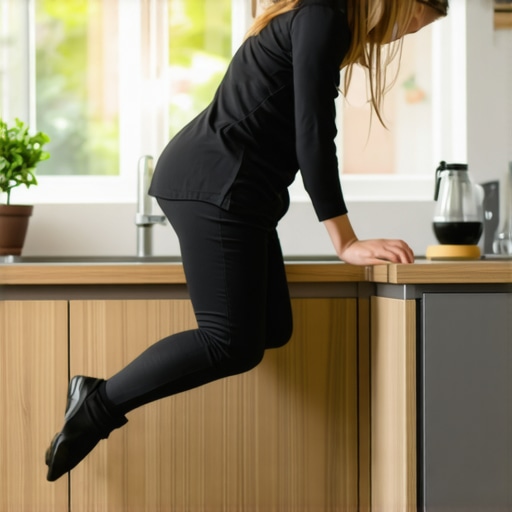
Visualizing your body as a machine helps strip away the bad habits. Think of your hips as a massive, oiled hinge and your spine as a solid, unbending bridge. Most people ’round’ their back, which is like trying to bend a piece of rebar—it doesn’t work, and eventually, something snaps. When you hinge, you push your butt backward as if you are trying to close a car door with your glutes while your hands are full of groceries. This movement loads the hamstrings and glutes—the strongest muscles in your body—rather than the tiny, sensitive ligaments of the spine. If you find your hips feel too ‘stuck’ to do this effectively, you might need to boost your back mobility with specific drills that target hip internal rotation. If the hips don’t move, the back has to, and that is where the trouble starts.
Keep the ‘cargo’ inside your personal bubble
There is a law of physics called the ‘moment arm,’ and it is the reason why holding a ten-pound weight at arm’s length feels five times heavier than holding it against your chest. When you reach deep into the back of a bottom shelf, that cast-iron skillet becomes a spinal wrecking ball. My rule of thumb is ‘nose over toes’—get your body as close to the object as possible before you even attempt to lift it. Last Thanksgiving, I almost took myself out of the game reaching for the turkey roaster. I caught myself mid-reach, stepped into the cabinet space, and pulled the pan toward my shins before lifting. This small shift in proximity is exactly what we teach when explaining how to load the dishwasher without hurting your lower back. If you can’t get close, use a tool or move other items out of the way first.
Move your feet to avoid the ‘corkscrew’ effect
The absolute worst thing you can do for a disc is to reach down and twist at the same time. It creates a shearing force that acts like a manual juicer on your spinal discs. I used to be the king of the ‘reach and pivot’—grabbing the flour from the low shelf and twisting my torso to put it on the counter without moving my feet. It felt efficient until it felt like a hot poker was being driven into my hip. Now, I follow the ‘point your toes’ rule. If you need to move an item from a low spot to a high spot, your toes must lead the way. Pick up the item, stand up, and then pivot your entire body as one unit. This ensures you are maintaining mobility mastery by using your ankles and hips for rotation rather than grinding your vertebrae together. It takes an extra two seconds, but it saves you two weeks of recovery.
I often hear from people who hit the gym five days a week, crush their plank records, and still end up horizontal on the floor after reaching for a cereal box. It’s the great fitness paradox: we assume that having ‘abs of steel’ acts as a biological suit of armor. But here is the contrarian truth that most trainers won’t tell you: why your core strength won’t fix your back if your hips are locked. If your hip joints are as stiff as a rusty gate, your lower back is forced to become the primary mover. No amount of core bracing can overcome a mechanical block at the pelvis. When you reach into that low cabinet, your hips should be doing 90% of the work; if they don’t, your lumbar spine is essentially being asked to do a job it wasn’t hired for.
The hamstring stretch that secretly sabotages your sciatica
Here is a massive ‘trap’ I see constantly. When people feel that familiar pull or ‘tightness’ in the back of their leg while reaching down, their first instinct is to stretch their hamstrings. It feels logical, right? But if that tightness is actually neural—meaning your sciatic nerve is being compressed—stretching is the worst thing you can do. It’s like pulling on both ends of a frayed rope. This is exactly why stretching your hamstrings can actually flare up sciatica rather than fixing it. In my own recovery, I had to learn the hard way that ‘tightness’ is often a protective signal from the brain, not a request for a deeper stretch. If you force the issue, you’re just inviting a massive flare-up that could last for days.
Could your ‘perfect’ posture be the reason you’re so stiff?
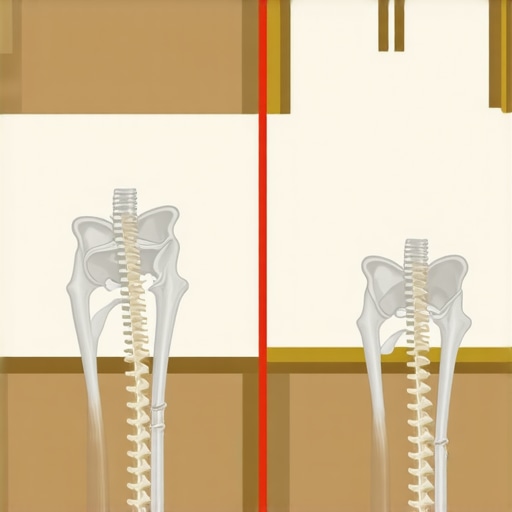
We have been told since kindergarten to ‘sit up straight,’ but the obsession with a rigid, military-style posture can actually be detrimental. According to a study by Dr. Stuart McGill, a world-renowned expert in spine biomechanics, static loading—even in a ‘perfect’ position—leads to oxygen deprivation in the tissues and increased muscle fatigue. This is why your perfect sitting posture is making you stiffer over time. The best posture is your *next* posture. When reaching into those low cupboards, don’t worry about looking like a statue; worry about staying fluid. If you feel stuck, it’s worth looking into unlocking mobility expert tips on managing back pain in 2025 to see how dynamic movement beats static bracing every single time.
The nuanced secret to longevity isn’t just about strength; it’s about knowing when to back off. If your reaching causes a sharp, traveling pain rather than just a dull ache, you need to recognize the warning signs your sciatica needs professional help. Managing your own health is about being a detective, not a drill sergeant. Have you ever fallen into the trap of trying to ‘stretch away’ a pain only to have it come back twice as hard the next morning? Let me know in the comments—I’d love to hear your story and help you navigate those tricky nuances.
Maintaining a healthy spine isn’t a one-time event; it is a lifelong commitment to mechanical efficiency. I used to think I could just ‘fix’ my back once and be done with it, but the reality is that our bodies are constantly adapting to the loads we place on them. If you want to keep those low cupboards from becoming a daily source of dread, you need a toolkit that goes beyond just ‘bending correctly.’ I’ve personally integrated a few non-negotiable items into my home routine that have saved me more times than I can count. For instance, I stopped relying on my own willpower to sit up straight and started using a D-shaped lumbar roll. Unlike the standard round ones that tend to slide around, the flat back of the D-section stays flush against the chair, providing consistent support. Learning how to use a lumbar roll to prevent mid-day back fatigue was a game-changer for me during those long afternoons of computer work between meal prep sessions.
Stop guessing and start measuring your kitchen workspace
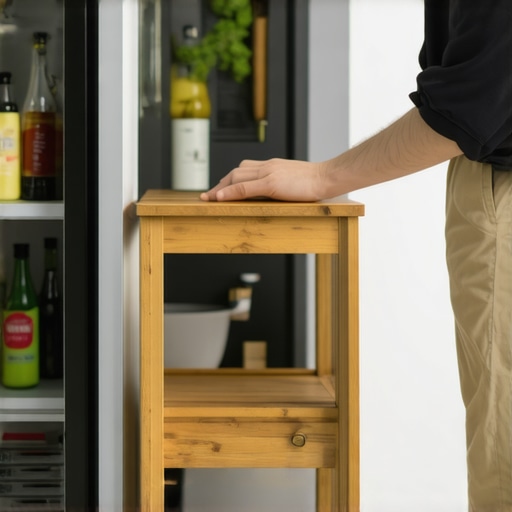
One of the most specific things I did was evaluate my workstation heights. According to the ISO 9241-5 standard for ergonomic requirements, the optimal height for manual tasks should be slightly below elbow height to reduce shoulder and spinal strain. In the kitchen, this means if you are constantly reaching down, you are fighting against your own anatomy. I now keep a heavy-duty, two-step stool tucked right next to my pantry. It sounds simple, but knowing how to use a step stool to save your lower back in the kitchen is about more than just height; it is about creating a platform that allows you to maintain a neutral spine while reaching into those deep, dark corners. I no longer overextend my lats or round my mid-back because I bring the floor up to me.
How do I maintain my spinal health over time?
Consistency beats intensity every single time. You don’t need a grueling hour-long gym session to stay mobile; you need ‘micromovements’ throughout the day. I am a huge advocate for the ‘2-minute reset.’ Every time I finish a task—like emptying the dishwasher or putting away the groceries—I perform a quick hip reset or a thoracic bridge. This prevents the cumulative stiffness that leads to a flare-up. I predict that in the next few years, we are going to see a massive shift toward wearable haptic feedback devices that gently buzz when your lumbar curve flattens. We are moving away from reactive treatments and toward real-time biofeedback. Until that technology is mainstream, you have to be your own sensor. This is the core of mobility mastery daily tips to keep your spine and joints healthy.
Why the humble tennis ball is my $3 physical therapist
If there is one tool I recommend above all others for those suffering from the occasional ‘zing’ of nerve pain, it is a simple tennis ball. When I feel my glutes tightening up—which is usually a precursor to my sciatica acting up—I don’t just wait for it to pass. I use the ball to perform targeted trigger point release. By leaning against a wall and placing the ball in the fleshy part of the glute, you can inhibit the overactive muscles that are tugging on your pelvis. I’ve found that how a simple tennis ball can fix deep glute tension is more effective than many of the expensive massage gadgets I’ve wasted money on. It is specific, portable, and allows you to control the pressure exactly where you need it. It’s a vital part of unlocking mobility expert tips on managing back pain in 2025 that focuses on self-care rather than passive reliance on others.
The goal isn’t to live in a bubble where you never bend over again; the goal is to build a body that is resilient enough to handle the occasional ‘bad reach.’ I want you to try one thing today: next time you have to reach into a low cabinet, use that ‘kickstand’ stance we talked about and keep your chest up. Don’t let your spine do the work your legs were designed for. If you find that your range of motion is so limited that you can’t even get into that position, it might be time for sciatica relief secrets how to banish pain quickly today. Start small, be consistent, and listen to the ‘whispers’ of your back before they turn into screams.
The Dutch oven incident was my wake-up call, but it was just one of many small moments that redefined how I view movement in my own home. I’ve realized that my kitchen wasn’t just a place for cooking; it was a physical therapy lab where I was either reinforcing good patterns or slowly wearing down my discs.
Why my kitchen was actually a secret injury factory
Looking back at my most painful months, I realized I was falling for three massive misconceptions that almost cost me my long-term mobility. First, I treated every reach like a race. I thought that by moving faster, I was spending less time in a ‘bad’ position, but in reality, I was just adding jerky, unpredictable momentum to my vertebrae. Second, I assumed that if something didn’t feel heavy, it didn’t require effort. I now know that even a light box of cereal can trigger a spasm if your mechanics are off. Finally, I had to accept that my ‘back problems’ were usually actually hip problems. If I didn’t take the time to how to check your own hip mobility in under a minute, I was just guessing at my risk level every time I reached for the bottom drawer. It wasn’t about being weak; it was about being disconnected from how my joints were actually functioning that day.
The gear that actually keeps me out of the clinic
I don’t believe in buying every gadget on the market, but there are a few items that have fundamentally changed my daily comfort level. I started using a high-quality, non-slip stool for those deep pantry corners because I realized my ego wasn’t worth a herniated disc. I also swear by a D-shaped lumbar roll for my kitchen desk area, which helps me maintain a natural curve while I’m planning meals. If you’ve been struggling, learning how to use a lumbar roll to prevent mid-day back fatigue is one of the cheapest and most effective upgrades you can make. And of course, the humble tennis ball is always nearby. It’s my go-to for how a simple tennis ball can fix deep glute tension before it turns into full-blown sciatica. These aren’t just tools; they are my insurance policy against another three weeks on the floor.
Reclaiming your home one reach at a time
It is easy to feel like your body is a ticking time bomb once you’ve experienced chronic back pain, but the truth is far more hopeful. Your spine is incredibly resilient when you give it the support it needs. By slowing down, using your legs, and staying mindful of your ‘personal bubble,’ you are building a foundation for a lifetime of movement. Don’t let the fear of a flare-up stop you from enjoying your kitchen. Instead, use these strategies to turn every meal prep session into a chance for back pain breakthroughs navigating your path to restored mobility. You have the tools, the knowledge, and the power to change how you move. Which part of your kitchen routine usually gives you the most trouble—is it the low cupboards, the heavy dishwasher door, or something else entirely? Let me know in the comments below!