
The breathing habit that is keeping your back muscles tight

I remember sitting at my kitchen table, my lower back throbbing with a dull, insistent ache that just wouldn’t quit. I had done all the ‘right’ things. I bought the lumbar support, I stood up every twenty minutes, and I even spent a small fortune on a ergonomic chair that looked more like a spaceship than furniture. Yet, every time I took a deep breath, I felt a sharp pull in my mid-back. It was a lightbulb moment. I realized that my chest was rising toward my chin every time I inhaled. I wasn’t breathing into my lungs; I was ‘lifting’ my entire torso with my back muscles. If you feel like your back is a solid block of wood, you might be surprised to learn that your lungs are the culprit.
Stop lifting your shoulders to catch a breath
Most of us have become ‘chest breathers.’ We live in a fast-paced world, and when stress hits, our breath gets shallow and moves up into the neck and shoulders. This isn’t just a lung issue; it’s a structural one. When you breathe vertically, you are essentially asking your back and neck muscles to perform thousands of ‘reps’ a day just to keep you oxygenated. This constant tugging is often why your straight posture is actually straining your muscles rather than helping them. I made the classic mistake of trying to ‘suck it in’ to look slimmer and stand taller, which effectively locked my diaphragm in a cage and forced my lower back to do all the heavy lifting.
Is breathing really powerful enough to stop a back spasm?
It sounds too simple to be true, right? I used to think the same thing. I figured I needed a deep tissue massage or a radical new exercise routine. But the science is pretty clear: your diaphragm is the ceiling of your core. According to a study published in the Journal of Physical Therapy Science, diaphragmatic breathing significantly improves core stability by increasing intra-abdominal pressure. When you don’t use it, your spine loses its internal ‘airbag,’ leaving your muscles to pick up the slack. This is often the missing link for people who find that their standing desk is giving them lower back pain despite having a ‘perfect’ setup. Today, we are going to break that cycle by learning how to breathe into your ribs instead of your neck.
Have you ever noticed your shoulders creeping up to your ears when you’re focused on a project or driving in traffic? If you have, you’re likely bracing your spine and starving your lower back of the movement it needs. We are going to dive into the 10-second breathing trick for instant lower back relief that finally helped me stop the cycle of constant tightness. It’s time to stop fighting your own body and start using your breath to decompress your spine from the inside out.
Expand your ribs like a blooming umbrella
To get your back to actually relax, you have to stop thinking about breathing as an ‘up and down’ motion and start seeing it as a ‘widening’ motion. Imagine your rib cage is a multi-colored umbrella. When you inhale, that umbrella shouldn’t just poke forward into your stomach; it should open 360 degrees, pushing against your sides and even into your back. I used to spend hours doing the ‘pufferfish’ breath, where I would just shove my belly out as far as possible. All that did was stretch my abdominal wall while my spine stayed completely unsupported. True relief comes when you feel the lowest part of your ribs—those ones right above your waistline—expand outward toward the walls. This creates a natural internal lift that reduces the vertical load on your discs.
Don’t fall for the ‘belly puff’ trap
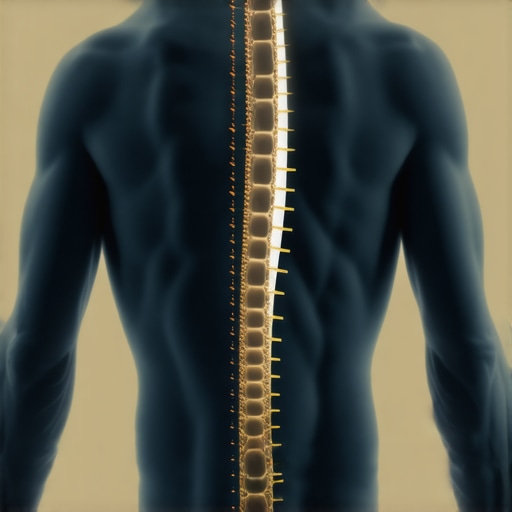
Many people are told to ‘belly breathe’ to relax, but if you have chronic back issues, focusing purely on the belly can actually destabilize your spine. If you only expand forward, you are creating an imbalance in pressure that pulls your lower back into a deeper arch. You want your torso to act like a solid, pressurized canister. When you breathe into your sides and back, you are engaging the specific core move that stabilizes the si joint without even trying. This internal pressure is what keeps your vertebrae from grinding together when you are sitting or standing for long periods. If you feel like why your perfect upright posture is actually tensing your spine, it is likely because you are using muscle tension to hold yourself up instead of this internal air pressure.
Find the air in your back
This is the hardest part of the technique: breathing into your actual back. We have been conditioned to keep our backs ‘flat’ and ‘strong,’ which often means we have turned the muscles around our spine into rigid armor. To break this, try sitting in a chair and leaning slightly forward with your elbows on your knees. Inhale deeply and try to feel your breath ‘hit’ the area where your bra line or heart rate monitor would sit. This specific expansion is how a simple reach and breathe move can decompress your back from the inside out. When those back ribs move, the tiny muscles between your vertebrae finally get a chance to stretch and hydrate. It is like a massage from the inside that no therapist can reach, which is exactly why deep tissue massage isn’t fixing your recurring back pain on its own; it addresses the surface but ignores the internal pressure.
How I killed a sciatica flare in a traffic jam
I remember being stuck on a bridge during rush hour last November, and that familiar, hot-poker sensation of sciatica started creeping down my right leg. Usually, I would panic and try to shift my weight, which only made the nerve more angry. Instead, I grabbed the steering wheel at three and nine o’clock and focused entirely on my lateral ribs. I forced my breath to expand my ribcage so wide that I could feel my seatbelt tighten against my chest without my belly moving forward. By the third breath, the ‘buzzing’ in my calf stopped. By the tenth breath, the sharp pinch in my glute was gone. I had successfully used my lungs to create enough space for the nerve to stop being compressed by my own tight muscles. Knowing how to sit in a car for hours without triggering sciatica starts with this 10-second reset. It feels messy and mechanical at first—you will feel like you are overthinking a basic human function—but once your ribs start moving, your back can finally stop being a shield and start being a support system.
If you’ve been told to just ‘stretch it out,’ I’m about to ruin your morning. For years, I treated my hamstrings like stubborn rubber bands, pulling on them every chance I got. But the advanced nuance most people miss is that your brain uses hamstring tension as a survival mechanism. If your breath isn’t providing internal pressure, your brain ‘locks’ your legs to keep you upright. This is exactly why stretching your hamstrings won’t fix your tight legs—you’re trying to solve a structural stability problem with a flexibility solution. In fact, if you have a sensitive nerve, why stretching your hamstrings can actually flare up sciatica becomes a painful reality as you tug on a nerve that is already screaming for slack, not more tension.
Stop treating your hamstrings like rubber bands
One of the biggest traps in modern mobility is the obsession with ‘bracing.’ We are told to keep our cores ‘tight’ and ‘engaged’ at all times. While that’s great for a heavy deadlift, it is a disaster for daily life. When you stay constantly braced, you are essentially holding your spine in a vice. I spent years perfecting my ‘straight’ posture, only to realize that your straight posture is actually straining your muscles because it prevents the ribs from moving. If your ribs can’t move, your diaphragm can’t drop. If your diaphragm can’t drop, your lower back never gets a break. You should understand why you should stop doing planks if your back already hurts because that level of isometric tension often reinforces this ‘frozen’ breathing pattern, making conquering sciatica much harder than it needs to be.
Can you actually breathe your way through a disc injury?
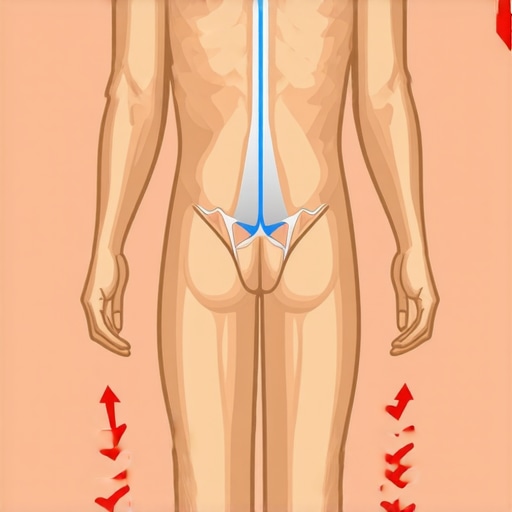
It sounds like ‘woo-woo’ science until you look at the mechanics. A study published in the European Spine Journal found that patients with chronic low back pain have significantly less diaphragmatic excursion than those without pain. This isn’t a coincidence. When you learn to direct your breath into the posterior part of your ribs, you are creating a ‘hydrostatic’ lift for your vertebrae. This is a core component of back pain breakthroughs that finally stick. Instead of just trying to ‘fix’ the pain on the surface, you are changing the pressure system that caused the disc to bulge in the first place. When you feel that expansion in your lower back, it is often the one sign that your sciatica is finally starting to heal: the pressure is moving away from the nerve rather than toward it. Have you ever fallen into the trap of over-stretching or ‘bracing’ too hard when you’re in pain? Let me know in the comments. We need to stop fighting the stiffness and start inflating the support system we were born with. For more ways to maintain this relief, check out these daily tips to keep your spine and joints healthy.
Maintaining that internal pressure isn’t just about a one-time fix; it’s about the environment you create for your spine every day. I’ve realized over the years that most ‘back-saving’ gadgets actually do the opposite because they lock you into a rigid, artificial position. This is precisely why your lumbar support might be making your back stiffer than it was before you spent the money. I eventually replaced my fancy, oversized lumbar pillows with a simple firm wedge that tilts my pelvis slightly forward without pushing directly into my spine. This small change allows my lower ribs to actually expand when I’m at my desk, rather than being pinned against a foam block.
Ditch the fancy gadgets for better rib movement
When you are looking to scale these results, you have to look at your digital environment too. I spent years chasing the ‘perfect’ chair, but the real breakthrough came when I looked at my screen height. If your eyes are looking down, your ribs will naturally collapse. Following the how to set up your laptop for better spine protection guidelines was a game-changer for me. By elevating my monitor so that my gaze stays level, I stopped ‘crunshing’ my front ribs, which gave my diaphragm the space it needed to keep that hydrostatic pressure alive all day. It’s a cascading effect: better eye position leads to better rib position, which leads to mobility mastery daily tips to keep your spine and joints healthy becoming second nature rather than a chore.

How do I keep my spine mobile for the long haul?
The secret to long-term success isn’t adding more exercises; it’s about refining the ones you already do. I use a specific feedback loop every morning that I call the ’90/90 Balloon Reset.’ By lying on your back with your feet on the wall and exhaling fully into a balloon, you force your ribs down and in, which sets your diaphragm in the optimal position for the rest of the day. This isn’t just a gym trick; the Postural Restoration Institute (PRI) emphasizes that achieving a proper ‘Zone of Apposition’—the area where the diaphragm and the abdominal wall overlap—is the single most critical factor for managing chronic tension and preventing the rib cage from flaring into a stress-induced state. This internal reset helps you avoid understanding the link between poor posture and chronic back pain the hard way by giving your spine a ‘buffered’ start to the morning.
Wearables will soon track how you breathe, not just how you stand
Looking ahead, I predict a massive shift in how we approach recovery. We are moving away from simple ‘posture buzzers’ that tell you to sit up straight and toward sophisticated biofeedback wearables that track rib expansion and respiratory rate in real-time. In the coming years, unlocking mobility expert tips on managing back pain in 2025 will likely involve AI-driven apps that alert you when your breathing becomes shallow long before your back actually starts to ache. This proactive approach is the future of spinal health. For now, my most advanced tip is this: tonight, before you go to sleep, spend two minutes breathing only into your side ribs while lying on your side with a pillow between your knees. This shuts off the ‘fight or flight’ tension in your back and prepares your discs for a night of hydration rather than compression. Stop waiting for the pain to return and start inflating your internal armor today.
What My Spine Taught Me After 10 Years of Pain
Reflecting on my journey from chronic stiffness to fluid movement, I’ve realized that the most profound changes didn’t come from a new gym machine, but from small, internal shifts. Here is the wisdom I wish I had on day one:
- The ‘Stiffness’ Illusion: Most of the time, that rock-hard feeling in your lower back isn’t a lack of flexibility; it is your nervous system ‘parking’ your spine in a braced position because it doesn’t feel stable. Air pressure provides that stability, not just muscle.
- Consistency Beats Intensity: You don’t need a 60-minute yoga session to find relief. Taking five intentional, rib-expanding breaths every hour is more effective at retraining your brain than a once-a-week deep stretch.
- Listen to the ‘Buzz’: When you feel that faint tingling or buzzing in your legs, it’s a signal to expand your ribs, not to reach for your toes. Reaching often makes it worse, while breathing creates space.
The Essentials I Keep in My Mobility Bag
I’ve tested dozens of gadgets, but these are the only ones that actually helped me maintain 360-degree breathing and spinal decompression. I use these daily because they provide immediate feedback to my nervous system.
- A Standard Party Balloon: It sounds silly, but exhaling into a balloon while lying on your back is the fastest way to find your deep abdominal muscles and reset your rib cage position.
- A Firm Tennis Ball: For those days when the glutes feel like they are clamping down on the nerve, knowing how a tennis ball can relieve deep glute and sciatic pain is a literal lifesaver. It’s the perfect tool for targeted release.
- A Monitor Riser: By keeping your eyes at a 15-degree angle, you prevent the rib-collapsing slouch that ruins your breathing patterns before your workday even begins.
- Resistance Bands: I use these for simple exercises that make a difference by providing external tension for my ribs to push against during an inhale.
Your Back Deserves to Feel Light Again
It is easy to feel like your body has betrayed you when you are in the middle of a flare-up. But remember, your spine is designed to move, and your lungs are the built-in pistons that keep everything lubricated and pressurized. By shifting your focus from ‘fixing’ a problem to ‘inflating’ your support system, you are taking the most direct path toward expert strategies for lasting comfort. Don’t be discouraged if it feels awkward at first. You are relearning the most fundamental human movement there is. Every time you breathe into your back ribs, you are giving your vertebrae a tiny bit of room to breathe, too. Keep going, keep expanding, and trust that your body knows how to heal when you give it the space it needs. Which part of your back feels the tightest when you take a deep breath? Let me know in the comments below!