
How a stiff upper back is forcing your neck to move too much
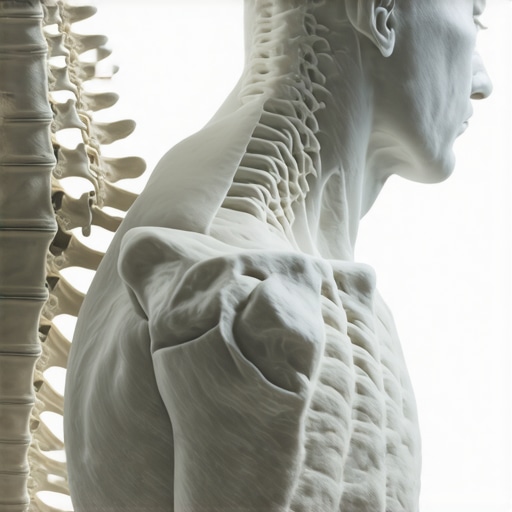
I’ll never forget the afternoon I tried to reverse out of my driveway and felt like my head was stuck in a vice. I had to rotate my entire torso just to see the street. I blamed my pillow, my stress levels, and even my age. But the truth was much more annoying: my upper back had become a solid brick of immobility, and my neck was desperately trying to compensate for it. When your thoracic spine—that middle section of your back—stops moving, your cervical spine has to work double time just so you can look around. It’s exhausting, and it’s a major reason why your recurring headaches won’t quit. Today, I’m pulling back the curtain on this mobility theft and showing you how to reclaim your range of motion without the endless, useless neck rubs.
Stop Blaming Your Neck for Your Back’s Laziness
For the longest time, I made the mistake of treating the symptom instead of the source. I’d spend twenty minutes a day stretching my neck into oblivion, pulling it side to side until it clicked. Big mistake. It turns out that over-stretching an already overworked neck just makes it more unstable and prone to guarding. I should have been looking at how to use a doorway to release chest tension to free up my ribcage instead. Research from the Journal of Manual & Manipulative Therapy suggests that thoracic spine mobilization can provide immediate relief for neck pain because the two areas are mechanically linked. If the anchor of your upper back doesn’t move, the tether of your neck eventually snaps under the pressure. This is especially true if you spend hours behind a wheel; learning how to adjust your rearview mirror can actually force your mid-back to stay engaged rather than collapsing into a slump.
Is this just another trend that won’t actually work?
I get it. You’ve tried the massage guns, the expensive pillows, and the heating pads. You’re skeptical because nothing has stuck. But unless you address the stuck vertebrae in your mid-back, your neck will always be on the verge of a flare-up because it is literally doing the work of two body parts. We need to focus on specific movements like the thoracic bridge move to wake up the muscles that are supposed to be doing the heavy lifting. Have you ever felt that sharp, hot pinch just while trying to look over your shoulder at the grocery store? It’s a clear signal your neck is being bullied into a range of motion it wasn’t designed to handle alone. Have you ever felt like your neck was doing all the work while your back just sat there like a lump of coal? It’s time to change that dynamic for good.
Turn Your Rigid Ribcage Into a Fluid Spring
I remember the first time I actually tried to move my upper back properly. I sat on the floor, ready to conquer a simple rotation, and I barely budged an inch. It was embarrassing; I felt like a tin man who’d been left in the rain for a decade. My ribs felt like they were knit together with steel wire. The breakthrough happened when I stopped trying to ‘stretch’ and started trying to ‘mobilize.’ Think of your thoracic spine as a series of hinges. If those hinges are rusted shut, no amount of pulling on the door handle (your neck) will make it swing smoothly. You need to apply oil to the hinges themselves. This starts with addressing how you sit and move throughout the day. Often, we focus so much on the lumbar region that we forget the mid-back is the true anchor for everything above it. If you are constantly slumped, you might even find that is your back pain a sign of something more serious because the lack of mobility is cascading down to your hips or up to your skull. To combat this, you need to implement boost your back mobility simple exercises that make a difference rather than just hoping the stiffness goes away on its own. 
Stop the Grocery Store Pinch With Proper Extension
That sharp, hot sensation you feel when looking over your shoulder isn’t just a tight muscle; it’s a mechanical failure. To fix it, you have to master thoracic extension—the ability to lean back without arching your lower back. When I first tried this, I cheated by sticking my stomach out, which did nothing for my neck and actually made my lower back ache. The trick is to keep your core engaged while you arch your mid-back over a foam roller or the back of a chair. This specific motion creates space for your lungs and takes the literal weight of the world off your cervical spine. If you’re a desk worker, you’re likely fighting a losing battle unless you know how to set up your laptop for better spine protection to keep your eyeline from dragging your chin toward your chest.
The Breathing Secret for Ribcage Freedom
Most people don’t realize their ribs are joints, too. Every time you breathe, your ribs should expand like a bucket handle lifting up. If you are a ‘chest breather,’ those joints get stiff, and your neck muscles (the scalenes) have to pull on your ribs to help you get air in. This is a recipe for chronic tension. I started practicing the 10 second breathing trick for instant lower back relief but found it worked wonders for my neck as well. By forcing the air into the back of my ribcage, I was essentially stretching my spine from the inside out. It felt messy and awkward at first—I actually felt a little dizzy because I wasn’t used to that much oxygen—but within three days, the ‘vice’ around my head started to loosen. You can further release that upper-body grip by using the 30 second wall stretch that releases shoulder blade knots to target the areas where the ribcage and spine meet. These aren’t just ‘gym moves’; they are survival tactics for anyone living in a digital world. Reclaiming your range of motion is less about force and more about consistent, intelligent movement that respects the link between your mid-back and your head.I’ve seen so many people try to ‘fix’ their backs by forcing themselves into a rigid, upright position all day. We’ve been told that slouching is the enemy, so we overcorrect into a military-style posture that’s just as damaging. In my experience, why your perfect upright posture is actually tensing your spine is because it creates constant muscular engagement without any recovery. A study published in the British Journal of Sports Medicine highlights that ‘movement variability’—the ability to shift through different positions—is far more protective than holding any single ‘perfect’ pose. By staying rigid, you’re just fatiguing different muscle groups until they eventually spasm. 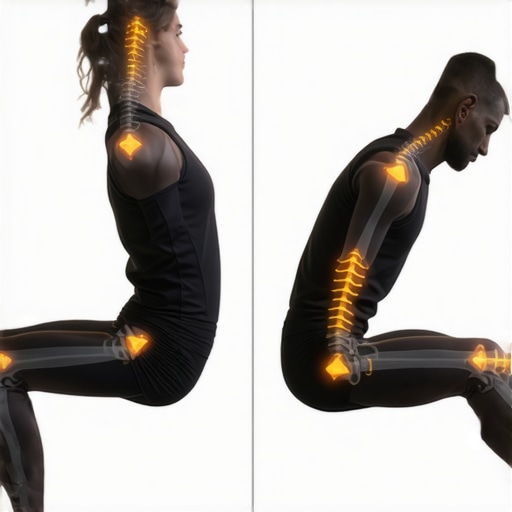
Can a strong core actually make your back pain worse?
It sounds like heresy, but yes. I often see ‘gym rats’ with abs of steel who can’t touch their toes or rotate their hips because they’ve essentially created a muscular corset that’s too tight. If you’re bracing your core 24/7, you’re essentially locking your spine in a cage. This is often why your core strength wont fix your back if your hips are locked. You need stability, yes, but you also need the joints to actually move. If the hips don’t rotate, that force has to go somewhere, and it usually ends up shearing your lower back discs.
The Sciatica Trap You Need to Avoid
One of the biggest mistakes I see—and one I’ve made myself—is trying to ‘stretch out’ sciatica by pulling on the hamstrings. It feels tight, so you stretch it, right? Wrong. If your sciatic nerve is sensitized, stretching it is like pulling on an angry dog’s tail. This is exactly why stretching your hamstrings can actually flare up sciatica. You’re not stretching a muscle; you’re tensioning an inflamed nerve. Instead of aggressive pulling, you should be looking at unlocking sciatica relief expert strategies for lasting comfort that focus on nerve gliding and decompression. Another common ‘oops’ is the habit of self-cracking. I know that pop feels satisfying, but why cracking your own back is making your joints more unstable is because you’re usually hitting the segments that are already moving too much, rather than the stuck ones. Have you ever fallen into this trap of over-stretching or over-bracing? Let me know in the comments.
Stop Buying Cheap Foam Rollers and Start Using Lacrosse Balls
When I first started my recovery journey, I bought every gadget under the sun, only to realize that most soft, colorful foam rollers from big-box stores are essentially useless for deep tissue release. They compress too much to actually affect the fascia. Now, I exclusively use a high-density black foam roller for my thoracic spine and a standard lacrosse ball for those stubborn knots under my shoulder blades. The lacrosse ball is a game-changer because it allows for a ‘pin and stretch’ technique—you pin the specific knot against a wall and then move your arm through its range of motion to force the muscle to slide underneath the pressure. If you are currently struggling with nerve issues, you have to be incredibly careful with your application; knowing how to use a foam roller for sciatica without making it worse is the difference between finding relief and spending a week in an inflammatory flare-up. I even keep a simple tennis ball in my center console for long commutes, as understanding how a simple tennis ball can fix deep glute tension while sitting in traffic can prevent that dreaded leg numbness before it starts. #IMAGE_PLACE_HOLDER_D#
How do I stay pain-free without a 60-minute daily routine?
The secret to long-term success isn’t a massive, exhausting workout; it’s what I call ‘movement snacking.’ Dr. Stuart McGill, author of Back Mechanic and a world-renowned expert in spine biomechanics, emphasizes that the spine does not have a ‘maintenance-free’ setting; it requires consistent micro-movements to pump nutrients into the intervertebral discs and prevent stagnation. Instead of one long, grueling session, I integrate mobility mastery daily tips to keep your spine and joints healthy throughout my actual workday. I use the 20 20 20 rule for neck and eye strain relief to ensure my cervical spine isn’t locked in one position for hours on end. If I am on a long conference call, I’ll stand up and perform the simple wall sit that builds spine-supporting strength. It is about creating a lifestyle where movement is a constant, quiet hum rather than a loud, occasional chore.
Smart Wearables and the Future of Spine Health
I predict that by 2030, we won’t be guessing about our spinal alignment anymore. We are already seeing the rise of wearable sensors that provide real-time haptic feedback, vibrating when your thoracic spine slumps beyond a certain degree. This real-time biofeedback is the ‘holy grail’ of mobility because it fixes the mechanical fault before the pain signal ever reaches your brain. Until those devices become mainstream, we have to rely on manual cues and enhance your back mobility ergonomic tips for everyday comfort. The medical community is moving away from the idea of ‘perfect posture’ and toward ‘dynamic sitting.’ The next breakthrough will likely be AI-integrated chairs that micro-adjust their lumbar support based on your muscle fatigue levels. For now, you can achieve similar results by implementing neck pain solutions proven techniques to regain your range of motion through consistent, small wins. My challenge to you is to try the ‘Mirror Reset’ today: every time you check your rearview mirror or see your reflection in a window, perform a five-second shoulder blade squeeze. It is the smallest habit with the largest long-term payoff.
The Hardest Lesson I Learned About My Rigid Ribcage
I used to think a pop or a crack meant I was fixed. I spent years chasing that audible release, only to realize that mobility is about control, not just noise. If you cannot move through a range of motion under tension, you do not own that range—you are just borrowing it. One of my biggest lightbulb moments was realizing how neck pain and stress are a two-way street; my tight shoulders were not just a physical issue, but a physical manifestation of my mental load. I also learned that the ‘perfect’ posture is a myth. The best posture is your next posture. Staying in any one position—no matter how ‘correct’ it looks—will eventually cause your muscles to guard and stiffen.
Gear That Actually Earned a Spot in My Gym Bag
If you are serious about managing back pain in 2025, stop buying cheap posture correctors that forcefully pull your shoulders back. Instead, I recommend investing in Dr. Stuart McGill’s Back Mechanic; it is the absolute gold standard for understanding spine hygiene and identifying your specific pain triggers. For physical tools, I trust a high-density black foam roller for broad thoracic work and a lacrosse ball for the pin-and-stretch techniques we discussed. These are inexpensive, durable, and far more effective than the vibrating gadgets marketed on social media. They allow for the precision needed to target the small muscles between your shoulder blades that a roller simply misses.
Your Spine Is Meant to Dance Not Just Endure
Reclaiming your body does not happen in a single weekend seminar or a one-off massage. It happens in the 30 seconds you spend breathing into your ribs while waiting for your coffee to brew. It happens when you choose to rotate your whole torso to look at a colleague instead of just straining your cervical spine. This journey toward restored mobility is built on small, daily wins that add up to a life without that heavy, vice-like headache at 5:00 PM. Your body is incredibly resilient, and once you stop bullying your neck and start supporting your mid-back, you will be amazed at how quickly the tension melts away. You deserve to move through the world without fear of a sudden pinch. Have you ever noticed that your neck feels tighter on days when you are stuck at your desk for more than four hours? Let me know in the comments below.