
The Proper Way to Carry a Backpack for Students

I still remember the exact Tuesday morning my back decided to go on strike. I was standing in front of my locker, loaded down like a pack mule preparing for a multi-day trek across the Andes, when a sudden, sharp ache bloomed right between my shoulder blades. I was only seventeen, yet I felt ninety. The culprit wasn’t some athletic injury; it was my beloved, overstuffed, single-strapped canvas backpack. For years, I wore it slung casually over one shoulder because I thought it looked cool. It didn’t look cool when I was limping to geometry class trying to manage a sudden spike in poor posture and chronic back pain.
The Heavy Toll of a Poorly Carried Pack
We do not talk enough about the physical tax our academic years levy on our bodies. Carrying heavy textbooks incorrectly is not just a minor inconvenience; it is a fast track to chronic spinal misalignment. When you slouch, lean forward, or drape thirty pounds of paper over a single shoulder, you force your muscles into survival mode. Over time, this daily strain can lead to severe issues, even mimicking the shooting discomfort that sends people searching for sciatica relief secrets. I made the mistake of ignoring these early warning signs, thinking I could just tough it out. Spoiler alert: you cannot tough out structural spinal strain.
Are Ergonomic Backpacks Actually Worth the Hype?
I used to think those specialized, padded bags with the chest straps were pure marketing gimmickry designed to overcharge worried parents. I was completely wrong. A study published by the International Journal of Environmental Research and Public Health notes that carrying a backpack exceeding just 10% to 15% of a student’s body weight significantly alters spinal curvature and lung volume. Once I swallowed my pride and learned the correct way to wear a backpack to avoid mid-back fatigue, my daily headaches and mid-afternoon shoulder burning practically vanished. Today, we are going to fix how your pack sits on your shoulders so you can protect your spine for the long haul. Have you ever felt that deep, burning ache in your neck after a long walk across campus?
Set Your Straps High and Tight to Save Your Spine
The single biggest error I committed during my school days was letting my backpack sag all the way down to my glutes. It felt relaxed, but mechanically, it was a disaster. When the bag hangs low, it acts as a lever pulling your torso backward, forcing you to lean forward at the hips just to stay upright. To counteract this, you need to learn how to carry a heavy backpack without leaning forward. Pull those shoulder adjustment straps until the base of the bag rests comfortably above your waistline. It might feel snug at first, but your lower back will thank you instantly.
How to Pack Your Bag Like a Structural Engineer
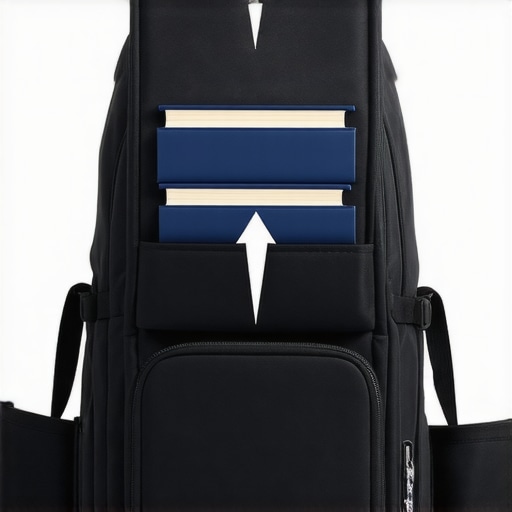
Imagine your backpack as a physical lever attached directly to your spine. If you place the heaviest items—like that massive chemistry textbook or your sleek but dense laptop—at the very outer edge of the bag, you are essentially multiplying the weight pulling your shoulders backward. To counteract this constant backward drag, your neck muscles have to work triple-time, which explains why your head feels heavy by 3 pm every afternoon. By keeping the heaviest cargo flush against your back, you align the load with your natural center of gravity.
I remember a chaotic Thursday in college when I shoved three library books into the outer zippered pocket because I was in a rush. Within twenty minutes of walking across the quad, my lower back felt like it was being squeezed in a vise, and my shoulders were rounded forward like a caveman’s. The moment I stopped on a bench, unzipped the bag, and slid those heavy books right up against the back sleeve, the immediate relief was staggering. It felt like I had instantly shed ten pounds of weight, simply by changing the distribution.
Keep the Heavy Gear Centered and Snug
To do this right, follow a strict packing hierarchy. Heavy textbooks and laptops go in the back compartment first, directly against your spine. Medium-weight items, like notebooks and tablet cases, go in the middle. Finally, lightweight essentials—like your keys, pens, and windbreaker—belong in the outermost pockets. This simple arrangement preserves your thoracic spine posture, helping you enhance your back mobility and preventing the compensations that lead to deep muscle spasms.
The Two-Strap Rule and the Magic of the Sternum Strap
We need to talk about the single-strap slouch. I know carrying your pack over one shoulder is a tough habit to break, but doing so forces one side of your body to hike upward to keep the bag from slipping. This chronic imbalance is a primary trigger for pelvic tilts and uneven hips, causing deep structural issues that make you search for conquering sciatica solutions later in life. Always use both shoulder straps to distribute the forces symmetrically across your collarbones and upper back.
Click That Chest Buckle to Stop the Sway
If your backpack features a sternum strap, use it. This small chest strap pulls the shoulder straps closer together, preventing them from slipping outward and sliding off your shoulders. More importantly, it keeps the bag from swaying side to side as you walk. Every time your bag sways, your core muscles have to micro-adjust to stabilize your torso. Over several miles of walking, those thousands of micro-adjustments turn into deep, exhausting lower back fatigue. Securing the chest buckle locks the bag to your torso, allowing you to move as a single, coordinated unit. Keeping your body stabilized this way is a massive step toward long-term spinal health and helps you maintain excellent mobility mastery throughout your busy day.
When we talk about fixing our backs and keeping our bodies moving fluidly, most of the standard advice is incredibly misleading. We are told to sit up straight, pull our shoulders back, and stretch our tight muscles until they give up. But after years of working through my own spinal issues and diving deep into physical mechanics, I realized that many of these mainstream habits are actually keeping us in a chronic cycle of pain.
Why is standing up straight actually making your back pain worse?
The biggest myth in the physical wellness world is that perfect, rigid posture is the ultimate shield against injury. We have been conditioned to believe that we must look like soldiers at attention. However, forcing an artificial, stiff posture actually locks your spine into an unnatural state of constant muscle tension. When you rigidly force your chest out and pull your shoulders back, you are hyperextending your lumbar spine and putting immense pressure on your facet joints. In fact, research published in physical rehabilitation archives shows that static, rigid posture restricts blood flow and accelerates spinal disc fatigue compared to dynamic, relaxed movement. To find true relief, you have to realize that why standing up straight is actually making your back pain worse is rooted in this lack of micro-movement.
The Hamstring Trap That Most Active People Fall Into
Here is another trap I fell into for years: stretching my hamstrings every single morning because my lower back felt tight. It seems logical. Your back hurts, your thighs feel stiff, so you bend over and reach for your toes. But here is the advanced nuance: your hamstrings are often not actually short; they are long and under constant neurological tension because your pelvis is tilted forward. Stretching an already over-lengthened muscle only destabilizes your pelvis further, pulling your lower back into more strain. Once I stopped endlessly pulling on my legs and focused on pelvic alignment instead, the chronic tightness disappeared. Understanding why your hamstrings are not the real reason your back is tight will save you years of wasted effort and prevent unnecessary nerve irritation.
If you are struggling with nerve pain that shoots down your leg, you must also be extremely careful with standard flexibility routines. Many popular yoga poses and forward folds actually pinch the sciatic nerve root against your spinal discs. I have seen so many people aggravate their symptoms by trying to stretch through the pain, unaware of why some sciatica stretches actually pinch the nerve further. Instead of aggressive stretching, focusing on gentle mobilization and core stability is what truly unlocks lasting relief.
Stop Icing Your Spine After the First Forty-Eight Hours
We have all been told to throw an ice pack on our back whenever it starts to ache. While ice is great for numbing acute pain immediately after an injury, using it chronically actually delays your body’s natural recovery process. Inflammation is not your enemy; it is the first phase of tissue repair. By continuously applying cold packs days after the initial strain, you constrict the blood vessels and prevent nutrient-rich blood from flowing to the injured muscles and discs. To speed up your healing, you need to know why you should stop icing your back after the first two days and switch to gentle heat and active recovery instead. Have you ever fallen into this trap of over-icing or forcing your posture straight? Let me know in the comments below!
Once you strip away the common myths about rigid posture and excessive stretching, the path to long-term comfort becomes much simpler. It is not about forcing your body into perfect alignment for eight hours a day. It is about equipping yourself with the right physical tools and creating a sustainable ecosystem for your joints. After years of testing gadgets, braces, and specialized seats, I have realized that the most effective solutions are incredibly low-tech and focus entirely on passive, effortless support.
How do I maintain spinal mobility and joint health over time?
The secret to preserving your progress is consistency through smart environmental design rather than sheer willpower. Instead of constantly reminding yourself to sit up, you must alter your physical surroundings so that bad habits become difficult to maintain. For example, using the simple footstool trick to stop lower back pain while sitting automatically tilts your pelvis back into a neutral resting position without you having to think about it. Over the next decade, the spinal care industry is going to shift heavily away from active, forced correction and move toward passive ergonomic integration—where our furniture, car seats, and workspace tools naturally cradle our structural curves.
The Core Tools I Use Every Single Day
I do not travel or work without two specific pieces of equipment. The first is a high-density foam lumbar roll. Standard office chairs, no matter how expensive, rarely match the unique curvature of your lower spine. By learning the specific way to use a lumbar roll for maximum relief, you can turn any cheap airplane seat or dining chair into a supportive ergonomic system. The second tool is a firm, small massage ball (like a lacrosse ball) which I use against a wall to pin and release tight trigger points in my mid-back before they can cause a spasm.
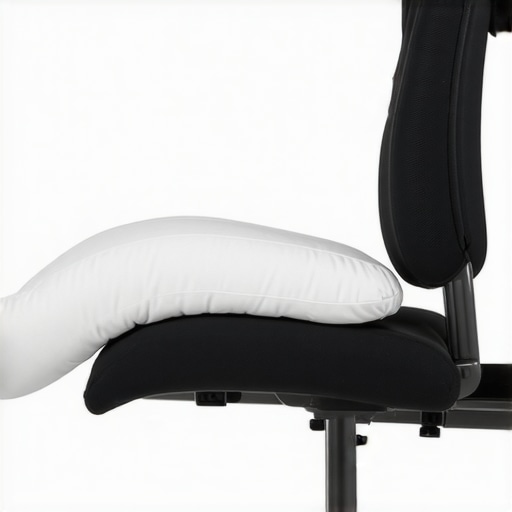
In addition to these physical supports, long-term spinal durability requires a systematic approach to daily movement. Renowned biomechanist Dr. Stuart McGill emphasizes that building true spinal resilience relies on core stiffness and endurance rather than dynamic flexibility. This means swapping out high-risk movements for safe, targeted stability exercises. Practicing the dead bug exercise variation that actually protects your spine is the ultimate way to build this deep muscular armor without stressing your delicate lumbar discs. My challenge to you today is to stop over-stretching your lower back tonight. Instead, grab a simple rolled-up bath towel, place it behind your lower back while sitting on the couch, and notice how much tension instantly drains from your shoulders. It is these tiny, everyday modifications that ultimately add up to lifetime mobility mastery.
When we look at the daily physical demands of modern life, our structural habits form the foundation of how we feel every single afternoon. Getting your heavy gear organized and carrying it correctly isn’t just about comfort; it is a vital daily shield for your nervous system.
What Experts Won’t Tell You About Spine Strain and Chronic Tension
Over my years of exploring physical recovery, I have noticed that the industry often keeps people trapped in a cycle of endless treatments. Here are the core realizations that shifted my perspective entirely:
- Symmetry is a myth we must stop chasing: Your body is naturally asymmetrical on the inside, from your lungs to your liver. Forcing yourself into a rigid, perfectly straight mold only builds unnecessary, painful muscle guarding.
- Passive rest can be actively harmful: Laying on a soft surface for days hoping your back will heal itself actually deprives your spinal discs of the dynamic pressure they need to absorb nutrients and stay hydrated.
- The location of the ache is rarely the source of the problem: A burning shoulder blade is frequently a cry for help from a compressed cervical nerve, and a tight lower back is often a symptom of an unstable pelvis or weak core.
My Essential Toolkit for Lasting Spinal Health
I do not rely on expensive high-tech gadgets or complex therapies to keep my body moving smoothly. Over the years, I have narrowed my daily maintenance routine down to three simple, highly effective tools:
- A firm lacrosse ball: This is my absolute favorite tool for targeted self-massage. Pinning this small, dense ball between a wall and my upper back allows me to release deep muscle knots around my shoulder blades in under two minutes.
- The simple under-desk footrest: By elevating your feet just a few inches, you can easily implement the simple footstool trick to stop lower back pain while sitting. This basic change tilts your pelvis back into a neutral posture and instantly unloads your lumbar discs.
- A high-density foam lumbar roll: This cheap, portable cylinder keeps your lower spine from collapsing into a C-shape while sitting in deep couches, bucket seats, or office chairs, protecting your alignment wherever you go.
Take Control of Your Daily Movement Starting Today
You do not have to live with a constant, exhausting ache in your neck or lower back. By making tiny, passive changes to how you pack your bags, how you set up your workspace, and how you move throughout your day, you can build a resilient body that supports you for a lifetime. Start small: pick just one habit to change today, and let your body adapt naturally to its new, healthier patterns. Achieving daily mobility mastery is entirely within your reach when you focus on sustainable, gentle habits. Have you ever noticed your lower back locking up after carrying a heavy bag? Let me know in the comments below!