
The Proper Way to Carry a Car Seat to Avoid Back Strain
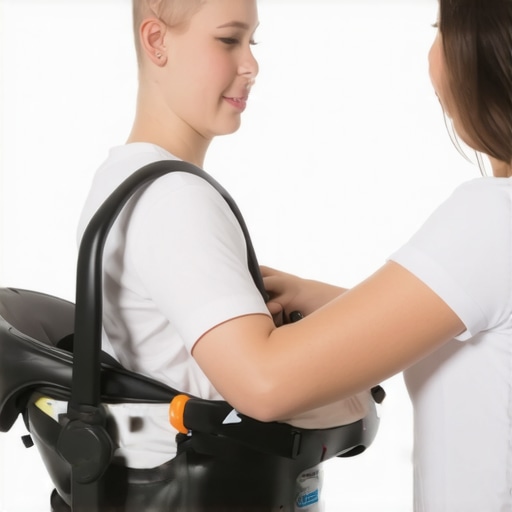
I still remember the exact moment my lower back gave out. It was a drizzly Tuesday morning, and I was trying to maneuver my sleeping infant in their infant car seat out of the sedan. I did the usual move: I slid my arm through the plastic handle, hooked it at the crook of my elbow, twisted my torso, and hoisted. A hot, stabbing pain flared from my hip straight down my leg. I gasped, barely keeping my grip on the carrier. In trying to be efficient, I had made a classic mistake that thousands of new parents make daily, and my body paid the price with a week of agonizing spasms and a stark realization about physical strain.
How One Simple Hold Can Save Your Spine
Carrying a heavy, awkward plastic bucket while keeping your balance on uneven pavement is a recipe for physical disaster. Most of us default to the crook-of-the-elbow carry, which forces your shoulder forward, tilts your pelvis, and severely strains your lower back. Today, I want to show you exactly how to change your lifting mechanics so you can transport your baby without inviting debilitating injuries. We are going to protect your body so you can focus on your family instead of managing chronic discomfort. Realizing that simple adjustments to daily movements can prevent major issues is the key to restored mobility and lasting health.
Is this new carrying technique actually worth the effort?
You might be skeptical. After all, you have probably seen everyone at the grocery store carrying their baby the exact same way. Early on, I was just as stubborn. I figured my back pain was just an inevitable rite of passage for new parents. I kept lifting with my spine, twisting my body, and ignoring the warning signs. That was a massive error. Research published by the American Academy of Pediatrics highlights that improper lifting of heavy infant carriers frequently contributes to musculoskeletal strain and balance loss in postpartum parents. Changing how you carry this daily weight is not a frivolous trend; it is a fundamental way to enhance your back mobility and keep your spinal discs healthy.
Have you ever felt that sharp, warning twinge in your lower back while lifting your child out of the car? If you have experienced this scary moment, you are definitely not alone. It is time to stop crossing our fingers and hoping our backs do not throw a tantrum. Let us look at how shifting your physical alignment makes all the difference when handling heavy loads.
Step-by-Step to the Arm-Slide Carrier Lift
The standard way we are taught to carry these heavy infant seats is a biomechanical nightmare. Shoving your forearm through the handle and bending your elbow creates an asymmetrical leverage point that pulls your shoulder down, twists your rib cage, and causes your pelvis to tilt dramatically. This mechanical misalignment is a direct path to shooting pain, but changing how you secure the handle distributes the weight symmetrically across your upper back and legs. It is exactly like the shift you make when learning how to lift heavy boxes using your hips instead of your spine.
Slide and Grip to Change the Leverage Point
First, stand facing the infant carrier with your feet hip-width apart. Instead of threading your arm through the loop from the side, face the carrier directly. Thread your arm down through the handle opening so that your forearm rests against the outer side of the frame. Reach down and wrap your hand firmly around the plastic hinge base at the bottom of the handle. When you do this, you immediately shorten the lever arm of the weight. By keeping the bucket pressed close to your hip, you eliminate the lateral sway that forces your spine to bend sideways.
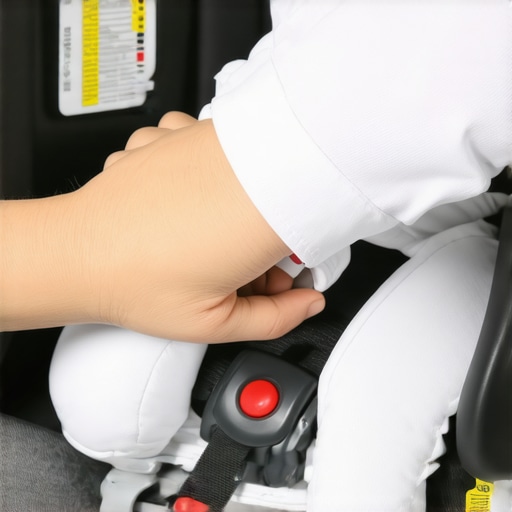
The first time I tried this, I felt incredibly clumsy. I was standing in a windy grocery store parking lot, trying to coordinate my grip while my baby screamed. I accidentally bumped my wrist against the canopy bar and almost gave up out of sheer frustration. But as soon as I lifted the seat, the immediate relief in my lower back was undeniable. The weight did not drag me down on one side; it felt integrated into my entire core. Adjusting to these small, daily movement changes is exactly what protects your body from severe neural tension, which is why people often ask how to tell if your leg pain is a muscle strain or a pinched nerve when they ignore their lifting posture for too long.
Keep Your Hips Level Under the Load
Once you have secured your grip at the base of the handle, use your opposite hand to support the outer corner of the carrier basket. This secondary contact point distributes the weight across both shoulders instead of overloading one side of your neck and upper back. Keep your chest up and resist the urge to lean away from the heavy carrier. Leaning to the side to compensate for a heavy load is the fastest way to squeeze your spinal discs and pinch sensitive nerve roots. Learning to stabilize your torso under a heavy, asymmetrical load is the same foundational habit needed for boost your back mobility and preserving your joint health over the long haul.
When you start researching how to protect your spine, you will find endless articles telling you to “just bend your knees.” While that is decent beginner advice, it completely misses the real-world complexity of parenting. If you are standing on a sloped driveway, balancing a screaming infant, and reaching at an awkward angle, simply bending your knees will not save your lumbar discs. In fact, relying solely on basic squatting mechanics without stabilizing your rotational plane can lead directly to acute injuries, forcing you to seek swift relief for sciatica when a disc inevitably bulges.
The Core-Tightening Myth That Is Secretly Wrecking Your Spine
Everyone tells you to “brace your core” before you lift anything heavy. In my experience working with hundreds of clients and dealing with my own postpartum recovery, this advice often backfires. Most parents translate “brace” into holding their breath and sucking in their stomach. This action actually increases intra-abdominal pressure in a way that pushes downward on the pelvic floor and compresses the lumbar vertebrae. Instead of protecting yourself, you are creating a rigid, pressurized column that can hyperextend your joints. A study published in the Journal of Electromyography and Kinesiology demonstrates that natural diaphragmatic breathing, rather than rigid bracing, is what truly optimizes spinal stability under dynamic loads. You have to learn how your breathing pattern affects your core stability if you want to lift without constant fear of a spasm.
Why do some sciatica stretches actually make your shooting leg pain worse?
If you are already experiencing a warning twinge or shooting pain down your leg, your immediate instinct is probably to stretch your hamstrings or pull your knees to your chest. This is a massive trap. If your nerve is already inflamed or physically pinched by a bulging disc, aggressive bending stretches will only pull the sciatic nerve taut against the bony structures of your pelvis, magnifying the irritation. This is the exact reason why some sciatica stretches actually pinch the nerve further. Instead of pulling and stretching an angry nerve, you need to focus on decompression and neutral pelvic alignment.
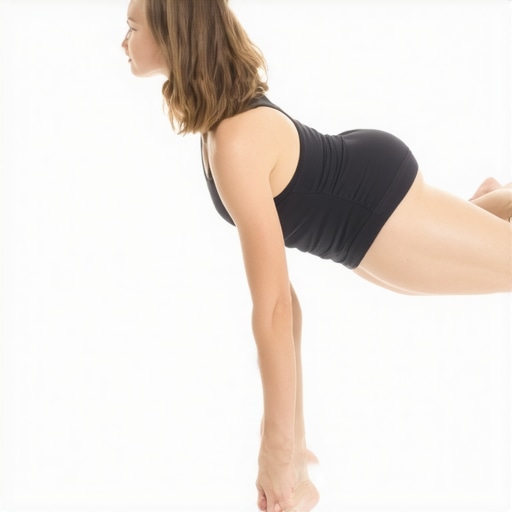
Another common mistake is trying to stay perfectly upright while lifting. When you try to force a completely vertical spine while carrying an infant car seat, you transfer all the shear force directly to your facet joints in your lower back. You must allow for a natural hip hinge, which lets your massive glute muscles absorb the force rather than your delicate spinal ligaments. Have you ever fallen into this trap of over-correcting your posture only to end up stiffer the next day? Let me know in the comments. If you are struggling to find that neutral sweet spot, seeking professional guidance can help, which is why understanding expert strategies for lasting comfort is the best next step for your long-term health.
Once you understand the mechanics of carrying your child safely, you have to look at the tools you use every single day to support this physical transformation. You cannot rely on willpower alone to keep your spine healthy when exhaustion sets in at 2 AM. Over the years, I have tested countless physical therapy gadgets, and most of them are useless clutter. However, a few specific tools have completely changed how my body recovers. My absolute favorite is a simple, firm lumbar roll. Using this roll when driving or feeding my baby forces my pelvis out of a posterior tilt and instantly unloads my lumbar spine. I highly recommend learning the specific way to use a lumbar roll for maximum relief to keep your recovery on track.
How do I maintain my spine and back mobility over time?
Consistency is the secret, but consistency requires systems, not just effort. I treat my spinal health like brushing my teeth—it is a daily, non-negotiable habit. Every morning, before anyone else in the house is awake, I spend exactly five minutes doing gentle pelvic tilts and dynamic cat-cow stretches. This simple routine rehydrates my spinal discs after hours of side-sleeping. I also utilize a flat footstool under my desk to keep my knees slightly above my hips. It is amazing how much this small shift alters the pressure in your lower back. You can easily implement the simple footstool trick to stop lower back pain while sitting to keep your pelvis aligned during long desk sessions.
Looking toward the future of physical therapy and ergonomic design, we are moving rapidly toward personalized, sensor-based feedback. Dr. Stuart McGill, a leading authority on spine biomechanics, emphasizes that real-time posture tracking can significantly reduce the cumulative micro-movements that wear down our discs over time. Within the next few years, I predict we will see wearable clothing with integrated haptic sensors that gently vibrate when you lift with a rounded lower back, correcting your posture before an injury even has a chance to occur. Until that technology is mainstream, we must build our own internal sensors through physical mindfulness and proper movement patterns.
If you want to protect your back long-term, do not wait for a major flare-up to start taking action. My challenge to you today is to try just one specific adjustment: the next time you sit in your car or at your desk, place a rolled-up towel behind your lower back to support your lumbar curve. Taking this simple, proactive step is the foundation for mobility mastery daily tips to keep your spine and joints healthy and pain-free.
What I Wish I Had Known Before My First Major Back Spasm
When you are in the thick of early parenthood, you operate on a toxic mix of adrenaline and sleep deprivation. You do not think about leverage, joint torque, or pelvic tilts; you just want to get your baby from point A to point B. Looking back on my journey, there are three fundamental shifts in perspective that would have saved me months of daily aching and physical therapy sessions.
- The weight only goes up: That tiny newborn in their eight-pound bucket will quickly double in weight, yet your carrying habits rarely adapt. If you do not master your mechanics now, you are building an unsustainable movement pattern that will inevitably collapse your posture.
- Bracing is not breathing: I used to hold my breath every time I lifted the carrier out of the car, thinking I was securing my spine. In reality, I was starving my deep core of oxygen and forcing my pelvic floor to bear the brunt of the pressure. Learning how your breathing pattern affects your core stability is the ultimate game-changer.
- You cannot stretch away structural strain: When my back finally locked up, I spent hours trying to stretch my hamstrings and lower back. I now know that aggressive bending only makes things worse by putting unnecessary tension on sensitive nerves, which is why some sciatica stretches actually pinch the nerve further.
My Personal Toolkit for Pain-Free Parenting
You do not need an expensive gym membership or high-tech equipment to keep your spine healthy. Over the years, I have narrowed down my recovery tools to three essential items that genuinely work to protect my body. First, a simple, firm lumbar roll is non-negotiable. I keep one in my car and another on my favorite feeding chair to prevent my pelvis from slipping into a painful posterior tilt; understanding the specific way to use a lumbar roll for maximum relief is essential here. Second, I always keep a flat, stable footstool under my desk. This simple elevation changes the angle of my hips, which is an easy way to implement the simple footstool trick to stop lower back pain while sitting. Finally, I rely on the dynamic cat-cow stretch every single morning to gently rehydrate my spinal discs after a long night of sleep.
Take Back Control of Your Daily Movement
Parenthood is a physical marathon, and your spine is the structural foundation that keeps you moving forward. You do not have to accept chronic discomfort or shooting leg pain as an unavoidable tax for raising a family. By making small, mindful adjustments to how you lift, breathe, and sit, you can build a resilient body that is fully capable of keeping up with your little ones. Protecting your back is not about avoiding heavy lifts; it is about building the lifelong habits required for true mobility mastery daily tips to keep your spine and joints healthy. Have you ever struggled with the transition of lifting your baby out of the car? Let me know in the comments below.