
How to tell if your leg pain is a muscle strain or a pinched nerve
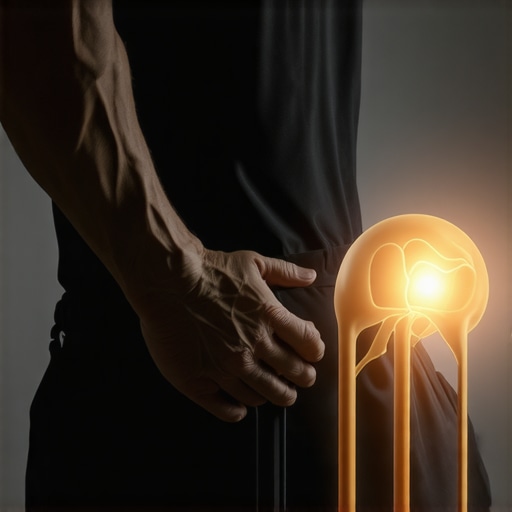
I remember standing in my kitchen last November, frozen in place because a simple reach for the coffee mug sent a lightning bolt from my hip to my ankle. I thought I’d just overdone it at the gym. I spent the next three days ‘stretching it out,’ only to find that every time I touched my toes, the fire in my leg got hotter. It was a humbling lesson in the difference between a muscle that’s tired and a nerve that’s being strangled. If you are currently hobbling around trying to figure out if you need a massage or a specialist, I’ve got you. Today, we are going to draw a clear line between that dull muscle ache and the spicy, erratic behavior of a pinched nerve so you can actually start healing instead of making it worse. [image_placeholder]
Stop Stretching That Leg Until You Know What’s Wrong
The biggest mistake I made early on—and I see neighbors make it all the time—is treating every leg pain like a tight muscle. When you have a strain, blood flow and movement are your best friends. But when a nerve is involved? Aggressive stretching is like pulling on a live wire. You might think stretching your hamstrings will help, but if that ‘tightness’ is actually a nerve issue, you’re just irritating the root. Nerves don’t like to be stretched; they like to be ‘flossed’ or moved gently through their path. I learned the hard way that reaching for your toes can be the absolute worst thing for a disc issue. It’s a hard pill to swallow when you’re used to ‘powering through,’ but with nerves, less is almost always more. Have you ever felt a pain that felt more like an electric shock than a muscle pull?
Is This Really Just a Bad Cramp?
It’s tempting to brush it off as a ‘charlie horse’ that won’t go away. But here is a surprising fact: according to clinical observations reported by the Mayo Clinic, nerve-related leg pain, often called radiculopathy, can mimic muscle fatigue so closely that patients often spend weeks on the wrong rehab protocol. If your ‘cramp’ comes with a side of tingling, numbness, or a feeling of heaviness, we aren’t in muscle territory anymore. You really need to understand the difference between muscular sciatica and a slipped disc before you try another home remedy. Even the way you sleep can give you a clue; for instance, learning how to use a pillow between your knees might provide instant relief for a nerve, whereas a muscle strain might just feel stiff regardless of your position. If you’ve been wondering if your back pain is a sign of something more serious, the behavior of your leg is usually the loudest messenger. We need to look at the ‘flavor’ of the pain—the zing versus the throb—to decide our next move.
Check Your Nerve Tension Before You Move
Think of your nerve like a garden hose. If you pull both ends tight, the water—or in this case, the electrical signal—gets restricted. To find out if your pain is nerve-driven rather than muscular, try a simple self-assessment from your chair. Sit tall, slump your shoulders forward, and tuck your chin to your chest. Slowly straighten your painful leg. If you feel that familiar zing or a weird tug in your calf that miraculously disappears the moment you lift your head to look at the ceiling, you aren’t dealing with a tight hamstring. You’re dealing with a nerve that is being snagged somewhere along the line. This is exactly why your hamstrings feel tight but never get better with stretching; you have been pulling on the hose instead of letting it glide. Once you realize the ‘tightness’ is actually protective tension from your nervous system, you can stop the aggressive stretching that is keeping you in a flare-up loop.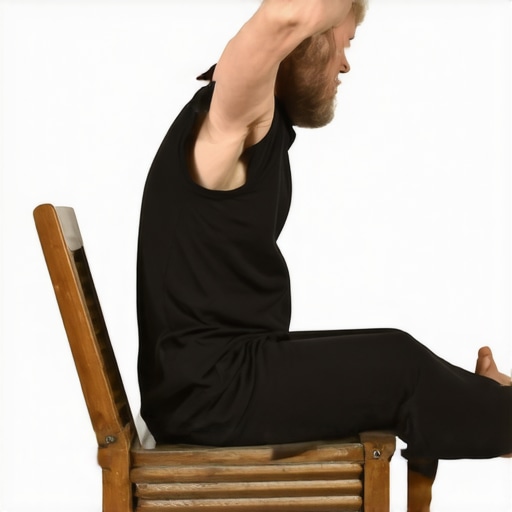
Switch to Nerve Flossing to Reset Your System
Once you identify that the nerve is the culprit, you have to stop the ‘no pain, no gain’ mentality immediately. Nerves need space and blood flow, not a battle. This is where the nerve flossing routine for stubborn leg numbness and tingling becomes your best tool. Instead of holding a static stretch, you move the nerve back and forth through its sheath like a piece of dental floss. I remember trying to ‘power through’ my own recovery by doing heavy deep squats, thinking I just needed to get my glutes stronger. I ended up curled on the floor for two hours because I didn’t understand that why your deep squat is causing a pinch in your hip is often due to the nerve getting compressed under heavy load. Now, I start my mornings with a gentle ‘reach and breathe’ move. Learning how a simple reach and breathe move can decompress your back changed my daily baseline from a constant nagging ache to total silence.
Fix Your Daily Geometry to Prevent Relapse
You can do all the flossing in the world, but if you go right back to a desk setup that is crushing your spinal discs, the pain will return by lunchtime. Start with your eyes. Applying the 15 degree rule for your computer monitor to save your neck keeps your head from drifting forward, which prevents the ‘pull’ that travels all the way down to your lower back. While you are at it, learning how to adjust your rearview mirror to force better posture is a sneaky way to ensure you aren’t slouching during your commute. Watch for centralization—that is when the pain moves out of your foot or calf and moves back up into your glute or lower back. That is the one sign that your sciatica is finally starting to heal, and it means your mechanical adjustments are finally giving that nerve the room it needs to breathe.
Stop Trying to Stand Up Straight Like a Soldier
The ‘straight posture’ myth is one of the hardest to unlearn, especially when you are in pain. We are told from childhood to ‘sit up straight,’ but in my experience, why standing up straight is actually making your back pain worse is a nuance that most people miss. When you force a rigid, military-style position, you are asking your muscles to hold a static contraction for hours on end. This creates a state of oxygen deprivation in the muscle tissues and generates ‘trigger points’ that can mimic the zing of a nerve. A 2021 study published in the Journal of Biomechanics found that individuals who prioritize rigid postural control often exhibit higher levels of muscle fatigue and increased spinal load compared to those who allow for natural, relaxed postural variability. Nerves crave blood flow and subtle movement, not a fixed, frozen position. If you have been bracing yourself to stay ‘perfectly’ upright, you might be the one keeping your own back in a state of high alert. 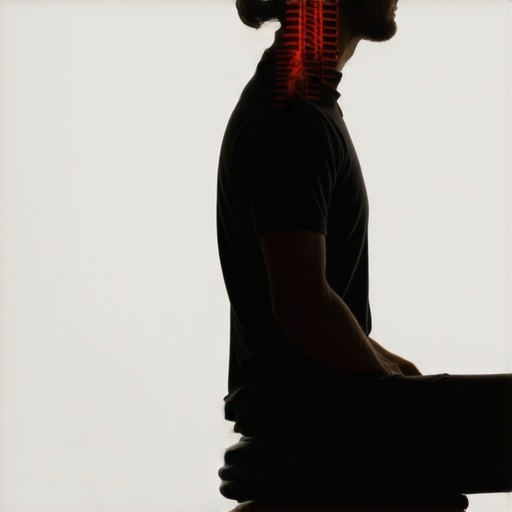
The Core Strength Trap That Actually Crushes Your Discs
The most common ‘oops’ factor I see in the gym and in the clinic is the obsession with core bracing as a cure-all. I have met dozens of people who do five-minute planks every single morning to ‘protect’ their spine, yet they still cannot find sciatica relief secrets that actually stick. Here is the hidden danger: if you have an active disc issue, why you should stop doing planks if your back already hurts is because the intense intra-abdominal pressure can actually ‘push’ the disc material further toward the nerve root. It is like squeezing a jelly donut that already has a small crack in the side. You are effectively increasing the compression you are trying to avoid. Additionally, many people forget that their daily habits are undoing their hard work; for example, how your wallet in your back pocket is ruining your alignment is a classic mistake that creates a pelvic tilt no amount of planking can fix. We need to stop ‘bracing’ and start ‘stabilizing’ through proper breathing and decompression.
Why does your calf feel like it’s exploding when you’re just sitting?
This is the advanced question I get most often from people who have already tried the basic stretches. If the pain is screaming in your lower leg, but your lower back feels relatively ‘fine,’ you might be looking at the wrong culprit. Sometimes how a stiff upper back is forcing your neck to move too much creates a tension chain that travels through the entire spinal cord, manifesting as pain far away from the source. It could also be a systemic issue in your environment. You might find that why your firm mattress is making your morning sciatica worse is because it is not allowing your hips to sink in, which keeps the nerve under tension all night. Similarly, while we often blame hard chairs, the truth about soft sofas and chronic mid-back stiffness is that they offer zero support, causing the spine to ‘C-curve’ and pinch the very nerves you are trying to soothe. We have to look at the body as a single, continuous system rather than a collection of isolated parts. Have you ever fallen into the trap of trying to ‘exercise’ your way out of a nerve flare-up only to make it worse? Let me know in the comments.Now that we’ve stopped the immediate ‘fire’ of a flare-up, the real work begins: keeping it from coming back. I spent years in a exhausting cycle of relief and relapse. I’d feel great for a week, get overconfident, and then find myself right back on the floor because I ignored the subtle geometry of my daily life. The shift for me happened when I stopped looking for a one-time cure and started building a ‘maintenance environment’ that protects my nerves while I sleep, work, and drive. One tool I absolutely swear by isn’t some high-tech gadget; it’s a simple footstool. I found that the simple footstool trick to stop lower back pain while sitting takes the mechanical pull off the psoas and prevents my pelvis from tilting into that dangerous ‘C-curve’ slump. It’s about creating a setup where your body doesn’t have to fight just to stay neutral. 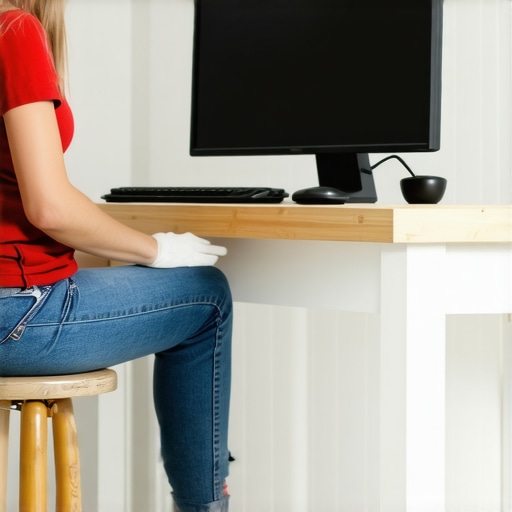
How can I keep my spine healthy without a 60-minute daily routine?
The secret is what I call ‘habit stacking.’ You don’t need to carve out an hour of your day for rehab if you integrate mobility mastery daily tips to keep your spine and joints healthy into your existing schedule. For instance, while my morning coffee is brewing, I do a quick 30-second wall slide. I’ve made the morning habit that prevents your sciatica from flaring-up as non-negotiable as brushing my teeth. As Dr. Stuart McGill, a world-renowned spine biomechanics expert, explains in his text Low Back Disorders, the ‘cumulative load’—those tiny, repetitive stresses from sitting poorly or lifting a grocery bag with a rounded back—is often far more damaging than one single heavy injury. This is why I’m so picky about the small stuff, like how to fix your slump while driving long distances. Even a half-inch adjustment to your car’s lumbar support can be the difference between arriving refreshed or limping to your front door. Looking forward, I predict we are going to see a massive surge in ‘smart’ apparel—clothing with woven biofeedback sensors that gently vibrate when your spinal posture reaches a high-risk fatigue point. Until that tech is in our closets, you have to be your own sensor. If you are working from a laptop, following the 15 degree rule for your computer monitor to save your neck is the single most effective way to prevent that ‘heavy head’ feeling by 3 PM. I want you to try one thing today: find a small box or a footstool and put it under your desk. Use it for just two hours and notice how your lower back finally feels like it can ‘unclench.’ Small changes in your environment are the only way to get big, lasting results.
The Three Hardest Truths About Nerve Recovery
Reflecting on my own journey through chronic discomfort, the first thing I had to accept was that the body doesn’t follow a calendar. I wanted to be ‘fixed’ in time for my vacation, but nerves heal at their own glacial pace compared to muscles. Secondly, I realized that silence isn’t always safety; sometimes, when the pain stops, it’s just because you’ve stopped moving altogether, which leads to glutes that ‘turn off’ and cause more instability later. Finally, the biggest ‘aha’ moment was realizing that my breathing habit was keeping my system in a state of high alert, making my nerves extra sensitive to every movement. [image_placeholder]
A Few Tools for Your Recovery Arsenal
I don’t believe in buying every flashy gadget on the market, but there are a few items that made a massive difference in my daily baseline. First, Back Mechanic by Dr. Stuart McGill is essentially the bible for anyone trying to understand the mechanical cause of their pain. Second, I cannot overstate the value of a high-quality lumbar roll; using the specific way to use a lumbar roll ensures your spine stays neutral even in the most unforgiving office chairs. Lastly, I keep a tennis ball in my desk drawer. It’s the cheapest physical therapist you’ll ever hire, and how a simple tennis ball can release deep glute tension is a game-changer when you’re stuck in a long meeting.
You Deserve a Body That Moves Without Fear
It is incredibly easy to feel betrayed by your own body when every step feels like a gamble. But remember, pain is just a signal, not a life sentence. By implementing expert strategies for lasting comfort and staying consistent with small ergonomic adjustments, you can retrain your nervous system to feel safe again. Healing is a series of small, quiet victories. You are already taking the right steps by simply paying attention to how you move. You’ve got the knowledge now—it’s time to put it into practice and find sciatica relief secrets that actually work for your unique anatomy. Have you ever tried a stretch that you thought was helping, only to wake up in more pain the next day? Let me know in the comments below.