
The real reason your head feels heavy at the end of the day

I remember sitting at my kitchen table last Tuesday, staring at a half-finished cup of coffee, and literally feeling like my neck was a wilted flower stem. I actually had to prop my chin up with my hand just to keep looking at my laptop. It wasn’t just “end-of-the-day fatigue.” It was a leaden, crushing weight. My head felt like a 20-pound bowling ball balanced on a toothpick. If you’ve ever found yourself rubbing the base of your skull at 4:00 PM, wondering why you can’t just hold yourself up anymore, you are definitely not alone. I spent years thinking I just needed more caffeine or a better pillow. I was wrong. Today, we are going to stop guessing and actually address why your gravity is working against you.
Stop Blaming Your Muscles for Your Heavy Head
The “heavy head” sensation is often a mechanical failure, not a lack of strength. I used to make the classic mistake of trying to “power through” by forcing my shoulders back, which only created a vicious cycle of neck pain and stress. The truth is, your body is incredibly efficient—or lazy, depending on how you look at it. When your alignment shifts even slightly, your muscles have to work ten times harder to keep you upright. Did you know that for every inch your head moves forward from its ideal center, it adds an extra 10 pounds of pressure on your spine? According to the Mayo Clinic, poor posture—like leaning toward a screen—strains the muscles and soft tissues of the neck, which is exactly how your monitor height is causing those recurring headaches. We aren’t going to just talk about “sitting up straight.” We are going to fix the structural drains on your energy so you can actually enjoy your evenings without wanting to collapse. Have you ever felt like your neck simply can’t support you after lunch?
Is a professional adjustment actually worth the hype?
I get it. You’re skeptical. You’ve probably tried every “ergonomic” gadget on Amazon and still feel like a gargoyle by noon. You might think your reading habit is causing that hump in your neck permanently. But here’s the thing: most of us are fighting against our environment without realizing it. For instance, understanding why your car seat is actually pushing your head forward reveals a design flaw most people ignore until their neck is screaming. I remember one specific failure of mine: I bought a high-tech standing desk but didn’t adjust my screen. I just stood there, staring down at my laptop, essentially hanging my head off my shoulders for eight hours. My back felt better, but my neck felt like it was in a vice. Before we dive into the deep stretches, you should try the 30-second neck tuck to stop tension headaches at your desk. It’s a game-changer for resetting your center of gravity.
Stop scanning the floor while you walk
I realized recently that I have a habitual “sidewalk stare.” I was always looking about three feet in front of my toes while moving. Think of your neck like a suspension bridge. The cables—your muscles—are designed to support the weight efficiently when the towers are upright. When you tilt your head down to look at your phone or the ground, you’re basically cutting the tension on the back cables and overloading the front. I once spent a whole weekend hiking in the hills, but instead of looking at the horizon, I was so focused on not tripping that I stared at the trail the whole time. By Sunday night, I didn’t just have sore legs; I had a migraine that felt like a hot poker behind my eyes. This happened because why your vision might be the cause of your neck leaning is a very real biological trap. Your head follows your eyes. If your gaze is constantly downward, your suboccipital muscles are stuck in a permanent state of contraction.

Use your doorframe as a personal therapist
You cannot fix a heavy head by only working on the back of your neck. The real culprits are often your pec muscles and the fascia across your collarbone. When these get tight, they pull your shoulders forward, which forces your chin to jut out just so you can see straight ahead. It’s like trying to keep a mast upright on a ship when the front rigging is way too tight. To combat this, you need to learn how to use a doorway to release chest tension and improve posture. I started doing this every single time I walked into my kitchen to grab water. I put my forearms on the frame and gently leaned through. The first time I tried it, I heard a distinct release in my upper back and felt an immediate “lightness” in my skull. I wasn’t getting stronger; I just stopped the front of my body from dragging the top of my spine into a collapse.
Your jaw is sabotaging your cervical spine
If you’re feeling that leaden weight at 3:00 PM, check your teeth. Are they touching? If they are, you’re likely clenching without even knowing it. There is a massive connection between jaw clenching and chronic neck pain because the muscles you use to chew are neurologically wired to the muscles that stabilize your top two vertebrae. It’s an old survival mechanism—clench hard to protect the throat. But in an office setting, it just creates a “muscular straightjacket.” If you can’t find relief, you might need to look at your ergonomics and learn how to adjust your monitor to stop that burning neck pain. If your screen is too low, you’ll naturally clench your jaw as you strain to focus. I started using the 20-20-20 rule for neck and eye strain relief, not just for my vision, but as a mental trigger to unstick my tongue from the roof of my mouth. Letting your jaw hang loose for just sixty seconds can drop the perceived weight of your head by half.
Stop stretching your hamstrings to fix your back
I see it all the time: someone feels a pull in their lower back or a heavy sensation in their neck, and their first instinct is to touch their toes. It feels intuitive, right? If it’s tight, stretch it. But here is a contrarian truth: your hamstrings are often tight because they are protecting you, not because they are short. If you have an underlying nerve irritation, the hidden reason your hamstrings always feel tight is likely your body trying to stabilize your pelvis. When you force a deep stretch in this state, you are actually tugging on an already inflamed sciatic nerve. This is exactly why stretching your hamstrings often makes your sciatica worse. Instead of aggressive pulling, you should be looking at the nerve glide exercise that calms burning leg pain, which creates space for the nerve to move without the trauma of a massive stretch.
The dangerous ‘quick fix’ that’s locking your spine
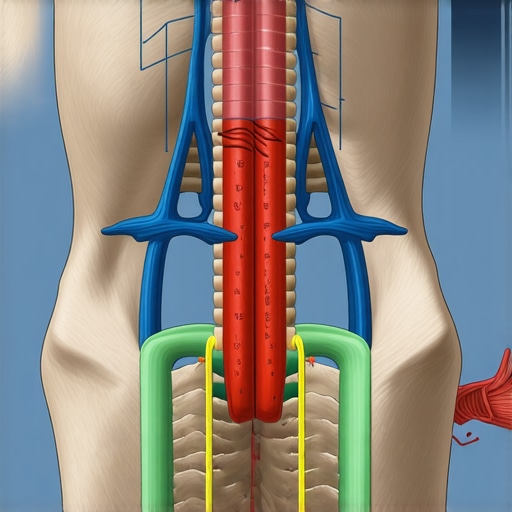
We’ve all done it—that quick twist of the neck or the sudden lean back to get a ‘pop.’ It feels like an instant release of pressure, almost like a localized hit of dopamine. However, there is a massive ‘oops’ factor here. When you self-adjust, you are almost always moving the segments of your spine that are already too mobile. The actual ‘stuck’ joints remain frozen, while the segments above and below become hyper-mobile and unstable. This is why cracking your back at home is a temporary fix that eventually leads to more frequent ‘stuck’ feelings. Dr. Stuart McGill, a world-renowned expert in spine biomechanics, emphasizes that true spinal health comes from stability, not just increasing range of motion. By constantly ‘popping’ the easy joints, you’re essentially wearing out your own suspension system while the real problem area continues to seize up.
Why does ‘perfect’ posture often lead to more pain?
If you’ve ever tried to sit with a perfectly straight back for eight hours, you probably felt like a robot and ended the day in more pain than when you started. That’s because ‘perfect’ is a myth. Static positions—even the ones that look good in a textbook—are the enemy of your discs. In fact, why your perfect sitting posture is making you stiffer is down to a lack of micro-movements. Your spine needs to breathe and shift. I used to think I just needed a stronger core to hold that ‘perfect’ pose, but I eventually learned that why your core strength won’t fix your back if your hips are locked is a fundamental mechanical reality. If your hips are like concrete, your lower back has to move twice as much to compensate. Before you assume you need a new gym routine, you have to learn how to tell if your sciatica is a disc or muscle issue, because the solution for a muscular knot is the opposite of the solution for a bulging disc. Have you ever fallen into the trap of over-stretching only to feel worse the next day? Let me know in the comments.
Ditch the crisis and start playing the long game
I’ve spent thousands on gadgets—massaging chairs, ergonomic keyboards, and even those weird vibrating vests—but the stuff that actually keeps me out of the chiropractor’s office is embarrassingly cheap. The biggest shift in my journey wasn’t a specific exercise, but realizing that maintenance care is better than waiting for a spinal crisis. We tend to treat our bodies like old cars: we only check the engine when there’s smoke coming out of the hood. But your spine doesn’t have a check-engine light until the pain is already a Level 8. Dr. Kelly Starrett, physical therapist and author of Becoming a Supple Leopard, argues that human maintenance is a daily requirement, noting that you should spend at least two minutes on each localized area of tension to actually effect change in the fascia. If you aren’t putting in that baseline time, you’re essentially just waiting for the next flare-up to happen.
My favorite tools that cost less than a latte
If you’re looking to build a ‘pain-proof’ kit, start with a simple lumbar roll. I keep one in my car and one in my office chair because knowing how to use a lumbar roll to prevent mid-day back fatigue has saved me from that dreaded late-afternoon slump. My second ‘must-have’ is a standard tennis ball. It sounds primitive, but learning how a simple tennis ball can fix deep glute tension is the closest thing to a professional massage you can get for under two dollars. I use it against the wall to hit the trigger points that my foam roller is too bulky to reach. Speaking of rollers, you have to be careful with the neck; make sure you’ve mastered how to use a foam roller on your neck without injury before you start putting your full weight on those delicate cervical vertebrae.

How do I keep my spine healthy as I get older?
Maintenance isn’t about doing a 90-minute yoga session every morning. It’s about those tiny, consistent micro-habits. I’m a huge fan of the 5-minute stretching routine for chronic desk workers because it’s something I can actually commit to without feeling overwhelmed. Looking ahead, I suspect we are moving toward a world of ‘bio-responsive’ furniture. I predict that by 2030, our desk chairs will have haptic sensors that gently vibrate the moment our posture starts to fail, turning our workspace into a passive physical therapy session. Until then, we have to be our own advocates. Using mobility mastery daily tips to keep your spine and joints healthy is the only way to stay ahead of the aging curve. If you want to see what the pros are saying about the next few years, check out unlocking mobility expert tips on managing back pain in 2025. My challenge for you today: grab a tennis ball, find a wall, and spend two minutes on that one ‘hot spot’ in your glute that’s been nagging you. Breathe through it and feel the release.
The painful truths about spinal health that finally saved my sanity
I spent years thinking my neck was just weak, but the real breakthrough came when I realized it was an alignment issue rather than a lack of muscle. First, I learned that understanding the link between poor posture and chronic back pain isn’t just about sitting up straight; it’s about how your environment forces your body to compensate. Second, I stopped reaching for the ice pack every time I felt stiff at the end of the day. I discovered why heat is often better than ice for chronic neck stiffness, as it actually helps the blood circulate through those cramped, overtaxed muscles. Finally, I realized that my neck pain wasn’t an isolated event—it was almost always the result of a chain reaction starting from my hips or even my jaw tension. Addressing the source, not just the symptom, changed everything.
The ‘survival kit’ I use to keep my neck from collapsing
I don’t go anywhere without my “spine-saver” gear because I know how quickly a long commute or a bad chair can derail my progress. My first essential is a basic tennis ball; knowing how a simple tennis ball can fix deep glute tension is a literal life-saver during long office hours because it releases the foundation my spine sits on. Next is my portable lumbar support. I’ve learned how to use a lumbar roll to prevent mid-day back fatigue, which keeps my pelvis from tilting and dragging my neck forward into that heavy “gargoyle” position. I also trust the 20-20-20 rule as my most valuable free tool to reset my gaze and cervical alignment every twenty minutes.
You don’t have to carry the weight of the world on your shoulders
You aren’t stuck with this leaden, heavy feeling forever, and you don’t have to wait for a total breakdown to start feeling better. Whether you are dealing with a desk-job slump or looking for back pain breakthroughs navigating your path to restored mobility, the first step is simply becoming aware of the structural drains on your energy. Your neck pain is a signal, not a life sentence. Start with one small adjustment today—like checking your monitor height or doing a doorway stretch—and your future self will thank you for the lightness you feel tomorrow. Which part of your day usually leaves your neck feeling the heaviest? Let me know in the comments below!