
The simple wall-sit that builds spine-supporting strength
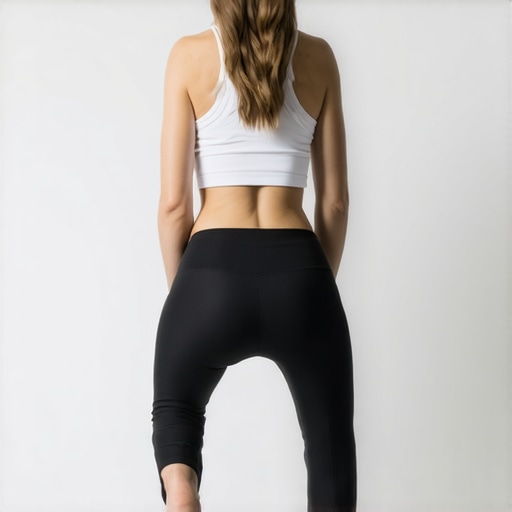
I remember the exact Tuesday my back finally quit on me. I wasn’t doing anything heroic; I was just leaning over the sink to brush my teeth. A sudden, sharp electric shock traveled from my lumbar spine down my leg, leaving me clutching the porcelain like a life raft. It was a wake-up call I couldn’t ignore. I had spent months ignoring the warning signs, thinking my expensive gym membership and flashy machines were enough to protect me. I was wrong. I was building superficial muscle while my deep stabilizers—the ones that actually keep your vertebrae from grinding together—were practically asleep at the wheel. It turns out, I didn’t need a fancy rowing machine or a 500-dollar ergonomic chair. I just needed a flat wall and a little bit of patience. Today, I want to show you how a basic move can fundamentally change how your back feels when you wake up in the morning. We are going to dive into how to fix your foundations and finally get ahead of that nagging discomfort. Have you ever felt like your back was a ticking time bomb just waiting for one wrong move to go off?
Stop Chasing Complex Cures for Your Aching Back
Many of us fall into the trap of thinking that more movement is always better. When I first started dealing with chronic stiffness, I tried every yoga pose in the book. I thought understanding the link between poor posture and chronic back pain meant I just needed to stretch more. But stretching a spine that lacks stability is like trying to tighten a loose screw with a rubber band. My biggest mistake early on was over-stretching my lower back into a C-shape, which only made my discs more vulnerable. I was missing the ‘bracing’ element. This is where the wall-sit comes in. It is an isometric powerhouse. Unlike dynamic movements that can sometimes irritate a sensitive nerve, a wall-sit forces your core and spinal stabilizers to work without the friction of motion. According to a study published in the Journal of Physical Therapy Science, isometric exercises are highly effective at increasing the cross-sectional area of the multifidus muscle—the tiny, crucial muscle that keeps your spine stable. When you do this right, you aren’t just burning your quads; you are creating a muscular corset that protects your nerves from being pinched. I eventually discovered the wall-sit modification that strengthens your lower spine, and it changed everything for my daily mobility.
Can a Simple Static Hold Really Fix My Sciatica?
I know what you’re thinking because I thought it too: ‘How is sitting against a wall for a minute going to stop my leg from tingling?’ It feels too simple to be true. We’ve been conditioned to think that recovery must be painful or complicated. But if you are constantly wondering is your back pain a sign of something more serious, the answer often lies in how well your body handles static load. If you can’t hold your own weight against a wall without your back arching or your knees wobbling, your spine is essentially unsupported during every other hour of the day. By mastering this one move, you’re teaching your brain how to lock in the pelvis and decompress the lower lumbar area naturally. It’s about building a fortress, one thirty-second hold at a time. This isn’t just about fitness; it’s about unlocking mobility with expert tips on managing back pain in 2025 that actually fit into a busy life. Let’s look at exactly how to set this up so you don’t repeat my early failures.
Find the Three Contact Points That Save Your Spine
To turn a simple wall-sit into a therapeutic tool, you have to stop thinking about it as a leg exercise. The magic happens in the contact between your skin and the drywall. When I first tried this, I made the mistake of just leaning back and checking my phone. My lower back arched so much you could have slid a thick novel between my spine and the wall. That’s a recipe for disaster. Instead, you need to establish three points of contact: the back of your head, your shoulder blades, and your sacrum (the flat bone at the base of your spine). If you struggle with this, it’s often because why your perfect sitting posture is making you stiffer by forcing an unnatural curve. By pinning these three points, you’re forcing your vertebrae into a neutral alignment that most of us haven’t felt since grade school. 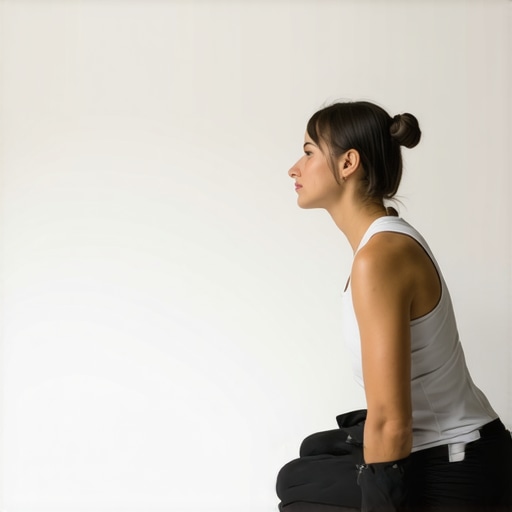
The Lumbar Press That Decompresses Your Discs
Once you are against the wall, the real work begins. I remember the first time I actually got this right; I felt a weird ‘pop’ and then a sudden release of pressure. It wasn’t a crack, but a sensation of space. To achieve this, you need to gently draw your belly button toward the wall until your lower back—the lumbar area—is completely flat against the surface. You are essentially trying to close that ‘tunnel’ I mentioned earlier. This is vital because why your core strength won’t fix your back if your hips are locked—the wall provides the resistance your hips can’t. If you feel a sharp pinch, stop. But if you feel a deep, dull ache in your midsection, that is your internal corset waking up. This ‘bracing’ is exactly the correct way to use your core when lifting heavy groceries or picking up your kids without a flare-up.
Keep Your Knees Safe and Your Hips Engaged
Your feet should be about hip-width apart and far enough from the wall so that when you slide down, your knees are directly over your ankles, not tracking past your toes. Think of your shins as two sturdy pillars. If your knees cave inward, you’re leaking stability. I used to let my knees wobble like jelly until I realized that how to do a proper squat to protect your knees and back starts with outward tension. Imagine you’re trying to rip the floor apart with your feet without actually moving them. This activates the glutes, which are the primary bodyguards for your lower spine.
Breathe Through the Burn to Lock in Stability
The biggest mistake people make is holding their breath. When you hold your breath, you create internal pressure that can actually irritate a sensitive disc. I used to turn beet-red trying to survive the 30-second mark until I learned how a simple breath reset can calm a back spasm. You want to breathe into your ribs, not your chest. Keep your back flat against the wall while your ribcage expands sideways like an accordion. This teaches your body that it can be stable and relaxed at the same time, which is the ultimate goal for anyone looking for sciatica relief secrets that actually stick.It’s easy to think that if something feels tight, the solution is to pull on it until it gives up. This is the biggest ‘trap’ I see with back pain patients. You feel that tugging in the back of your thigh and immediately reach for your toes. However, if your discomfort is coming from a disc or a sensitized nerve, you aren’t stretching a muscle; you are literally tensioning your nervous system like a guitar string. This is why stretching your hamstrings often makes your sciatica worse. You might get a temporary ‘hit’ of relief because the stretch triggers a brief inhibitory response, but you’re actually micro-tearing the nerve’s protective sheath or aggravating a disc bulge. Have you ever fallen into this trap? Let me know in the comments.
Stop Pulling on Your Hamstrings if Your Leg is Tingling
Many people believe that more flexibility equals less pain, but in my experience, the opposite is often true for chronic sufferers. When you have a history of lumbar issues, your hamstrings often tighten up as a protective mechanism to prevent your pelvis from tilting too far and shearing your vertebrae. By force-stretching them, you are stripping away your body’s natural defense system. Expert spine biomechanist Dr. Stuart McGill has long argued that ‘aggressive stretching of the back’ is often counterproductive and can lead to further instability. Instead of a deep pull, you need to learn how to tell if your sciatica is a disc or muscle issue before you ever attempt a floor stretch.
Why Does My Pain Feel Better During the Stretch but Worse an Hour Later?
This is a question I get all the time from people who feel like they are doing everything right. The ‘stretch reflex’ can mask pain temporarily by flooding the brain with new sensory input, essentially distracting you from the underlying nerve irritation. But once the nervous system cools down, the inflammation returns—often more intense than before. This cycle is why you should why you should stop stretching your back into a c-shape if you want long-term recovery. You are essentially poking a bruise and wondering why it won’t heal.
Swap the Deep Stretch for a Neural Glide
If you want to actually resolve the tension without the risk, you need to transition to ‘nerve flossing’ or gliding. This isn’t about length; it’s about movement. Imagine the sciatic nerve is a thread running through a straw; if the thread is stuck, pulling on both ends just makes it tighter. Gliding involves moving one joint (like your ankle) while relaxing another (like your neck) to slide the nerve back and forth through its pathway. I’ve found that the nerve glide exercise that calms burning leg pain is far more effective for back pain breakthroughs than any yoga pose I ever tried. It respects the biology of the nerve rather than treating your body like a piece of rubber.Once you’ve mastered the glides, the conversation shifts from ‘how do I stop the fire’ to ‘how do I keep it from relighting.’ I spent years in a cycle of recovery and relapse because I treated my back like an emergency room patient rather than a long-term project. The key to staying pain-free isn’t just one magic exercise; it’s the gear and habits you layer into your day. For me, the most important tool isn’t a thousand-dollar machine; it’s a simple yellow tennis ball. I use it for precision work on my glutes and upper traps. If you’ve never tried it, how a simple tennis ball can fix deep glute tension is the ultimate hack for those days when you’ve been sitting too long. I keep one in my car, one in my desk, and one by my bed. It’s my frontline defense against stiffness before it turns into a spasm.
How do I maintain my results without it becoming a full-time job?
This is the hurdle most people trip over. You feel better, you get busy, and you stop doing the work. I’ve found that the trick is ‘stacking’ your spinal health onto things you already do. When I’m washing dishes, I don’t just lean over; I use a small step stool for one foot to keep my pelvis neutral. It sounds minor, but learning how to use a step stool to save your lower back in the kitchen has saved my lumbar from hours of unnecessary shear force every week. This is what we call mobility mastery with daily tips to keep your spine and joints healthy—it’s about the micro-adjustments, not just the big workouts. Remember, why maintenance care is better than waiting for a spinal crisis is the philosophy that keeps you out of the doctor’s office.
The Five-Dollar Tool That Saves Me Hundreds in Therapy
Beyond the tennis ball, I’m a huge advocate for a dedicated lumbar roll. Most ‘ergonomic’ chairs have a curve that hits everyone in the wrong spot. By using a portable roll, you can place the support exactly where your specific spine needs it most. This prevents that mid-day slump that leads to understanding the link between poor posture and chronic back pain on a deeper level. According to a 2015 study in the Journal of Bodywork and Movement Therapies, consistent self-myofascial release—like using a ball or foam roller—significantly improves joint range of motion and decreases perceived pain levels. It works because you’re literally teaching your fascia to hydrate and slide again. Looking ahead, I suspect the next five years will bring ‘smart’ fabrics that vibrate when your posture slips or your core disengages. We are moving toward a world where technology doesn’t just record our steps, but monitors our spinal shear in real-time. Until then, you are your own best sensor. If you’re feeling that familiar twinge today, I want you to try one thing: grab a tennis ball, lean against a wall, and find that one spot in your glute that feels like a knot. Breathe into it for sixty seconds. It’s a small step, but it’s the difference between a flare-up and a productive afternoon. Don’t wait for the ‘electric shock’ to return before you take action; unlocking mobility with expert tips on managing back pain in 2025 starts with the habits you build while you’re still feeling good.
The Harsh Realities of Recovery That I Learned the Hard Way
Looking back at my journey, there are a few things I wish someone had whispered in my ear when I was lying on the floor in a cold sweat. First, intensity is the enemy of healing. We are taught to ‘push through,’ but with a sensitized nerve, pushing through is just a way to ensure you’re still in pain next month. Second, your brain learns pain. Sometimes, even after the physical tissue heals, your nervous system stays on high alert. That’s why back pain breakthroughs often feel like they happen in the mind before they happen in the muscle. Finally, stability isn’t a ‘level’ you reach; it’s a garden you tend. If you stop weeding (the bad habits) and watering (the mobility work), the stiffness will grow back.
The Gear That Actually Lives in My Gym Bag
I don’t believe in buying a dozen gadgets to fix a single spine. I keep it lean and functional. My ‘essential toolkit’ includes a standard yellow tennis ball for deep glute release and a portable lumbar roll. If you’re stuck at a desk, learning how to use a lumbar roll to prevent mid-day back fatigue is worth more than any fancy ergonomic chair. I also recommend keeping a simple log of your ‘pain triggers’ so you can spot patterns. This proactive approach is the heart of mobility mastery with daily tips to keep your spine and joints healthy. It’s about having the right tools nearby so that a small twinge doesn’t turn into a weekend on the couch. #IMAGE_PLACEHOLDER_E#
Start Writing Your Own Recovery Story Today
Recovery can feel like a lonely road, especially when every movement feels like a risk. But you have more control than you think. By choosing stability over stretching and curiosity over frustration, you are already ahead of the curve. Don’t wait until you are asking is your back pain a sign of something more serious to start respecting your spine’s need for support. Your future self—the one who can reach for a coffee mug or pick up a child without a second thought—is waiting for you to take that first thirty-second wall-sit today. You’ve got this.
What is the biggest thing stopping you from being consistent with your mobility work? Is it time, or just not knowing where to start? Let me know in the comments below!