
Why firm mattresses are not always better for scoliosis

I’ll never forget the sound my spine made that Tuesday morning—a series of dry, rhythmic pops that echoed in the quiet of my bedroom. I had just spent three months sleeping on what was essentially a carpeted piece of plywood because I believed the common wisdom that firm mattresses are the holy grail for scoliosis. Instead of waking up refreshed, I felt like my spine was trying to escape my body. My scoliosis wasn’t being ‘corrected’; it was being shoved into positions it hated. Today, I want to pull back the curtain on the ‘firm is better’ myth and show you how to actually find a sleeping surface that respects your curves without causing a flare-up. Have you ever woken up feeling more like a rusty hinge than a human being?
Your Back Needs a Hug, Not a Brick
For years, I made the mistake of thinking ‘support’ meant ‘no give.’ I treated my bed like a structural beam rather than a place of rest. When you have scoliosis, your spine isn’t a straight line, so why would you expect a perfectly flat, hard surface to accommodate those unique curves? If the mattress doesn’t contour to your shape, it creates pressure points that can leave you wondering if your back pain is a sign of something more serious. When I finally realized that my mattress was actually working against my anatomy, everything changed. We often focus on things like understanding the link between poor posture and chronic back pain during the day, but we completely ignore the eight hours we spend horizontal.
Is a rock-hard mattress actually worth the hype?
The short answer is: probably not. While we’re told to avoid soft, sagging surfaces to prevent things like chronic mid-back stiffness, going too far in the other direction is just as risky. A landmark study published in The Lancet found that patients with chronic non-specific low back pain actually reported significantly better outcomes on medium-firm mattresses compared to very firm ones. When I finally made the switch to a surface with a bit more ‘give,’ my morning stiffness vanished almost overnight. If you’re currently struggling, you might notice that your firm mattress is making your morning sciatica worse because it’s putting direct pressure on those sensitive nerves. We need to focus on managing back pain by looking at spinal alignment, not just surface hardness. I even found that simple tweaks, like learning how to use a pillow between your knees, worked better once my mattress stopped fighting me. Let’s look at what your spine actually needs when the lights go out.Finding the right support for scoliosis is like trying to find a glove for a hand with an extra finger—standard advice simply doesn’t fit. You need a surface that acts more like a custom mold and less like a structural beam. If you’ve been struggling, the first thing you need to evaluate is the ‘Push-Back’ factor. Your mattress should support your weight without swallowing your curves or resisting them so much that you feel bruised by morning.
The Medium-Firm Sweet Spot
Think of your mattress like a firm handshake. It should be solid enough to give you confidence, but soft enough to let you feel the person’s hand. For a spine with scoliosis, a medium-firm mattress provides that crucial blend of structural integrity and contouring. This balance prevents the mattress from collapsing under your heavier points—like your hips—while still allowing your shoulders to sink in just enough to keep your spine neutral. When the surface is too rigid, it forces your body to adapt to it, which is often why your firm mattress is making your morning sciatica worse. I remember the month I tried to ‘fix’ my posture by sleeping on the floor with only a thin yoga mat. By night three, the pain was so sharp I couldn’t even perform the simple morning move to prime your spine for the day because my ribs felt like they had been in a boxing match. 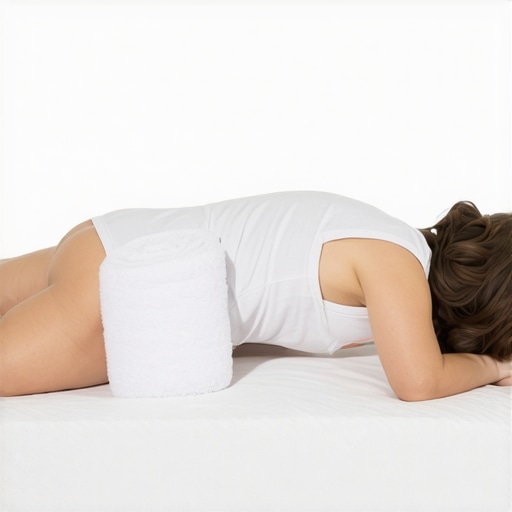
Fixing the Gap Between Your Waist and the Bed
One of the biggest mistakes we make is ignoring the ‘air gaps’ created by our spinal curves. If you lie on your side and can see daylight between your waist and the mattress, your spine is essentially hanging in mid-air, straining your ligaments all night. To fix this, you don’t necessarily need a new bed; you need to fill the void. I started using a small, rolled-up hand towel tucked right into the curve of my waist. This small adjustment stopped my spine from sagging toward the mattress and instantly reduced that nagging morning ache. You can also explore the simple towel roll trick for better sleep with neck pain if you find your upper back is also struggling to find a home on your pillow.
Stop Crushing Your Shoulders
If you are a side sleeper with scoliosis, the pressure on your bottom shoulder can be intense. Most people pull their shoulder forward, which leads to rounded posture and mid-back tension. Instead, you need to learn the way to sleep on your side without crushing your shoulder by slightly leaning back onto a wedge or a long body pillow. This opens up the chest and keeps the thoracic spine from twisting.
Roll Over Without the Ouch
Mobility doesn’t stop just because you’re asleep. People with scoliosis often experience ‘stuckness’ when trying to change positions. To avoid a midnight spasm, use the ‘Log Roll’ technique. Instead of twisting your upper body and then your hips, move your entire torso as one solid unit. This protects your discs from the shearing forces that often occur when you’re half-asleep. This is especially vital if you’re already focused on mobility mastery and want to protect your progress. Using the specific way to roll over in bed without triggering a flare-up can be the difference between a productive morning and a day spent on the heating pad. Integrating these habits alongside using a pillow between your knees creates a supportive cradle that respects your anatomy rather than trying to force it into a straight line.
Stop Trying to Pull Your Spine Straight
For years, the fitness industry has sold us the lie that ‘good posture’ means pinning your shoulders back and tucking your chin until you look like a rigid soldier. If you have scoliosis, this is the fastest way to trigger a massive flare-up. In my experience, forcing a curved spine into a ‘perfect’ vertical line creates internal tension that your nervous system perceives as a threat. This is exactly why standing up straight is actually making your back pain worse. Your goal shouldn’t be a straight line; it should be a functional, moving, and resilient one.
The Stretching Trap That Actually Backfires
One of the biggest ‘oops’ moments for those of us with chronic back issues is the obsession with stretching our hamstrings. I used to spend twenty minutes every morning touching my toes, thinking I was helping my lower back. I didn’t realize that my ‘tight’ legs were actually my body’s way of creating stability because my deep core was offline. This is the main reason why stretching your hamstrings won’t fix your tight legs. When you aggressively pull on those muscles, you’re often just yanking on the sciatic nerve, which leads to more inflammation. This is a common pitfall in managing back pain: we mistake protective tension for a flexibility problem.
Why does stretching sometimes make your leg pain feel sharper?
If you’ve ever reached for your toes and felt a lightning bolt of pain or a weird numbness, you aren’t dealing with a muscle issue—you’re dealing with nerve tension. This is a sophisticated nuance that many beginners miss. When a nerve is irritated, stretching it like a rubber band makes it more sensitive. I recommend everyone try the nerve tension test you can do in your living room before starting any new routine. If your nerve is the problem, why some sciatica stretches actually pinch the nerve further becomes clear: you’re literally compressing the very thing you’re trying to release. Instead of pulling, you should be ‘flossing’ the nerve. Learning the nerve flossing routine for stubborn leg numbness and tingling changed my recovery trajectory because it focused on mobility without aggression. 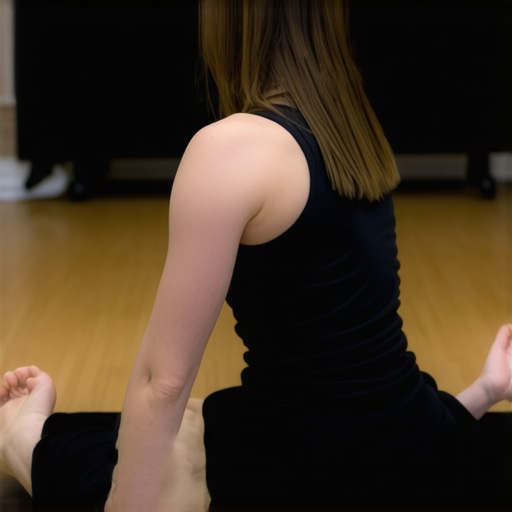
The Power of Better Breathing Over Better Stretching
We often search for a external fix like a new mattress or a better chair, but we ignore the engine inside. I was shocked to learn how much my shallow chest breathing was locking up my mid-back. A study published in the Journal of Physical Therapy Science found that patients with chronic low back pain had significantly decreased respiratory muscle function compared to healthy individuals. When you breathe into your chest, you use your neck and upper back muscles to lift your ribs, which causes constant fatigue. Understanding how your breathing pattern affects your core stability is a game-changer for scoliosis. It allows you to expand the ‘concave’ side of your curve from the inside out. If you’re unsure if your discomfort is just typical stiffness, you should always check if your back pain is a sign of something more serious. Have you ever fallen into the trap of trying to stretch your way out of a nerve flare-up? Let me know in the comments.The hardest part of managing scoliosis isn’t the big flare-ups; it’s the quiet days when you feel fine and start to get lazy. I’ve learned the hard way that ‘maintenance’ isn’t a chore—it’s a lifestyle of protecting the progress you’ve already made. Once I stopped looking for a one-time cure and started focusing on mobility mastery, my good days started outnumbering the bad.
Stop the Set-It-and-Forget-It Mentality
We tend to buy a new chair or mattress and assume the problem is solved. In reality, your spine is a dynamic system that requires constant input. I’ve found that even the best ergonomic setup fails if you don’t actively engage with it. For example, knowing the specific way to use a lumbar roll for maximum relief changed how I felt after a long day at the desk, but it only worked because I was consistent. You have to treat your back like a high-performance engine that needs regular tuning. This shift in mindset is the true back pain breakthrough that many people miss.
Tools That Earn Their Space in My Daily Routine
I’m a minimalist at heart, so I don’t believe in buying every gadget on the market. However, a few specific tools have become non-negotiable for me. I keep a high-density foam roller nearby not for ‘cracking’ my back, but for gentle mobilization. I had to learn how to use a foam roller on your mid-back without causing pain to ensure I wasn’t actually irritating my ribs. My other ‘must-have’ is a simple laptop stand. If you’re working from home, learning how to set up your home office for less than fifty dollars can save you thousands in future physical therapy bills.
How do I maintain my spinal health as I get older?
Maintenance is about stacking small wins. For me, it starts with the simple morning move to prime your spine for the day. It’s a five-minute investment that pays dividends for the next sixteen hours. Dr. Stuart McGill, a world-renowned expert in spine biomechanics, emphasizes ‘spine hygiene’ in his work—essentially the idea that the way you brush your teeth or pick up a pen matters as much as your gym routine. By applying these micro-habits, you prevent the ‘micro-trauma’ that eventually leads to a full-blown crisis. 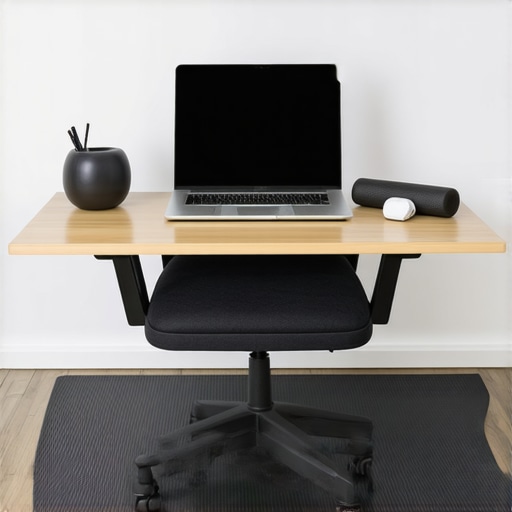
Wearable Tech is the Next Frontier for Back Pain
Looking ahead, I predict we are going to see a massive shift toward biofeedback. We already track our steps and heart rate, but soon we’ll be using affordable, wearable sensors that vibrate when our pelvic tilt shifts out of alignment or when our breathing becomes too shallow. This real-time data will take the guesswork out of managing back pain. Until that tech becomes mainstream, we have to be our own sensors. I want you to try one thing today: set a timer for every forty-five minutes and perform one ‘nerve floss’ or a quick postural reset. It feels small, but it’s the secret to a pain-free decade.
The Hardest Lesson I Learned About Chasing a Straight Spine
I spent years trying to fix my curve as if it were a structural defect that needed a hammer and nails. The reality is that your nervous system cares much more about how you move and breathe than how you look on a static X-ray. Here are the lightbulb moments that finally stopped the flare-ups:
- Consistency beats intensity: A twenty-minute hard session once a week is useless compared to five minutes of mobility work every morning.
- Your spine is a roommate, not an enemy: When I started listening to the whispers of tension before they became screams of pain, my recovery sped up.
- Rest requires strategy: It is not just lying down; it is about how you support the gaps, such as the truth about using two pillows for side sleeping to keep your pelvis from rotating.
My Non-Negotiables for Daily Spinal Resilience
You do not need a house full of expensive gadgets to find a back pain breakthrough. I rely on three specific things every single day. First, a firm lumbar roll—not just for my chair, but to help me maintain alignment while driving. Second, I never work without a dedicated laptop stand; enhancing your back mobility starts with stopping the tech-neck slouch before it begins. Lastly, I use a simple yoga block to support my head during side-lying stretches so my neck does not take the strain.
Take Back Control of Your Evenings
Living with scoliosis does not mean you are destined for a life of limitations. By shifting your focus from straightening to stabilizing, you open up a world of movement you might have thought was gone. It is all about managing back pain with smart, daily choices rather than grand, expensive gestures. Start tomorrow with the simple morning move to prime your spine for the day and see how much lighter you feel. Have you ever found that a standard ergonomic chair actually made your back feel worse? Let me know in the comments below.