
Why your ‘firm’ mattress is making your morning sciatica worse

I remember the morning I finally had enough. I was lying on a mattress that felt like a sheet of plywood, staring at the ceiling and wondering why my expensive ‘orthopedic’ investment was making my leg feel like it was plugged into a wall socket. I’d followed the old-school advice to get the firmest bed possible, but my morning routine had become a slow, painful crawl to the coffee maker. If you’re tired of waking up with that searing, lightning-bolt pain, I’ve got some news that might hurt as much as your spine: your ‘good’ mattress is likely your biggest enemy.
The Big Lie About Firm Surfaces and Nerve Pain
For decades, we’ve been told that a hard bed is the only way to save a crumbling spine. I fell for it hook, line, and sinker. I spent months sleeping on what was essentially a carpeted rock, thinking the stiffness was ‘healing’ me. It wasn’t. In fact, overcoming sciatica starts with realizing that your spine isn’t a straight line—it has curves that need to be cradled, not crushed. When your bed is too firm, it creates high-pressure zones at your hips and shoulders. This forces your lumbar spine to hover unsupported or twist awkwardly, which is exactly how you end up pinching that sensitive sciatic nerve for eight hours straight. I made the mistake of thinking ‘support’ was synonymous with ‘hardness,’ but all I was doing was bruising my joints and aggravating my nerves. You might even need to take the simple test to see if your leg pain is actually sciatica before you blame the bed entirely, but if the pain is strictly a morning gift, the mattress is the primary suspect.
Is a ‘softer’ bed actually worth the risk?
I know what you’re thinking because I thought it too: ‘If I go soft, I’ll just sink into a hole and never get out!’ It’s a terrifying thought when you’re already struggling with mobility. However, there is a massive difference between a sagging, unsupportive heap and a surface that provides targeted pressure relief. My biggest early blunder was buying a cheap, squishy topper that offered no structural integrity, which actually made my alignment worse. What you really need is ‘dynamic contouring.’ Before you run out and buy a new bed, learning how to sleep with a pillow between your knees for back relief can act as a bridge while you transition your setup. A landmark study published in the medical journal The Lancet actually found that patients with chronic low back pain reported significantly less disability when using medium-firm mattresses compared to the extra-firm ones often recommended by retailers. Have you ever felt like your bed was fighting against you instead of letting you rest? I’d love to hear if your morning stiffness seems to vanish once you’ve been moving for an hour, as that is the classic sign your mattress is the culprit. We are going to break down how to find that ‘Goldilocks’ level of support to finally quiet that nerve pain.
Stop the Guesswork with the 15-Minute Gravity Test
To stop the cycle of morning stiffness, you have to look at your bed like a suspension bridge, not a slab of concrete. A bridge needs to give slightly under weight while maintaining its structural integrity. You can test your own setup right now. Lie on your back and try to slide your hand under the small of your back. If there is a massive gap, your bed is too hard, leaving your lumbar spine dangling. If you can’t get your hand in at all because you’re buried in foam, the bed is too soft. I learned this the hard way when I tried to save money by sliding a sheet of heavy plywood under a sagging mattress. I thought I was being clever, but I woke up at 3:00 AM with a leg so numb I couldn’t stand. That rigid board forced my spine into a flat line it wasn’t meant to hold, proving that ‘hardness’ is the enemy of healing. For those struggling with more than just lower back issues, the best sleeping position for a pinched nerve in the neck follows this same principle of neutral alignment.
Check for the ‘Valley’ in Your Sleep Zone
Pull back your sheets and look at the bare mattress. If you see even a slight indentation where you usually sleep—what I call the ‘ghost of your body’—the internal springs or foam have likely failed. This valley creates a subtle ‘C’ curve in your spine all night long. It’s similar to why you should avoid soft couches if you have sciatica; that sinking feeling is actually your vertebrae being pulled apart or compressed. If your mattress has a valley, no amount of stretching will fix the morning flare-up because you are undoing eight hours of damage every single night. 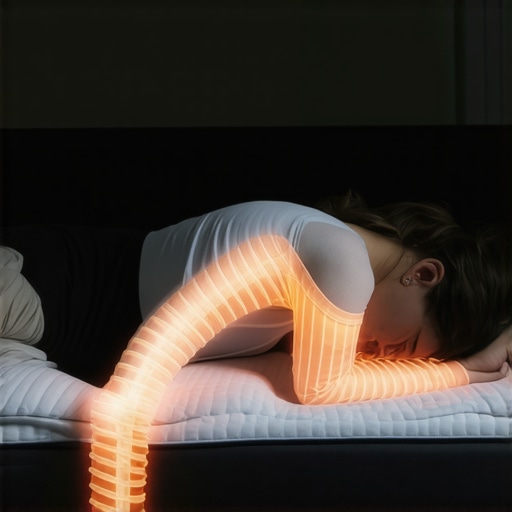
The DIY Fix While You Shop for a Replacement
If you aren’t ready to drop two grand on a new hybrid mattress today, you need a temporary intervention. I used a high-density latex topper for three weeks while I researched my next move, and the difference was night and day. Unlike memory foam, which traps you in a heat-filled hole, latex pushes back. It’s about creating that ‘Goldilocks’ zone of medium-firm support. You should also take a moment to how to check your own hip mobility in under a minute before you go to bed. If your hips are locked up before you even lie down, even a perfect mattress will feel like a bed of nails. Pairing a supportive surface with the 2-minute hip-reset for better sleep tonight 2 can significantly lower the inflammation around the sciatic nerve.
Mastering Your Body’s Alignment in 2025
Managing chronic pain requires staying updated on unlocking mobility expert tips on managing back pain in 2025, as new research continues to debunk the ‘firm is better’ myth. Think of your spine as a delicate chain of gears. When one part—like your hips or shoulders—is pushed out of place by a bad mattress, the entire system grinds to a halt. I’ve found that using a medium-firm surface allows the heavy points of my body to sink just enough so that the lower back remains in contact with the bed. This takes the ‘stretch’ off the nerve. If you still feel a pull in your leg, consider whether your daily habits are contributing; for instance, many people don’t realize why your standing desk is giving you lower back pain might be related to the same postural fatigue you’re feeling at night.
Why Stretching Your Hamstrings Might Be Making Your Leg Pain Worse
Most people feel a ‘tightness’ in the back of their leg and immediately think they need to reach for their toes. I did this for years, thinking I was helping my range of motion. But if that tightness is actually neural tension from the sciatic nerve, stretching the muscle is like pulling on both ends of a frayed electrical wire. The hard truth is that why stretching your hamstrings can actually flare-up sciatica is the most overlooked reason people stay in pain for months. In my experience, what feels like a ‘tight muscle’ is often the nerve sounding an alarm because it’s being compressed at the spine. When you stretch, you’re not lengthening tissue; you’re just irritating the nerve further. This is precisely why reaching for your toes is the worst way to stretch your back when your disc health is already compromised. 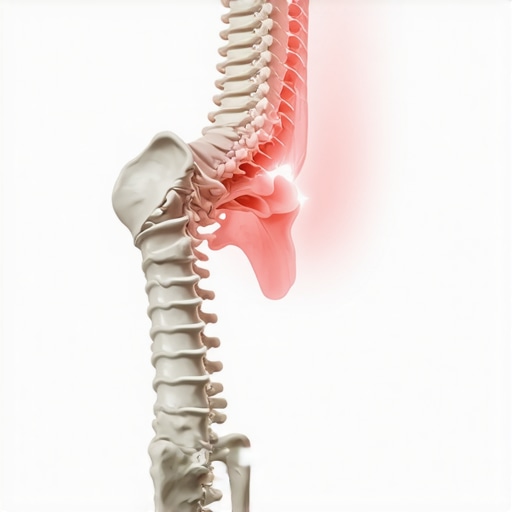
Does ‘perfect’ upright sitting actually protect your discs?
We’ve been told to sit up straight like we have a string pulling the top of our head toward the ceiling. However, maintaining a rigid, ‘upright’ posture for hours actually increases muscle fatigue and can lead to more spinal stiffness than a relaxed, supported position. Research published in the journal Spine indicates that a slightly reclined sitting position (around 135 degrees) actually reduces disc pressure more effectively than a vertical 90-degree posture. This is a massive nuance because why your straight posture is actually straining your muscles involves the constant ‘on’ state of your paraspinal muscles. You’re forcing your stabilizing muscles to work as prime movers, which leads to that deep, gnawing ache by 3:00 PM.
The Dangerous Trap of Powering Through Core Work
Another nuance involves the ‘core.’ If you have an active flare-up, stop the planks immediately. I’ve seen so many people try to ‘strengthen’ their way out of a disc injury, only to find that why you should stop doing planks if your back already hurts is because the high intra-abdominal pressure can actually push a disc bulge further against the nerve root. For true mobility mastery, you have to prioritize decompression over tension. Instead of high-intensity core work, focus on how a simple reach and breathe move can decompress your back to create space between your vertebrae. Have you ever fallen into the trap of thinking more exercise would ‘fix’ a structural injury only to end up in more pain? Let me know in the comments.Maintaining a pain-free life isn’t about being perfect for one hour at the gym; it’s about the other twenty-three hours where you unconsciously slip into old habits. I used to think I could ‘fix’ my back with a weekly massage, but I soon realized why deep tissue massage isnt fixing your recurring back pain—it’s a temporary band-aid for a structural habit. To achieve true longevity, you need a toolkit of habits that require zero extra time but offer maximum protection. One of the biggest game-changers for me was realizing why your lumbar support might be making your back stiffer. I was using a generic pillow that pushed my lower back too far forward, creating a localized ‘hinge’ point. Now, I use a slim, high-density roll specifically placed at the top of my pelvis, not the curve of my waist. This small shift stopped the midday flare-ups that used to ruin my evenings.
How do I keep my spine healthy for the next decade?
Long-term success comes down to what Dr. Stuart McGill, a world-leading expert in spine biomechanics at the University of Waterloo, calls ‘spine hygiene.’ This means moving in ways that spare the discs while building ‘islands of stability’ throughout your day. I don’t just exercise; I practice mobility mastery by integrating micro-movements into my work hours. For example, if I’ve been sitting for too long, I immediately perform the simple movement that resets your SI joint after a run, even if I haven’t been running. It realigns the pelvis and takes the ‘tug’ off the lower vertebrae. If you ignore these small resets, you might find yourself wondering is your back pain a sign of something more serious, when in reality, you’re just suffering from postural fatigue.
The rearview mirror hack that forces better posture
My favorite ‘lazy’ tool is actually inside my car. I call it the Mirror Trap. Sit in your driver’s seat, sit up with a tall (but relaxed) spine, and then how to adjust your rearview mirror to force better driving posture by setting it slightly higher than you normally would. The moment you start to slouch or ‘turtle’ your neck, the mirror becomes useless. You’ll find yourself naturally lengthening your spine just to see the traffic behind you. It’s a brilliant way to build endurance in your deep neck flexors without ever stepping foot in a clinic.  I predict that by 2030, we won’t even need mirrors for this; we will have haptic sensors in our clothing that gently vibrate when our spinal load exceeds a safe threshold. But until that tech is affordable, these manual ‘environmental’ triggers are your best defense. I also highly recommend looking at your workspace; following the 15-degree rule for your computer monitor to save your neck can prevent that heavy-head feeling that leads to tension headaches. If you want to start today, try the mirror trick on your commute home. It is the single most effective way to turn a passive activity into a corrective one.
The Reality Check My Spine Needed
Over the years, I have realized that recovery isn’t about one big ‘fix’ but a series of small, intentional adjustments. My biggest lightbulb moment was discovering that neural tension is not the same as muscle tightness. I spent years stretching my hamstrings when I really should have been focused on expert strategies for lasting comfort that prioritize nerve gliding over muscle pulling. I also learned that ‘perfect’ posture is a moving target; the best posture is your next posture. Staying static is what kills the spine. Lastly, I stopped ignoring the morning signals. If your pain disappears once you’ve been upright for an hour, your bed is the culprit, and no amount of ibuprofen will change that structural reality.
A Few Essentials to Speed Up Your Recovery
If you are looking to build your own toolkit for a healthier spine, I highly recommend starting with these specific resources. First, look into a high-density lumbar roll for your car or office chair to maintain that pelvic tilt. Second, learn how to use a foam roller for sciatica without making it worse, as many people accidentally roll directly onto the nerve and increase inflammation. Third, I always suggest my readers take the toe touch test that reveals your actual back injury risk to get a baseline of their current mobility levels. These tools aren’t just ‘nice to have’; they are the foundation for long-term independence from chronic pain.
Believe Your Body Can Heal
It is easy to feel like your back is a ‘lost cause’ when you’ve been struggling for months, but the human body is incredibly resilient when given the right environment. By choosing a medium-firm surface and implementing small postural resets throughout your day, you are finally giving your discs the space they need to breathe. These back pain breakthroughs often happen when we stop fighting our bodies and start supporting their natural mechanics. Don’t be afraid to make that first change today—your future, pain-free self will thank you. Which part of your morning routine leaves you feeling the stiffest? Let’s talk about it in the comments below.