
The nerve-flossing routine for stubborn leg numbness and tingling
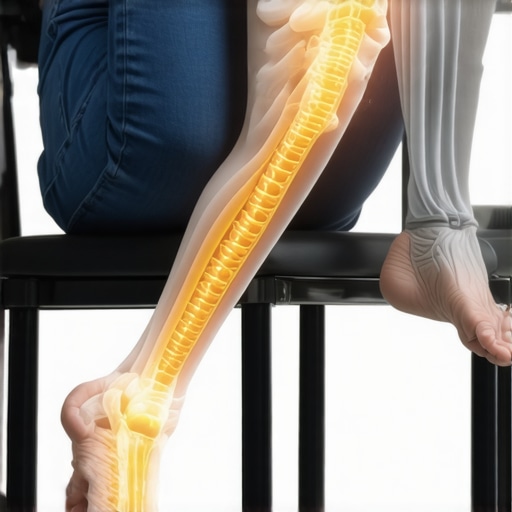
I was sitting on a hard plastic chair at my nephew’s eighth birthday party when it happened again. That familiar, fuzzy, static-like hum began creeping down my right thigh, settling into a dull buzz behind my knee. I did what I always did: I stood up and tried to touch my toes, thinking my hamstrings were just tight. Big mistake. By the time they were cutting the cake, my leg didn’t just feel numbness; it felt like it was on fire. I had spent years treating my nerves like bungee cords, pulling them tighter every time they signaled for help. It took a lot of trial and error—and a few painful flare-ups—to realize that nerves don’t want to be stretched. They want to slide. [image-placeholder]
Stop Pulling and Start Sliding Your Nerves
If you have ever felt that dead leg sensation or a sharp zing that travels all the way to your ankle, you know how distracting it is. You might think you need deeper stretches, but often, reaching for your toes is the worst way to stretch your back and legs when a nerve is the culprit. We are going to change the game today. I am going to show you the exact nerve-flossing routine that finally stopped that stubborn tingling for me. We aren’t just masking the symptoms; we are addressing the fact that your nerves are likely stuck to the surrounding tissue. In those early days, I was convinced my legs were just chronically tight. I would spend twenty minutes on a foam roller, wondering why some sciatica stretches actually pinch the nerve further instead of helping. I had to learn the hard way that nerves are incredibly sensitive to tension. As noted by researchers in the Journal of Manual & Manipulative Therapy, neural gliding exercises help restore the dynamic balance between the movement of neural tissues and the surrounding mechanical interfaces. When they get stuck, they complain with numbness.
Does this tiny movement actually fix real nerve pain?
I get the skepticism. When you first see a nerve-flossing move, it looks like you are doing almost nothing. It is a gentle, rhythmic motion—nothing like the no pain, no gain workouts we are used to. But that is the point. We are teaching the nervous system that it is safe to move again. Have you ever felt like your leg was falling asleep even when you weren’t sitting in a weird position? You aren’t alone; I have been there, and it usually comes down to how your seat is set up. In fact, a simple chair height trick to stop your legs from falling asleep can be a lifesaver while you are working on your mobility.
The Secret to Lasting Comfort Without the Burn
Getting lasting comfort through expert strategies isn’t about intensity; it is about consistency. When I first started, I would overdo it. I would do fifty reps when I should have done five. My mistake was thinking more was better. With nerve flossing, more usually just means more irritation. We want to be the helpful neighbor to our nervous system, not the drill sergeant. Have you ever had a moment where a simple stretch made your leg numbness significantly worse? Tell me about it in the comments, because understanding that wrong move is usually the first step toward the right one.Think of your nerve like a long, delicate silk thread running through a narrow straw. That straw is your muscle, bone, and fascia. When things are healthy, the thread slides back and forth with every step you take. But when you have inflammation or a disc issue, it is like someone poured glue into that straw. If you try to pull on both ends of that thread at once—which is exactly what happens when you do a standard hamstring stretch—you aren’t stretching the nerve; you are just irritating it further. This is precisely why stretching your hamstrings won’t fix your tight legs if the nerve is the one caught in the glue.
Get your nerves moving without the ouch factor
I remember sitting in the back of my car in a grocery store parking lot, sweating because my leg was throbbing. I had just read about nerve gliding and decided to try it right there. At first, I moved too fast. I treated it like a gym rep, trying to ‘feel the burn.’ My leg flared up so badly I could barely drive home. The lesson I learned the hard way is that nerves have a hair-trigger temper. You have to be subtle and coax them into moving again rather than forcing them.
The slump and kick method for sciatic relief
To start, find a firm chair—not your soft sofa. In fact, why your couch is the worst place to sit with a herniated disc becomes very clear once you realize you need a stable base to move your pelvis correctly. Sit on the edge and let your shoulders slump forward. This might feel counterintuitive if you’ve been told to stand up straight, but why standing up straight is actually making your back pain worse in some cases is due to the constant tension on your spinal cord. By slumping, you slacken the system. From this slumped position, straighten your affected leg. As your foot comes up, look up at the ceiling. This ‘pulls’ the nerve toward your head while ‘releasing’ it at your foot. Then, as you bend your knee back down, tuck your chin toward your chest. You are now ‘feeding’ the nerve back toward your leg while ‘pulling’ from the neck. It is a rhythmic, gentle glide. #IMAGE_PLACE_HOLDER_B#
Keep your range of motion within the safety zone
The biggest mistake people make is pushing into the pain. If you feel that familiar zing, you have gone ten percent too far. I used to think I needed to kick my leg as high as possible, but I was wrong. I eventually learned that how a slight change in your sitting angle stops leg numbness is by finding the window of movement where the nerve doesn’t feel threatened. If you can only straighten your leg halfway before the tingling starts, then only go halfway. Over a few days, that window will naturally open up as part of your journey toward mobility mastery and daily tips to keep your spine and joints healthy. You are retraining the brain to realize that movement isn’t synonymous with danger. If you feel stuck, remember that simple exercises that make a difference don’t have to be sweat-inducing to be effective. For me, doing ten gentle glides every few hours was the turning point that finally let me sit through a movie without my leg going dead.One of the biggest lies I fell for during my own recovery was the ‘perfect posture’ trap. I spent weeks trying to sit like a statue, thinking that if I just kept my spine perfectly vertical, the pain would disappear. Instead, I just felt more brittle and irritable. I had to learn the hard way that why your perfect upright posture is actually tensing your spine comes down to how it locks your vertebrae and reduces the natural ‘pump’ of your discs. Nerves thrive on blood flow, and blood flow requires motion. When you freeze your torso in a rigid position, you are essentially starving the nerve of the oxygenated blood it needs to heal. This is a common pitfall in understanding the link between poor posture and chronic back pain; sometimes, the most ‘correct’ looking posture is actually the most stressful one for a sensitive nerve root. #IMAGE_PLACE_HOLDER_C#
Don’t ignore the lead-weight feeling in your calf
Another nuance I missed early on was the ‘heavy leg’ sensation. Before the lightning strikes of pain, there is often a phase where your leg just feels sluggish, clumsy, or unusually tired during a simple stroll. You might think you’re just out of shape or that your shoes are wrong, but the hidden reason your legs feel heavy during your evening walk is often a subtle neural compression that hasn’t fully triggered the pain fibers yet. It is the nervous system’s way of whispering before it starts screaming. If you keep pushing through that heaviness without adjusting your movement, you’re walking right into a major flare-up. Have you ever fallen into this trap where you ignored a ‘heavy’ leg only to have it turn into a week of misery? Let me know in the comments, because catching it early is the real secret to avoiding a crisis.
Why is the pain leaving my foot and moving to my back?
This is the question that confuses most of my readers. You start your nerve-gliding routine, and suddenly your foot feels great for the first time in months, but your lower back or glute feels like it’s being stabbed. Most people panic and think they’ve caused a brand new injury. In reality, this is a physiological phenomenon called ‘centralization.’ As the nerve becomes less irritated and the ‘glue’ we talked about earlier starts to loosen, the symptoms move from the furthest extremities back toward the spine. It is actually the one sign that your sciatica is finally starting to heal and is considered a major victory in the clinical world. According to a study published in the journal Spine, patients who exhibit this centralization of symptoms have significantly better long-term outcomes than those whose pain remains ‘peripheralized’ in the foot or ankle. It is a sign that the mechanical pressure on the nerve root is finally lifting.
Your back is a bridge, not a fragile glass tower
We often get so scared of the ‘zing’ that we stop moving entirely, treating our bodies like they are made of glass. While it is important to be cautious, staying completely still is rarely the answer. If you aren’t sure if your current discomfort is a simple muscle tweak or something that requires professional intervention, knowing is your back pain a sign of something more serious can help you decide when to push through and when to seek help. The goal isn’t to find a single ‘safe’ position and stay there forever; it is to build a body that can handle the messy, unpredictable movements of real life. When I finally stopped obsessing over being ‘straight’ and started focusing on being ‘fluid’ and adaptable, that was when the real healing began. Your spine is designed for movement—it just needs the right kind of invitation to start moving again.I’ve spent thousands of dollars on gadgets—everything from vibrating massage guns to inversion tables—but the real winners were the ones that changed my daily environment. I realized that unlocking mobility and expert tips on managing back pain in 2025 will likely shift even further toward high-tech biofeedback. For now, my most trusted ‘tool’ is a simple $20 lumbar roll. I don’t just shove it behind me; I use the specific way to use a lumbar roll for maximum relief by placing it exactly at the beltline to preserve that natural curve while I work. I also stopped guessing where my screen should be. Applying the 15-degree rule for your computer monitor to save your neck was the final piece of the puzzle that stopped those 3 PM tension headaches. It’s about creating an environment where your body can’t help but be in a good position. #IMAGE_PLACE_HOLDER_D#
How do I keep my spine happy without turning into a health nut?
The secret is what experts like Dr. Stuart McGill call ‘spinal hygiene.’ In his extensive research at the University of Waterloo, McGill demonstrates that small, repetitive micro-movements—like the way you brush your teeth or get out of bed—are more predictive of long-term health than your three-day-a-week workout. This is why I swear by the simple morning move to prime your spine for the day. It takes thirty seconds but sets the tone for the next sixteen hours. I’ve also had to be honest with myself about the ‘standing desk’ craze. While they can help, the truth about standing desks and lower back fatigue is that standing still is just as bad as sitting still. Movement is the only true currency for nerve health. I predict that in the next few years, we will see ‘smart furniture’ that gently shifts its angle every ten minutes to force our muscles to stay engaged without us even noticing. Until then, you have to be your own advocate.
Take control with one simple habit shift
If you want to move beyond just ‘surviving’ your workday, I want you to try one specific advanced trick today. It sounds silly, but how to adjust your rearview mirror to force better posture is a game-changer. Sit up tall, set your mirror, and then never touch it again. The moment you can’t see out of it, you will know your spine has slumped, and your nerves are likely being compressed. Pair this with the 10-second wall slide for instant shoulder tension relief during your lunch break, and you are already ahead of 90% of people struggling with chronic stiffness. You aren’t just managing pain anymore; you are building mobility mastery and daily tips to keep your spine and joints healthy for the long haul.
The Hard Truths About Why Nerves Stay Angry
After years of trial and error, I realized that why your straight posture is actually straining your muscles is because it lacks the variability our bodies crave. One of the biggest ‘lightbulb’ moments for me was understanding that nerves are electrical wires, not rubber bands. If you try to stretch them, they often short-circuit. I also learned that conquering sciatica with proven approaches means respecting the ‘calm’ days just as much as the flare-up days. It is easy to do your exercises when you are in pain, but the real magic happens when you keep moving even when the ‘zing’ is gone.
The Toolkit That Keeps Me Pain-Free
I don’t leave my recovery to chance anymore. My essential toolkit starts with the research of Dr. Stuart McGill; his work is the gold standard for understanding how to stabilize the spine. I also focus on enhancing your back mobility with ergonomic tips, like using a high-quality lumbar support whenever I am in the car for more than twenty minutes. Lastly, I rely on regular mobility check-ins rather than guesswork. If you find yourself wondering is your back pain a sign of something more serious, having a trusted professional to consult is always more effective than any gadget you can buy online.
Your Journey Starts with One Gentle Movement
If you are currently feeling that frustrating static in your leg, please know that it does not have to be your permanent reality. By shifting your mindset from ‘stretching’ to ‘sliding,’ you are opening the door to back pain breakthroughs and restored mobility. It takes patience, but the moment you can walk through a grocery store or sit at a dinner table without thinking about your leg, you will know every gentle rep was worth it. Have you ever noticed your symptoms changing location or moving ‘up’ toward your back as you started to feel better? Let me know in the comments below!