
How to use a foam roller on your mid-back without causing pain
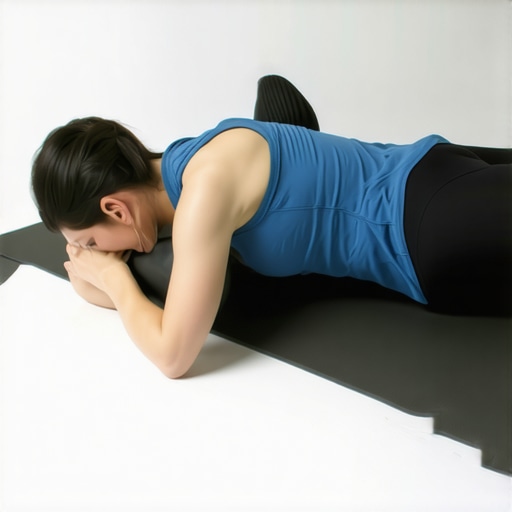
I still remember the first time I hauled a neon-blue foam roller into my living room, convinced it was the secret to erasing years of desk-job stiffness. I flopped onto it, rolled back and forth with zero grace, and—*pop*—my spine made a sound like a dry twig snapping. I thought I’d achieved alignment, but instead, I woke up the next morning feeling like I’d been kicked by a mule. My mid-back was tender, my breathing felt shallow, and I was terrified to touch the thing again. If you’ve ever felt like your foam roller is more of an instrument of torture than a recovery tool, believe me, I’ve been there. We are going to change that narrative today. I want to help you boost your back mobility without the wincing and the bruising.
Stop Cracking Your Ribs and Start Fixing Your Mid-Back Tension
Mid-back pain is a sneaky beast. It usually hides right between your shoulder blades, making every breath feel a little tighter and every hour at your computer feel a little longer. The mistake most of us make is treating our spine like a rolling pin on dough. We press too hard, we roll too low, and we ignore how your rib cage position determines your shoulder health. When I finally learned that the thoracic spine—that middle section of your back—needs a gentle nudge rather than a blunt-force trauma approach, everything changed. Have you ever felt that sharp, wrong kind of pain while trying to roll out a knot?
Does rolling my back actually work or am I just bruising myself?
It is a valid fear. If you’re doing it wrong, you aren’t actually helping your muscles; you’re just triggering a guarding response where your body tightens up to protect itself. According to research published in the Journal of Bodywork and Movement Therapies, self-myofascial release is incredibly effective for increasing range of motion, but only if the nervous system feels safe. If you’re tensing up and holding your breath because it hurts, you’re wasting your time.
The Massive Mistake I Made When I First Started Rolling
My biggest blunder? I used to roll right onto my lower back. I thought if it worked for the top, it would work for the bottom. Wrong. Your lower back doesn’t have the protective cage of ribs that your mid-back does, and rolling there can cause some serious issues. I also had a habit of chasing that popping sound. I thought the noise meant I was fixing things, but why cracking your own back is making your joints more unstable is a lesson I had to learn the hard way through a week of muscle spasms. We also have to realize that how a stiff upper back is forcing your neck to move too much is the real reason your neck hurts, not just the neck itself. By focusing on the mid-back correctly, we take the pressure off the rest of the chain. It’s about precision, not pressure.The first thing you have to realize is that your spine is more like a chain and less like a solid rod. When you lay across that foam roller, you want to target the links that are stuck, not just flatten the whole thing out. I used to think that ‘more pressure equals more progress,’ but I quickly learned that why your rib cage position determines your shoulder health is the real secret to unlocking that mid-back stiffness. If your ribs are flared out like a startled bird, you’re just jamming your joints together.
Ditch the Steamroller and Try the Hinge Technique
Stop rolling up and down like you’re trying to flatten dough. Instead, find one stiff spot—usually just below your shoulder blades—and stay there. This is the ‘hinge.’ You want to keep your butt on the floor and gently lean back over the roller. I remember trying this the first time and I was so stiff I couldn’t even lean back an inch without gasping. I felt like a piece of dry cardboard. But once I realized that how a simple reach and breathe move can decompress your back, the ‘cardboard’ started to feel more like leather. It takes patience, not force.
Keep Your Neck Safe While You Work
One of the biggest mistakes I see (and I’ve done it a hundred times) is letting the head hang back or, worse, pulling on the neck to try and force a stretch. This is exactly how you end up needing revitalize your neck effective techniques for lasting pain relief the next day. Cradle your head in your hands like it’s a bowling ball. Your hands should be doing 100% of the work to support your skull so your neck muscles can actually relax. If you feel a pinch, you’ve gone too far. We’re aiming for a ‘melt,’ not a ‘snap.’
Use Your Ribs as a Lever for Better Range
Your breath is your internal foam roller. When you’re draped over the roller, take a deep breath into your back—not your belly. Feel your ribs expand against the foam. This internal pressure creates space from the inside out. If you’re struggling with this, you might realize the breathing habit that is keeping your back muscles tight is actually the root of your stiffness. I spent years breathing only into my upper chest, which kept my mid-back in a constant state of ’emergency mode.’
Protect Your Lower Back from Unnecessary Arching
While you’re working on that mid-back hinge, keep your core slightly engaged. If you let your lower back arch wildly, you aren’t actually stretching your mid-back; you’re just stressing your lumbar spine. I used to make this mistake and wondered why my lower back hurt after ‘fixing’ my upper back. Learning why your lumbar support might be making your back stiffer helped me realize that the lower back needs stability while the mid-back needs mobility.
The Five-Second Rule for Tension Release
Once you’ve found a spot and you’re supported, hold the position for five seconds while exhaling completely. Think of it like letting air out of a balloon. As the air leaves, your body naturally sinks deeper into the roller. I once tried to rush this during a 10-minute workout gap, and I ended up with a rib spasm that felt like a hot poker. I learned the hard way that why some sciatica stretches actually pinch the nerve further also applies to the thoracic spine—if you rush the nervous system, it fights back. After you finish the hinge, try the 10-second wall slide for instant shoulder tension relief to lock in that new range of motion.Let’s dig deeper into why so many people get stuck in a cycle of temporary relief followed by a painful flare-up. We’ve been conditioned to believe that ‘perfect’ posture means shoulders pinned back and chest out, like a soldier on parade. But in my experience, chasing that rigid aesthetic actually creates a new set of problems. I spent months trying to force my spine into a straight line, only to realize why your perfect upright posture is actually tensing your spine and causing deep, stubborn mid-back knots. Your spine is designed for movement and fluid adaptation, not for being a frozen pillar. When you hold it too stiffly, you’re just replacing one type of strain with another.
Stop Trying to Sit Like a Statue
The truth is that ‘good’ posture is always your next posture. If you’ve been told that sitting perfectly straight is the cure-all, you’ve been sold a half-truth. Research indicates that static loading—even in an ‘ideal’ position—can lead to disc compression and muscle fatigue. This is precisely why your straight posture is actually straining your muscles. Instead of trying to be a statue, you should focus on micro-movements throughout the day. We often think standing is the answer, but the truth about standing desks and lower back fatigue is that standing still is just as taxing as sitting still.
Why Stretching Your Hamstrings Might Be Making Your Leg Pain Worse
This is the biggest ‘oops’ factor I see in the mobility world. You feel a sharp pull in the back of your leg and assume it’s a tight muscle, so you start reaching for your toes. But if you’re dealing with nerve issues, this is a dangerous trap. You might find that why stretching your hamstrings can actually flare up sciatica is the very reason your recovery has stalled. A study published in the Journal of Orthopaedic & Sports Physical Therapy highlights that what many perceive as ‘hamstring tightness’ is often neural tension. When you stretch a sensitized nerve as if it were a muscle, you’re not lengthening it; you’re irritating it further. It’s the primary reason why stretching your hamstrings won’t fix your tight legs if the root cause is coming from your lower back or sciatic nerve path. I’ve seen people try to ‘power through’ a nerve flare-up with deep forward folds, only to end up in a week-long spasm because why some sciatica stretches actually pinch the nerve further is a nuance that most gym-goers ignore.
Is my ‘tightness’ a muscle issue or a nervous system protection reflex?
This is the sophisticated question that separates beginners from those achieving true recovery. Often, your brain will tighten your muscles as a ‘splinting’ mechanism to protect a joint it perceives as unstable. If you try to force that muscle to relax without addressing the underlying stability, your brain will just tighten it back up within minutes. This is why mobility mastery daily tips to keep your spine and joints healthy focus on building stability alongside flexibility. If you’ve been ‘stretching’ the same spot for years with no change, it’s not a muscle problem; it’s a protection problem. Have you ever fallen into the trap of stretching a spot that just keeps getting tighter? Let me know in the comments. If you’re tired of the guessing game, conquering sciatica proven approaches to end discomfort now can provide the roadmap you need to finally stop the cycle of pain.I used to think a foam roller was the only tool I would ever need, but my toolkit has expanded as I have learned that different tissues require different ‘languages’ to relax. While a roller is great for broad strokes, I now swear by a standard lacrosse ball for those deep, gnarly spots between the shoulder blades. The surface area is smaller, allowing for a targeted pressure that a large cylinder just cannot reach. If you are serious about unlocking mobility expert tips on managing back pain in 2025, you have to get comfortable with this kind of pinpoint accuracy. I also shifted my focus downward, realizing that the 30-second ankle drill that reduces your risk of back injury is a non-negotiable part of my morning routine. If your foundation is stiff, your back will always pay the price.
Why Your Foam Roller Needs a Smaller Sidekick
Using a lacrosse ball or a specialized peanut-shaped mobility tool allows you to affect the fascia around the ribs without putting direct pressure on the spinous processes. It is a game-changer for that ‘stuck’ feeling. Dr. Stuart McGill, a world-renowned spine biomechanist, often discusses ‘spine hygiene’—the idea that how we move during mundane tasks matters just as much as our gym time. This is why I became obsessed with my environment. I stopped hunching over my screen and learned how to set up your laptop for better spine protection. I even started following the 15-degree rule for your computer monitor to save your neck, which felt strange for two days but eventually eliminated my afternoon headaches entirely.
How do I keep my spine feeling this good for the long haul?
Long-term maintenance is not about hour-long sessions; it is about the ‘micro-wins’ you accumulate throughout the day. Consistency beats intensity every time.
The Future of Feeling Good
Looking ahead, I suspect we are going to see a massive shift toward bio-feedback wearables that alert us the second our spinal mechanics start to degrade. We are moving away from ‘fix it when it breaks’ toward real-time prevention through AI-driven movement analysis. For now, your best bet is mobility mastery daily tips to keep your spine and joints healthy. These small habits are the real back pain breakthroughs navigating your path to restored mobility. My challenge to you is simple: tomorrow morning, before you even check your phone, spend exactly two minutes on that mid-back hinge we discussed. Your future self will thank you.
What I Finally Realized After Years of Fighting My Spine
The biggest lightbulb moment was realizing that relief is about safety, not force. When I stopped trying to ‘break’ my knots and started using boost your back mobility techniques that respected my nervous system, the tension finally stayed away. I also learned that why stretching your hamstrings won’t fix your tight legs is the same reason why aggressive rolling fails—your brain will only let a muscle relax if it feels stable. Consistency beats intensity every time; a two-minute hinge is worth more than a weekly hour of torture. Finally, I discovered that chasing the ‘pop’ is a distraction from building actual, functional control over your movements.
Simple Upgrades That Actually Support Your Recovery
I trust these specific tools and habits because they address the root cause of stiffness rather than just masking the symptoms. A standard lacrosse ball is my secret weapon for reaching the deep fascia near the shoulder blades that a roller simply cannot touch. I also swear by adjusting my workstation—specifically following the 15-degree rule for your computer monitor to save your neck. Finally, prioritize mobility mastery daily tips to keep your spine and joints healthy to ensure your progress doesn’t disappear overnight. These small adjustments are what turn a ‘good day’ into a pain-free life.
Start Rewriting Your Movement Story Today
You don’t have to live with a back that feels like a rusted hinge. By shifting your focus from ‘fixing’ to ‘listening,’ you can finally conquer back pain and reclaim your mobility. The path to back pain breakthroughs navigating your path to restored mobility starts with a single, gentle breath and a commitment to moving smarter, not harder. If you’re feeling stuck or unsure where to begin, don’t hesitate to contact us for guidance tailored to your specific needs. Have you ever felt like your foam roller was making your back pain worse instead of better? Let me know your experience in the comments below!