
How your phone habits are creating a permanent neck hump

I still remember the first time I saw it. I was walking past a department store window, caught a glimpse of my side profile, and stopped dead. Who was that person with the rounded shoulders and the head jutting forward like a turtle? It was me. For months, I’d been ignoring a dull, burning sensation at the base of my neck, assuming I was just “stressed” or needed a better pillow. In reality, my iPhone was literally reshaping my skeleton. I felt a wave of embarrassment followed by a genuine fear. Was this permanent? Could I actually fix a physical hump caused by years of mindless scrolling? If you’ve ever caught your reflection and felt that same jolt of realization, I want you to know you aren’t alone, and more importantly, you aren’t stuck this way.
Your Smartphone is Quite Literally Reshaping Your Skeleton
It’s not just about looking a bit slouchy or having poor etiquette at the dinner table. When we tilt our heads down to check a notification, the physics of our body changes. Your head weighs about 12 pounds when it’s neutral. But as you tilt it forward, the effective weight on your cervical spine skyrockets. According to research published by Dr. Kenneth Hansraj in Surgical Technology International, at a 60-degree angle—the typical posture for texting—your neck is supporting a staggering 60 pounds of pressure. Imagine hanging a heavy dumbbell from your neck for four hours every single day. Your body is smart; it starts laying down extra fat and connective tissue at the base of the neck to protect the spine from that constant strain. That’s the “hump” beginning to form. I made the mistake of thinking neck pain and stress were just parts of modern life, but my body was screaming for a change. If we don’t address it, this habit leads to much more than a cosmetic bump; it can spiral into chronic poor posture and chronic back pain that steals your mobility.
Is this really a permanent change or just a bad habit?
You might be skeptical. I certainly was. I thought, “Surely, if I just sit up straight for five minutes, it’ll go away.” But the truth is, your muscles have memory, and your fascia—the cling-wrap-like tissue holding you together—actually thickens in response to your posture. I spent years in denial, thinking a few random shoulder rolls would negate eight hours of slouching. It didn’t work. I had to learn that your reading habit is causing that hump just as much as your phone. Today, we are going to break down how to stop this process in its tracks. We’ll look at the specific moves, like the 30-second neck tuck, that can actually reverse the tension before it becomes a structural fixture of your body. Have you ever caught your reflection and realized your posture was way worse than you thought? It’s a wake-up call we all need eventually. Let’s get into the mechanics of how we fix this for good.
Stop the Sag and Reclaim Your Alignment
I used to think I could just “will” myself into better posture. I would sit at my desk, realize I was hunched, and yank my shoulders back like a soldier on parade. Ten minutes later, I would be right back in the turtle position. This failed because my chest muscles were so tight they were literally pulling my skeleton forward. Think of your body like a tent: if the front ropes are too tight, the middle pole—your spine—is going to lean. To fix the hump, you have to loosen the front before you can strengthen the back. I started using a specific routine that prioritized opening up the ribcage. Using a doorframe is the easiest way to begin this; learning how to use a doorway to release chest tension and improve posture was the first time I felt my shoulders actually sit where they were supposed to without constant effort. 
The 30-Second Reset You Can Do Anywhere
Once your chest isn’t pulling you forward, you have to address the forward head carriage. This is where that 60 pounds of pressure on your neck originates. The most effective move I have found is the chin tuck. It feels ridiculous—you are essentially giving yourself a massive double chin—but it is the only way to activate the deep neck flexors that have gone dormant from years of phone use. I remember doing these at a red light and catching the person in the car next to me staring in total confusion. It was embarrassing, but that night was the first time in weeks I didn’t have a thumping tension headache. Mastering the 30-second neck tuck to stop tension headaches at your desk is a non-negotiable part of the process. It is like hitting the reset button on your cervical spine to stop the connective tissue from thickening into a permanent hump.
Stop Fighting Your Workspace
You can do all the stretches in the world, but if your monitor is sitting flat on your desk surface, you are doomed to repeat the cycle of pain. Your eyes lead your body. If your eyes have to look down, your neck will naturally follow. I finally took a stack of old books and shoved them under my laptop until the top of the screen was at eye level. It felt weird at first, almost like I was looking up at the world, but the burning sensation between my shoulder blades vanished within two days. Learning how to adjust your monitor to stop that burning neck pain is the structural foundation of your recovery. If you are a back sleeper, you also need to ensure your head isn’t being pushed forward all night by a bulky, overstuffed pillow. Finding the specific pillow height for back sleepers ensures your spine stays neutral while you recover from the day’s strain.
Add Movement to the Tightest Areas
Your mid-back, or thoracic spine, is often the most locked part of the equation. If that area doesn’t move, your neck has to overcompensate for every turn and twist. I found that incorporating the thoracic bridge move that fixes slouching helped break up that stiff, cement-like feeling in my upper back. These aren’t just temporary exercises; they are neck pain solutions proven techniques to regain your range of motion that tackle the root cause rather than just masking the symptoms. Every time you feel that familiar ache, don’t just reach for a heating pad—reach for a doorway or a wall and reset your frame.We’ve been sold a convenient lie that there is a ‘perfect’ way to sit. We invest in expensive ergonomic chairs and attempt to sit like statues, yet the burning sensation in our necks remains. Here is the contrarian truth: your quest for ‘perfect’ static posture is likely part of the problem. Your body isn’t designed for rigid perfection; it’s designed for constant, subtle micro-adjustments. According to Dr. Joan Vernikos, former Director of NASA’s Life Sciences Division and author of Sitting Kills, Moving Heals, the lack of intermittent movement—what she calls ‘gravity-defying’ activities—is what causes our tissues to degrade and our spines to stiffen. When you lock yourself into one position, you’re starving your spinal discs of the nutrients they typically receive through movement-based osmosis. This is exactly why your perfect sitting posture is making you stiffer. 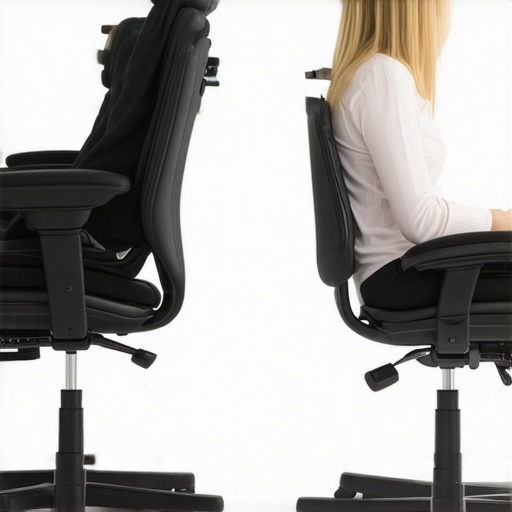
The common stretch that might be wrecking your discs
One of the biggest mistakes I see people make when they finally decide to address their neck hump or lower back pain is aggressive, reflexive stretching. They feel tight, so they pull. However, if your pain is coming from a nerve issue or a structural instability, stretching can be the absolute worst thing you can do. For instance, understanding why you should stop stretching your back into a C-shape is a lesson usually learned through a flare-up. Rounding the spine further when you already have a forward-leaning habit can actually push a bulging disc closer to the nerve root, turning a dull ache into a lightning bolt of sciatica. Before you start yanking on your hamstrings, you must learn how to tell if your sciatica is a disc or muscle issue.
Why does my neck hurt even though I use a standing desk?
This is the question that plagues many professionals who have already ‘optimized’ their workspace. You’ve raised the monitor, you’re standing up, yet that nagging pressure at the base of your skull persists. The nuance here is often found in the kinetic chain below your neck. If your glutes are ‘off’ or your hip flexors are locked, your pelvis tilts forward, forcing your upper back to round just to keep you upright. I’ve found that why your core strength won’t fix your back if your hips are locked is the missing link for most patients. Furthermore, if you find yourself leaning in despite a high monitor, check your eyes; why your vision might be the cause of your neck leaning is a frequently overlooked factor in chronic strain. To achieve true mobility mastery daily tips to keep your spine and joints healthy, you must look beyond the symptom and find where the restriction actually lives. Have you ever fallen into this trap of trying to fix one spot while ignoring the rest of your body? Let me know in the comments.I stopped looking for a magic bullet and started looking for a toolkit. One of the most effective tools in my arsenal isn’t a hundred-dollar gadget; it’s a standard lacrosse ball. I use it to target the ‘trigger points’ that my foam roller just can’t reach. Specifically, using how a simple tennis ball can fix deep glute tension has been a game-changer for my lower back health. When those deep muscles in the hips seize up, they pull on the sacrum, and no amount of standing desks will fix that. I also keep a second ball at my desk for my shoulders. Learning how to use a tennis ball to release tension in your upper traps allows me to break up the ‘cement’ feeling that accumulates during long writing sessions. 
How can I keep my spine healthy for the next twenty years?
Sustainability isn’t about one-off sessions; it’s about the ‘movement snack’ philosophy. I’ve integrated the 20-20-20 rule for neck and eye strain relief into my digital life using a simple app called ‘Time Out.’ Every 20 minutes, it dims my screen and reminds me to look at something 20 feet away. This prevents the ‘visual lock’ that leads to that turtle-neck posture I used to have. Beyond tools, why maintenance care is better than waiting for a spinal crisis is the mindset shift that saved me. We maintain our cars and our HVAC systems; our spines deserve the same proactive attention. This includes regular check-ins with your body’s mechanics, like practicing the simple wall sit that builds spine-supporting strength to ensure the foundation remains solid. According to the OSHA Computer Workstation eTool, the ‘neutral reach zone’—the area where you can reach things without leaning or twisting—is critical for preventing repetitive strain. I rearranged my entire desk so my keyboard, mouse, and phone are all within this 10-inch radius. If you are reaching further, you are essentially inviting why your shoulder blade pain might be a rib out of place. In the next five years, I predict we will see ‘Posture AI’ integrated into every laptop camera. Instead of just a blurry background, your computer will gently nudge you when it detects your shoulders rising or your head dipping. We are moving toward a world where biofeedback is constant. If you want to get ahead of the curve, try the most advanced tip I’ve found: the thoracic bridge move that fixes slouching. It’s more demanding than a simple stretch, but it builds the actual structural integrity you need to resist the pull of your devices.
The Shift from Fixing a Hump to Living Without One
Reflecting on my own journey, the hardest lesson wasn’t the exercises themselves, but the realization that I couldn’t ‘hack’ my way out of a decade of poor habits in a single weekend. I used to think the hump was a permanent structural failure, but my breakthrough happened when I realized it was a living, breathing adaptation to my environment. If you want to see real change, stop looking at your neck as a broken part and start looking at your daily movement patterns as a conversation with your nervous system.
- The soft tissue lie: Most of that ‘hump’ is actually inflammation and protective fluid, not a bone deformity. This means it is reversible if you stop the constant irritation.
- Environment over willpower: You will never win a fight against a desk that is set too low. High-value enhance your back mobility ergonomic tips for everyday comfort are more effective than any amount of stretching if your setup stays the same.
- The myth of the ‘big fix’: I found more relief in the 20-20-20 rule for neck and eye strain relief practiced daily than I ever did in expensive, one-off massage sessions.
My Everyday Gear for a Pain-Free Spine
#IMAGE_PLACE_HOLDER_E#
If you were to peek into my office today, you wouldn’t see high-tech robots. You’d see a few simple, intentional tools that keep my skeleton happy. First, the laptop riser is non-negotiable. If my eyes aren’t level with the top third of the screen, I don’t work. Second, I keep a firm ball nearby to handle tension before it turns into a headache. I’ve learned that how a simple tennis ball can fix deep glute tension is just as important for my neck as it is for my hips. Your spine is a closed system; ignoring unlocking sciatica relief expert strategies for lasting comfort can often be the missing piece for total spinal health. I also rely on neck pain solutions proven techniques to regain your range of motion whenever I feel that familiar stiffness returning.
The Future of Your Mobility Starts with One Movement
You didn’t develop this posture overnight, and you won’t ‘perfect’ it by tomorrow morning. But every time you perform a chin tuck or stand up to reset your gaze, you are voting for a future where you move with ease. There is a specific kind of freedom that comes from knowing you aren’t a victim of your devices. By focusing on back pain breakthroughs navigating your path to restored mobility, you are investing in a version of yourself that can stay active and present for decades to come. Don’t wait for a crisis to care for your spine; start today, one micro-adjustment at a time. Which part of your current workstation do you suspect is the biggest culprit for your neck strain? Let me know in the comments below.