
How to use a foam roller for sciatica without making it worse
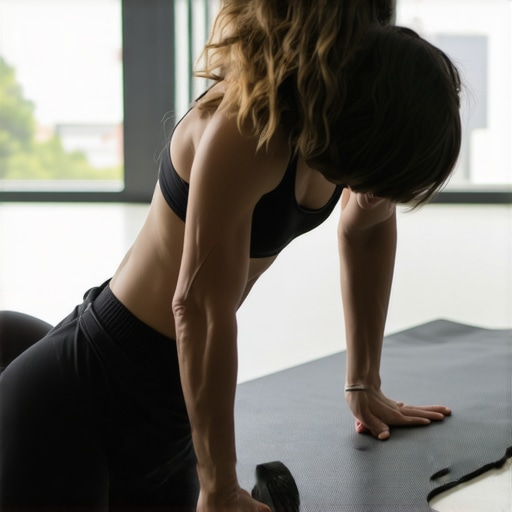
I remember the day I thought a foam roller was my best friend, only to end up crying on my living room floor twenty minutes later because my leg felt like it was on fire. I had a flare-up so bad I could barely stand to brush my teeth. I thought I was being a hero—gritting my teeth and rolling my glutes with a high-density roller, thinking ‘no pain, no gain,’ right? Wrong. So very wrong. I had committed the cardinal sin of sciatica management: I attacked the nerve directly. I spent the next three days hobbling because I didn’t know how to conquer sciatica the right way. We have all been told that foam rolling is a magic wand for mobility, but when it comes to the sciatic nerve—the largest nerve in your body—brute force is your worst enemy. Today, I want to share the ‘indirect’ method that changed everything for me, so you can stop living in fear of your living room floor.
Why your current rolling routine is likely backfiring
When you feel that sharp, electric pain in your hip or leg, your first instinct is to smash it with a roller. But here is the thing: the sciatic nerve is already irritated, inflamed, and compressed. Adding more direct pressure is like trying to put out a fire by poking it with a hot poker. According to research cited by Harvard Health, direct pressure on a compressed nerve can exacerbate inflammation and lead to further neuropathy. I learned the hard way that the goal is not to massage the nerve itself, but to relax the tissues that are crowding it. Many people find that why stretching your hamstrings often makes your sciatica worse applies here too; sometimes, more intensity equals more injury. Have you ever tried to roll out a ‘knot’ only to have it feel ten times tighter the next morning?
Can a simple piece of foam actually fix nerve pain?
It is a valid fear. If you use it like a steamroller over a sensitive nerve, then yes, it will make things worse. However, if you focus on the ‘gatekeeper’ muscles—the ones that actually pull your pelvis out of alignment—you can create the space your nerve needs to breathe. My big mistake early on was thinking the pain was the problem. The pain was just the messenger. The real culprits were my locked-up quads and a glute muscle that refused to relax. By learning how to use a foam roller on quads to relieve back pressure, I finally started to see real, lasting progress without the ‘after-roll’ agony.
Look at the muscles that pull on your spine
Instead of digging into your lower back or directly onto the most painful spot in your buttock, we are going to focus on the surrounding architecture. When your hip flexors and quads are tight, they tug on your pelvis, which in turn unlocks sciatica relief by taking the mechanical stress off the spinal discs. We are going to use the roller to create space, not to crush tissue. I will show you how to navigate those tight spots without ever touching the nerve itself, ensuring you walk away feeling lighter rather than more inflamed.To get started, we have to address the ‘tension anchors’ first. Think of your pelvis as a seesaw. When your quads are tight, they pull the front of the seesaw down, which forces your lower back into a deep arch. This compression is often the silent catalyst for that lightning-bolt pain in your leg.
Release your quads to stop the tug-of-war
Your quadriceps are massive, powerful muscles. When they are chronically short from sitting, they become like tight guitar strings. I remember a particularly nasty flare-up last Tuesday after a four-hour drive. My first instinct was to grab my percussive massager and go to town on my glute. Instead, I forced myself to lie face down and spend five minutes slowly rolling from just above my knee to the top of my thigh. I focused on the ‘outer’ edge of the quad where the IT band meets the muscle. At first, it was uncomfortable, but as the muscle let go, I felt a physical ‘shift’ in my lower back. This is because why your core strength wont fix your back if your hips are locked is a reality many of us ignore—you can have the strongest abs in the world, but if your quads are pulling your spine out of place, the nerve will stay pinched. 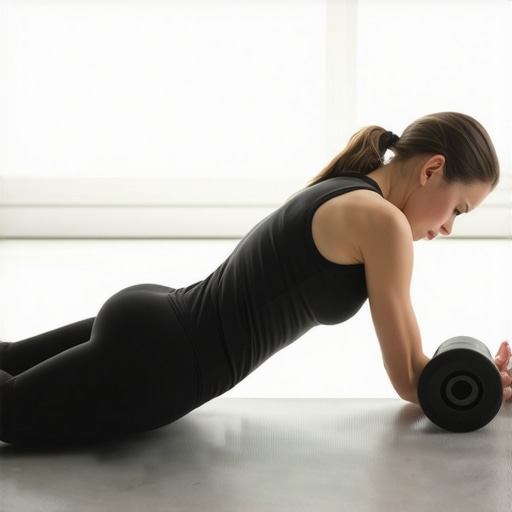
Slow and steady wins the mobility race
Speed is the enemy of muscle release. If you roll back and forth like you are tenderizing meat, your muscles will actually guard and tighten further. Instead, move one inch per breath. When you hit a ‘hot spot,’ stop. Don’t push harder; just breathe into it for thirty seconds. This signal tells your nervous system it is safe to relax.
Target the hip stabilizers without crushing the nerve
Once the front of your legs are addressed, we move to the back, but we avoid the ‘danger zone.’ The sciatic nerve runs right through or under the piriformis muscle. If you put a heavy foam roller directly on that spot, you are essentially sandwiching the nerve between the foam and your pelvic bone. It is no wonder it hurts! Instead, use a smaller tool for precision. I’ve found that how a simple tennis ball can fix deep glute tension is much more effective. Place the ball under the side of your hip—the fleshy part where your pocket would be—rather than the center of your buttock. This targets the gluteus medius, which is often the real culprit behind hip instability. By releasing the side of the hip, you allow the pelvis to level out. If you need a quick fix after a long day at the office, try the 10-second hip reset for relief after sitting to keep things moving before you even get home.
Why nerve flossing beats traditional stretching
The final piece of the puzzle isn’t about muscles at all; it is about the nerve itself. Nerves are like electrical wires; they don’t like to be pulled, but they need to be able to slide through the surrounding tissue. If a nerve is ‘stuck’ due to inflammation, stretching your hamstrings will only irritate it further. This is why the nerve glide exercise that calms burning leg pain is a total game-changer. Imagine a piece of dental floss moving back and forth. By gently pumping your ankle while lying on your back with your leg raised, you pull the nerve through its pathway without putting it under tension. This ‘flossing’ action helps clear out inflammatory byproducts and restores mobility without the risk of a flare-up. I started doing this every morning before even getting out of bed, and the ‘morning stiffness’ that used to haunt me virtually disappeared within a week.Let’s dig deeper into why these mechanical resets often fail if you aren’t looking at the bigger picture. I’ve seen it a thousand times: someone with chronic sciatica spends six months doing planks and dead-bugs, only to find the pain hasn’t budged. We have been conditioned to believe that a weak core is the root of all spinal evil. While stability is great, why your core strength wont fix your back if your hips are locked is a hard truth most trainers won’t tell you. If your hips are jammed, your lower back has to move to compensate for every step you take. Strengthening the muscles around a stuck joint is like putting a bigger engine in a car with no wheels—you are just creating more internal torque and tension.
Your abs cannot do the work of your hips
A study published in the Journal of Biomechanics highlights that excessive co-contraction of the trunk muscles—exactly what happens when you brace your core too hard—can actually increase spinal compression rather than reduce it. This is the ‘Oops’ factor nobody talks about. If you are constantly bracing your abs to protect your back, you might be the one keeping the pressure on that sensitive disc. The goal is reflexive stability, not making your torso as rigid as a 2×4. 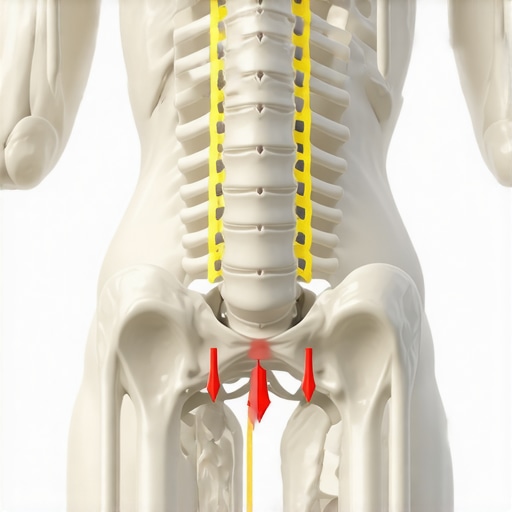
Stop trying to flatten your back
Many well-meaning people try to find relief by pulling their knees to their chest or rounding their back into a ball. This feels good for a few seconds because it stretches the tight paraspinal muscles, but why you should stop stretching your back into a c-shape becomes clear when you realize it can actually push the disc material further into the nerve pathway. It is a temporary relief that creates a long-term trap. Instead of forcing a stretch, focus on maintaining your natural lumbar curve while you move.
Is your ‘perfect’ sitting posture actually crushing your nerves?
We often obsess over sitting up perfectly straight with our shoulders pinned back. However, why your perfect sitting posture is making you stiffer is a nuance often missed; static posture, no matter how ‘correct’ it looks in a diagram, is still a form of circulatory and mechanical stress. Your spine needs frequent movement, not a military-grade freeze. If you have been sitting all day, try the 2-minute hip reset for better sleep tonight rather than forcing a rigid upright position. One more trap to avoid is ignoring the warning signs that your body is giving you. Is that tingling just a ‘tight muscle’ or is your back pain a sign of something more serious? If you are losing strength in your foot or can’t stand on your toes, stop the foam rolling and see a professional immediately. Have you ever fallen into this trap of over-correcting your posture only to feel worse? Let me know in the comments.Once you move past the ’emergency’ phase of a flare-up, the temptation is to stop everything and go back to your old habits. I know this cycle well. I used to be a ‘crisis manager’ of my own spine—I would only pay attention to my body when it was screaming at me. But the secret to never ending up on that living room floor again is realizing that maintenance is a lifestyle, not a chore. Transitioning into mobility mastery means you are no longer reacting to pain; you are preventing it from having a reason to show up.
Stop waiting for a crisis to fix your back
The biggest mistake I see people make is thinking they are ‘cured’ because the sharp pain is gone. This is where why maintenance care is better than waiting for a spinal crisis becomes the foundation of your long-term success. If you only brush your teeth when you have a cavity, you’re doing it wrong. The same applies to your vertebrae. According to the research of Dr. Stuart McGill, a professor emeritus at the University of Waterloo and a world-renowned expert on spine biomechanics, ‘the key is to build a foundation of spinal stability that allows for movement in the hips and shoulders without compromising the integrity of the discs.’ This means we need tools that support our natural anatomy during the mundane hours of our day.
The two tools that actually live in my travel bag
I don’t believe in cluttering your house with gadgets, but there are two things I never leave home without. The first is a high-density lumbar roll. Most office chairs, car seats, and even high-end ergonomic chairs are actually designed for aesthetics rather than your actual L4-L5 vertebrae. By learning how to use a lumbar roll to prevent mid-day back fatigue, you keep your spine in a neutral position while you work. I personally use a McKenzie-style roll because it’s firm enough to resist the weight of my torso. The second is a simple tennis ball for those ‘hot spots’ we discussed earlier. 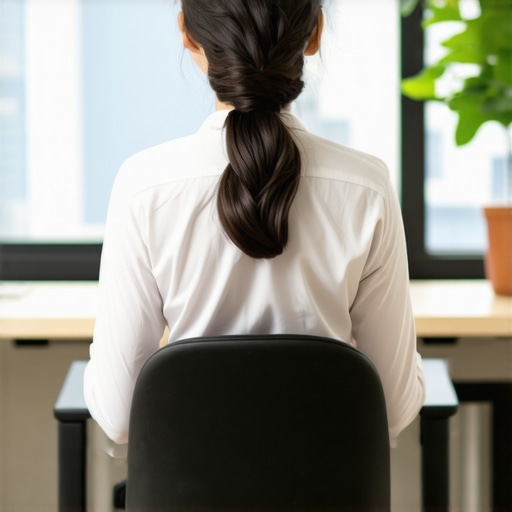
How can you stay mobile when life gets busy?
It’s easy to stay healthy when you have two hours a day for the gym, but what about when you’re stuck in back-to-back meetings? This is where I use the ‘micro-break’ method. I’ve adapted the 20-20-20 rule for neck and eye strain relief into a full spinal reset. Every 20 minutes, I stand up, look 20 feet away to relax my eye muscles, and perform three deep diaphragmatic breaths while gently tucking my chin. This small habit prevents the ‘creep’—a phenomenon where your ligaments slowly stretch and lose their ability to support your spine under constant load. I also make sure I know how to pick a chair that actually supports your lumbar curve whenever I’m setting up a new workspace.
Where the science of relief is heading
Looking forward, I predict we are going to see a massive shift toward wearable biofeedback. We are already seeing smart clothing that can track muscle activation and alert you when your core has ‘turned off’ or when your shoulders are beginning to hike up toward your ears. Until that tech is perfected, we have to rely on our internal sensors. If you want to start today, I challenge you to try the lumbar roll for just one afternoon of work. You will be shocked at how much less ‘heavy’ your legs feel by 5:00 PM. Don’t wait for the next flare-up to take action.
The Hardest Lessons I Learned on My Path to Relief
Over the years, I’ve realized that the biggest barrier to healing isn’t a lack of effort; it’s applying the wrong kind of pressure. Here are the shifts in perspective that finally moved the needle for me:
- The nerve is a passenger, not a muscle. I spent months trying to ‘stretch out’ my sciatic pain, only to realize I was just pulling on a sensitive wire. Nerves need space and sliding room, not tension.
- Consistency beats intensity every single time. A two-minute hip reset done daily is worth more than a two-hour gym session once a week. It’s the micro-habits that keep your discs happy.
- Listen to the whispers before they become screams. I learned to recognize when my hip was ‘clicking’ or my gait felt off. Learning how to fix your gait to reduce chronic hip clicking was a massive breakthrough that stopped my lower back from compensating.
- Know when to step back. Sometimes, the best ‘exercise’ is recognizing the warning signs your sciatica needs professional help instead of trying to roll through the agony.
The Simple Tools That Actually Earned a Spot in My Daily Life
You don’t need a house full of gadgets to reclaim your life. These are the three things I genuinely use every single week to maintain my progress:
- The McKenzie Lumbar Roll: This isn’t just a pillow; it’s a spine-saver for anyone with a desk job. It supports your natural curve, preventing the ‘slump’ that leads to disc pressure.
- A Standard Tennis Ball: For under five dollars, you have the most effective tool for deep glute release. It’s portable and much safer for your nerves than a heavy foam roller.
- “Back Mechanic” by Dr. Stuart McGill: If you want to understand the ‘why’ behind your pain, this book is the gold standard. It helped me realize that back pain breakthroughs often come from understanding your own unique triggers.
#IMAGE_PLACEHOLDER_E#
Your Blueprint for a Life Without Nerve Pain
Sciatica can make your world feel very small. It dictates where you can sit, how long you can walk, and even how you sleep. But you are not a victim of your anatomy. By focusing on gentle releases, better sitting habits, and intentional movement, you can start overcoming sciatica one day at a time. The goal isn’t just to stop the pain—it’s to get back to the things you love, whether that’s playing with your kids or just sitting through a movie without reaching for an ice pack. You have the tools now; it’s just a matter of putting them to work. Have you ever tried a ‘nerve glide’ or a lumbar roll before, or are you still stuck in the cycle of stretching through the pain? Let me know in the comments below!