
Why your favorite yoga pose might be hurting your spine
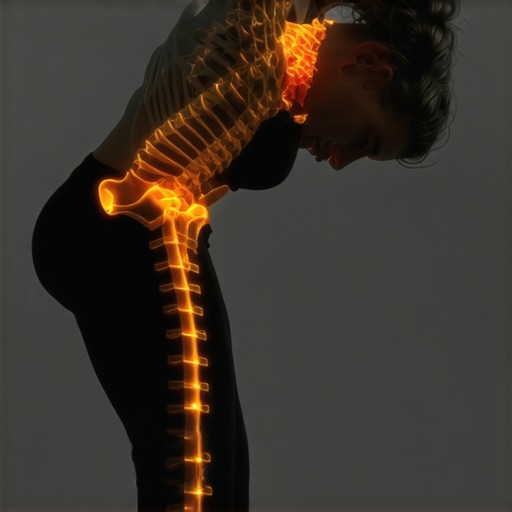
The “pop” wasn’t loud, but it felt like a gunshot in my soul. I was deep in a Pigeon Pose, breathing into my hips and feeling incredibly smug about my dedication to wellness, when my lower back decided it had finally had enough. I didn’t float out of the studio that day; I literally crawled to my car. For months, I’d been ignoring the “is your back pain a sign of something more serious” question, assuming I just needed one more deep stretch to fix it. I was dead wrong. My early mistake was believing that flexibility was the same thing as health. I thought if I could just touch my toes with my forehead, I’d be bulletproof. Instead, I was just destabilizing my own spine, one aggressive Vinyasa at a time. Today, I want to peel back the curtain on why your go-to poses might be your worst enemies and how we can actually fix your movement to stop the cycle of injury.
Stop Treating Your Spine Like a Rubber Band
We’ve been sold a lie that more range of motion is always the goal. But here’s the reality: your spine needs stability just as much as it needs to move. When we force ourselves into deep spinal flexion or extension without proper support, we aren’t “releasing” tension—we’re grinding our facet joints and irritating our nerves. I see it all the time with people trying to find the truth about yoga for sciatica sufferers; they think a deeper fold will help, but they actually end up making the nerve compression worse. You have to stop stretching your back into a C-shape every time you feel a twinge. According to a study published in the Journal of Orthopaedic & Sports Physical Therapy, excessive lumbar flexion under load is one of the primary mechanisms for disc injury, yet we repeat this movement in nearly every yoga class. Have you ever walked out of a session feeling more brittle and fragile than when you walked in? You’re not alone, and it’s likely because you’re substituting spinal collapse for true hip or shoulder mobility. We need to look at the link between poor posture and chronic back pain through the lens of how we move on the mat, not just how we sit at a desk.
Is this “healthy” habit actually worth the hype?
It’s a fair question to ask when you’re icing your back after a “relaxing” Sunday morning flow. If yoga is making you more stiff, something in the mechanics is fundamentally broken. We often chase the aesthetic of a pose rather than the function of it. I used to be the guy who pushed his heels to the floor in Downward Dog even when my hamstrings were screaming, only to wonder why I had a sharp pinch in my lower back for the rest of the day. If you’ve been struggling to figure out if your back pain is a sign of something more serious, the first place to look is your regular movement routine. Are you actually building strength, or just finding new ways to hang on your ligaments? Tell me—have you ever felt that “bad” kind of sharp pain during a stretch and just breathed through it because you thought you were supposed to? [image_placeholder_1]
Think of your spine like a mast on a ship. The sails provide the movement, but the mast stays anchored by tension cables. If those cables—your deep core and stabilizing muscles—are slack, the mast wobbles and eventually cracks. To stop the “cracking” in your own back, you have to prioritize bracing over bending. I learned this the hard way while trying to rearrange my garage. I reached for a heavy crate, felt my lower back start to round, and immediately “reset” my hips. By applying the correct way to use your core when lifting heavy groceries to a dusty bin of holiday decorations, I saved myself three weeks of recovery. It is about making those micro-adjustments before the load hits your discs. If you are not actively “setting” your spine before you move, you are essentially gambling with your mobility every time you bend over.
Build a Shield Instead of a Noodle
Most of us were taught that a flexible spine is a healthy spine. But a spine that moves too easily is a spine that gets injured. True health comes from “stiffness”—the good kind. I am talking about the muscular tension that protects your nerves. When you feel that urge to stretch because your back feels “tight,” your brain is actually sounding an alarm that your spine is unstable. Instead of ignoring that alarm with a deep twist, you need to provide the support your body is begging for. This means thinking of your core as a cylinder where the diaphragm and pelvic floor create internal pressure, much like an airbag for your vertebrae.
Find Your Neutral and Own It
First, stop the “cracking” addiction. You need to stop pulling your knees to your chest for back relief because that aggressive rounding just pulls on the already sensitized nerves and shifts your discs out of alignment. Instead, find your “neutral spine.” Stand with your back against a wall and feel the natural, small space behind your lower back. That is your home base. If you lose that curve while you are sitting at your desk or lifting a child, you are losing your protection. I used to spend my yoga classes trying to flatten my back against the mat, thinking it was “safer.” In reality, I was just teaching my body how to live in a compromised, flat-back position that left me vulnerable to every sneeze and trip.#IMAGE_PLACE_HOLDER_B#
Switch to Active Range of Motion
Next, we have to address the “tight” hamstring myth. You might think your legs are the problem, but why stretching your hamstrings often makes your sciatica worse is often due to the fact that those muscles are actually over-lengthened. They are “guarding” a vulnerable sciatic nerve. If you feel a zing down your leg, quit the forward fold immediately. Switch to the nerve glide exercise that calms burning leg pain. This is not a traditional stretch; it is a gentle “flossing” technique that allows the nerve to slide through the surrounding tissue without getting snagged. When I first tried nerve glides after a particularly bad flare-up, I was shocked that I did not need to feel “the burn” to get relief. In fact, the less I felt, the better I got.
Put It to Work in the Real World
Finally, you have to translate this mat work into your everyday environment. You spend maybe an hour a day “exercising” but sixteen hours moving through life. You must learn how to do a proper squat to protect your knees and back every single time you pick up a laundry basket or a pet. If your legs are weak, your back will always be the “default” mover, and that is a recipe for disaster. Start incorporating the simple wall sit that builds spine-supporting strength while you are waiting for your morning coffee. These tiny, repetitive wins build a resilient spine that can actually handle the rigors of real life without folding under pressure.But here is where most people trip over the finish line. They think once the acute pain is gone, they should immediately go back to “getting flexible.” I am going to go against the grain here: stop trying to be a gymnast if your spine is currently a house of cards. Everyone tells you to stretch more, but in my experience, over-stretching is often the fastest way to a multi-week flare-up. We have been conditioned to believe that “stiff” is bad, but research led by Dr. Stuart McGill, a world-renowned spine biomechanist at the University of Waterloo, highlights that for many, this stiffness is actually the body’s protective mechanism to keep the vertebrae from shifting. Forcing mobility into a protected area is like trying to open a locked door with a sledgehammer—you might get it open, but you will break the frame in the process. He argues that while a gymnast needs extreme range, the average person with a history of disc issues needs to prioritize “stiffness”—the muscular bracing that prevents micro-movements of the vertebrae. 
Why Your Hamstrings Are Not Actually Tight
You probably feel that nagging pull in the back of your legs and reach for your toes. But the real reason your hamstrings feel tight after a long walk is rarely because the muscle is short. Often, the sciatic nerve is sensitized and “tugging” on the surrounding tissue. When the brain senses the sciatic nerve is under threat, it sends a signal to the hamstrings to contract. This is a defensive “splinting” mechanism. If you keep stretching it, you are just irritating a raw nerve and fighting your brain’s safety system. The biggest mistake I see is stretching until you feel a “zing.” That zing isn’t a deep muscle release; it’s your nerve screaming for mercy. Before you dive back into your routine, try the simple test to see if your leg pain is actually sciatica to determine if your issue is muscular or neural. Stretching a nerve like a rubber band is one of those “oops” moments that can set your recovery back by months.
Is your core routine secretly damaging your discs?
We have been told that a strong core fixes everything, but if you are doing traditional sit-ups or aggressive twists, you might be doing more harm than good. I have seen countless clients who have abs of steel but cannot stand up straight without a wince. This is because why your core strength won’t fix your back if your hips are locked comes down to leverage. If your hips don’t move, your lower back has to, and even the strongest abs cannot protect a spine that is being forced to do the hips’ job. This is why why maintenance care is better than waiting for a spinal crisis is so vital; you need to address the global mechanics, not just the spot that hurts. To find lasting relief, you must focus on unlocking sciatica relief expert strategies for lasting comfort that prioritize stability over raw flexibility. Have you ever fallen into the trap of stretching a tight muscle only to have it feel worse the next day? Let me know in the comments.
Equip Your Home for Long-Term Spine Health
Maintenance isn’t just about avoiding pain; it’s about building a buffer so that a long flight or a stressful week doesn’t send you back to square one. I’ve spent thousands of dollars on gadgets, but the tools that actually work are surprisingly low-tech and portable. For example, how a tennis ball can relieve deep glute and sciatic pain is a trick I use every single evening while watching TV. It’s not about rolling aimlessly until you’re bruised; it’s about finding the specific trigger points in the piriformis or glute medius that are ‘splinting’ and applying sustained, gentle pressure to signal the nervous system to let go. You can learn how to use a tennis ball to relieve glute tension in under five minutes, and it provides more functional relief than a thirty-minute generic hamstring stretch ever could. Every time I feel that familiar, dull ache creeping in after a long drive, I don’t reach for the heating pad first; I reach for that $2 yellow ball. It’s about having a toolkit that empowers you to handle the ‘hiccups’ before they become full-blown medical crises.
How do I maintain my back and neck health over time?
The secret is consistency in the ‘boring’ stuff and optimizing the environments you can’t avoid. It is about the mobility mastery daily tips to keep your spine and joints healthy that you actually do, not the complex hour-long routine you ignore. For me, the game-changer was learning how to use a lumbar roll to prevent mid-day back fatigue. Research published in the Journal of Physical Therapy Science indicates that maintaining the natural lordotic curve of the lower back while sitting significantly reduces disc pressure and muscular strain compared to slumped sitting. I don’t go anywhere without my roll now—it’s in my office chair, my car, and even my carry-on bag. If you’re constantly fighting stiffness, look at your environment first. If you don’t know why your desk chair height is wrecking your hips, you’re fighting an uphill battle every eight hours you spend at work. Small adjustments to your workspace are the foundation of overcoming sciatica top lifestyle changes for better quality of life. 
Win the Battle Against Sedentary Stiffness
We need to shift our mindset from ‘fixing’ to ‘preventing’ by looking at the small habits that accumulate over a decade. I used to be the person who only thought about my back when I couldn’t tie my shoes. Now, I understand why maintenance care is better than waiting for a spinal crisis. The future of spinal health isn’t in more complex surgeries; it’s in bio-mechanical awareness and ‘painless’ movement. According to ergonomics experts at Cornell University, the shift toward ‘dynamic sitting’—where the user frequently changes posture—is the most effective way to combat the modern sedentary epidemic. We are moving toward a world where we prioritize ‘movement snacks’ over intense, once-a-week gym sessions that our bodies aren’t prepared for. This is where unlocking sciatica relief expert strategies for lasting comfort truly happens—in the micro-moments. I predict that in the next few years, we will see a massive move away from passive therapies and toward ‘neuromuscular re-education’—teaching the brain how to protect the joints during high-load activities. My advanced tip for you today: buy a lumbar roll and use it for every single car ride this week. Don’t wait for the pinch to return; protect the curve before it flattens. If you are a side sleeper, you also need to master the side sleeping fix for constant hip bursitis to ensure your recovery doesn’t stop the moment you close your eyes.
The Hardest Lessons My Lower Back Taught Me
Looking back at the moment I had to crawl to my car, I realize I was ignoring the most vital signals my body was sending. The biggest lesson I learned is that ‘more’ isn’t always better; more stretching often leads to more instability if you aren’t bracing properly. I also discovered that pain is a sophisticated messenger—it wasn’t trying to punish me, it was trying to protect my spine from my own aggressive movements. When I stopped trying to force my body into ‘perfect’ yoga shapes and started respecting its need for support, my recovery truly began. If you want a back pain breakthrough, you must stop treating your symptoms and start addressing your mechanics. Consistency in the ‘boring’ daily habits, like maintaining a neutral spine, is what ultimately builds a bulletproof body.
A No-Nonsense Toolkit for Your Spine
I have spent years filtering through the noise to find what actually works for long-term health. First, a simple lumbar roll is a non-negotiable tool for anyone who sits for more than four hours a day; it is the most effective way to enhance your back mobility by preventing the slow creep of slouching. Second, a standard tennis ball is my go-to for addressing muscle guarding without the price tag of a professional massage. I also highly recommend the work of Dr. Stuart McGill; his evidence-based approach to spinal ‘stiffness’ changed how I view every move I make. Lastly, never underestimate the power of a daily 20-minute walk—it is the natural pump that keeps your spinal discs hydrated and healthy. [image_placeholder_2]
Build a Spine That Supports Your Life
Your journey out of pain doesn’t have to be a battle against your own anatomy. By shifting your focus from raw flexibility to intelligent stability, you are creating a shield that allows you to live fully again. You can rediscover the joy of movement by applying sciatica relief secrets that prioritize nerve safety over aesthetic poses. Whether your goal is to lift your grandchildren or return to the gym, your spine is capable of incredible resilience when given the right environment. If you find yourself struggling to find the right path forward, please contact us so we can help you navigate your recovery with confidence. You deserve to move through the world without the constant fear of a flare-up. Have you ever felt that a ‘healthy’ exercise was actually making your back pain worse? Let me know in the comments below.