
How to adjust your rearview mirror to improve your driving posture
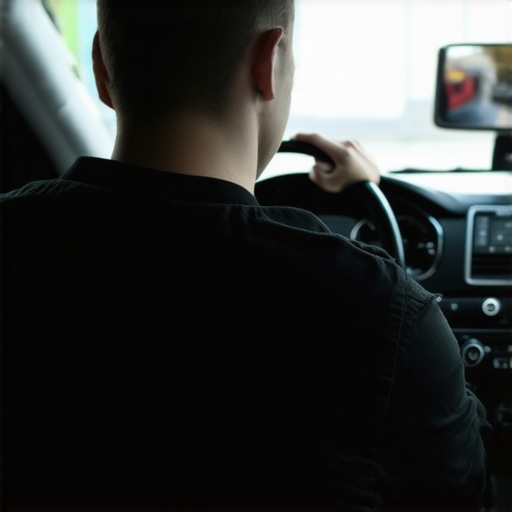
I remember pulling into my driveway after a grueling three-hour commute, my neck feeling like it had been fused into a permanent C-shape. I was thirty, yet I was groaning like an old floorboard just trying to unbuckle my seatbelt. For years, I blamed the car seats, the traffic, and even my shoes. It wasn’t until I caught my own reflection—slumped, chin protruding, shoulders rounded—that I realized I was the problem. Or rather, my mirror was. I had adjusted my rearview mirror to accommodate my slouch, rather than using it to keep me upright. It was a classic case of understanding the link between poor posture and chronic back pain the hard way. Today, I want to show you how a simple five-second tweak can turn your car from a torture chamber into a recovery zone.
Your Mirror Should Act Like a Posture Alarm
Most of us treat our rearview mirror as a passive safety tool, but I’ve learned to see it as a mechanical coach. When we get tired, we naturally sink into the seat. To keep seeing the road, we unconsciously tilt our heads or shift our hips, which is exactly why your car seat is actually pushing your head forward and straining your upper spine. I made the mistake for a decade of adjusting the mirror *after* I had already started slouching. That is the quickest path to a stiff neck and mid-back knots. Instead, you need to set your ‘gold standard’ position before you even put the car in reverse. When you sit tall, with your shoulder blades tucked back, that is when you lock the mirror in. The moment you can’t see out of it clearly, you know you’ve started to slump.
Does a simple mirror tilt actually fix a bad back?
You might be thinking this sounds too easy to be effective. I get it; I was a skeptic too. But ergonomic experts at organizations like the Mayo Clinic emphasize that prolonged static postures are the primary drivers of musculoskeletal strain. If you are struggling with a current flare-up, you might also need to look into sciatica relief secrets to calm the nerves while you fix your habits. Have you ever noticed that your back feels tighter at the end of a drive than at the beginning? Tell me in the comments if you’ve ever caught yourself driving like a turtle! By using the mirror as a constant feedback loop, you force your core to stay engaged without having to think about it every second. It’s about building a fail-safe that catches you before the pain starts.
Lock in Your Seat Position Before Touching the Mirror
The biggest mistake most drivers make is adjusting their mirror while they are already tired or halfway through a drive. Your spine is like a coiled spring; as the day goes on, it loses tension and begins to compress. If you adjust your mirror to that compressed state, you are essentially telling your body that it is okay to stay slumped. To fix this, you must set your ‘home base’ when you are at your most alert. Before you even put the car in gear, sit up tall, imagine a string pulling the crown of your head toward the ceiling, and tuck your chin slightly. This aligns your vertebrae and creates a neutral baseline. Only once you are in this peak position should you adjust your rearview mirror. Use it as a fixed point in space that only works when you are at your best. If you find yourself needing to look up or crane your neck to see behind you, it is a sign that you have drifted into a dangerous posture that can lead to ergonomic discomfort.
Wait for the Stoplight to Calibrate
I learned the hard way that trying to fix your posture while navigating heavy traffic is a recipe for disaster. I once tried to straighten my spine while merging onto a busy freeway, only to realize I was gripping the steering wheel so hard my knuckles were white. The stress actually made my neck pain worse because I was forcing a rigid position rather than a relaxed one. Now, I use red lights as my ‘calibration checkpoints.’ When the car stops, I do a quick body scan. Are my glutes pressed against the back of the seat? Is my head hovering over my shoulders or jutting forward? If I can’t see the full frame of the back window in my mirror, I know I’ve sunk. I use that moment to learn how to relax your shoulders while driving in heavy traffic, dropping them away from my ears and letting the seat take the weight.
Treat Your Rearview as a Visual Snag
Think of your mirror as a tripwire for your brain. Driving for hours is a feat of endurance, and even the best athletes lose their form when they get tired. When your vision of the road behind you starts to blur or move out of the frame, your brain receives a ‘snag’—a visual reminder that you are no longer in your optimal alignment. It is much easier to make a tiny adjustment every five minutes than it is to fix a full-blown spasm after a three-hour trip. If you already feel a twinge starting in your lower back, you need to know how to sit in a car for hours without triggering sciatica, which usually involves keeping your hips slightly higher than your knees. Driving with a slumped spine is like trying to hold a bowling ball at arm’s length; eventually, the muscles in your neck and upper back will simply give up, leading to that heavy, burning sensation we all dread.
Reset Your Breath to Reset Your Spine
When you catch yourself slouching in the mirror, don’t just jerk your body back into place. That sudden movement can actually trigger a protective muscle guard. Instead, use a breath-led reset. Inhale deeply into your belly, allowing your ribs to expand. As you exhale, imagine your spine growing taller and your shoulder blades sliding down toward your back pockets. This internal expansion naturally pushes you back into the position you set at the start of your journey. Using the 10-second breathing trick for instant lower back relief can deactivate the ‘fight or flight’ response that tightens your muscles during a stressful commute. By the time you reach your destination, you won’t feel like you need to be unfolded like a piece of origami; you’ll be ready to step out of the car with the same height and mobility you had when you got in. If your range of motion still feels restricted, it might be time to look into revitalize your neck techniques to undo the damage of years of poor driving habits.
While the mirror trick is a game-changer, I see a lot of people fall into what I call the ‘Ergonomic Rigidity Trap.’ They get so focused on sitting ‘perfectly’ that they end up creating more tension than they had when they were slouching. We’ve been told since grade school to ‘sit up straight,’ but in reality, why your perfect sitting posture is making you stiffer is a nuance most people miss. A study published in the Journal of Biomechanics suggests that static postures—even ones that look correct—can increase intradiscal pressure and muscle fatigue. The key isn’t to be a statue; it is to be a dynamic, moving organism even while you are behind the wheel.
Stop chasing the perfect 90-degree angle
The most common myth is that our bodies are made of right angles. I used to try to force my hips into a strict 90-degree bend, thinking I was doing my spine a favor. I wasn’t. In fact, keeping your body in a rigid, forced upright position causes your paraspinal muscles to work overtime, leading to that deep, aching fatigue. You want a ‘stacked’ spine, not a stiff one. If you find that even with ‘good’ posture you are still hurting, it might be time to investigate if is your back pain a sign of something more serious. Often, the pain isn’t from the position itself, but from the lack of micro-movements that keep blood flowing to your discs.
Why strong abs won’t fix a frozen hip
I see fitness enthusiasts all the time who have incredible core strength but still suffer from debilitating driving pain. This is a massive ‘hidden nuance’ in the world of mobility. You can have a six-pack, but why your core strength won’t fix your back if your hips are locked comes down to the way the pelvis interacts with the lumbar spine. If your hip flexors are shortened from hours of sitting, they pull on your lower back like a tug-of-war rope. No amount of ‘sitting tall’ will fix that tension until you address the hip mobility itself. Have you ever fallen into this trap of over-correcting your posture until you’re stiffer than a board? Let me know in the comments.
The ‘Oops’ factor of lumbar supports
Here is a specific warning: more lumbar support is not always better. I’ve seen drivers buy massive cushions that actually push their lower back into an exaggerated arch. This is the ultimate ‘trap’ because it feels supportive for the first five minutes, but it eventually jams the facet joints in your spine. This is exactly why your lumbar support might be making your back stiffer. You want a support that mimics the natural curve of your spine, not one that tries to reshape it. If you feel like your back is ‘fighting’ the seat, you’ve gone too far.
Are you stretching your way into a sciatica flare?
This is the most dangerous mistake I see advanced readers make. When you feel that burning sensation in your glute or leg, the first instinct is to lean forward and stretch your hamstrings. Stop right there. If your pain is coming from a compressed nerve, why stretching your hamstrings often makes your sciatica worse is because you are literally tensioning an already irritated nerve like a guitar string. Instead of aggressive stretching, you should focus on neck pain solutions and spinal decompression to take the pressure off the source. Real relief comes from understanding that the site of the pain is rarely the site of the problem.
Moving beyond the mirror trick, I’ve found that specific hardware makes the difference between a good day and a stiff week. I personally swear by a dedicated lumbar roll. Unlike those oversized memory foam pillows that shove your spine into a weird shape, a proper roll is firm enough to provide a mechanical stop for your lower back. It prevents that C-curve collapse without being bulky. I learned that [how to use a lumbar roll to prevent mid-day-back-fatigue](https://bodyrenewtherapy.com/how-to-use-a-lumbar-roll-to-prevent-mid-day-back-fatigue) is more about placement than pressure. You want it right at the belt line, not tucked into the mid-back. This isn’t just my opinion; research published in the *Journal of Orthopaedic & Sports Physical Therapy* highlights that specific lumbar supports significantly reduce intradiscal pressure compared to standard car seats. If you’re shopping for gear, [how to pick a chair that actually supports your lumbar curve](https://bodyrenewtherapy.com/how-to-pick-a-chair-that-actually-supports-your-lumbar-curve) is a skill that will save you thousands in medical bills later.
How do I keep my spine healthy on year-long road trips?
Maintenance isn’t a one-time event; it is a series of micro-decisions. I use a stopwatch strategy—every 45 minutes, I find a way to shift my weight, even if I can’t pull over. This keeps the synovial fluid moving in your joints. For those deeper resets, [mobility mastery daily tips to keep your spine and joints healthy](https://bodyrenewtherapy.com/mobility-mastery-daily-tips-to-keep-your-spine-and-joints-healthy) offers a framework that I follow religiously. If you’re dealing with lingering issues, it is worth checking [the warning signs your sciatica needs professional help](https://bodyrenewtherapy.com/the-warning-signs-your-sciatica-needs-professional-help) before you commit to another long drive. We often ignore the check engine light in our bodies until the car won’t start. Looking forward, I predict we will see Active Ergonomics becoming the industry standard. We are already seeing high-end vehicles with massaging seats that subtly shift your pelvis every few minutes to prevent blood pooling. Until we all have AI-driven seats, we have to be our own mechanics. I have found that [back pain breakthroughs navigating your path to restored mobility](https://bodyrenewtherapy.com/back-pain-breakthroughs-navigating-your-path-to-restored-mobility) often start with these tiny, tech-free tools. If you take one thing from this, go grab a small rolled-up towel right now and place it behind your lower back. It is the cheapest upgrade your car will ever get.
The Hard Truths About Why My Recovery Stalled
Looking back at my years of struggle, I realized I was trying to out-stretch a bad habit. You cannot fix a forty-hour work week of slouching with a five-minute stretch. One major lightbulb moment was discovering that pain is a lagging indicator; by the time your back burns, the damage was likely done forty minutes ago. This is why proactive triggers like the mirror are so vital. I also learned that managing back pain in 2025 requires more than just sitting up straight; it requires variety. My biggest mistake was staying perfectly still, rather than moving slightly within my seat to keep blood flowing. Learning how a simple breath reset can calm a back spasm was the final piece of the puzzle that allowed me to drive long distances again.
#IMAGE_PLACEHOLDER_E#
The Gear I Actually Keep in My Glovebox
I do not leave the driveway without these specific things. First, a firm lumbar roll—it is the only way to ensure your spine does not collapse when you get tired or distracted. Second, I keep a tennis ball in the center console. If I start feeling that deep glute ache, I know I can use it for swift relief for sciatica the moment I pull over for a break. Third, I rely on a simple interval timer on my phone. Setting it to chime every thirty minutes reminds me to perform a shoulder drop and a deep belly breath. If you are looking for a structured way to stay limber, I highly recommend checking out mobility mastery daily tips to keep your joints from seizing up during a long travel season.
Reclaim Your Freedom Behind the Wheel
Driving should not feel like a chore that you have to recover from for the rest of the evening. By turning your environment into a coach—using your mirror, your breath, and your seat as tools—you reclaim control over your body. You deserve to arrive at your destination feeling energized and ready to walk, play, or work without that heavy cloud of chronic back pain hanging over you. It takes less than five seconds to reset your mirror, but it could save you decades of discomfort. It is time to shift from being a passenger in your own body to being the driver of your recovery. Have you ever tried the mirror trick, and did you notice how quickly you started to sink? Let me know in the comments below!