
The toe-touch test that reveals your actual back injury risk
I’ll never forget the morning I reached down to pull a damp towel out of the dryer and felt a sensation like a hot wire snapping in my lower back. It wasn’t even a heavy load. It was just a towel. But that moment of total physical betrayal sent me on a three-year journey of foam rollers, ice packs, and far too many Ibuprofen. I used to brag about my “stiff” hamstrings as a badge of honor for being an athlete. I didn’t realize that my inability to touch my toes wasn’t just about tight muscles; it was a screaming siren that my spine was losing its ability to share the load.
Stop guessing and start testing your spine’s real limits
[image_placeholder_1] Most of us treat the toe-touch test like a pass-fail grade in middle school gym class. We either have the “good genes” or we don’t. But here is the reality: if you can’t reach past your mid-shins without your knees buckling or your back rounding into a painful “C” shape, you aren’t just “inflexible.” You are likely overloading your lumbar discs every single time you bend over to tie your shoes or pick up a toddler. I made the classic mistake of thinking I could just stretch my way out of it. I spent months cranking on my legs, but stretching your hamstrings often makes your sciatica worse if the problem is actually coming from your nerves.
The reason this matters right now is that our lifestyles have become “flexion-heavy.” We sit, we slouch, and we wonder why is your back pain a sign of something more serious. According to the National Institute of Neurological Disorders and Stroke, about 80 percent of adults experience low back pain at some point in their lifetimes, and a huge chunk of those injuries happen during mundane, everyday movements. By the end of this, I’m going to show you how to use this simple test to see if you’re actually at risk and what to do if you’re currently “locked up.” Have you ever felt that sudden, sharp “catch” in your back when doing something totally normal? Tell me about it—I’ve been there.
Does being able to touch your toes actually mean your back is safe?
You might be thinking, “I know plenty of flexible people who still have back issues.” And you are absolutely right. The hype around flexibility can be misleading. Simply being “bendy” doesn’t protect you if you don’t have the stability to back it up. In fact, why your core strength wont fix your back if your hips are locked is one of the biggest realizations I had early on. A successful toe-touch isn’t about the length of your muscles; it’s about the “stack” of your spine and the way your pelvis rotates. We’re looking for a back pain breakthrough that focuses on movement quality, not just reaching the floor. Let’s dive into what your current reach is telling you.
Master the Hinge to Save Your Lower Back
Think of your spine like a delicate fishing rod and your hips like a heavy-duty crane. When you reach for the floor, you want the crane to do the heavy lifting while the rod stays relatively stable. I used to do the opposite—I would keep my hips frozen and let my spine round like a terrified cat. This rounding is exactly how I ended up with that hot-wire sensation. To fix this, you need to learn to hinge. Stand with your feet shoulder-width apart and imagine there is a wall two inches behind your butt. Your goal isn’t to reach down; it’s to reach back with your hips until they touch that imaginary wall. Learning how to do a proper squat to protect your knees and back starts with this exact hip-first movement.
How I Finally Stopped Throwing My Back Out at the Grocery Store
A few years ago, I was at the checkout line and reached into the bottom of the cart to grab a heavy gallon of milk. Instead of using my legs, I just reached. Pop. I spent the next three days on the floor. Now, I use the active core method every time I lift. Before my hands even touch the object, I brace my midsection as if someone is about to poke me in the ribs. It is not about sucking your stomach in; it is about creating an internal belt of pressure. Mastering the correct way to use your core when lifting heavy groceries changed my life because it took the load off my discs and put it on my muscles where it belongs.
Reset Your Pelvis Before You Reach
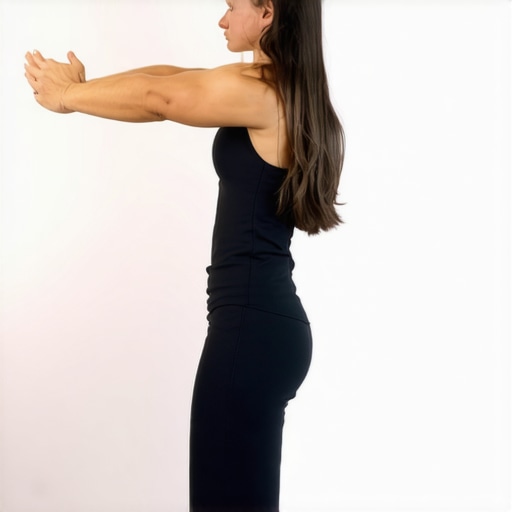
If you have been sitting all day, your pelvis is likely stuck in a forward tilt. Trying to touch your toes in this state is like trying to pull a car with the emergency brake on. You will feel a massive pull in your hamstrings, but it is actually your pelvis refusing to rotate. I found that performing the 10-second hip reset for relief after sitting before any stretching session made the floor feel six inches closer. It is about convincing your nervous system that it is safe to let go. If you feel a sharp, shooting pain down your leg while trying this, stop immediately. Often, why stretching your hamstrings can actually flare up sciatica is because you are literally yanking on an inflamed nerve rather than a muscle.
Stop Forcing the Deep Stretch
We are told that yoga is the ultimate cure, but the truth about yoga for sciatica sufferers is that many common poses involve heavy spinal flexion that can aggravate a bulging disc. Instead of forcing a deep stretch, try the micro-bend technique. Keep a soft bend in your knees when reaching down. This simple shift moves the tension away from the sensitive attachments at your sit-bones and into the belly of the muscle. This is how you build functional mobility that lasts, ensuring you are managing back pain in 2025 with a proactive, movement-based strategy rather than just reacting to the next spasm. When you stop viewing the floor as a target and start viewing the movement of your hips as the goal, your back finally gets the air it needs to breathe.
The Dangerous Myth of the Perfect Sitting Posture
Wait, before you try to fix your form for the thousandth time, let’s talk about the ‘posture trap.’ Everyone told me to sit up straight, shoulders back, and chin tucked. I looked like a soldier on parade at my desk for months. But the nuance I missed—and what many ‘experts’ overlook—is that static perfection is actually a cage. Your body wasn’t designed to be a statue. If you are holding yourself in a rigid position, you are essentially asking your muscles to perform a low-grade isometric contraction for eight hours straight. This is why your perfect sitting posture is making you stiffer. In reality, the ‘best’ posture is your next posture. Research from biomechanics experts suggests that movement variability is far more protective for your spinal discs than trying to maintain a textbook spine. Have you ever tried so hard to sit ‘right’ that you actually felt more exhausted? Let me know in the comments if you’ve fallen into that trap.
Stop Fighting Your Protective Tension
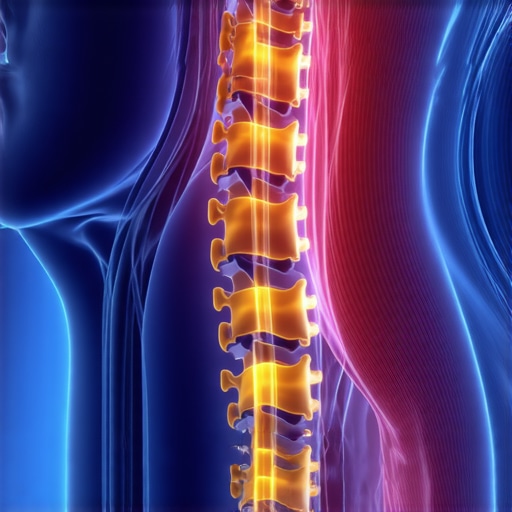
One of the biggest ‘oops’ moments I see is people aggressively stretching their hamstrings because they feel tight. But here is the advanced truth: that tightness is often a defensive contraction sent by your brain to stabilize a shaky lower back. If you keep yanking on them, you aren’t lengthening a muscle; you are irritating your nervous system and potentially your nerves. This is the hidden reason your hamstrings always feel tight—they are working overtime to do the job your glutes and core are ignoring. Instead of a long, static hold, try dynamic movements that wake up your hips. If you’ve been struggling with short hamstrings for years and nothing has changed, it’s a clear sign the problem isn’t the muscle at all, but rather managing back pain in 2025 by addressing the neurological root.
Can a clenched jaw really trigger a lower back flare-up?
It sounds like ‘woo-woo’ science until you understand the deep fascial lines that run from your head to your toes. I spent months treating my neck stiffness before realizing I was grinding my teeth every night. There is a documented connection between jaw clenching and chronic neck pain, which then cascades down the spine. When your jaw (TMJ) is stressed, it creates a ‘top-down’ tension pattern. Your neck tightens to compensate, which pulls on your upper back, eventually forcing your lumbar spine to lose its natural curve just to keep you upright. A study in the Journal of Bodywork and Movement Therapies highlights how these myofascial chains transmit tension far from the original source. If you’re only looking at where it hurts, you’re likely missing the culprit. To get a real back pain breakthrough, you have to stop treating the body like a collection of separate parts and start seeing it as one interconnected web.
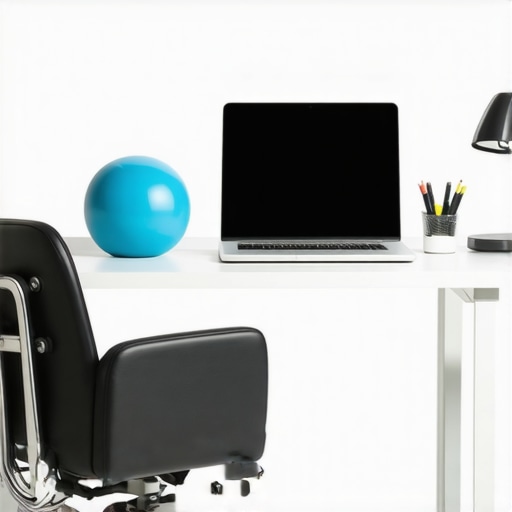
Once you’ve stopped the immediate fire of a flare-up, the game changes from rescue to management. I realized quickly that I couldn’t rely on willpower alone to ‘sit better.’ I needed environmental cues and high-leverage tools. This is why I advocate for a physical toolkit rather than just a list of exercises. For me, it started with a simple lumbar roll. Understanding how to use a lumbar roll to prevent mid-day back fatigue is the easiest win you can get. It physically prevents your spine from collapsing into that ‘C’ shape when your brain gets distracted by a deadline. I also stopped guessing about my sleep. Adjusting to the specific pillow height for back sleepers was the difference between waking up like a rusted tin man and actually feeling rested. If you are serious about managing back pain in 2025, you have to realize that why maintenance care is better than waiting for a spinal crisis is not just a slogan; it is a financial and physical survival strategy.
How do I maintain my spine’s health without making it a full-time job?
Maintenance isn’t about two-hour gym sessions. It’s about ‘spinal hygiene.’ Dr. Stuart McGill, a world-renowned spine biomechanics expert, emphasizes that we must move in ways that preserve the integrity of our discs throughout the day, rather than just during a workout. This means automating your micro-movements. For instance, I keep a tennis ball in my desk drawer. Knowing how a tennis ball can relieve deep glute and sciatic pain allows me to perform a ‘micro-reset’ while I’m on a conference call. I also integrated the 20-20-20 rule for neck and eye strain relief to break up the neurological load. If you can sprinkle these 30-second habits throughout your day, you won’t need to ‘fix’ yourself on the weekend because you never broke yourself during the week. You’ll find that boost your back mobility simple exercises that make a difference work ten times better when they are maintaining a loose spine rather than fighting a locked one.
Why Biofeedback is the Next Big Move for Chronic Pain
We are moving toward a world where ‘guessing’ if your posture is okay will be obsolete. I predict that within the next few years, we will see a surge in AI-powered wearable sensors that don’t just buzz when you slouch, but actually track your ‘movement budget’—telling you exactly when your discs have reached their load limit for the day. This data-driven approach will revolutionize how we handle sciatica and neck tension. Until then, you are your own best sensor. My biggest piece of advice? Stop waiting for the ‘snap’ to take action. Try this today: Grab a towel, roll it up, and place it in the small of your back the next time you sit down. That one tiny shift is the first step toward a lifetime of mobility. If you’re ready for a real back pain breakthrough, start by auditing the environment where you spend 90% of your time.
The Most Expensive Mistakes I Made While Chasing Mobility
After years of trial and error, I realized that my obsession with ‘touching the floor’ was actually my biggest setback. [image_placeholder_conclusion] I spent months forcing myself into positions because I thought flexibility equaled health. In reality, why your favorite yoga pose might be hurting your spine is often about the lack of stability during the stretch. I also ignored the ‘silent’ tension in my head; learning about the connection between your jaw tension and your constant headaches was the missing piece of my lower back puzzle. Most importantly, I had to accept that why maintenance care is better than waiting for a spinal crisis is a lesson best learned before the next spasm hits.
My Daily Arsenal for a Pain-Free Spine
You don’t need a gym full of equipment to keep your back happy. I rely on three non-negotiables every single day. First, I never sit without support; knowing how to use a lumbar roll to prevent mid-day back fatigue keeps my discs from slumping. Second, I use how a simple tennis ball can fix deep glute tension as my go-to ‘reset’ after a long drive or a stressful meeting. Finally, I stopped fighting my sleep environment and dialed in the specific pillow height for back sleepers to ensure my neck isn’t strained for eight hours straight.
Your Spine Deserves a Second Chance
Recovering from chronic pain or stiffness isn’t about finding a magic ‘cure’ that works overnight. It’s about a series of small, intentional shifts in how you move, sit, and breathe. As you focus on unlocking mobility expert tips on managing back pain in 2025, remember that your body is remarkably resilient if you stop fighting its protective signals and start listening to them. You aren’t ‘broken’—you’re just learning a new way to move.
Which part of your day usually triggers that first ‘twinge’ of stiffness—is it the morning roll-out of bed or the mid-afternoon desk slump? Let me know in the comments below!