
How a stiff ankle is actually causing your recurrent lower back aches
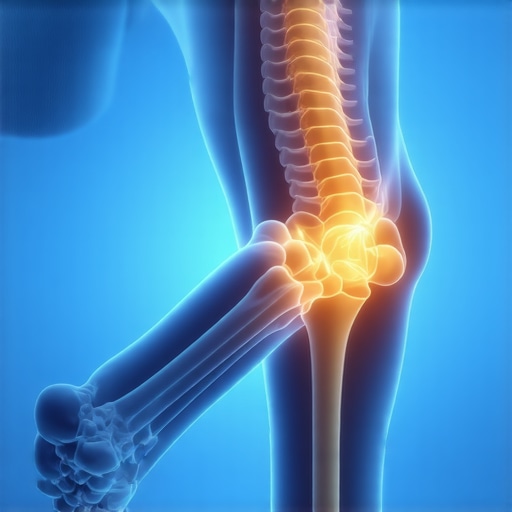
I remember the exact moment I realized I was treating the wrong body part. I was hunched over my kitchen counter, trying to find a position that didn’t send a hot, searing wire of pain through my lumbar spine. I had been doing everything ‘right’—from learning how to pick up a toddler without a disc flare-up to investing in the most expensive lumbar support money could buy. Yet, there I was, barely able to reach for the coffee pot. My big mistake? I was obsessed with my back, but I was completely ignoring the fact that my right ankle was as stiff as a piece of frozen lumber. It felt like my lower back was constantly ‘on,’ with no off switch, just a dull hum of discomfort that would spike whenever I tried to do anything remotely active. It turns out, that ankle stiffness was pulling the strings on my back pain the whole time. Today, I want to share how I finally broke that cycle and why the secret to your back relief might actually be hiding in your socks.
Your Lower Back is Cleaning Up the Mess Your Feet Made
When your ankle lacks the ability to flex properly, your body doesn’t just stop moving; it finds a workaround. Think of your body like a kinetic chain. If the bottom link—your ankle—is rusted shut, the next link up has to work twice as hard to maintain your balance and gait. This is often the real culprit behind the connection between flat feet and recurrent lower back pain spreading upward through the legs. I made the massive mistake early on of thinking my hamstrings were just tight, so I spent months stretching them into oblivion, which only made my back feel more unstable because the tension was a symptom, not the cause. When your ankle doesn’t bend, your lower back arches excessively to compensate for that lost range of motion.
Is a stiff joint really worth all this fuss?
You might be skeptical. How can a tiny bit of tightness in your foot cause that deep, throbbing ache in your spine? It seems like a stretch, but the science is pretty clear. A study published in the Journal of Orthopaedic & Sports Physical Therapy found that limited ankle dorsiflexion significantly increases the compensation required by the hips and lower back during simple movements like walking. If your foundation is locked, your spine becomes the primary shock absorber. By embracing mobility mastery and looking at the whole picture, you can stop the endless cycle of temporary fixes. Have you ever noticed your back feels worse after a day in unsupportive shoes or stiff flip-flops? If so, your ankles might be screaming for help, and your back is just the one doing the shouting. Stick with me, because we are going to fix that foundation today.
Reclaim Your Range of Motion Without the Back Strain
To understand why your back is angry, you have to look at the mechanics of a single step. Think of your ankle like a door hinge. If that hinge is rusted shut, you can still force the door open, but you’re going to end up warping the door frame just to make it happen. In this scenario, your lower back is the door frame. When I first started this journey, I was convinced my spine was just ‘weak.’ I spent hours on planks and crunches, but why your core strength won’t fix your back if your hips are locked (and your ankles are stiff) became painfully obvious during a gym session. I tried to perform a basic squat, and instead of sitting back, I felt my heels pop off the floor. To keep from falling, I pitched my torso forward, sending a sharp jab straight into my lumbar discs. It wasn’t a core failure; it was an ankle failure.
Test Your Foundation with the Wall Check
Before you start any exercise, you need to know if your ankles are actually the culprit. I use a simple diagnostic called the wall test. Stand facing a wall with your toes about four inches away. Try to touch your knee to the wall without letting your heel lift off the ground. If your heel pops up or your knee caves inward, you’ve found the ‘rust’ in your hinge. This lack of mobility is exactly what we see in the toe touch test that reveals your actual back injury risk. If your ankles can’t move, your back has to over-flex to reach the floor. 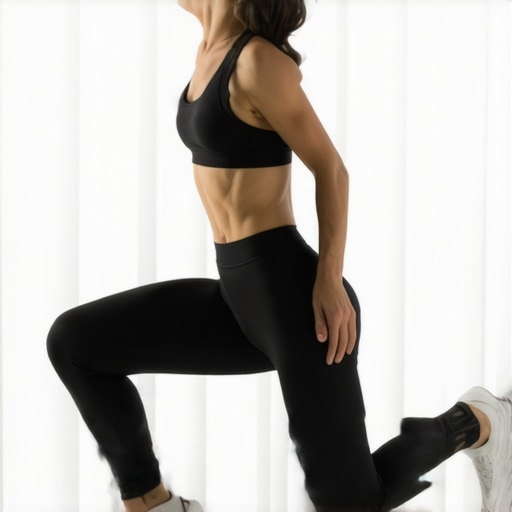
The Simple Drill That Actually Resets Your Gait
Once you identify the restriction, you need a way to loosen the joint without aggravating your spine. I found that the simple ankle drill that improves your walking balance was my turning point. Instead of static stretching—which often just pulls on the calf muscle without changing the joint—you want to focus on ‘joint flossing.’ Place your foot on a low step and gently drive your knee forward over your second toe while keeping the heel glued down. I did this every morning for two weeks, and the result was messy at first; I felt cracks and pops that were decades in the making. But suddenly, my morning walk didn’t feel like a chore. My lower back stopped feeling like it was being compressed with every stride because my ankles were finally absorbing the impact of the pavement.
Protect Your Progress During Everyday Tasks
Mobility isn’t just about what you do on a yoga mat; it’s about how you move in the kitchen or at the office. If you have stiff ankles, you likely struggle with tasks that require bending. To avoid a flare-up, I started using how to use a step stool to save your lower back in the kitchen. By elevating one foot, you take the pressure off the restricted ankle and prevent your back from arching. This is one of those simple exercises that make a difference without requiring a gym membership. You can even apply this to your workout by learning how to do a proper squat to protect your knees and back, ensuring your weight stays in your mid-foot rather than your toes. Remember, tension travels; you might even find the hidden link between tight calves and neck stiffness starts to dissolve once your foundation is stable. If you ignore the bottom of the chain, you’ll be chasing back pain breakthroughs forever without ever reaching the finish line.One of the biggest mistakes I see people make—and one I was guilty of for years—is the ‘more is better’ approach to stretching. When your back feels tight, the instinctual reaction is to fold in half and try to touch your toes until you feel a pull. But here is the expert-level nuance: if you are dealing with nerve sensitivity, why you should stop stretching your back into a C-shape becomes a vital piece of your recovery. You aren’t just stretching a muscle; you are often yanking on a sensitized nerve. A study in the Journal of Manual & Manipulative Therapy highlights that ‘neural tension’ requires gentle gliding, not aggressive pulling. If you have a disc issue, that deep forward fold is like pulling a frayed rope across a sharp rock, causing the very inflammation you’re trying to avoid.
Stop Yanking on Your Nerves
Most people assume that back pain is strictly a ‘strength’ issue. They think if they just do enough planks, the pain will vanish. However, why your core strength won’t fix your back if your hips are locked is the missing piece of the puzzle. If your joints cannot move through their natural range, your muscles cannot fire in the correct sequence. It is like trying to start a car with a seized engine—no matter how much gas (strength) you give it, it is not going anywhere. The ‘Oops’ factor here is ignoring the hierarchy: mobility must come before stability. This is why understanding the link between poor posture and chronic back pain starts at the ankles and hips, not just the spine itself. 
Is Your Rigid Neck Making Your Lower Back Work Overtime?
You might find it hard to believe, but your cervical spine and your lumbar spine are like two ends of a long, tensioned cable. In my practice, I have seen patients find sciatica relief secrets not by rubbing their glutes, but by releasing their upper neck. When you have a ‘forward head’ posture from staring at a screen, it shifts your entire center of gravity. Your lower back has to arch excessively just to keep you from falling forward. This is the hidden link between tight calves and neck stiffness that most general practitioners miss. If you are only treating the spot that hurts, you are treating the victim, not the criminal.
The Stability Trap That Keeps You Stiff
Another common myth is that we should always stay ‘perfectly upright.’ In reality, mobility mastery is about the ability to move through all planes of motion. When you are in a flare-up, you must know how to tell if your sciatica is a disc or muscle issue before you start any exercise routine. For instance, why stretching your hamstrings can actually flare up sciatica is because that ‘tightness’ you feel in your leg might actually be your brain creating protective tension to save a nerve. If you keep stretching it, your brain will only tighten the ‘knot’ harder. Sometimes, is your back pain a sign of something more serious? If you aren’t seeing progress by addressing the foundation, it’s time to dig deeper. Have you ever fallen into the trap of stretching a ‘tight’ muscle only to have it feel worse the next day? Let me know in the comments.Winning the long game means ditching the quick fix. If you are anything like I was, you have probably spent a small fortune on gadgets that promised to align your spine in five minutes. Most of them ended up in the back of my closet. The real back pain breakthroughs did not come from a vibrating massage chair; they came from low-tech, high-intent habits. For instance, I now swear by how to adjust your rearview mirror to force better driving posture. It sounds ridiculous, but by setting your mirror slightly higher than usual while sitting tall, you create an external cue that forces you to correct your slump the moment your vision dips. It is an automated coach that costs zero dollars.
How do I maintain my mobility without spending hours at the gym?
The secret is micro-dosing your movement throughout the day. I no longer believe in the hour-long stretching session. Instead, I use the 5-minute hip flexor release for desk workers every single time I finish a call. This is not just my opinion; Dr. Stuart McGill, a world-renowned spine biomechanist, emphasizes the concept of Spinal Hygiene in his book Back Mechanic. He argues that the way you brush your teeth or tie your shoes matters just as much as your heaviest deadlift. If you are constantly picking the scab of your injury through poor daily mechanics, no amount of therapy will save you.  Beyond just moving, I have found that how a simple tennis ball can fix deep glute tension is the most effective way to manage travel-related stiffness. When I am on the road, I use a tennis ball against a wall to target the piriformis. It is much safer than why cracking your own back is making your joints more unstable, which provides a temporary pop but actually degrades your long-term stability. Looking ahead, I predict we are going to see a massive shift toward biofeedback wearables in unlocking mobility expert tips on managing back pain in 2025. We are moving away from guessing where the tension is and toward sensors that tell us exactly when our form breaks down. If you want to stop the cycle of recurring flares, I want you to try the lumbar roll trick today. Learn how to use a lumbar roll to prevent mid-day back fatigue and stick with it for just three days. You will be surprised how much energy you have left at the end of the day when your spine is not fighting gravity.
Three Core Truths My Spine Tried to Tell Me Years Ago
I wasted years thinking my back was a separate entity from the rest of my body. Here is what I know now: First, ‘tightness’ is often a neurological defense mechanism. If you keep pushing, your brain will only lock down harder. Second, symmetry is non-negotiable; that old sprained ankle on your left side is often the silent driver of your right-sided sciatica relief secrets. Third, your back is a reflection of your daily habits, not just your gym sessions. If you stop why cracking your own back is making your joints more unstable and focus on joint flossing, the relief actually lasts.
The Low-Tech Tools That Actually Saved My Sanity
You don’t need a thousand-dollar setup to fix your foundation. I trust these specific tools implicitly because they focus on mechanics rather than masking symptoms. I recommend using the specific way to sit on a couch to avoid lower back spasms by adding a small firm pillow behind your waist. For those working from home, how to transition to a standing desk without leg pain involves using a specific foot positioning to keep those ankles active. Lastly, I always suggest checking out these simple exercises that make a difference when you are short on time but need to reset your hips and feet. #IMAGE_PLACEHOLDER_E#
Take the First Step Toward a Fluid Spine
Recovery is rarely a straight line, but it is always possible. Your body wants to be in balance; it is just waiting for you to stop fighting against its natural mechanics. By addressing your foundation from the ground up, you are giving your spine the support it has been begging for. Don’t let back pain define your limits anymore. Start with that one-minute wall test today and see what your ankles are really saying. Have you ever noticed that your back feels tighter after wearing a specific pair of shoes? Let me know in the comments below!