
How to know if your back pain needs a chiropractor or a doctor
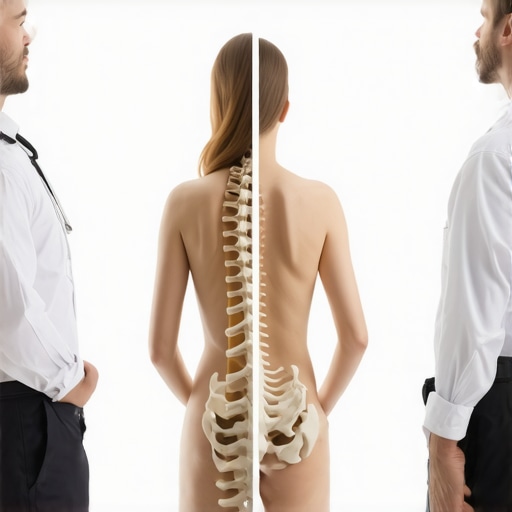
I’ll never forget the morning I reached for a dropped sock and felt my entire world tilt. It wasn’t a car accident or a heavy lifting mishap; it was a Tuesday morning, a dirty sock, and a sudden, sickening *pop*. For the next three hours, I was a human statue on my bedroom floor, staring at the dust bunnies under my dresser. My mind was racing: Is this a ‘rest and ibuprofen’ situation? Do I need a surgeon? Or is there someone who can just… click me back into place? If you are currently propped up by four pillows trying to find a comfortable angle to read this, I know that internal debate all too well. Today, I want to help you cut through the confusion so you can stop guessing and start healing. We are going to break down exactly when to call a specialist and when to seek out a chiropractor for that restored mobility you’re dreaming of.
That Tiny Pop That Changed Everything
Early in my journey with chronic stiffness, I made a massive mistake that I still regret: I tried to ‘stretch’ my way out of an acute injury. I thought if I just worked hard enough at it, the pain would vanish. Instead, I learned the hard way why you should avoid the cobra stretch during a back spasm. It turned a three-day ache into a three-week ordeal. This is the reality of back pain; it is a leading cause of disability worldwide, affecting over 619 million people according to 2020 data from the Lancet Rheumatology, yet most of us are never taught how to navigate the healthcare system for it. Have you ever spent more time Googling your symptoms than actually talking to a professional?
Is this all just a marketing ploy to get me on a table?
It’s a fair question. With so much conflicting advice online, it’s easy to feel like everyone is just trying to sell you a specific treatment. But the truth is, your body usually gives off very specific signals that tell you which expert is the right fit. If your pain is mechanical—meaning it hurts more when you move a certain way—a chiropractor might be your best friend. However, if you are seeing key symptoms that suggest something more serious, like fever or unexplained weight loss, a medical doctor is your first stop. My goal is to show you how to read those signals before you waste time and money on the wrong waiting room.
When to Grab Your Keys and Head to the ER
Before we talk about adjustments or physical therapy, we have to talk about the ‘deal-breakers.’ I used to think I was being tough by ignoring a numb toe, but that kind of thinking is dangerous. There are moments where you don’t need an appointment; you need an emergency room. If you’re experiencing a sudden loss of bladder control, or if your legs feel like they’ve turned into heavy lead weights that you can’t lift, stop reading this and get help. These are signs of nerve compression that no amount of ‘toughing it out’ will fix. For everything else, the choice between a chiropractor and a doctor comes down to the root cause of your discomfort.Think of your musculoskeletal system like the suspension on a mountain bike. If the shocks are bottomed out, every pebble feels like a boulder. This is what happens when your joints lose their ‘play.’ If your pain is localized and changes intensity when you change positions, it’s a mechanical red flag. For instance, if you feel a pinch only when you’re driving, it might be that your car seat is actually pushing your head forward, creating a leverage problem rather than a disease state. To figure out if you need a chiropractor, look for ‘positional’ relief. If you can find any posture that makes the pain go away, even for a second, your issue is likely movement-based. I remember trying to lift a heavy laundry basket last spring; I felt a sharp heat in my lower right back. My heart sank. I thought I’d finally done it—the big one. But I paused and did a quick check. The pain wasn’t there when I stood still; it only screamed when I twisted. By learning how to carry a heavy laundry basket without a back spasm, I realized I was just overriding my body’s natural mechanics.
Spot the Mechanical Glitch Before You Call a Surgeon
Most back pain isn’t actually a ‘back’ problem; it’s a compensation problem. If your ankles are stiff as boards, your lower back has to move twice as much to compensate while you walk. You can actually how to check your own hip mobility in under a minute to see if your lumbar spine is simply doing the work your hips are too lazy to do. If you fail that mobility check, a chiropractor can help ‘unlock’ those stuck joints so your back can finally stop overworking. It’s also worth investigating how a stiff ankle is actually causing your recurrent lower back aches. If the foundation is crooked, the roof—your spine—will eventually leak.
When That Nerve Pain Down Your Leg Changes the Rules
Now, if the pain isn’t just in your back but is traveling down your leg like a lightning bolt, the ‘wait and see’ approach gets more complicated. This is often the calling card of the sciatic nerve. While many people think they need a doctor for this immediately, chiropractors specialize in the decompression required to take the pressure off that nerve. However, you need to be able to identify the warning signs your sciatica needs professional help. If the ‘lightning’ becomes a constant, dull numbness, or if the muscle in your calf feels weak, the conversation shifts from ‘adjustment’ to ‘medical intervention.’ It’s about mapping the path of the pain—is it staying put, or is it exploring new territory in your leg? Pay attention to whether the pain is static or dynamic; a doctor is often required for systemic inflammation or structural damage, whereas a chiropractor is your go-to for functional restoration.One of the biggest lies we’re told about recovery is that “tightness” always needs to be stretched out. I see this most often with the hamstrings. If you feel that pull in the back of your leg, your first instinct is probably to touch your toes. But here’s the contrarian truth: your hamstrings are often acting as a secondary brake system for an unstable pelvis. If you stretch them into submission, you’re actually removing the only thing keeping your spine from shearing forward. In fact, why stretching your hamstrings can actually flare up sciatica is a phenomenon rooted in neural tension, not muscle length. If you pull on a nerve that is already irritated, you’re just fraying the wire. I call this the “Stretch Trap.” People think they are “loosening up” for a walk, but they are actually triggering a protective spasm. It is a similar logic to why you should stop stretching your back into a c-shape when you are already feeling stiff. You are essentially poking a bruise and wondering why it won’t heal.
Does a stronger core always mean a healthier spine?
Actually, no. A study published in the Journal of Biomechanics suggests that “over-bracing” the core—creating too much intra-abdominal pressure through constant engagement—can actually increase the compressive load on your discs by up to 40%. It’s not about how hard you can squeeze your abs; it’s about timing and reflexive stability. If you’re constantly “sucking it in” because you heard it helps your back, you might be discovering why your perfect upright posture is actually tensing your spine and causing more harm than good. True mobility comes from the ability to relax as much as the ability to stabilize. When we look at the neck, the nuances get even deeper. Most people treat the neck like an isolated tower, but it’s more like the tip of a whip. If you have the hidden link between tight calves and neck stiffness, no amount of neck rubs will fix the problem because your entire posterior chain is pulling on the base of your skull. This is the “Oops” factor most patients miss: they treat the site of the pain rather than the source of the tension. You might find that the 10-second jaw release that softens your neck muscles does more for your chronic headaches than a high-dose ibuprofen ever could. We have to stop looking at our bodies as a collection of separate parts and start seeing them as a single, connected web of tension and release. Have you ever fallen into this trap of stretching a “tight” muscle only to have it feel even tighter the next day? Let me know in the comments.
Stop Buying Every Gadget on Instagram
I have a closet full of ‘back-saving’ devices that didn’t work. The gadget graveyard is real, and it’s usually populated by things that promised to fix my posture while I slept or vibrate whenever I slouched. What I’ve learned over a decade of trial and error is that the most effective tools are often the simplest ones you can find in a sports bin or your kitchen. For me, the most transformative piece of equipment wasn’t a thousand-dollar chair; it was understanding how a simple tennis ball can fix deep glute tension. This low-tech approach allows you to pin-point specific trigger points that a large foam roller might miss. When you do use a roller, you have to be careful about your technique, especially if you’re dealing with nerve irritation. I always tell people to check out how to use a foam roller for sciatica without making it worse, because rolling directly over an inflamed nerve is like rubbing sandpaper on a burn.
My Three Unbreakable Rules for Long-Term Spinal Freedom
Maintenance isn’t about doing a grueling hour-long routine every morning; it’s about micro-interventions that prevent tension from accumulating in the first place. My first rule is the ‘Temperature Check.’ Most people default to ice for everything, but I’ve found that the truth about using heat packs versus ice for chronic stiffness is that heat often does a better job of inviting movement back into a ‘cold’ joint. My second rule is ‘Movement Variability.’ Dr. Robert Schleip, a leading fascia researcher and director of the Fascia Research Group at Ulm University, emphasizes that our connective tissues require diverse mechanical loading to maintain their ‘elastic recoil.’ This means if you only walk on flat pavement, your spine is starving for the variety it needs. My third rule is the ‘Reset Rule.’ If I’ve been staring at a screen for more than twenty minutes, I immediately implement the 20-20-20 rule for neck and eye strain relief to break the static hold.
How do I keep my spine feeling young as the years go by?
The secret to longevity isn’t in the gym; it’s in the ‘hidden’ hours of your day. We spend so much time focusing on our workout form, but then we sit in a collapsed heap on the sofa for four hours. You can find plenty of mobility mastery: daily tips to keep your spine and joints healthy that focus on these transition periods. Looking forward, I predict we are going to see a massive shift toward ‘active furniture’—desks and chairs that use AI-driven haptic feedback to subtly encourage us to shift our weight every few minutes. We are moving away from the idea of a ‘perfect’ posture and toward the idea of ‘constant’ micro-movement. If you want to start scaling your results right now, try one simple habit today: perform the 5-second glute squeeze that prevents sciatica flares while standing next time you’re waiting for the microwave. It’s a tiny move that builds the reflexive stability your lower back is currently begging for.
What I Learned When My Spine Finally Stopped Screaming
One of the biggest shifts in my recovery was realizing that pain is rarely the enemy; it’s a high-volume notification system telling you that your current movement patterns are unsustainable. I used to think that ‘more is better’ when it came to flexibility, but I eventually discovered the real reason your hamstrings feel tight after a long walk isn’t a lack of stretching, but a lack of stability. Another hard lesson? Stop being your own chiropractor. I learned that why cracking your own back is making your joints more unstable over time, leading to a cycle of constant clicking and temporary relief that never actually heals the root issue. Finally, I stopped viewing my back as a fragile glass tower and started treating it like a dynamic system that needs diverse inputs to thrive.
Gear and Guides That Actually Earned a Spot in My Home
If you’re looking to build your own recovery toolkit, you don’t need to spend thousands. I swear by a standard tennis ball for pinpointing knots—it’s often more effective than those expensive rollers. Learning how a tennis ball can relieve deep glute and sciatic pain was a game-changer for my daily comfort. Beyond physical tools, I recommend checking out the work of Dr. Stuart McGill; his ‘Big Three’ exercises are the gold standard for core stability. When you are ready to upgrade your environment, take the time to learn how to pick a chair that actually supports your lumbar curve so your office setup isn’t undoing all your hard work at the clinic. Lastly, keep a simple heat pack nearby for those mornings when stiffness feels like a heavy coat you can’t take off.
Your Body is Designed to Heal if You Let It
Navigating the world of specialists can be overwhelming, but remember that you are the primary advocate for your health. Whether you choose a chiropractor for mechanical adjustments or a doctor for systemic issues, the goal is always the same: achieving that restored mobility that allows you to live without constant calculation. It might take time, and it will definitely take consistency, but a pain-free life isn’t just a dream—it’s the result of listening to your body’s signals and acting on them with precision. Have you ever tried to ‘stretch through’ the pain only to make it worse? Drop your story in the comments below.