
The 10-second jaw release that softens your neck muscles

I remember sitting at my kitchen table last Tuesday, staring at a lukewarm cup of coffee, and realizing I couldn’t even tilt my head back to take a sip without a sharp, electric zing shooting down my shoulder. My neck felt like it was made of dry, brittle wood instead of muscle. For years, I did what most of us do: I rubbed the back of my skull and yanked my head from side to side, hoping for a release that never came. I even fell into the trap of cracking my own neck at home, which I now know was just making my joints more unstable in the long run. The realization hit me when I caught my reflection in the microwave door; my teeth were clamped together like a vise, and my jaw was jutting forward. Today, I’m going to show you how a simple, almost invisible 10-second jaw release can do more for your mobility than an hour of aggressive stretching ever could.
Stop Pulling on Your Neck and Look at Your Jaw Instead
The biggest mistake I made for years was treating the symptom rather than the source. I used to think neck pain and stress were just things I had to live with as a side effect of modern life. I’d spend my afternoons doing heavy-duty trap stretches, but the tension would return within twenty minutes. What I didn’t understand—and what most doctors forget to mention—is that your jaw and your upper cervical spine are essentially best friends. When your masseter muscles (the ones you use to chew) are locked tight, they send a signal to the muscles at the base of your skull to go on high alert. This is exactly why your head feels so heavy by 5:00 PM; you aren’t just tired, your muscles are literally exhausted from a tug-of-war they can’t win. According to research published in the Journal of Oral Rehabilitation, there is a direct functional relationship between the masticatory system and the cervical spine, meaning a tight jaw effectively ‘handcuffs’ your neck’s ability to rotate. We are going to break those handcuffs today with a move that requires zero equipment and less time than it takes to check a text message.
Is a tiny jaw shift actually worth the hype?
I know it sounds a bit too simple to be true. When I first heard about the jaw-neck connection, I was incredibly skeptical. I thought, ‘How can my mouth affect the stabbing pain between my shoulder blades?’ But the moment I stopped fighting my neck and started softening my jaw, the ‘wood’ started to feel like muscle again. This isn’t just about comfort; it’s about preventing the long-term damage that comes from habits like looking at your phone all day. Have you ever caught yourself clenching your teeth while simply reading an email or driving through traffic? If you have, you’re already halfway to solving your chronic stiffness just by noticing it. This 10-second reset is the ‘missing link’ for those of us who feel like we’ve tried every technique to regain range of motion without success. Let’s look at why your body keeps this tension locked in and how we can finally trick it into letting go.
Drop Your Guard Starting with Your Teeth
Think of your jaw like a heavy drawbridge. Most of the time, we have the chains pulled so tight that the wood is groaning under the pressure. To release it, you don’t need to yank or pull; you just need to let go of the winch. Try this right now: separate your back teeth. You don’t need to open your mouth wide—just enough so there’s a sliver of daylight between your upper and lower molars. The moment you do this, you’ll likely feel a weird, melting sensation at the base of your skull. This is the first step in revitalizing your neck because it tells your nervous system the ‘threat’ is over and the guard can stand down.

Stop Pressing Your Tongue Against the Roof of Your Mouth
I used to be a chronic ‘tongue-presser.’ I’d be deep into a work project and suddenly realize my tongue was glued to the roof of my mouth like it was trying to hold up a falling ceiling. This creates massive tension in the floor of the mouth and the front of the neck. Instead, let your tongue rest gently behind your bottom teeth. When I finally mastered this, I realized my head felt less heavy because I wasn’t using my throat muscles to subconsciously stabilize my skull. It’s a subtle shift, but if you do it while holding a book or reading on your phone, you’ll prevent that deep, gnawing ache from setting in.
The Driving Test That Saved My Shoulders
Three months ago, I was stuck in a traffic jam on I-80, and my neck was screaming. I was doing the classic ‘turtle’—shoulders up to my ears, jaw clamped shut, leaning toward the steering wheel. I decided to try a trick I’d heard about: I sat up tall, relaxed my shoulders, and adjusted my rearview mirror so I could only see out of it if I maintained that exact posture. Within ten minutes, I caught myself slouching and losing the view behind me. It was a physical reminder to drop my jaw and soften my gaze. This is far more effective than trying to maintain a perfect sitting posture that actually makes you stiffer. By using the mirror as a guide, you stop the ‘tension creep’ before it turns into a full-blown muscle spasm.
Check Your Hips to Free Your Neck
It sounds crazy, but sometimes the reason your jaw won’t relax is because your lower half is in a total lockdown. The body is a continuous chain of connective tissue. I’ve found that when I’m particularly stressed, I’m not just clenching my teeth; I’m also gripping my glutes like my life depends on it. Try the 5-second glute squeeze and then a full, conscious release while you’re standing in line at the grocery store. You’ll notice that as your pelvis settles, your shoulders drop, and your jaw naturally follows suit. If you’re struggling with more than just neck tightness, like shooting leg pain, checking out proven approaches to end sciatica can help you see how these different zones of the body are constantly talking to each other. When one end of the rope relaxes, the knots at the other end finally have a chance to loosen.
I see it every single day: people trying to ‘win’ at recovery by being as aggressive as possible. We’ve been conditioned to believe that if something feels tight, we must pull on it until it yields. But here is the nuance that most ‘stretch-of-the-day’ influencers miss: your body doesn’t tighten up because it’s mean; it tightens up because it feels unsafe. When you go for a deep, painful stretch, your nervous system often reacts by tightening even further to protect the joint. This is why why your perfect upright posture is actually tensing your spine rather than helping it. You aren’t relaxing; you’re just trading one type of tension for another.
Stop trying to win at posture
The biggest contrarian truth I can offer you is this: ‘Perfect’ posture is a lie. If you are constantly pulling your shoulders back and tucking your chin because a blog post told you to, you are likely creating a rigid, brittle spine. I call this the ‘Military Trap.’ In my experience, a spine that can’t slouch safely is just as injured as one that can’t stand up straight. When you force yourself into an artificial frame, you create micro-tensions that lead to back pain breakthroughs being harder to achieve because your muscles never actually rest. Real mobility is the ability to move through many positions, not the ability to hold one ‘correct’ one forever. This is exactly why your perfect sitting posture is making you stiffer; you’re essentially asking your muscles to act like concrete pillars instead of dynamic springs.
Can stretching actually make my sciatica worse?
This is the most common ‘advanced’ mistake I encounter. People feel a pull in the back of their leg and immediately start a marathon of hamstring stretches. However, if that ‘tightness’ is actually neural tension—the nerve itself being irritated—then stretching is the worst thing you can do. You cannot ‘stretch’ a nerve like a muscle; you can only irritate it further. In fact, stretching your hamstrings can actually flare up sciatica because it puts the sciatic nerve on maximum tension. According to research led by Dr. Stuart McGill, a world-renowned expert in spine biomechanics, ‘nerve flossing’ or gentle mobilization is far superior to static stretching because it allows the nerve to glide within its sheath without being overextended. If you’ve been stretching for weeks with no relief, you aren’t ‘tight’—you’re likely inflamed.
The hidden trap of the core strength obsession
We’ve been told for decades that a strong core is the holy grail of back health. While stability is important, I’ve met athletes with six-packs who have the most fragile backs in the world. Why? Because they’ve learned to ‘brace’ their core 24/7. If your core is always ‘on,’ your spine loses its ability to absorb shock. This is a massive ‘oops’ factor for many gym-goers. You might find that your core strength won’t fix your back if your hips are locked, because the energy from your movement has nowhere to go but into your lumbar discs. 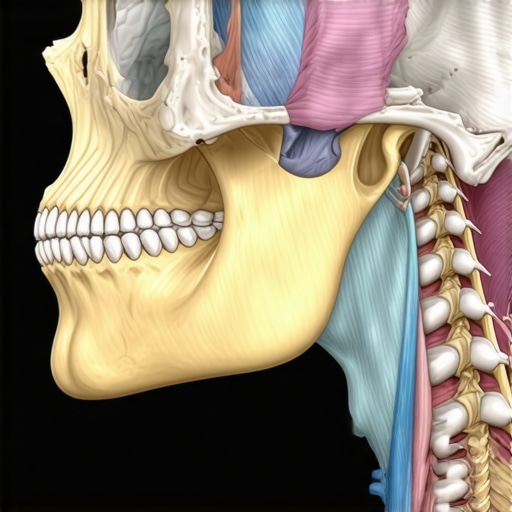 To truly find unlocking sciatica relief, you need a core that knows how to relax as well as it knows how to work. If you are always ‘braced,’ you are just one sneeze away from a spasm. Have you ever fallen into the ‘more stretching is better’ trap? Let me know in the comments. I’d love to hear which common myths you’ve debunked on your own journey.
Avoid the C-shape collapse when you’re tired
Finally, watch out for the ‘rebound’ effect. After a long day of trying to be ‘perfect,’ most of us collapse into the couch. This extreme transition from rigid to a total ‘C-shape’ is a recipe for disaster for your discs. This is why you should stop stretching your back into a c-shape even when it feels like it’s providing relief. It’s actually just placing the posterior side of your discs under high pressure. Instead of these extremes, look for ‘middle-ground’ movements throughout the day. It’s the subtle shifts, like the jaw release we discussed earlier, that create lasting change, not the aggressive 30-minute stretching sessions that leave you feeling like you’ve been in a wrestling match.
Once you stop the cycle of aggressive stretching and start listening to the subtle cues of your jaw and hips, the conversation changes from ‘how do I stop the pain’ to ‘how do I keep this working forever.’ I spent years in a boom-and-bust cycle: I’d feel great for a week, get lazy, and then end up back on the floor with a heating pad. The difference now is that I use a few non-negotiable tools that act as an early warning system for my nervous system. I don’t wait for a flare-up; I treat my mobility like a retirement account that needs small, daily contributions.
Stop guessing and use a lumbar roll
The single most effective tool in my kit isn’t a thousand-dollar massage chair; it’s a simple foam cylinder. I learned the hard way that even the best office chairs usually have a lumbar curve that is either too high or too low for my specific spine. By learning how to use a lumbar roll correctly, I essentially ‘outsourced’ the work of my spinal stabilizers. When I’m driving or typing, the roll provides a tactile reminder to stay stacked. This isn’t just about comfort—it’s about preventing the ligament creep that happens when you sit for more than twenty minutes. If you find your low back feels ‘stale’ by noon, this is your primary fix.
A tennis ball is your best therapist
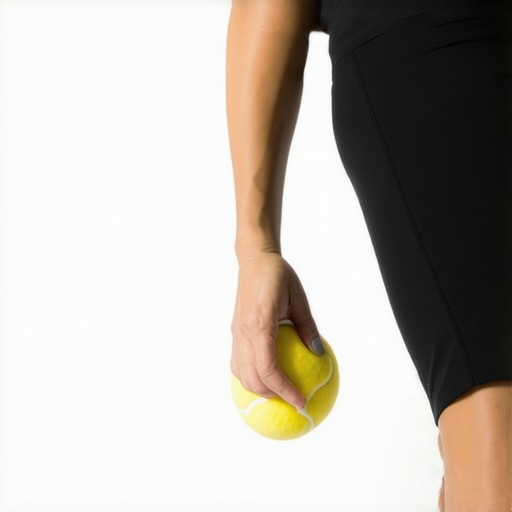
When my sciatica used to flare, I would try to stretch my hamstrings until I was blue in the face. Now, I just grab a tennis ball. I place it right in the center of my glute and lean against a wall, hunting for those ‘hot spots’ where the muscle has decided to lock down. This tennis ball trick works because it provides targeted ischemic pressure, which can reset the muscle spindle fibers much faster than a generic stretch ever could. It’s a portable way to access sciatica relief secrets without needing a professional appointment every time you feel a twinge. I keep one in my car and one in my gym bag; it is the ultimate ‘reset button’ for the posterior chain.
How can I keep my spine mobile for the next decade?
Maintenance is less about doing ‘more’ and more about doing ‘often.’ The human body is incredibly adaptive, but it’s also lazy; if you don’t use a range of motion, your brain will literally ‘prune’ that neural pathway to save energy. This is why I advocate for daily tips to keep your spine and joints healthy, such as the ‘cat-cow’ or gentle neck rotations, done while the coffee is brewing. According to the Human Factors and Ergonomics Society (HFES), prolonged static loading—staying in any one position—is the leading predictor of musculoskeletal disorders. To fight this, I follow a strict rule: never stay in one posture for more than 30 minutes, regardless of how ‘perfect’ that posture might feel.
Wearable tech will soon watch your back
Looking ahead, I predict we are going to see a massive shift toward biofeedback-driven recovery. We already have watches that track our heart rate, but the next frontier is wearable sensors that vibrate the moment your jaw clenches or your lower back begins to ‘C-shape.’ This real-time data will take the guesswork out of revitalizing your neck because you won’t have to remember to check in with yourself; your clothes will do it for you. Until then, we have to rely on our own internal sensors. If you feel stuck or unsure where to start with these advanced tools, feel free to reach out for a plan that fits your specific needs. My challenge for you today: grab a tennis ball or even a rolled-up towel and spend two minutes on your tightest spot. Don’t push through the pain—just breathe into it and watch how your mobility changes by tomorrow morning.
I spent years thinking that if I just stretched hard enough, my body would eventually submit. I was wrong. The real breakthrough didn’t come from a new yoga pose; it came from realizing that my nervous system was simply trying to protect me. When you stop fighting your anatomy and start working with it, the results are almost instantaneous.
The Hardest Lessons I Learned While Chasing a Pain-Free Life
If I could go back and talk to my younger, stiffer self, I’d share a few hard-won truths that would have saved me a decade of frustration. First, pain is a messenger, not an enemy. When your neck locks up, it’s often because your brain thinks your spine is unstable. Instead of yanking on the muscle, you need to prove to your brain that you are safe. This is why innovative neck pain solutions often focus on gentle resets rather than aggressive pulling. Second, the ‘invisible’ habits—like how you clench your teeth when you’re stressed—matter more than the 30 minutes you spend at the gym. Finally, consistency beats intensity every single time. A ten-second jaw release done ten times a day is infinitely more effective than a two-hour massage once a month.
The Small Toolkit That Actually Travels With Me
I don’t believe in expensive gadgets that gather dust in a closet. Instead, I rely on three things that have fundamentally changed how I move. I never go on a long drive or a flight without a way to use a lumbar roll to keep my spine stacked. I also keep a tennis ball nearby at all times; knowing how a tennis ball fixes glute tension has saved me from more than one sciatica flare-up. Lastly, I highly recommend checking out a guide on how to boost your back mobility with movements that focus on flow rather than force. These tools aren’t just for ‘bad days’; they are my daily insurance policy for a healthy spine.
#IMAGE_PLACEHOLDER_E#
You Deserve a Body That Moves Without Fear
Recovery isn’t about becoming a world-class athlete; it’s about being able to pick up your kids, drive to work, and sleep through the night without a dull ache. If you’ve been struggling for a long time, please remember to watch for key symptoms that might be more serious, but for most of us, the path forward is built on these small, daily wins. You don’t have to live in a state of ‘bracing’ forever. If you feel like you’ve tried everything and still aren’t seeing progress, don’t hesitate to reach out to a professional who can help you identify your specific triggers. You have the power to change how you feel, starting with the very next breath you take and the very next time you relax your jaw. What’s the one ‘invisible’ habit—like clenching your teeth or holding your breath—that you noticed for the first time today? Let me know in the comments below.