
Why your rib cage position determines your shoulder health
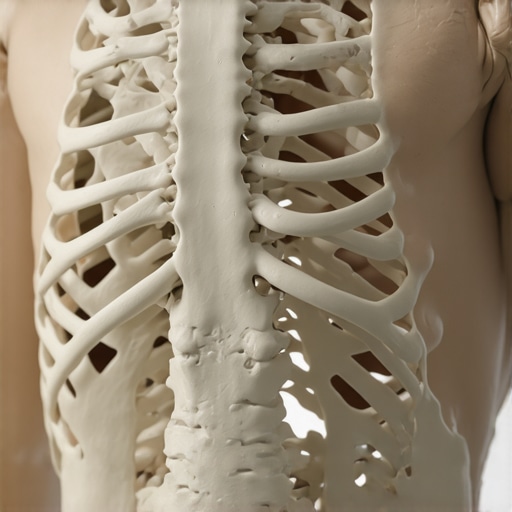
I remember the exact moment my shoulder gave up on me. It wasn’t during a heavy lift or a dramatic fall; it was simply reaching into the cupboard for a coffee mug. A sharp, hot pinch shot through my collarbone, and suddenly, my arm felt like it didn’t belong to my body. For years, I blamed my ‘tight pecs’ and spent hours doing the doorway move that opens your chest, but the relief never lasted more than ten minutes. I was stuck in a cycle of stretching a symptom while ignoring the source. It took a frustrated realization in front of a mirror to see it: my rib cage was flared out like a peacock’s tail, leaving my shoulder blades with nowhere to go. Today, I want to show you how to stop chasing the pain and start fixing the foundation from the bottom up.
Your Ribs Provide the Foundation Your Shoulders Crave
Most of us treat the shoulder as an isolated joint, but it’s more like a house built on a hill. If the hill—your rib cage—is slanted, the house is going to have cracks. When your ribs flare forward, your shoulder blades (the scapulae) are forced to tilt and slide into a position that narrows the joint space. This is exactly why your shoulder hurts more when you try to stand up straight; you are essentially grinding the joint because the base underneath is tilted. I made the massive mistake early on of trying to ‘force’ a military-straight posture, which only jammed my joints further and led to burning sensations between my shoulder blades. You cannot find mobility by stacking tension on top of poor alignment. Real shoulder health starts when we stop treating the arm as the enemy and look at what the torso is doing.
Is rib positioning actually worth the hype?
I get it—focusing on your ribs sounds like some complex fitness trend that’s more trouble than it’s worth. You want to stretch your neck or crack your back for instant gratification. However, the science is pretty clear: research published in the Journal of Physical Therapy Science indicates that thoracic spine and rib cage alignment significantly affects the way the scapula moves. If your ribs aren’t ‘stacked’ over your pelvis, your rotator cuff has to work twice as hard just to keep your arm in the socket. We are going to solve this by teaching you how to ‘knit’ your ribs down, which instantly creates space for your shoulders to move freely without that nagging midday tension. Have you ever noticed your ribs sticking out when you reach overhead, or do you feel like your shoulders are permanently shrugged toward your ears? Let’s get into the mechanics of why the breathing habit you have might be the very thing locking your shoulders in place. We’re going to fix your alignment so your shoulders can finally relax.
Exhale Until You Find Your Abs
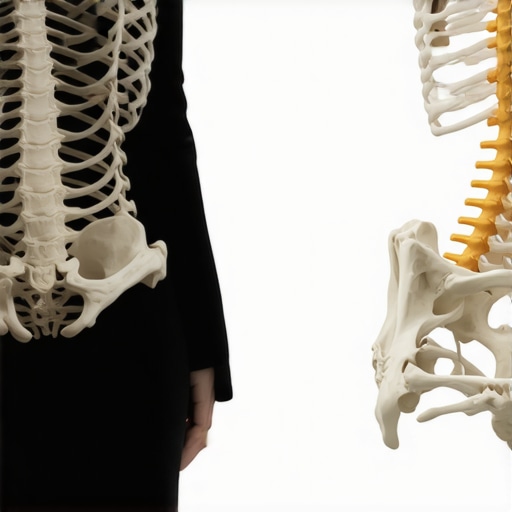
To get your shoulders to behave, we first have to tame the rib cage. I like to think of your ribs and pelvis as two buckets. If the top bucket (ribs) is tilted back and the bottom bucket (pelvis) is tilted forward, everything in the middle—and everything attached to the top—is under constant strain. This is why your perfect upright posture is actually tensing your spine. The first move is the deep exhale. I want you to blow out like you’re trying to flicker a candle ten feet away. As you do this, feel your lower ribs ‘knit’ down toward your belt line. Most people stop halfway, but the magic happens in that last 10% of the breath where your side-abs kick in.
I remember trying this for the first time while sitting at my desk. I blew out so hard I turned a bit red, but for the first time in months, that burning sensation between my shoulder blades went quiet. My ribs were finally acting as a flat surface for my shoulder blades to sit on rather than a steep ramp they were sliding off of. This creates an immediate mechanical advantage for your rotator cuff.
Stop Pinched Shoulders with the Reach
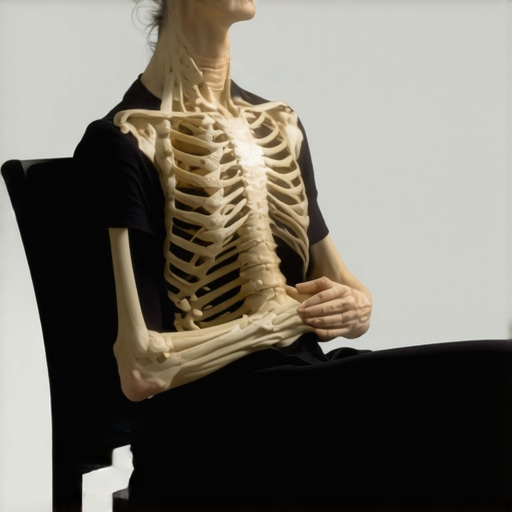
Once you have the ribs down, you need to ‘reach.’ Your shoulder blade isn’t just a flat plate on your back; it’s a curved bone that needs to wrap around your rib cage. If your upper back is flat and stiff, the blade gets stuck. This is how a stiff upper back is forcing your neck to move too much. To fix this, reach your arms forward as if you’re trying to touch a wall just out of reach. Don’t lean your torso; just move the arms. You should feel your shoulder blades move away from your spine, creating ‘width’ in your back.
Master the Stack During Daily Movement
This ‘reach and breathe’ combo is a game changer. I used to do this before every gym session. Early on, I was messy with it—I’d reach so far I’d round my whole lower back and end up with lower back fatigue. I had to learn to keep the ‘buckets’ stacked while the arms moved independently. If you can master this, you’ll find that the 10-second wall slide for instant shoulder tension relief actually works because your bones are finally in the right zip code. Now, think about your daily habits. If you’re constantly reaching for the backseat while driving, you’re throwing that rib-stack out the window and inviting a pinch. Instead, keep those ribs ‘heavy’ and move from the shoulder joint only. This small shift in awareness is what separates temporary relief from a permanent fix.
If you’ve ever been told to ‘pinch your shoulder blades together’ to fix your slouch, you’ve been given a recipe for chronic impingement. This is perhaps the most destructive ‘expert’ advice still circulating today. When you force your blades back and down, you aren’t actually improving your alignment; you are just masking a flared rib cage by creating massive tension in your mid-back. This ‘military posture’ is exactly why your straight posture is actually straining your muscles rather than supporting them. In my clinical experience, the more someone tries to pin their shoulders back, the more they lose the ability to move their arms overhead without a sharp pinch. You are essentially trying to drive a car with the parking brake engaged.
The Trap of Passive Stretching and Frozen Progress
The ‘Oops’ factor I see most often with advanced clients is the tendency to over-stretch the front of the shoulder while ignoring the back of the rib cage. You might think your pecs are tight, but they are often just ‘locked long’ because your upper back is too flat. If you keep doing the doorway move that opens your chest without first ‘stacking’ your ribs over your pelvis, you are just over-stretching the joint capsule. This leads to micro-instability, which makes your brain tighten the muscles even more to protect the joint. It is a vicious cycle of stretching a fire that your brain is trying to put out with tension. Instead of more stretching, you likely need more ‘internal’ space. A study published in the Journal of Bodywork and Movement Therapies highlights that thoracic mobility is not just about bending backward; it is about the rib cage’s ability to expand in all directions, especially into the back. If your upper back is like a brick wall, how a stiff upper back is forcing your neck to move too much becomes your daily reality.
Why Does My Neck Tense Up When I Try to Fix My Ribs?
This is the most common hurdle for those who have mastered the basic ‘stack.’ If you feel your neck muscles (the scalenes) popping out when you try to knit your ribs down, you are likely ‘muscling’ the movement instead of using your breath. This creates a secondary problem where neck pain and stress become linked to your corrective exercises. The key is to keep the jaw soft and the tongue on the roof of your mouth. If you find yourself gritting your teeth, you’re just trading one compensation for another. We want to find ease, not more force. If the tension is persistent, you might find that the truth about using heat packs versus ice can help; applying heat to the mid-back can sometimes signal the nervous system to let go of that protective ‘bracing’ so the ribs can finally drop. Have you ever fallen into this trap of forcing your chest out to look ‘upright’ only to end up with a headache? Let me know in the comments below.
I’ve spent thousands of dollars on gadgets that promised to fix my posture, from vibrating sensors that buzzed my spine to neoprene braces that felt like a straightjacket. None of them worked because they focused on the outside rather than the internal pressure system of the body. If you want to scale these results and make them permanent, you have to look at your environment. My first recommendation is actually the simplest: get your monitor height right. I realized that the 15-degree rule for your computer monitor to save your neck is not just a suggestion; it’s a mechanical necessity. If your eyes are looking down, your ribs will naturally flare to compensate for the weight of your head, undoing all the breathing work we just discussed. This is also why I’m a huge advocate for learning how to set up your laptop for better spine protection, because even twenty minutes in a ‘tech-neck’ position can lock your rib cage back into that dysfunctional tilt.
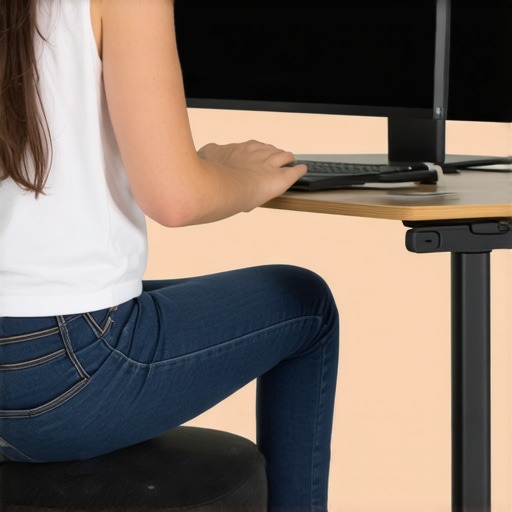
Beyond the desk, the most effective ‘tool’ in my kit is a simple 5-inch step or a stack of books. I use the simple footstool trick to stop lower back pain while sitting because it forces the pelvis into a slight posterior tilt, which makes it much easier for the ribs to drop. This is what I call the ‘passive stack.’ You aren’t muscling your way into a good position; you are using the furniture to do the work for you. In fact, according to Ron Hruska, founder of the Postural Restoration Institute (PRI), maintaining the ‘Zone of Apposition’—the specific mechanical relationship between the diaphragm and the internal rib wall—is the foundation for all human movement. If you lose that ZOA, your shoulders will never be truly free. I believe the future of mobility tech is moving away from passive bracing and toward wearable biofeedback that tracks your breathing patterns rather than just your shoulder position. We will soon see apps that alert you when your rib cage has ‘lost its stack,’ preventing the pain before it ever starts.
How do I keep my shoulders healthy for the long haul?
Maintenance isn’t about doing an hour of corrective exercises every morning; it’s about integrating these ‘resets’ into your existing life. I personally use the 10-second breathing trick for instant lower back relief every time I’m waiting for my coffee to brew. It’s a way of checking in with my ribs and making sure I’m not ‘parking’ on my joints. If you find yourself slipping, don’t panic and go back to aggressive stretching. Instead, revisit mobility mastery daily tips to keep your spine and joints healthy to remind your nervous system that it’s safe to let go. The goal is to move from a state of ‘effortful correction’ to ‘unconscious competence’ where your body naturally seeks the stack. I challenge you to try the ‘exhale and knit’ technique while you’re driving today; notice how it changes your grip on the steering wheel. If you’re ready to dive deeper into these mechanics, I highly recommend checking out our full guide on neck pain solutions: proven techniques to regain your range of motion to see how the ribs and neck are two sides of the same coin.
The Subtle Shifts That Finally Ended My Shoulder Impingement
The biggest epiphany I had wasn’t about a new exercise; it was realizing that posture is a dynamic conversation, not a static pose. For years, I tried to ‘hold’ myself correctly, which only led to more fatigue. I learned that true mobility comes when you stop sucking your stomach in to look thinner and instead let your breath expand your lower back. This simple shift prevents your ribs from flaring and allows for genuine revitalize your neck outcomes. Another hard-earned lesson was that ‘feeling’ a muscle work is often less important than ‘feeling’ the bones move. When your shoulder blade finally slides over a flat rib cage, the relief is unmistakable.
#IMAGE_PLACEHOLDER_E#
My Go-To Toolkit for a Balanced Spine
If you are ready to take this beyond the screen, I recommend a few specific tools that helped me bridge the gap from constant pain to daily comfort. First, never underestimate the power of a physical anchor; I still use the simple footstool trick to stop lower back pain while sitting because it keeps my pelvis from tilting, which in turn keeps my ribs from flaring. Second, I highly suggest exploring the work of the Postural Restoration Institute (PRI); their focus on human asymmetry changed how I view my own body. Lastly, if your pain feels persistent or sharp, it is vital to know is your back pain a sign of something more serious before you continue with self-correction.
Reclaim Your Natural Range of Motion
The path to a pain-free life isn’t paved with complex surgeries or expensive gadgets; it’s built on the small, consistent habits of how you breathe and move. Your body wants to be in balance, and by focusing on your rib cage ‘stack,’ you are finally giving it the foundation it needs to heal itself. Don’t be discouraged if you slip back into old habits—the goal is to catch yourself sooner and reset using your mobility mastery daily tips to keep your spine and joints healthy. You have the tools now to stop the pinch and start moving with the ease you deserve. Have you ever felt your ribs pop out when you reach for something on a high shelf? Let me know in the comments below.