
The 10-second wall slide for instant shoulder tension relief

I was three hours into a deep-work session last Tuesday when I realized I hadn’t moved my head in forty-five minutes. My upper back felt like a sheet of plywood, and my traps were screaming. I did what most of us do: I tried to yank my shoulders back into a military-style posture, thinking I was helping myself. It didn’t help. In fact, why your perfect upright posture is actually tensing your spine became a painful reality for me right then and there. I was fighting fire with fire, adding more tension to an already exhausted system. Then, I remembered a simple wall-based movement that completely changed the game for my daily comfort. Today, I am going to show you exactly how to use the 10-second wall slide to reset your nervous system and melt that concrete-feeling tension in your upper back.
The Day My Shoulders Finally Quit on Me
The moment of realization hit when I tried to reach for a coffee mug and felt a sharp, nagging catch. It wasn’t just ‘stiffness’ anymore. It was a full-blown mobility strike. For years, I made the classic mistake of thinking that the harder I stretched, the better I would feel. I’d pull my head back and shove my chest out, but why your shoulder hurts more when you try to stand up straight is often because you are compressing the very joints that need space. According to Harvard Health Publishing, prolonged static positions—like the ‘tech neck’ we all succumb to—can lead to muscle fatigue and even structural changes over time. My mistake was trying to force a ‘correct’ position rather than allowing my body to find its natural alignment. I needed a way to signal to my brain that it was safe to let go of the tension, and I needed it to take less time than a commercial break. Have you ever felt that burning sensation right between your shoulder blades that feels impossible to reach?
Is a 10-second move really enough to fix hours of slouching?
It sounds like marketing fluff, I know. We are conditioned to believe that ‘real’ results require thirty-minute stretching routines or expensive foam rollers. But the wall slide works because it isn’t just a stretch; it is a neurological reset. By using the wall as a reference point, you are providing your brain with biofeedback that you simply can’t get in open space. It’s similar to how the wall angel move that fixes rounded shoulders targets the deep stabilizers that we usually ignore. This isn’t about building massive strength or becoming a gymnast. It’s about taking ten seconds to tell your shoulders they don’t have to carry the weight of the world—or your heavy head—for a moment. When you combine this with other micro-habits, like the 10-second jaw release that softens your neck muscles, you start to break the cycle of chronic stiffness before it turns into a migraine or a lost day of work. If you are skeptical, I get it. I was too, until I realized that the best solution is often the one you actually have time to do.
How to Execute the Perfect Wall Reset
To get started, find a flat section of wall and clear about two feet of space. Lean your back against the wall with your feet about six inches away from the baseboard. This slight forward position of the feet is vital because it allows your lower back to flatten against the surface without you having to arch like a gymnast. Most people fail because they try to maintain a ‘military’ posture, but why your perfect upright posture is actually tensing your spine often comes down to this forced, unnatural curve. Instead, think of your spine like a wet noodle slowly sticking to a window. Raise your arms so your elbows and the backs of your hands touch the wall, creating a ‘W’ shape. If your hands can’t touch without your ribs popping forward, don’t force it.
Keep Your Ribs Tucked and Your Chin Level
The ‘magic’ happens in the mid-back, but only if you keep your core engaged. As you slowly slide your hands upward, your ribcage will naturally want to flare out toward the room. Resist this. Imagine there is a magnet pulling your belly button toward your spine. This engagement is exactly how the wall-supported move that fixes slumping posture fast creates lasting change rather than just a temporary stretch. When I first tried this, I was so stiff that I couldn’t get my left wrist to touch the wall. I felt like a failure, but my therapist reminded me that the ‘gap’ is actually the data your brain needs. By acknowledging that gap, your nervous system starts to release the protective tension it has been holding in your traps.
The Three-Breath Rule for Maximum Release
Once your arms are as high as they can go without your back losing contact with the wall, stop. Don’t push into pain. Take three deep, diaphragmatic breaths. On each exhale, visualize your shoulder blades sinking lower toward your back pockets. This breathing component is essential because how a stiff upper back is forcing your neck to move too much is usually a result of shallow, chest-based breathing patterns that keep us in a state of ‘fight or flight.’ I remember standing against a cold wall at an airport terminal after a cramped flight to Omaha. My neck was screaming, and I felt that familiar heaviness. I did exactly three reps of this move. By the third breath, I felt a distinct ‘thump’ of release in my mid-back, and the fog in my head cleared instantly. It’s a similar relief to what you’d find in neck pain solutions: proven techniques to regain your range of motion. Even if you are in a public space, these ten seconds are worth the weird looks.
Small Adjustments for Tech Neck Relief
If you spend eight hours a day staring at a screen, your setup is likely fighting against you. While the wall slide fixes the damage, you also need to look at the 15-degree rule for your computer monitor to save your neck to prevent the tension from returning ten minutes later. Think of the wall slide as a ‘software update’ for your posture; it resets the default settings so you don’t default back into a slump. When I’m traveling, I use this as the one stretch you should do after every flight because it opens the chest and re-engages the muscles that go dormant in those tiny airplane seats. It isn’t about being perfect; it’s about being consistent enough to tell your body it’s okay to move again.Stop stretching your hamstrings if you think you have sciatica. It sounds counterintuitive because your legs feel like they are made of rusted iron, but in my experience, this is the single most common mistake that keeps people in a cycle of pain. Most people assume that tightness always means a muscle is too short. However, when it comes to the sciatic nerve, that feeling is often your brain’s way of sounding an alarm. When you pull on a sensitized nerve, you aren’t lengthening it; you are irritating it. This is exactly why stretching your hamstrings can actually flare up sciatica rather than cooling it down. A study published in the Archives of Physical Medicine and Rehabilitation highlights that aggressive stretching of a sensitized nerve can increase intraneural edema, essentially creating more pressure inside the nerve sheath. If you have been religiously touching your toes and your pain isn’t budging, you have likely fallen into this trap.
Can you actually differentiate between a muscle knot and a nerve entrapment?
The answer lies in how the sensation responds to movement. If you feel a sharp, electric-like zing that travels down toward your calf when you reach forward, that is a clear neurological signal. You should check out the simple test to see if your leg pain is actually sciatica to be sure. True muscle tightness usually feels dull and localized. The danger of misdiagnosing yourself is that the remedy for one often destroys the other. For instance, why stretching your hamstrings won’t fix your tight legs is because the root cause might be a lack of pelvic stability or a nerve that is stuck further up the chain in the lumbar spine.
The hidden trap of the military posture
Another nuance most people miss is the over-correction error. We are told to stand up straight, so we pin our shoulders back and puff our chests. This is a disaster for your nervous system. By forcing this rigid shape, you are essentially putting your spinal cord on a constant stretch. I’ve written extensively about why your perfect upright posture is actually tensing your spine, but the advanced takeaway is this: posture should be a dynamic range, not a static destination. If you can’t comfortably pass the toe-touch test that reveals your actual back injury risk without your back seizing up, your perfect posture is just a mask for underlying mobility issues. To truly see progress, you have to move past the stretch and pray method. You need sciatica relief secrets: how to banish pain quickly today that focus on nerve gliding and decompression rather than brute force. Real mobility mastery comes from understanding that your body is an interconnected system of pulleys and levers, not a series of isolated rubber bands. Have you ever fallen into the trap of stretching a painful spot only to have it feel worse the next day? Let me know in the comments below.I don’t believe in buying every gadget on Instagram, but a few specific tools have saved me from back-sliding into old habits. For example, knowing how to use a foam roller for sciatica without making it worse is the difference between a productive evening and a week of inflammation. I personally keep a high-density roller and a single tennis ball by my desk. When my glutes feel like they are turning into bricks, I use how a tennis ball can relieve deep glute and sciatic pain to hit the piriformis without the aggressive pressure of a hard lacrosse ball. It’s about precision, not pain. Dr. Stuart McGill, a professor emeritus at the University of Waterloo and a world-renowned expert in spine mechanics, emphasizes the concept of ‘spinal hygiene’—small, daily movements that protect the discs during mundane tasks. This means my ‘tools’ are often just environmental tweaks. I even use a simple ‘anchor’ trick in my car: how to adjust your rearview mirror to force better posture. By setting my mirror while sitting tall, I know the second I start to slump because I can’t see the traffic behind me anymore. It’s a physical nudge that requires zero extra time. 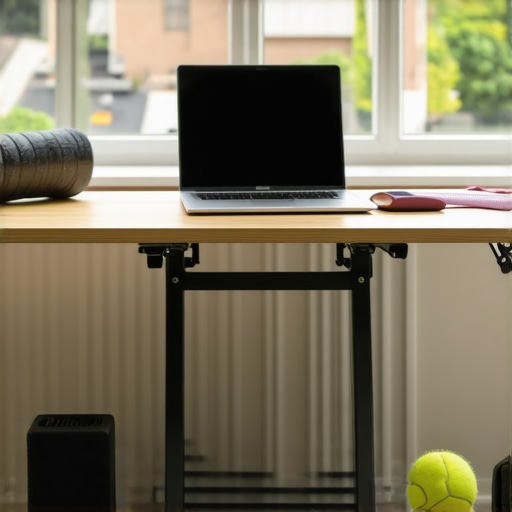
How do I maintain my spine health without making it a full-time job?
The secret is integration, not isolation. If you try to carve out an hour every day for ‘rehab,’ you will eventually fail when life gets busy. Instead, I look for ways to scale these habits into my existing routine. While my coffee is brewing, I do my wall slides. While I am on a conference call, I practice mobility mastery: daily tips to keep your spine and joints healthy by shifting my weight or doing standing calf stretches. If I am forced to sit for a long stretch, I follow the 15-degree rule for your computer monitor to save your neck to ensure my head isn’t drifting forward like a turtle. Maintenance isn’t a destination; it’s a series of micro-adjustments that prevent the ‘concrete’ from setting in your fascia. When you stop viewing movement as a chore and start seeing it as a nervous system snack, the results become permanent.
The coming shift toward movement-rich environments
Looking ahead, I predict we will see a massive decline in the obsession with ‘perfect’ ergonomic chairs and a rise in movement-rich workstations. The future of back health in 2025 and beyond will be about furniture that forces us to change positions every twenty minutes. We are learning that the ‘best’ posture is always your next posture. To stay ahead of the curve, I highly recommend you try the rearview mirror trick during your commute tomorrow morning—it is the single most effective way to audit your spine without adding a single minute to your to-do list. Once you start catching yourself in the slump, you gain the power to fix it before the pain even starts.
Why My Quest for Perfect Posture Almost Ruined My Progress
After years of battling recurring tension, I’ve realized that the biggest barrier to feeling better wasn’t my chair or my phone—it was my mindset. First, I had to accept that pain is a conversation, not a broken part. When your traps burn, they aren’t asking to be pulled; they are asking for stability elsewhere. Second, I learned that ‘sitting straight’ is actually a high-energy activity. If you try to hold a rigid position all day, you are essentially doing a low-grade bicep curl with your spine. It’s exhausting! Finally, the biggest shift came when I realized that mobility mastery isn’t about being flexible; it’s about being adaptable. If you can move through different positions throughout the day, your brain won’t feel the need to ‘lock’ your joints in place.
The Only Tools That Actually Stay in My Daily Rotation
I’ve wasted hundreds of dollars on vibrating massage guns and ‘posture correctors’ that just ended up in a junk drawer. Now, my toolkit is lean and effective. I swear by a high-density foam roller, but I only use it after checking how to use a foam roller for sciatica without making it worse. Using it incorrectly can actually bruise the nerve you are trying to soothe. I also rely heavily on ‘passive reminders.’ The rearview mirror trick is my favorite because it requires zero willpower. Lastly, I keep a printout of sciatica relief secrets near my desk for those days when I feel a flare-up coming on. These aren’t just gadgets; they are systems that protect my peace of mind.
#IMAGE_PLACEHOLDER_E#
You Are More Than Your Stiffness
It is easy to feel like you are destined to be the ‘stiff person’ in the office, but your body is remarkably resilient. Whether you are looking for neck pain solutions or trying to navigate back pain in 2025, remember that every ten-second wall slide is a vote for a more comfortable future. You don’t have to fix everything today. Just start with one breath, one reach, and one moment of letting go. Have you ever tried to stretch a ‘knot’ only to have it come back twice as hard the next day? Let me know your experience in the comments below!