
Why your back hurts more after a day of ‘resting’ on the couch

I’ll never forget that rainy Sunday three years ago. I had a slight ‘twinge’ in my lower back, so I did what I thought was the responsible thing: I grabbed a bag of chips, a fuzzy blanket, and parked myself on my deep-seated, ultra-plush microfiber couch for six hours of Netflix. I figured I was ‘resting.’ But when I finally tried to stand up, my spine felt like it had been fused together with cheap wood glue. I literally had to crawl to the kitchen. It was humiliating. I realized then that my ‘recovery’ day was actually a slow-motion car crash for my vertebrae.
We’ve all been there. You think you’re giving your body a break, but you wake up the next morning feeling like you’ve gone ten rounds in a boxing ring. Today, I’m going to show you why that ‘rest’ is actually an inflammatory trap and how you can switch to active recovery that doesn’t leave you hobbling. We need to talk about why your favorite armchair is secretly causing your lower back stiffness and why your body is actually craving movement over stagnation.
The Sofa Trap is Shifting Your Spine
The problem with most couches isn’t that they are ‘bad’ furniture; it’s that they are designed for temporary comfort, not long-term structural support. When you sink into those soft cushions, your pelvis tilts backward, pulling your lower spine into a C-shape. This puts immense pressure on your intervertebral discs. I made the massive mistake of thinking ‘soft equals safe’ for far too long. In reality, your couch is the worst place to sit with a herniated disc because it offers zero resistance to keep your spine neutral.
Wait, isn’t a soft cushion supposed to be better than a hard chair?
It sounds logical, right? But your muscles actually go ‘offline’ when they don’t have a stable surface to react to. Research from the Journal of Biomechanics highlights that static, slouched sitting can increase intradiscal pressure by up to 40% compared to standing. This is why you feel that sharp, ‘stuck’ sensation when you finally try to move. Have you ever felt that terrifying ‘click’ or ‘snap’ in your back after a movie marathon? I want to know—leave a comment if you’ve ever felt worse after a nap than before it. For more modern advice on how to navigate these issues, check out expert tips on managing back pain in 2025 to see how the science of rest has completely changed.
When you finally decide to vacate the couch, how you move determines if your discs survive the transition. Most people torque their spine sideways or ‘launch’ their torso forward using only their lower back muscles. This is a recipe for a flare-up. I remember one specific Thanksgiving where I was stuck in a low-slung recliner for hours. When I tried to stand, I felt a sharp, electric pinch because I tried to ‘muscle’ my way up without engaging my glutes. Now, I follow the ‘nose over toes’ rule and use a pivot. Learning how to get out of your car without twisting your lower spine is actually the same skill you need for your living room sofa; it’s about keeping the pelvis and shoulders aligned as a single unit.
Stop Twisting Your Spine Before You Even Stand Up
The first rule of spinal preservation is to stop the ‘worm’ wiggle. Instead of arching your back to get leverage against soft cushions, roll to your side and use your arms to push your torso upright while your legs swing toward the floor. This keeps the pressure off those sensitive lumbar discs. If you’re already dealing with nerve irritation, you need to be extremely careful with how you transition between sitting and standing. I’ve found that conquering sciatica starts with these tiny, habitual movements that we usually do on autopilot. By bracing your core slightly—think about pulling your belly button toward your spine—you create a natural weight belt that protects you from that sudden ‘catch’ in your back.
Ditch the Slouch with the Simple Footstool Hack
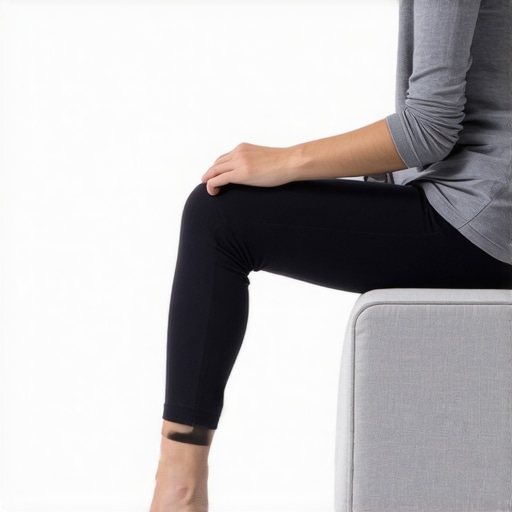
If you absolutely must sit for a movie, you have to change the geometry of the seat. Most couches are too deep, which forces your back to round. The fix is remarkably low-tech: put your feet on a small stool or even a stack of books. The simple footstool trick to stop lower back pain while sitting works because it keeps your knees slightly higher than your hips, which naturally encourages your pelvis to tilt into a neutral position rather than a ‘slumped’ one. It’s like putting a wedge under a rolling tire; it stops the mechanical slide that leads to pain.
The Stealth Posture Coach Hiding in Your Car
You can train your body for better alignment even when you aren’t at home. One of my favorite ‘hacks’ involves your vehicle. Sit up perfectly straight—the way you know you *should* sit—and then adjust your rearview mirror to that height. The moment you start to slouch, the mirror will be ‘off,’ serving as a visual cue to sit back up. This constant feedback loop is essential for unlocking mobility because it prevents the long-term ‘creep’ of spinal tissues into a deformed state. You can apply a similar logic to your workspace by ensuring you know how to set up your laptop for better spine protection, avoiding the ‘tech-neck’ that often accompanies lower back issues.
Breathing Your Way Out of a Back Spasm
We often hold our breath when we are in pain, but this actually creates more internal pressure. I used to be a ‘chest breather,’ which kept my mid-back incredibly stiff. Once I switched to diaphragmatic breathing—breathing into my belly and lower ribs—I noticed my lower back felt less ‘inflamed’ after long days. The breathing habit that is keeping your back muscles tight is often a silent contributor to chronic aches. When you inhale deeply into your abdomen, you are essentially massaging your spine from the inside out. Pair this with a gentle decompression move, such as how a simple reach and breathe move can decompress your back, and you’ll find that active recovery is much more effective than just lying flat on a hard floor.
While those breathing techniques offer a quick reprieve, we need to dig deeper into the most dangerous myth in recovery: the idea that you can simply ‘stretch away’ a disc injury. I see people at the gym daily performing long, static hamstring stretches to ‘fix’ their lower back, but if your pain is coming from a disc, you aren’t lengthening a muscle—you are cheese-grating your sciatic nerve against the bone. In fact, why stretching your hamstrings can actually flare up sciatica is one of the most important lessons I ever learned. When the nerve is already inflamed, any additional tension acts like a tripwire. Instead of reaching for your toes, which is why reaching for your toes is the worst way to stretch your back, you need to focus on decompression and ‘neural flossing’ rather than brute force. Have you ever fallen into this trap where you stretched more and felt worse? Let me know in the comments.
Why does sitting with ‘perfect’ posture still feel like a workout?
We’ve been told since kindergarten to ‘sit up straight,’ but forcing a military-style upright position is a massive mistake. When you pull your shoulders back and puff out your chest, you’re actually locking your facet joints together and creating a ‘stiff’ spine that can’t absorb shock. Research published in the Journal of Physical Therapy Science suggests that ‘postural sway’—the tiny, natural movements our bodies make while sitting—is far healthier than a rigid, static pose. This is why your perfect upright posture is actually tensing your spine and leading to that burning sensation between your shoulder blades. True mobility mastery isn’t about holding a pose; it’s about having a spine that is adaptable enough to move in and out of different positions without fear.
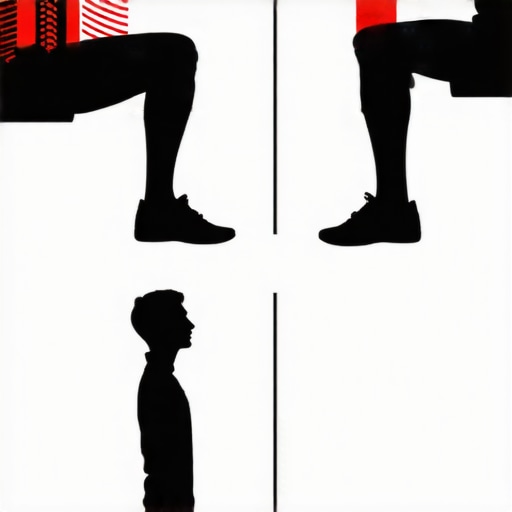
Another common ‘oops’ factor is the misuse of inversion tables. While they feel great for thirty seconds, the rebound effect can be devastating. When you return to an upright position, the sudden re-compression of the discs can cause a localized muscle spasm that is worse than the initial pain. I’ve found that the truth about inversion tables for chronic sciatica relief is that they are often a ‘band-aid’ that distracts from the core issue: lack of structural stability. If you feel like your legs are getting heavier or the pain is moving further down your calf, is your back pain a sign of something more serious? Centralization—the pain moving from your leg back toward your spine—is the goal, but aggressive stretching often does the opposite, ‘peripheralizing’ the pain and making it harder to treat.
The Secret to Nerve Desensitization
The nuance most people miss is that nerves don’t like to be stretched; they like to be ‘slid.’ If you are dealing with a ‘pinch’ in your lower back, stop the aggressive yoga poses. Instead, try why some sciatica stretches actually pinch the nerve further and look for movements that create space rather than tension. For example, before you even attempt a mobility routine, you should use the toe touch test that reveals your actual back injury risk to see if your ‘tightness’ is actually a protective mechanism from your nervous system. If your brain thinks your spine is unstable, it will keep those hamstrings tight as a ‘natural splint.’ No amount of stretching will override a brain that is trying to protect you from a perceived injury.
Once you stop the immediate fire of a flare-up, the real work begins—the boring, daily maintenance that ensures you never have to crawl to the kitchen again. I’ve tried every gadget on the market, from vibrating foam rollers to expensive braces, but I’ve found that mobility mastery usually comes down to three things: space, leverage, and consistency. For me, the most indispensable tool isn’t a machine; it’s a simple lacrosse ball. I use it because it’s dense enough to reach the piriformis muscle without compressing the surrounding nerves. If you’ve ever wondered how a simple tennis ball can release your deep glute tension, it’s all about finding that trigger point and breathing into it, rather than rolling over it like a rolling pin. This allows the nervous system to let go of its protective ‘grip’ on your joints.
How do I keep my spine mobile without it becoming a full-time job?
The secret is ‘micro-dosing’ movement throughout your day rather than scheduling an hour of torture at the gym. I no longer set aside a specific time for ‘back work.’ Instead, I use the simple morning move to prime your spine for the day while my coffee is brewing. By the time I’m sitting at my desk, I’ve already de-rotated my pelvis and hydrated my discs. Speaking of desks, we have to talk about ergonomic tips for everyday comfort. Most people think they need a $1,000 chair, but I’ve found that monitor height is actually the primary culprit for most neck tension. If your eyes are looking down even slightly, your neck is supporting the weight of a heavy bowling ball. I follow the 15-degree rule for your computer monitor to save your neck, ensuring my gaze is perfectly level with the top third of the screen.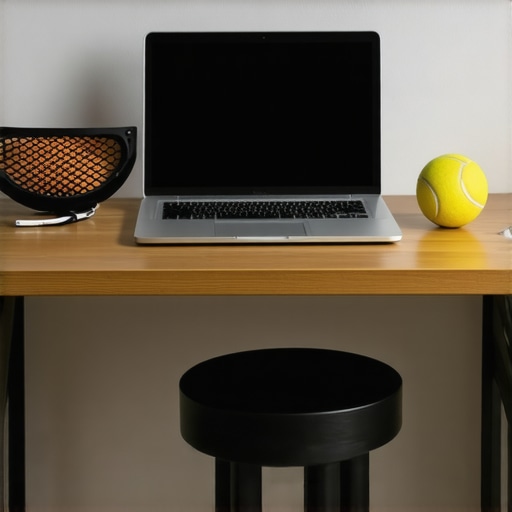 In the world of biomechanics, experts like Dr. Stuart McGill, author of Back Mechanic, emphasize that ‘spinal hygiene’—the way you move during non-exercise hours—is far more important than any physical therapy session. This is why I focus on simple exercises that make a difference that mimic real-life movements like hinging and reaching. Looking forward, I predict that the next five years will bring a massive shift toward bio-feedback wearables that alert us to spinal shear forces in real-time, moving us away from reactive care. We will soon see expert tips on managing back pain in 2025 focusing less on passive stretching and more on these tech-integrated ‘neural cues.’ For now, your best defense is a proactive offense. Conquering sciatica isn’t a one-time event; it’s a lifestyle of avoiding the ‘big bends’ and choosing small, frequent wins. My challenge to you: adjust your monitor today. Not tomorrow, not after the next meeting—right now. Your future self’s neck will thank you for the relief.
The Cruelest Myths I Had to Unlearn About My Spine
Looking back at my journey from crawling across the kitchen floor to moving with confidence, the biggest shift wasn’t a surgery or a magic pill. It was realizing that my brain was ‘guarding’ my back because it didn’t trust my movement patterns. I spent years thinking my hamstrings were short, but the toe touch test that reveals your actual back injury risk showed me that my nerves were just hypersensitive. Here are the three non-negotiables I live by now: First, stop chasing the ‘stretch’ sensation. If it feels like an electric pull, you’re aggravating a nerve, not lengthening a muscle. Second, your spine is a bank account; you have a limited ‘flexion budget’ every day. Spend it wisely on things that matter, not on slumping into a soft sofa. Finally, stability always comes before mobility. You can’t have a mobile neck if your rib cage is flared out of position.
The Only Gear That Actually Lives in My Daily Routine
I’ve wasted hundreds on gadgets, but these are the items that actually made the cut for my mobility mastery. First, a simple lacrosse ball is my go-to for deep tissue release. It’s dense and targeted, unlike a foam roller which can be too broad for the piriformis. Second, I swear by a basic monitor riser—or even a sturdy box—to ensure I’m following the 15-degree rule. Finally, I recommend everyone read Stuart McGill’s work to understand how to build ‘spinal hygiene.’ These tools are the foundation for your back pain breakthroughs because they address the root cause: the way you interact with your environment every single hour.
Take Back Your Freedom One Micro-Adjustment at a Time
The road to recovery isn’t always a straight line, and you might have days where that old ‘twinge’ returns. But remember, you now have a toolkit of ‘micro-doses’ to fight back. Whether it’s adjusting your rearview mirror or performing a quick belly-breathing session, you are no longer a passive observer of your own pain. Conquering sciatica and chronic stiffness is about the small, consistent wins that add up to a resilient body. Don’t wait for the perfect time to start; move your monitor, stand up with your glutes, and breathe deep right now. Your spine is designed for movement, not stagnation. Have you ever noticed that a tiny change in your workspace made a massive difference in your pain levels? Let me know your biggest ‘aha’ moment in the comments below!