
The truth about ‘inversion tables’ for chronic sciatica relief
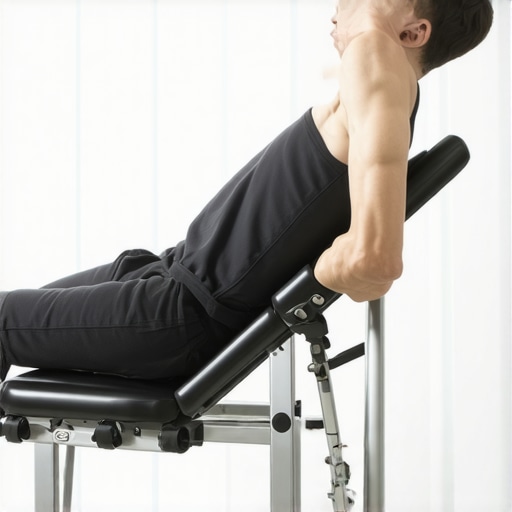
I remember lying on my living room floor three years ago, staring at the ceiling and feeling that familiar, electric lightning bolt shooting down my left leg. I was desperate. I’d already tried every stretch in the book, and frankly, some of them made things worse—like when I learned that stretching your hamstrings can actually flare up sciatica rather than help it. That’s when I saw the infomercial. A smiling man hanging upside down, claiming his back pain vanished the moment he defied gravity. I bought one that night. But as I soon found out, the relationship between gravity, your spine, and that pesky sciatic nerve is a lot more complicated than just flipping a switch. Today, I want to pull back the curtain on whether these tables are a miracle cure or just an expensive way to get a headache.
The Reality of Spinal Decompression in Your Living Room
When you first strap your ankles into an inversion table, there is a distinct sensation of relief. It feels like someone is finally pulling your vertebrae apart and letting your discs breathe. For someone dealing with muscular sciatica versus a slipped disc, that moment of space can feel like heaven. I made the classic mistake of going full ‘bat mode’ immediately—tilting to a steep 60-degree angle on my first day. I woke up the next morning with a neck so stiff I couldn’t check my blind spot while driving. I should have focused on improving my driving posture instead of aggressive traction. The truth is, while inversion can temporarily create space, it doesn’t always address why the nerve is being pinched in the first place.
Is this just another expensive piece of equipment taking up space?
It is a valid fear. My inversion table eventually became a very efficient clothes rack for six months. Before you drop hundreds of dollars, you need to know if you are dealing with a structural issue or if your back pain is a sign of something more serious. According to the Mayo Clinic, while inversion therapy might provide short-term relief, research hasn’t yet proven it to be a long-term solution for chronic back issues. It can even be dangerous if you have high blood pressure or glaucoma. Have you ever felt like you were just one ‘crack’ or one ‘stretch’ away from being fixed, only to find the pain returns an hour later? That was my cycle for years. I had to learn that using a foam roller for sciatica or hanging upside down are just tools, not the entire cure. We need to talk about how to use these tools without ending up in a back spasm that leaves you crawling to the phone.
Master the Art of Gradual Gravity
Stop thinking of the inversion table as a medieval rack designed to stretch you into a taller human. Instead, visualize it as a slow-release valve for a pressurized pipe. Your spine is like a stack of sponges that have been stepped on for sixteen hours; you can’t just snap them back to their original shape. To get real results, you have to treat the process like a slow-cooked meal rather than a microwave snack. I learned this the hard way when I tried to fix a month of desk-bound stiffness in a single ten-minute session of full inversion. My lower back felt loose for five minutes, then tightened up like a drum because my nervous system went into protective mode.
Start at a Shallow Incline to Stay Safe
The biggest mistake is going too steep too soon. Your body needs to trust the table. I recommend starting at a mere 15 to 20-degree angle. At this slope, you aren’t even fully upside down, but you are effectively neutralizing the weight of your upper body. It’s enough to stop the constant compression but not enough to trigger a fight-or-flight response in your muscles. If you feel your pulse thumping in your ears, you’ve gone too far. You want to spend time here—about three to five minutes—letting your ligaments slowly adjust. This is also the perfect time to evaluate if why stretching your hamstrings won’t fix your tight legs applies to you; often, that tightness is actually neural tension that requires this gentle decompression rather than aggressive pulling.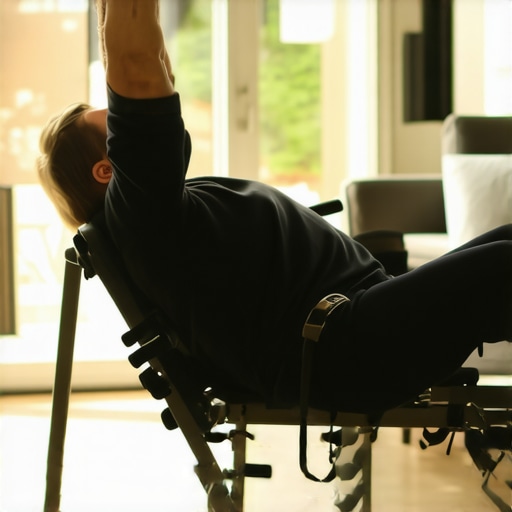
Use the Reach and Breathe Technique
Once you are comfortable at a slight angle, don’t just lie there like a statue. I found that incorporating how a simple reach and breathe move can decompress your back while inverted makes a massive difference. While tilted back, slowly reach your arms over your head—but only as far as your shoulders allow without pain. As you inhale deeply into your belly, imagine your ribs expanding away from your hips. This movement uses your own breath to create internal space, which is far more effective than just letting gravity pull on your ankles. During my second month of using the table, I started doing these small ‘oscillations’—rocking the table slightly up and down using my arm weight—and it felt like a gentle massage for my spinal discs. It’s one of those simple exercises that make a difference by encouraging fluid to move back into the discs.
How to Dismount Without a Back Spasm
The most dangerous part of inversion therapy isn’t being upside down; it’s coming back up. When you return to a horizontal position, your discs are like wet sponges that have just expanded. If you jump off the table immediately, you’re hitting them with a sudden load they aren’t ready for. This is often why you feel a sharp pinch when standing up from a chair or an inversion table. I make it a rule to stay horizontal for at least 60 seconds before unlocking my ankles. Once upright, I perform a 5-second glute squeeze. This simple contraction wakes up the muscles that support your spine, telling your brain that it’s safe to move again. Think of it as ‘re-setting’ your internal stabilizer before you take your first step. Ignoring this transition is the fastest way to turn a recovery session into a week-long flare-up.
The Military Posture Trap
One of the biggest myths I had to unlearn during my recovery was the idea of ‘perfect posture.’ We are told from birth to sit up straight, but why your straight posture is actually straining your muscles is a nuance that even many physical therapists miss. When you force your spine into a rigid, military-style position, you are essentially asking your stabilizers to work at 100% capacity twenty-four hours a day. This leads to what researchers call ‘allostatic load’—a state where your nervous system is so fried from trying to be ‘perfect’ that it interprets even minor movements as threats. A study in the Journal of Biomechanics highlights that movement variability—the ability to shift and change positions—is actually a better predictor of spinal health than holding a single ‘correct’ pose. Rigidness isn’t strength; it is a precursor to a flare-up. If you have been obsessively holding your shoulders back, you might be surprised to find that why your shoulder hurts more when you try to stand up straight is actually due to this constant, low-level muscle guarding.
Stop Chasing the Pop
Then there is the ‘chasing the pop’ trap. If you find yourself constantly twisting your torso or yanking your neck to hear that click, you need to understand why cracking your own back is making your joints more unstable. You aren’t ‘realigning’ anything; you’re just stretching the joint capsule and releasing gas. This provides a temporary hit of endorphins, but it leaves the ligaments looser and more prone to injury in the long run. I used to be a chronic self-cracker, thinking I was doing myself a favor, but I was actually feeding a cycle of instability that made my sciatica worse. Instead of searching for that loud release, focus on mobility mastery through controlled, gentle movement that doesn’t rely on joint cavitations to feel ‘loose.’
Why does your spine feel ‘stuck’ despite daily stretching?
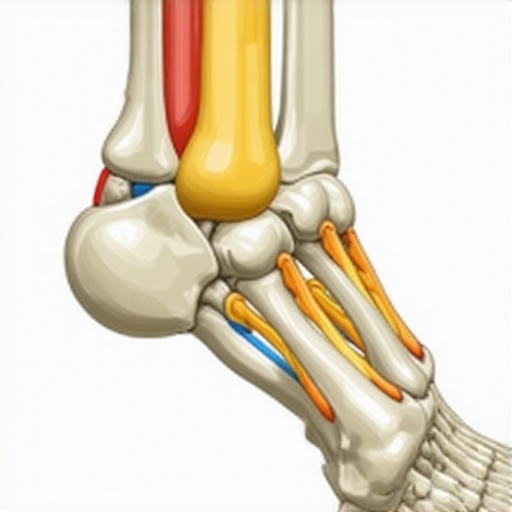
This is the question that keeps most back pain sufferers up at night. The nuance lies in the ‘kinetic chain.’ I spent months focusing on my L5-S1 disc, only to realize how a stiff ankle is actually causing your recurrent lower back aches. If your ankle doesn’t flex properly, your lower back has to pick up the slack every time you take a step. Dr. Stuart McGill, a world-renowned spine biomechanist, often points out that back ‘stiffness’ is frequently a protective mechanism by the brain, not a lack of flexibility. You can’t stretch your way out of a protective brain response. You have to prove to your brain that it is safe to move again. Sometimes this means looking at the breathing habit that is keeping your back muscles tight rather than just pulling on your hamstrings. Have you ever fallen into this trap of trying to ‘crack’ or ‘stretch’ your way out of pain only to have it return an hour later? Let me know in the comments—I’d love to hear your experience with the ‘rebound effect’ of aggressive treatments.
Owning an inversion table is a great start, but the real magic happens in the twenty-three hours a day when you aren’t hanging like a bat. Maintenance isn’t about one heroic hour at the gym; it is about the small, almost invisible tools you use to keep the ‘beast’ at bay. I’ve found that my most valuable piece of equipment isn’t the three-hundred-dollar table in the corner—it’s the five-dollar tennis ball in my desk drawer. Knowing how a tennis ball can relieve deep glute and sciatic pain while I’m answering emails has done more for my daily comfort than almost any other intervention. It’s about targeted pressure on the piriformis that prevents that deep, gnawing ache from ever starting. If you’re sitting right now and feeling that familiar tug, you might also want to investigate why your standing desk is giving you lower back pain, as simply standing up isn’t always the cure-all we were promised.
How can I stay pain-free without a daily hour-long routine?
The secret to long-term results is integrating ‘movement snacks’ into your existing life. I stopped trying to find a dedicated ‘workout time’ and started using the one foot up rule for pain-free dishwashing and chores. By simply placing one foot on a small stool while doing the dishes, you tilt your pelvis into a neutral position and take the load off your lower lumbar. This is the essence of mobility mastery: making your environment work for you rather than against you. I predict that over the next five years, we will see a massive shift toward bio-feedback wearables that alert us when our pelvic tilt is off before the pain even registers. We are moving away from ‘fixing’ injuries and toward real-time prevention. Research in the British Journal of Sports Medicine has already shown that breaking up sedentary periods with just two minutes of movement every half hour significantly reduces musculoskeletal discomfort.

Beyond the gadgets, you have to address the foundations. I spent years ignoring my feet, not realizing that the 2-minute foot massage that helps your lower back relax was the missing link in my recovery. When your plantar fascia is tight, it pulls on your calves, which pulls on your hamstrings, which ultimately tugs on your lower back. It is all connected. This is why back pain breakthroughs often happen when you stop looking at the spot that hurts and start looking at the foundation. Even something as mundane as the specific way to vacuum can be the difference between a productive weekend and three days on the heating pad. If you want to scale your progress, stop looking for the next big machine and start mastering the small movements. I highly encourage you to try the ‘foot-up’ rule tonight while doing chores—it’s the easiest way to see how a tiny ergonomic shift can immediately quiet a screaming nerve.
The Hardest Lesson I Learned About Gravity and My Spine
After years of experimenting with every gadget under the sun, I realized that the inversion table wasn’t a magic wand; it was a window of opportunity. The biggest epiphany I had was that decompression only works if you don’t immediately re-compress. Here are a few lightbulb moments that changed my recovery path:
- The Rebound Effect is Real: If you feel great on the table but worse an hour later, your body is likely reacting to the sudden change. This is why I always emphasize expert strategies for lasting comfort that focus on the transition back to upright life.
- Tension is Often a Bodyguard: Your muscles tighten up to protect the nerve. If you force them to stretch too fast, they will only fight back harder.
- Hydration Matters More Than You Think: Spinal discs are mostly water. I noticed that on days I was dehydrated, the table felt less effective. Fluid needs to be available to move into those newly created spaces.
- Consistency Beats Intensity: Two minutes at a shallow angle every day is infinitely better than twenty minutes of full inversion once a week. You are training your nervous system, not just pulling on bones.
My Personal Toolkit for Spine Health
Beyond the inversion table, I’ve curated a small selection of tools that I trust implicitly. These aren’t just random products; they are the items that stood the test of time when I was deep in the trenches of chronic pain. First, a high-quality inversion table with a ratcheting ankle lock—the comfort of your ankles determines how long you can actually relax. Second, I never travel without a simple tennis ball. Knowing how a simple tennis ball can release your deep glute tension has been a lifesaver in hotel rooms and office chairs alike. Lastly, I highly recommend keeping a copy of Dr. Stuart McGill’s Back Mechanic on your shelf; it’s the gold standard for understanding how to move without triggering symptoms. These resources help you transition from passive relief to managing back pain in 2025 and beyond.
#IMAGE_PLACEHOLDER_E#
Reclaim Your Freedom One Inch at a Time
It is easy to feel defeated when your body feels like it’s betraying you, but remember that every small adjustment adds up. Whether it’s mastering the 15-degree rule or finally understanding navigating your path to restored mobility, you are making progress. You don’t have to live your life around a electric lightning bolt in your leg. Start small, be patient with your progress, and don’t be afraid to try these sciatica relief secrets at your own pace. You have the tools; now you just need the consistency to let them work. Have you ever tried inversion and felt a ‘rebound’ spasm the next day, or did it provide instant relief for you? Let me know in the comments below!