
Why reaching for your toes is the worst way to stretch your back
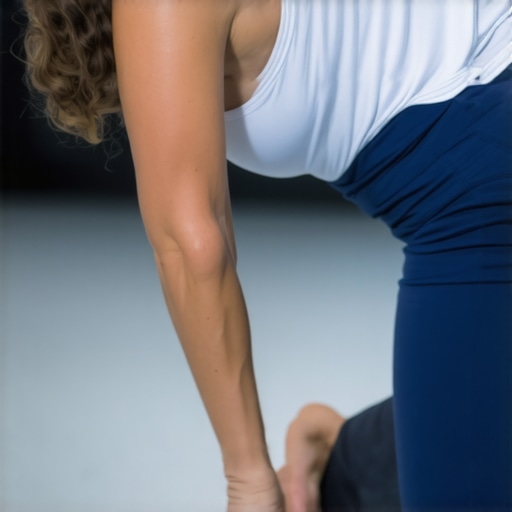
I still remember the morning I couldn’t tie my own shoes without a lightning bolt of pain shooting through my lower spine. Like most people, I thought the solution was simple: I just needed to be more flexible. I spent every morning for a month forcing myself into a deep toe-touch, gritting my teeth while waiting for that elusive relief. Instead of feeling loose, I ended up with a flare-up so bad I couldn’t sit for more than ten minutes. It was a classic lightbulb moment where I realized my go-to fix was actually the primary culprit behind my misery. Today, I am going to show you why that traditional forward fold is a recipe for disaster and how you can actually find relief without risking a herniated disc.
Stop Folding Yourself Like a Rusty Lawn Chair
When your back feels tight, the instinctual urge is to round your spine and reach for the floor. We have been conditioned since grade school gym class to believe this is the gold standard for flexibility. However, for those of us dealing with actual spinal issues, this move is incredibly counterproductive. I made the mistake of thinking my tightness was just short muscles, but often, the hidden reason your hamstrings always feel tight is actually your nervous system trying to protect an unstable spine. By forcing a toe touch, you are essentially pulling on nerves and putting massive pressure on your lumbar discs. Stretching should never feel like a battle against your own anatomy.
Is stretching actually making your injury worse?
It is a fair question to be skeptical about. After all, isn’t movement supposed to be medicine? While movement is vital, the type of movement matters. According to research published by renowned spine expert Dr. Stuart McGill, repeated spinal flexion—the exact motion of a toe touch—is a primary mechanism for disc herniation in clinical settings. If you are already feeling a pinch, you might be stretching your back into a C-shape and aggravating the very tissue that needs rest. I used to think I was just not trying hard enough, but the reality was that my body was screaming at me to stop. Have you ever felt that sharp, localized catch in your lower back right after trying to touch your toes? In this guide, we are going to pivot away from these outdated habits. We will look at how simple exercises that make a difference can replace these dangerous stretches, ensuring you stay mobile without the constant fear of a back attack.
Master the Hip Hinge and Save Your Discs
If you want to stop the cycle of flare-ups, you have to trade the ‘fold’ for the ‘hinge.’ Think of your hips like a heavy-duty door hinge and your spine as the solid door itself. When you bend over, the movement should happen entirely at the hip joint, keeping your back as straight as a plank. I remember the first time I tried this while doing chores; I was terrified to reach down for a heavy laundry basket. Instead of rounding my shoulders, I shoved my butt back toward the wall behind me, keeping my shins vertical. For the first time in years, I picked up the load without that sickening ‘pop’ sensation. Learning how to carry a heavy laundry basket without a back spasm starts with this one fundamental shift in how you move.
Brace Your Spine Like a Professional Lifter
Most people think ‘core strength’ means doing a thousand crunches, but for back health, it is actually about stiffness. You need to create a natural corset of muscle around your spine before you move. Try this: poke your fingers into your sides, just above your hips, and cough. That sudden hardening of the muscles is what a proper brace feels like. You should maintain about 10% of that tension whenever you are transitioning from sitting to standing or reaching for the bottom cupboard. It is important to realize that why your core strength won’t fix your back if your hips are locked usually comes down to this lack of coordination. You can have the strongest abs in the world, but if they do not fire when you hinge, your lower back takes the hit.
Stop Pulling and Start Gliding Your Nerves
That ‘tight’ feeling in your legs during a toe touch is often not muscle tightness at all—it is your sciatic nerve being stretched to its limit. Nerves do not like to be stretched; they like to slide. If you keep yanking on them, you will end up with more inflammation. This is why stretching your hamstrings can actually flare up sciatica. Instead of the traditional stretch, try ‘nerve flossing.’ Sit in a chair, straighten one leg while looking up at the ceiling, then tuck your chin while pointing your toes back toward you. This rhythmic motion allows the nerve to glide through the tissues without the trauma of a sustained pull.
Use Your Breath to Reset the System
When you feel a spasm coming on, your first instinct is to freeze and shallow-breath into your chest. This actually keeps your nervous system in a ‘fight or flight’ mode, which tightens the muscles around your spine even more. I have found that a simple diaphragmatic breath—expanding your ribs 360 degrees—can act like a biological reset button. Learning how a simple breath reset can calm a back spasm was a game-changer for me during long car rides. It forces the deep stabilizers of the spine to relax and stop guarding so aggressively, giving you the window of opportunity to move safely again without the usual agony.We need to address the elephant in the room: the obsession with ‘perfect’ posture. Most of my clients arrive trying to sit like soldiers, chests puffed out and shoulders pinned back, believing this rigidity will protect them. In reality, why your perfect upright posture is actually tensing your spine comes down to muscle fatigue. You are essentially asking small stabilizer muscles to act like heavy-duty cranes for eight hours a day. They eventually give out, leading to that deep, gnawing ache between your shoulder blades. Movement is the real goal, not a frozen, ‘correct’ position. A study in the Journal of Electromyography and Kinesiology found that people who frequently shift their sitting positions report significantly less discomfort than those who try to maintain a fixed, upright stance. If you are not moving, you are stiffening.
Ditch the Soldier Stance to Save Your Nerves
When you force yourself into a rigid upright position, you often unintentionally increase the compression on your lumbar discs. This is a common trap for those using standing desks; they lock their knees and arch their lower backs, leading to a situation where why your standing desk is giving you lower back pain becomes a daily reality. I have seen countless people develop secondary issues because they were ‘trying too hard’ to be ergonomic. The secret isn’t a better chair; it’s variability. Your best posture is your next posture. Have you ever fallen into this trap of trying to sit perfectly straight only to end up in more pain? Let me know in the comments.
Why do some stretches feel good initially but leave you stiffer an hour later?
This is the ‘Stretch Reflex’ nuance that most people miss. When you aggressively pull on a muscle—like during a deep toe touch—your muscle spindles actually send a signal to the brain to tighten up to prevent a tear. You might feel a temporary ‘high’ from the endorphin release of the stretch, but your nervous system is actually preparing to lock the joint down even tighter to protect it. This cycle is exactly why cracking your own back is making your joints more unstable over time. You are hitting a temporary reset button while the underlying instability remains unaddressed. Instead of seeking that ‘pop’ or that ‘burn,’ focus on controlled, mid-range movements that tell your brain it is safe to let go.
Stop Chasing the Symptom and Find the Source
One of the most advanced mistakes I see is focusing entirely on where the pain is located. If your lower back is constantly tight, the problem might actually be ten inches lower. It sounds counterintuitive, but how a stiff ankle is actually causing your recurrent lower back aches is a textbook example of the kinetic chain in action. If your ankles don’t flex when you walk, your lower back has to arch more to compensate for the lost range of motion. Similarly, we often see people overworking their core with static holds that don’t translate to real life. In fact, why you should stop doing planks if your back already hurts often comes down to the fact that you are training your body to be a rigid board rather than a functional, moving human being. True mobility mastery is about teaching your body how to coordinate movement across every joint, rather than just forcing one area to be ‘strong.’
The Low-Tech Tools That Save My Spine Every Day
I have spent thousands on fancy ergonomic chairs and high-end massage guns, but the things that actually keep me out of the clinic are usually under twenty dollars. For example, a simple tennis ball is my secret weapon for travel and long office days. By learning how a tennis ball can relieve deep glute and sciatic pain, you can essentially perform a self-release on the piriformis muscle while sitting in a terminal or at your desk. I also swear by a McKenzie-style lumbar roll. It is not just a cushion; it is a tactile reminder for your nervous system. Knowing how to use a lumbar roll to prevent mid-day back fatigue is the difference between ending your shift feeling fresh or feeling like a crumpled piece of paper.
How do I keep my spine healthy for the long haul?
Maintenance is not about doing an hour of rehab every morning—it is about the micro-decisions you make throughout the day. Dr. Shirley Sahrmann, a pioneer in physical therapy and author of Diagnosis and Treatment of Movement Impairment Syndromes, emphasizes that the direction of your most frequent movements is usually the direction of your pain. If you always lean or rotate one way, your body adapts to that strain. This is why mobility mastery and daily tips to keep your spine and joints healthy are so critical. You have to balance the scales. If you sit for an hour, you owe your spine one minute of standing and reaching.#IMAGE_PLACE_HOLDER_D#I predict we are moving toward a future where posture is no longer a static look but a dynamic data point. We are already seeing the rise of wearable sensors that vibrate when you have been in one position for too long. But until that becomes standard, you have to be your own sensor. You need to stay ahead of the curve by understanding is your back pain a sign of something more serious by listening to the subtle whispers of stiffness before they become shouts of agony.
The Chair Choice That Actually Matters
If you are in the market for new gear, stop looking for ‘orthopedic’ labels and look for adjustability. Most people fail because they buy a chair that fits a generic person, not their specific limb lengths. Learning how to pick a chair that actually supports your lumbar curve involves measuring from your hip to your knee and ensuring the seat pan does not cut off circulation. Take five minutes today to find a tennis ball or a rolled-up towel and place it behind your lower back while you work. See if that small support changes how you feel by the time you log off.
The Hard Truths About Spinal Health I Had to Learn the Hard Way
Looking back on my journey, the most important shift wasn’t a specific exercise, but a complete change in mindset. I finally realized that my body wasn’t ‘broken’; it was simply communicating. I used to think that pushing through the burn was a sign of progress, but the toe touch test that reveals your actual back injury risk taught me that forcing range of motion is a dangerous game. Another lightbulb moment was acknowledging that why cracking your back at home is a temporary fix comes down to joint instability. Chasing that ‘pop’ only masked the real issue of weak stabilizers. Lastly, I learned that recovery is never a straight line, and being patient with your nervous system is the fastest way to heal.
My Go-To Kit for Keeping My Back Happy Every Day
I don’t leave my spinal health to chance anymore, and I rely on a few specific tools that have earned my trust over the years. First, I always keep a tennis ball in my bag; knowing how a simple tennis ball can fix deep glute tension has saved me from dozens of potential flares while traveling. For deeper insights into the science of recovery, I highly recommend checking out back pain breakthroughs navigating your path to restored mobility. It’s one of those resources that completely changes how you interpret every ache and pain. I also swear by a firm lumbar roll for any office chair that doesn’t quite fit my frame. These aren’t just gadgets—they are my daily insurance policy against stiffness.
Take Small Steps Toward a Stronger Future
Living without constant back pain isn’t about finding a miracle cure; it’s about the consistency of small, smart choices. You now have the tools to hinge instead of fold, to glide your nerves instead of yanking them, and to breathe through the tension. Don’t feel like you have to master everything at once. Start with one change today—maybe it’s the way you sit at your desk or how you reach for your shoes. If you need more personalized guidance or feel stuck in your progress, you can always contact us to discuss your specific needs. Your spine is incredibly resilient when you stop fighting its natural mechanics. Have you ever tried a stretch that made your back feel worse instead of better? Let me know your experience in the comments below!